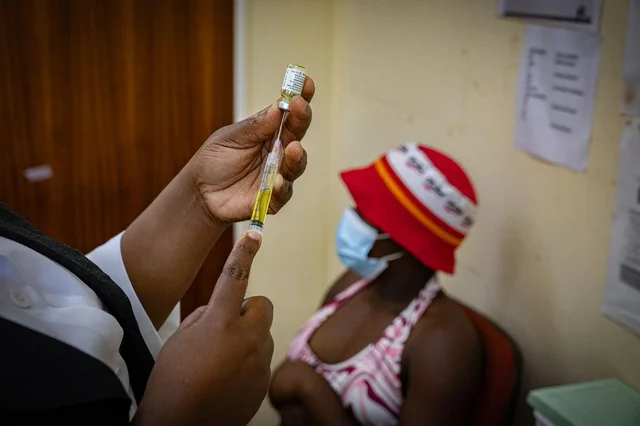
A cut-price copy of lenacapavir has cleared a major US regulatory hurdle, and campaigners say it could put near-total protection against HIV within reach of millions who could never afford the brand-name shot.
HEALTH
For years, the dream of ending the HIV epidemic has run into one stubborn problem: the best tools cost too much, and the people who need them most live where the money is scarcest. This week, that equation shifted in a way few health advocates expected to see so soon.
On Monday, drugmakers and global health groups announced that the US Food and Drug Administration has granted tentative approval to the first generic version of lenacapavir, the twice-yearly injection that studies show can almost completely block HIV infection. The price tag in the world's poorest regions: about $40 per person per year. That is the same as the daily preventive pills already on the market, and a fraction of the $28,218 annual US list price of the brand-name shot. Two injections a year. Roughly the cost of a family takeaway. And, according to the studies, protection that comes remarkably close to total.

What Was Actually Approved
The generic was developed by India-based Dr. Reddy's Laboratories under an arrangement brokered by Unitaid, the Clinton Health Access Initiative (CHAI) and Wits RHI, a South African health research institute. The announcement was made in Geneva on 2 November 2026.
Technically, the FDA decision is a 'tentative approval'. That is the agency's standard label for a generic product while the original medicine is still under patent. The brand-name drug, Yeztugo, made by Gilead Sciences and approved in the United States in June 2025, remains patent-protected, so the generic cannot be sold to Americans. But tentative approval is no mere formality. It follows a long-standing FDA practice for HIV medicines supplied to other countries through the US government, it allows US government procurement, and it gives national regulators around the world a trusted stamp of quality to lean on as they make their own decisions.
Dr. Reddy's filed a single application covering both prevention and treatment uses of lenacapavir through the FDA's 505(b)(2) pathway. That route allowed the company to request priority review, which aims for a decision within six months. The whole journey from the original brand approval to this generic nod took about 16 months, a blink by the standards of global drug access, where cheap copies of life-saving HIV treatments once took the better part of a decade to appear.
How Good Is the Jab, Really?
The headline claim is a bold one, so it is worth looking at the evidence behind it. Lenacapavir's reputation rests on two large trials known as PURPOSE 1 and PURPOSE 2.
PURPOSE 1 enrolled more than 5,300 teenage girls and young women, aged 16 to 25, in South Africa and Uganda. The median age was 21, and more than a third had a sexually transmitted infection when they joined. They were randomly split into three groups: one received lenacapavir injections every six months, one took daily Descovy pills, and one took daily Truvada pills.
After a year, the results were startling. Among the 2,134 women given lenacapavir, there were zero new HIV infections. In the Descovy group of 2,136 women there were 39 infections, and among the 1,068 women on Truvada there were 16. Put another way, the infection rate per 100 person-years was 0.00 for the injection, 2.02 for Descovy and 1.69 for Truvada, against a background rate in the community of 2.41. The daily pills, in other words, barely beat doing nothing in this population. The reason, researchers found, was not that the pills are useless but that adherence was poor and kept falling. More than 90 percent of women on the injection, by contrast, turned up for their shots on time.
The second study, PURPOSE 2, tested the jab in gay and bisexual men, transgender women and non-binary people, and its results, announced in September 2024, also showed it to be highly effective.
Sharon Lewin, president of the International AIDS Society, said at the time: "These data confirm that twice-yearly lenacapavir for HIV prevention is a breakthrough advance with huge public health potential."
The jab was generally well tolerated. In PURPOSE 1, fewer than five percent of participants in each group suffered severe adverse events, and just four women stopped lenacapavir because of injection-site reactions. Common side effects reported include injection-site reactions, headache and nausea.
The Price Revolution
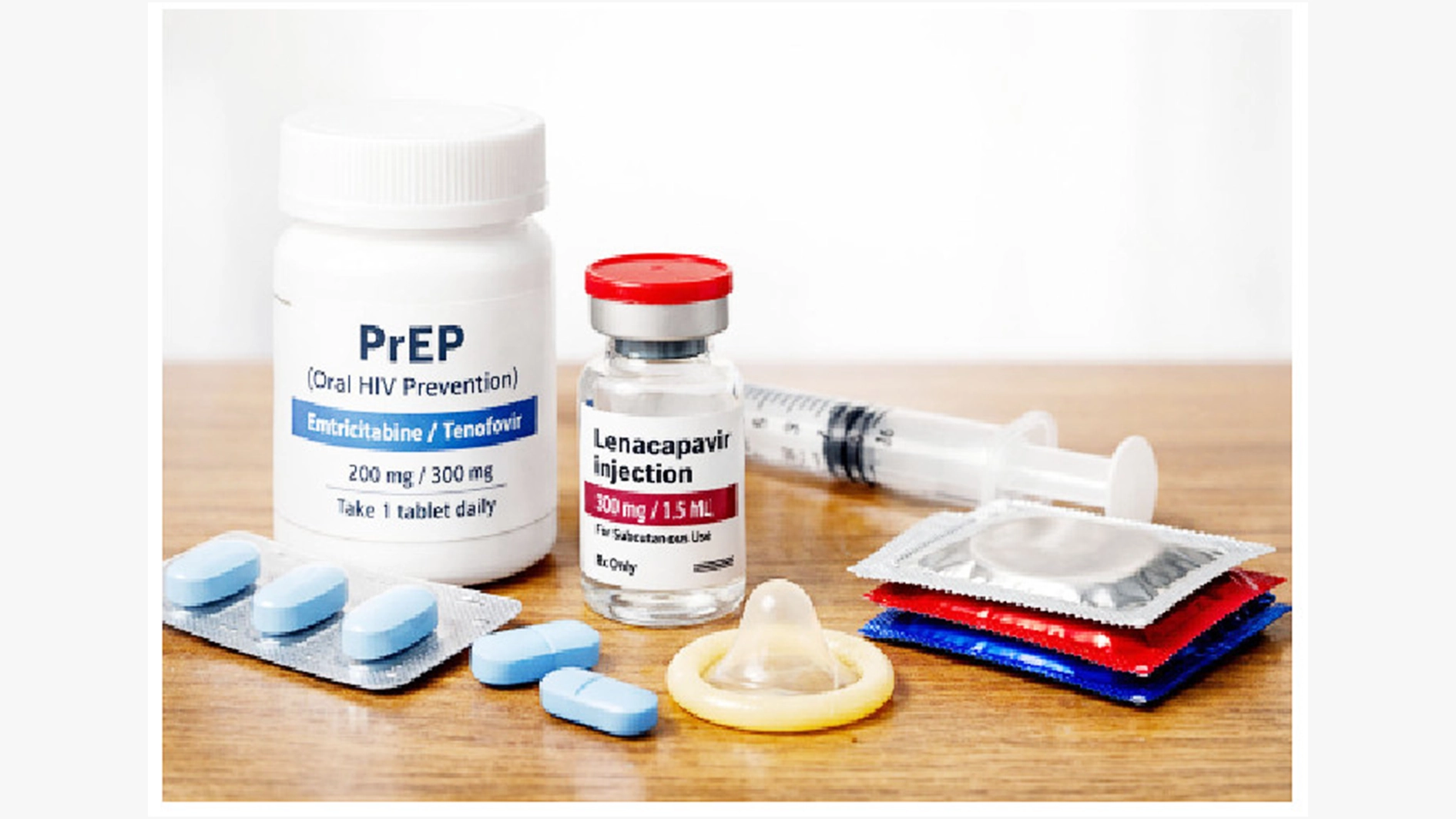
Effectiveness is only half the story. Since the brand-name shot was approved in June 2025, the great question has been who would actually get it. In the United States, the list price of $28,218 a year before insurance puts it out of reach for many. In the world's low- and middle-income countries, where the great majority of new HIV infections occur, it would be unthinkable at that cost.
The route to a lower price began in late 2024, when Gilead granted royalty-free voluntary licences to six generic manufacturers to supply sub-Saharan Africa, Asia and Latin America. In September 2025, Unitaid, Wits RHI, CHAI and Dr. Reddy's announced a pricing agreement: $40 per person per year, covering the 120 low- and middle-income countries included in Gilead's licence.
The $40 figure matters because it matches the cost of daily oral PrEP, the preventive pill that governments and donors already buy. For ministries of health, that means a switch from pills to a twice-yearly jab does not blow a hole in the budget.
Gilead had been the only supplier, and demand has outstripped supply. More than 125,000 people in 10 early-adopter African countries have already started on the brand-name product. Generic supply is expected to start reaching some countries within weeks, with the first supplies due before the end of 2026 and broader availability through 2027. Countries that require their own approval processes may take longer. Generics from other licensed manufacturers have not yet received FDA approval.
Why a Shot Beats a Pill
Daily pills have been available for years, and they work, if you take them. In real life, millions of people find a daily pill hard to keep up with. Some live with partners or families who must not know. Some face stigma at the pharmacy. Some simply forget, or run out, or cannot get to a clinic every month for refills.
A jab that lasts six months changes the picture. Dr. Neil Buddy Shah, chief executive of CHAI, put it bluntly: "Two injections a year, of a product that is almost 100% effective at preventing HIV, changes that entirely."
The scale of the need is enormous. The World Health Organization says 41 million people worldwide are living with HIV, and 570,000 people died of HIV-related causes last year. Advocates estimate that around 20 million people are at high enough risk to need pre-exposure prophylaxis, known as PrEP, which is taken before exposure to the virus.
The Fine Print
Before anyone declares the epidemic over, the experts are keen to inject a note of realism. Lenacapavir is not a vaccine, and it is not a cure.
People must be tested for HIV before they start, and before each injection. That matters because drug-resistant HIV has been seen in people who had an undiagnosed infection when they received the drug. Testing, trained health workers and reliable supply chains are all part of the package, and in many places they are in short supply.
Professor Saiqa Mullick, director of implementation science at Wits RHI, has stressed that an affordable drug alone is not enough. Countries, she says, need health systems that are ready, providers who feel confident, and communities that are engaged. A cheap jab nobody trusts, or nobody can reach, saves no one.
There is also the matter of what tentative approval does not do. It does not mean the product can be sold in every country tomorrow. Each nation still has its own regulatory steps, procurement cycles and rollout plans. The partner organisations say they are working with governments, communities, the Global Fund, the US Bureau of Global Health Security and Diplomacy, the Gates Foundation and others on introducing the product, engaging communities and gathering real-world evidence.
What the Experts Are Saying
Philippe Duneton, executive director of Unitaid, framed the development as proof that taking early risks pays off: "Unitaid's early risk-taking is helping shorten the time between a scientific breakthrough and real access." The agency says its work delivered in about four years what used to take ten, and that with lenacapavir the gap shrank to just over a year.
Carmen Pérez Casas of Unitaid summed up the mood among advocates: "With lenacapavir, we are much more hopeful."
Deepak Sapra, chief executive of API and Services at Dr. Reddy's, said the FDA decision validates the company's work in developing and manufacturing the product at an affordable price and at scale.

What This Means For You
If you live in the United States, Britain or another wealthy country, the generic will not change your options overnight. The brand-name shot, Yeztugo, is the version available in the US, and it remains under patent. If you think you are at risk of HIV, talk to a doctor or sexual health clinic about PrEP choices, including daily pills and the long-acting injection, and about regular testing.
If you live in one of the 120 countries covered by the licence, the news is potentially far more significant. Over the coming months, ask local clinics and health departments whether and when the injection will be available, and make sure you know where to get tested.
For everyone, the story is a reminder of how much of global health is decided not by science but by price. The science of near-total HIV prevention was settled in the trials. What is changing now is who can afford it.
Common side effects include injection-site reactions, headache and nausea. Anyone considering the injection should be tested for HIV first and discuss risks and benefits with a clinician.
The Bottom Line
It is rare for a headline about a regulatory decision to carry real hope, but this one does. A drug that reduced new infections to zero in one of the largest prevention trials ever run is now on course to cost $40 a year in the places that need it most. Challenges remain: supply, testing, trained staff, trust and the pace of national approvals. Yet the direction of travel is unmistakable.
With first supplies due before the end of 2026 and wider access expected in 2027, the coming year will be the real test. If the world can get these injections to the people who need them, 'nearly eliminated' may stop being a trial result and start being a public-health reality.
Published By | Health News Editor