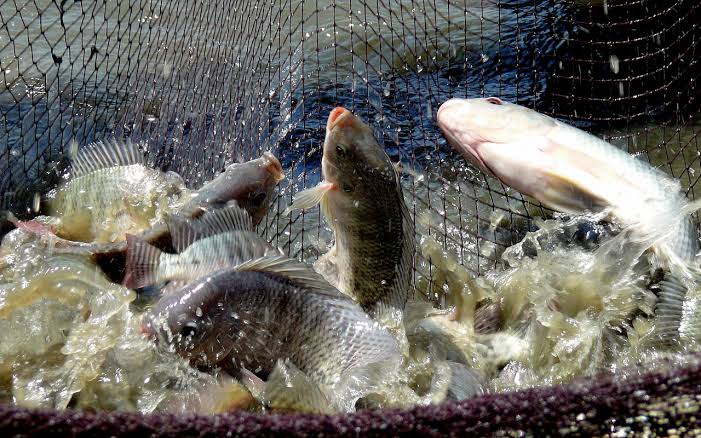
A new FAO global report ranks Uganda as the continent's largest inland fisheries producer. Behind the record numbers lie questions about sustainability, enforcement and whether Lake Victoria's bounty is translating into farmer incomes
KAMPALA
Uganda has been named Africa's leading producer of inland fisheries, according to the State of World Fisheries and Aquaculture 2026 (SOFIA 2026) report, the flagship biennial publication of the Food and Agriculture Organization of the United Nations, which found that the country produced more than 500,000 tonnes of aquatic animals from its lakes, rivers and fish farms in 2024 — more than any other country on the continent, ahead of Tanzania, Nigeria, Egypt and the Democratic Republic of Congo.
The report, launched on June 16 at the 11th Our Ocean Conference in Mombasa, Kenya, positions Uganda at the centre of a global fisheries and aquaculture sector that FAO says produced a record 235 million tonnes in 2024, with aquaculture output topping 100 million tonnes worldwide for the first time. For a landlocked East African country with no marine coastline, ranking first in inland fisheries production is a distinction with real economic weight: inland fisheries contributed 12.3 million tonnes globally in 2024, and FAO notes that this catch is disproportionately important for food security and rural employment in low-income and landlocked countries — a description that fits Uganda closely.
Lake Victoria's outsized role
The bulk of Uganda's production is tied to Lake Victoria, the world's largest tropical lake and the single biggest inland fishery on the planet, shared with Kenya and Tanzania. Regional data compiled by fisheries researchers show Lake Victoria alone supports the direct livelihoods of more than 4 million people across the three countries, with fisheries-related employment across the East African Community generating an estimated $1.1 billion in 2021. Three species dominate commercial landings: Nile perch, the large predatory fish introduced in the 1950s-60s that built Uganda's export fish-processing industry; Nile tilapia, which serves mostly domestic and regional markets; and mukene (also called dagaa or omena), a small sardine-like fish that is dried and sold cheaply, making it one of the most important sources of affordable animal protein for low-income households in the region.
Cage aquaculture, largely concentrated on Lake Victoria, now accounts for more than 99 percent of Uganda's farmed-fish production, according to sector data from Uganda's aquaculture roadmap research, and the government has set a target of scaling national aquaculture output to 1.3 million metric tonnes by 2029 — more than double current levels — as part of a broader push to diversify the fisheries sector beyond wild capture.
The export opportunity — and its limits
Uganda's wild-caught Nile perch industry has historically generated between $100 million and $160 million annually in export revenue, with roughly 70 percent of that fish destined for European markets. That trade got a significant boost this year when Uganda secured formal European Union authorisation, on January 28, 2026, to export farmed finfish and other aquaculture products — not just wild-caught Nile perch — opening the EU market to Ugandan tilapia, catfish and processed aquaculture goods for the first time. The Ministry of Agriculture, Animal Industry and Fisheries has set an ambitious combined export revenue target of roughly $730 million for aquaculture and capture fisheries combined, nearly five times current wild-capture export earnings, banking on aquaculture growth to close the gap.
To meet EU market-access requirements, Uganda has had to overhaul its fish trade compliance systems. A digital catch-certification system, known as CATCH, became compulsory from January 10, 2026, and is being integrated into the EU's own Trade Control and Expert System (TRACES), part of a six-year effort by Ugandan authorities to align with international food safety and traceability protocols — a process that mirrors the traceability push Uganda's coffee sector has undergone to meet the EU's deforestation regulation.
But the SOFIA 2026 report is careful to frame Uganda's production record within a broader continental context that is far less flattering. Per-capita aquatic food availability in Africa stood at just 9.1 kilograms per person in 2023 — less than half the global average of 21.1 kg — even as the continent's population and demand for animal protein continue to rise. In other words, Uganda can be the continent's largest inland fish producer while African consumers, including many Ugandans, still eat far less fish than the global average, a gap FAO attributes to distribution bottlenecks, post-harvest losses, and uneven investment in cold-chain and processing infrastructure rather than a lack of raw production.
Sustainability pressure behind the record catch
Uganda's fisheries success story also sits uneasily alongside recent domestic enforcement actions that suggest the resource base underpinning that record catch is under strain. Earlier this month, Uganda's military-backed Fisheries Protection Unit intensified a crackdown on illegal fishing practices across Lake Victoria and Lake Albert, including a ban on night-time mukene fishing and stricter licensing enforcement at landing sites — a response to years of warnings from fisheries scientists that undersized-mesh nets, juvenile fish harvesting and overcapacity in the canoe fleet were pushing Nile perch and tilapia stocks toward decline. Fishing communities have complained that the enforcement, while addressing a real sustainability problem, has in the short term hurt the incomes of small-scale fishers who depend on daily catches to survive.
That tension — between conserving a shared natural resource and protecting the livelihoods of people who depend on exploiting it — is precisely the challenge FAO's SOFIA 2026 report flags as the central test facing fisheries globally. The report notes that only 72.6 percent of global fish landings in 2023 came from biologically sustainable stocks, and warns that under high-emission climate scenarios, exploitable fish biomass could decline by more than 10 percent by 2050 in several regions, a risk particularly acute for shallow, warming tropical lakes like Victoria. FAO's Blue Transformation Roadmap, which the report frames Uganda's progress against, explicitly calls for stronger fisheries governance, improved data collection, and support for small-scale fishers implementing sustainable practices — precisely the areas where Uganda's enforcement-heavy approach on Lake Victoria has drawn domestic criticism.
What it means for farmers and the wider economy
For Uganda's rural economy, the implications of the SOFIA ranking cut two ways. On one hand, a validated global reputation as Africa's top inland fish producer strengthens Uganda's hand in trade negotiations, potentially attracting the kind of processing and cold-chain investment needed to close the value-addition gap that keeps so much of Uganda's fish trade — mukene especially — in low-margin, minimally processed form. Investment of this kind could meaningfully raise incomes for the estimated hundreds of thousands of Ugandans working across fishing, fish trading, drying, processing and transport along the Lake Victoria and Lake Albert value chains.
On the other hand, the record production figures obscure a resource under mounting pressure from overfishing, climate variability and competing demands on the lake — including hydropower, transport and rapidly growing lakeside populations. Whether Uganda can sustain, let alone grow toward, its 1.3-million-tonne aquaculture target by 2029 without further depleting wild stocks will depend on how effectively the government can pair its enforcement campaign with genuine alternative livelihoods and expanded aquaculture financing for small-scale operators, rather than large processors alone. For now, Uganda holds bragging rights as the continent's inland fisheries leader — the harder work of making that status durable, equitable and sustainable is only beginning.
Published By | Features Editor