Written By |
Namugongo, Uganda's holiest ground, is rebuilding its crowds after an Ebola-quiet Martyrs Day
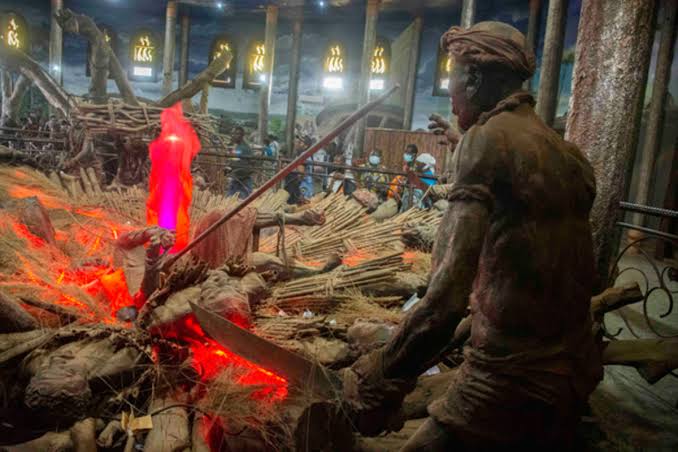
Every year on the third of June, the roads northeast of Kampala stop being roads and become a river of people. Pilgrims arrive on foot from Kasese, Gulu and Mbarara, some after walking for weeks, carrying rosaries, water bottles and sleeping mats, bound for a patch of ground in Namugongo where, in 1886, a group of young Christian pages of King Mwanga's court were burned alive for refusing to renounce their faith. It is the largest religious gathering in East Africa, and in a normal year it counts its visitors in the millions.
This year was not a normal year. On 3 June 2026, with Uganda in the grip of a Bundibugyo-strain Ebola outbreak, both the Catholic shrine and the neighbouring Anglican site were noticeably quieter than in living memory. Health workers screened and sanitised everyone who came; prayer sessions were staggered; the Vatican's envoy offered prayers for Ebola victims and health workers; and only a handful of foreign pilgrims made the journey. Yet the shrine held, and the story of Namugongo, as it so often has, became one about endurance.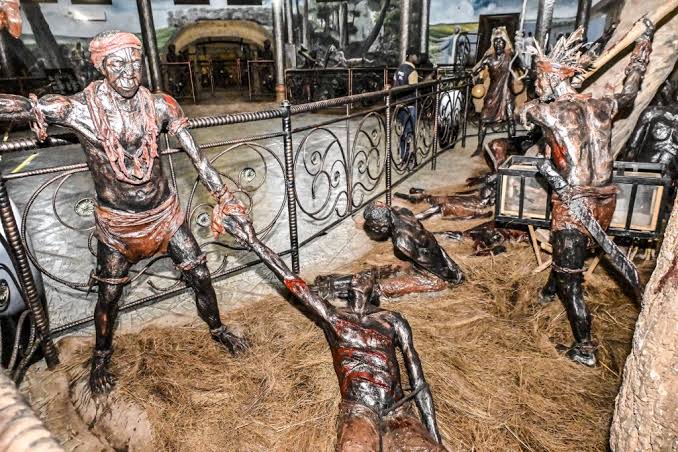
The Ground and Its Story
Namugongo sits about fifteen kilometres from central Kampala, close enough that the city's sprawl now laps at its edges. The martyrdom it commemorates took place between 1885 and 1887, when Kabaka Mwanga II, alarmed by the growing influence of Christian converts among his courtiers, ordered executions. On 3 June 1886, Charles Lwanga and a group of companions were bound, carried to Namugongo and burned on a pyre. In all, 45 Catholic and Anglican converts are remembered as the Uganda Martyrs; 22 of them were canonised by Pope Paul VI in 1964. Three popes have since come to pray here: Paul VI in 1969, John Paul II in 1993, and Francis in 2015.
Two shrines now share the story. The Catholic Basilica, consecrated in 1975, is designed after a traditional African hut, its conical roof carried on twenty-two copper-clad pillars, one for each Catholic martyr, so that the building seems to stand in a ring of remembrance. A lake was dug beside it, and a boat-shaped pavilion holds the open-air altar where the great Martyrs Day Mass is celebrated. Beneath the altar are rooms that include the bedroom Pope Francis used on his 2015 visit. A short distance along the road stands the Anglican Martyrs' Shrine, with its own church and a small museum, and the two communities mark the day side by side.
What a Visit Feels Like
Outside the pilgrimage season, Namugongo is a place of unusual quiet. Visitors wander the grounds under old trees, walk to the spot where the execution pyre is believed to have stood, and read the martyrs' names. Guides tell the story of Lwanga, who was a catechist and a page, and of the youngest, Kizito, who was about fourteen. The museum and the lakeside give the visit a contemplative rhythm; most people come for an hour or two, though a morning gives time to see both shrines properly.
The shrine is not only for the devout. Historians come for the story of how a young Church survived a king's wrath, and travellers who have just spent days among gorillas and savannah find that Namugongo adds a dimension to a Ugandan itinerary: the country's human story, set beside its wild one. It combines easily with a morning in Kampala or a last day before the airport at Entebbe, roughly an hour or more away depending on the notorious traffic.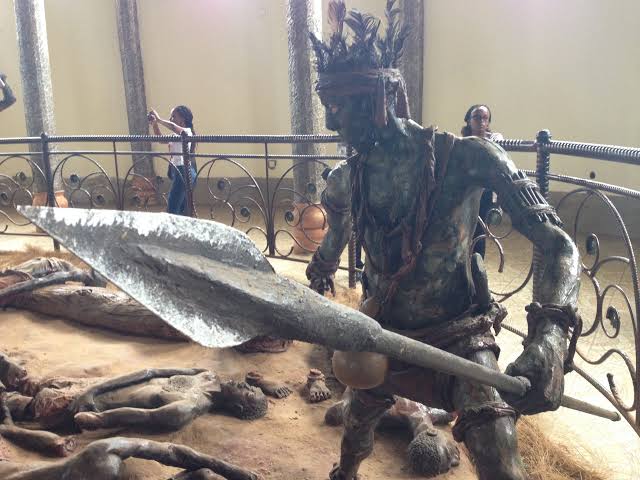
Practical Information
Namugongo lies off the Kampala–Jinja road on the city's northeastern edge. A private car or a hired driver is the simplest way to reach it; boda-bodas and taxis also serve the area, though traffic on the Northern Bypass and Jinja Road can add considerable time. Dress modestly, since this is an active place of worship, and expect to remove hats and keep voices low near the altar. Photography is generally welcome in the grounds but should be discreet during services. Entry arrangements and any donation or guide fees vary by site and season, so confirm locally with the shrine office or your tour operator before you go.
The date that matters is 3 June, Martyrs Day, a public holiday. Travellers who want the full spectacle should plan months ahead, book accommodation in Kampala well in advance, and be prepared for enormous crowds and long walks. Those who prefer solitude will do better on an ordinary weekday, or in the dry months of December to February and June to September, when the roads are easier. Normal health precautions apply, and the Ministry of Health's current guidance should be checked before travel.
This Week in Ugandan Tourism
26 October — At the fifth Uganda–Kenya Coast Tourism and Innovation Summit in Mombasa, the Association of Uganda Tour Operators and its Kenyan counterpart signed a memorandum on sustainable regional tourism. The Uganda and Kenya travel-agent associations (TUGATA and KATA) signed another, and the Private Sector Foundation Uganda agreed to cooperate with the Mombasa chamber of commerce on trade and investment (allAfrica).
11 October — Travel-trade media reported the launch of a single East Africa Tourist Visa covering Uganda, Kenya and Rwanda: US$100, multiple entry, valid 90 days. The report cites no official source and gives no start date, so travellers should confirm with immigration authorities (Travel And Tour World).
1 October — Uganda hosted its first African dragon boat racing competition on Lake Victoria at Kawuku in Wakiso, with teams from across Africa and beyond, as listed by the Uganda Tourism Board.
30 September — The Uganda Tourism Board met Germany's Import Promotion Desk to discuss growing Uganda's European tourist market.
28 August — The World Health Organization certified the end of the Bundibugyo-virus Ebola outbreak after 42 days without a new confirmed case, clearing the main cloud over the 2026 tourist season, according to the Uganda Tourism Board.
The Last Word
The recovery from this year's quiet Martyrs Day will not be measured in a single season, but with the Ebola outbreak officially over and regional visa and marketing deals taking shape, the pilgrimage economy around Namugongo has reason to expect a fuller crowd on 3 June 2027. For now, the shrine waits as it always has: the lake still, the pillars ringed in copper, the ground itself holding a story that Uganda has chosen, every year for 140 years, to walk toward.



