Written By |
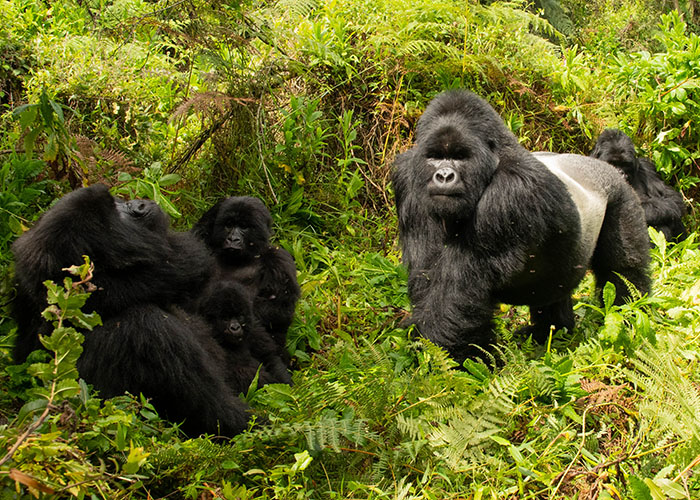
The park was gazetted as a national park in 1991 and later inscribed as a UNESCO World Heritage Site, recognised for its extraordinary biodiversity and its role in protecting the endangered mountain gorilla.
TOURISM
The first thing you notice in Bwindi is the sound of nothing in particular: water dripping from a thousand leaves, a distant turaco, your own breath on the climb. Then the tracker ahead raises a hand, the guides fall silent, and a few metres away a wall of green rearranges itself into a silverback, chewing a stem with the unhurried calm of someone who has nowhere else to be. For one hour, you are a guest in a family's living room, and the family has the right of way.
That hour is the reason Bwindi Impenetrable National Park, tucked into the misty folds of south-western Uganda, sits at the top of so many travel wish lists. It is also the reason that, on a Monday in early November, the park remains the beating heart of Uganda's tourism story.
A Forest Older Than Memory
Bwindi's tangled montane and lowland forest covers the steep ridges of Kanungu, Kabale and Kisoro districts along the border with the Democratic Republic of Congo. It is among the oldest and most biologically rich forests in Africa, a refuge that survived the climatic upheavals that erased much of the continent's forest cover over the millennia. The name says it plainly: impenetrable. Slopes are sharp, the undergrowth dense, and the weather capable of turning a clear morning into a drenching afternoon. The park was gazetted as a national park in 1991 and later inscribed as a UNESCO World Heritage Site, recognised for its extraordinary biodiversity and its role in protecting the endangered mountain gorilla.
Roughly half of the world's surviving mountain gorillas live here. Beyond them, the forest shelters chimpanzees, forest elephants, several species of monkeys, hundreds of butterflies and a long list of birds, including Albertine Rift endemics that draw birders from across the world. Recent conservation news underlines the point: a first census reported by Ugandan media earlier this year counted 426 chimpanzees in the Bwindi landscape, a reminder that the forest's value reaches well beyond its celebrity primates.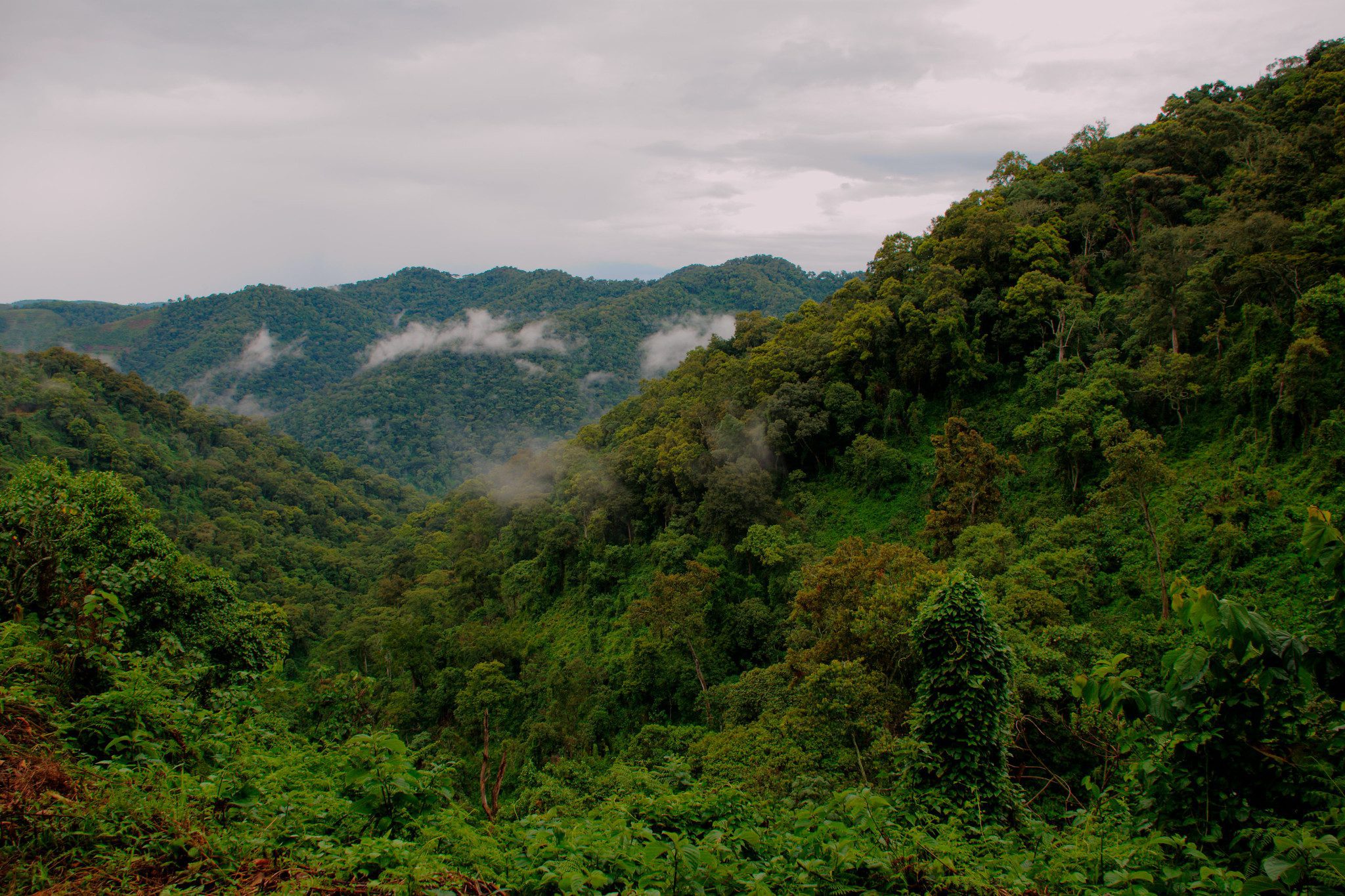
Four Doors Into the Forest
Visitors enter Bwindi through four trekking sectors, each with its own character. Buhoma in the north is the oldest and most established, with a lively community of lodges and craft makers. Ruhija in the east, high and cool, is a favourite of birders. Rushaga in the south offers the largest number of habituated gorilla groups, while Nkuringo in the south-west rewards trekkers with dramatic views over terraced hills and volcanoes on the horizon. About two dozen gorilla families are habituated for tourism. Each is visited by a single group of up to eight people for one hour, which caps the park at roughly 190 permits a day. That scarcity is deliberate: it keeps stress on the animals low and keeps the experience intimate.
Treks can last anywhere from under two hours to most of a day, depending on where the family spent the night. Trackers set out at dawn to find the gorillas' nests, and guides brief visitors on conduct: stay seven to ten metres back where possible, keep your voice low, no flash photography, and no trekking when ill. The minimum age is 15. Porters, who can be hired locally for a modest fee quoted at around US$20, carry bags, steady elbows on slippery slopes and put money directly into village households. Many visitors say hiring one was the best decision of the trip.
Planning Your Visit
A gorilla permit for foreign non-residents is quoted at US$800, with lower rates published for foreign residents, other African nationals and East African citizens, who pay UGX 300,000 according to current operator guides. Permits are booked through the Uganda Wildlife Authority or a licensed tour operator and are tied to a specific sector and date, so book early for the busiest months. Always confirm current rates with the Uganda Wildlife Authority before paying, as fees and promotions change.
The drier seasons, roughly June to August and December to February, bring easier trails and the heaviest demand. The wetter months of March to May and September to November mean muddier slopes and fewer visitors, and occasionally attractive promotions on permits and lodging. Pack waterproofs, sturdy boots, gloves for gripping vegetation and long sleeves against nettles. Getting there takes eight to ten hours by road from Entebbe or Kampala, or about ninety minutes by scheduled or charter flight to the airstrips at Kihihi or Kisoro. From Kigali in Rwanda, the southern sectors are a four-to-five-hour drive. Many travellers combine Bwindi with Queen Elizabeth National Park to the north and the serene Lake Bunyonyi to the south.
Beyond gorilla trekking, the park offers habituation experiences where visitors spend longer with a group still getting used to people, guided forest walks, birding, waterfall hikes, and village encounters that include the Batwa, the forest's original people, whose cultural trails share songs, medicinal plant knowledge and hunting traditions. Bookings through Batwa-led initiatives help ensure benefits reach the community most affected by the park's creation.
Why It Matters for the Country
Gorilla tourism is one of Uganda's most valuable products. Ugandan press has reported gorilla tourism revenue approaching Shs110 billion as the mountain gorilla population grows, evidence that high-value, low-volume tourism can pay for protection. A share of permit income and park-entry revenue goes to communities around the park, funding schools, health centres and clean water, which gives families living at the forest edge a direct stake in keeping it standing. The model is not without strain: crop raiding, habitat pressure at the park boundary, and the risk of human disease passing to gorillas all demand constant management. For visitors, the practical lesson is simple: follow the rules, because the rules are why the gorillas are still there.
This Week in Ugandan Tourism
30 October 2026 — Tourism Satellite Account released. New figures for 2024 put tourism's direct contribution to GDP at UGX 6.99 trillion (3.3 percent), with some 876,500 people directly employed, about 7.5 percent of total employment, according to figures reported by Travel And Tour World on 2 November.
Reported 2 November 2026 — Visitor spending jumps in the first half of the year. International visitor spending rose 25.6 percent year on year to about UGX 2.30 trillion (US$631 million) in the first half of 2026, while arrivals grew 3.7 percent and the average stay lengthened from 7.4 to 8.3 nights, a sign of higher-value travellers.
6 October 2026 — US$5 billion by 2030. The Ministry of Finance reaffirmed the target of US$5 billion in annual tourism receipts by 2030. Uganda recorded about 1.64 million arrivals and roughly US$1.62 billion in receipts in 2025.
Announced mid-October 2026 — Tour operators' gala moved to 27 November. The Association of Uganda Tour Operators, which represents more than 400 members, has rescheduled its annual gala from 17 October to 27 November under the theme "Sustainable Tourism, Shared Responsibility". The Uganda Tourism Board says sustainability credentials increasingly matter to overseas agents, and training for operators is planned ahead of the event.
Ongoing — AFCON 2027 partnership. The Uganda Tourism Board and the Confederation of African Football have agreed a partnership to showcase the Pearl of Africa during the 2027 Africa Cup of Nations, which Uganda co-hosts, positioning the event as a shop window for the country's attractions.
The Last Word
Bwindi will not reward the hurried. It asks for early starts, wet boots and patience, and in exchange gives one of the few encounters left on Earth that genuinely humbles. As Uganda chases higher spending, longer stays and a US$5 billion future, the forest offers a quiet argument for how to get there: protect something extraordinary, limit how many people see it, and make sure the people living beside it share the rewards.



