PIKETON, OHIO
For nearly fifty years, the fields outside this speck of a town in Ohio's Appalachian foothills held one of America's most dangerous secrets: a sprawling gaseous diffusion plant that enriched uranium for the country's nuclear arsenal, humming behind barbed wire while generations of local workers came home each night not knowing exactly what they'd breathed in that day. The plant went dark in 2001. Cleanup crews are still there today, scraping asbestos and uranium hexafluoride residue out of the buildings.
Now the same patch of land is about to become something almost as strange: the beating heart of the artificial intelligence economy, and the site of what may be the single largest financial guarantee one company has ever offered another.
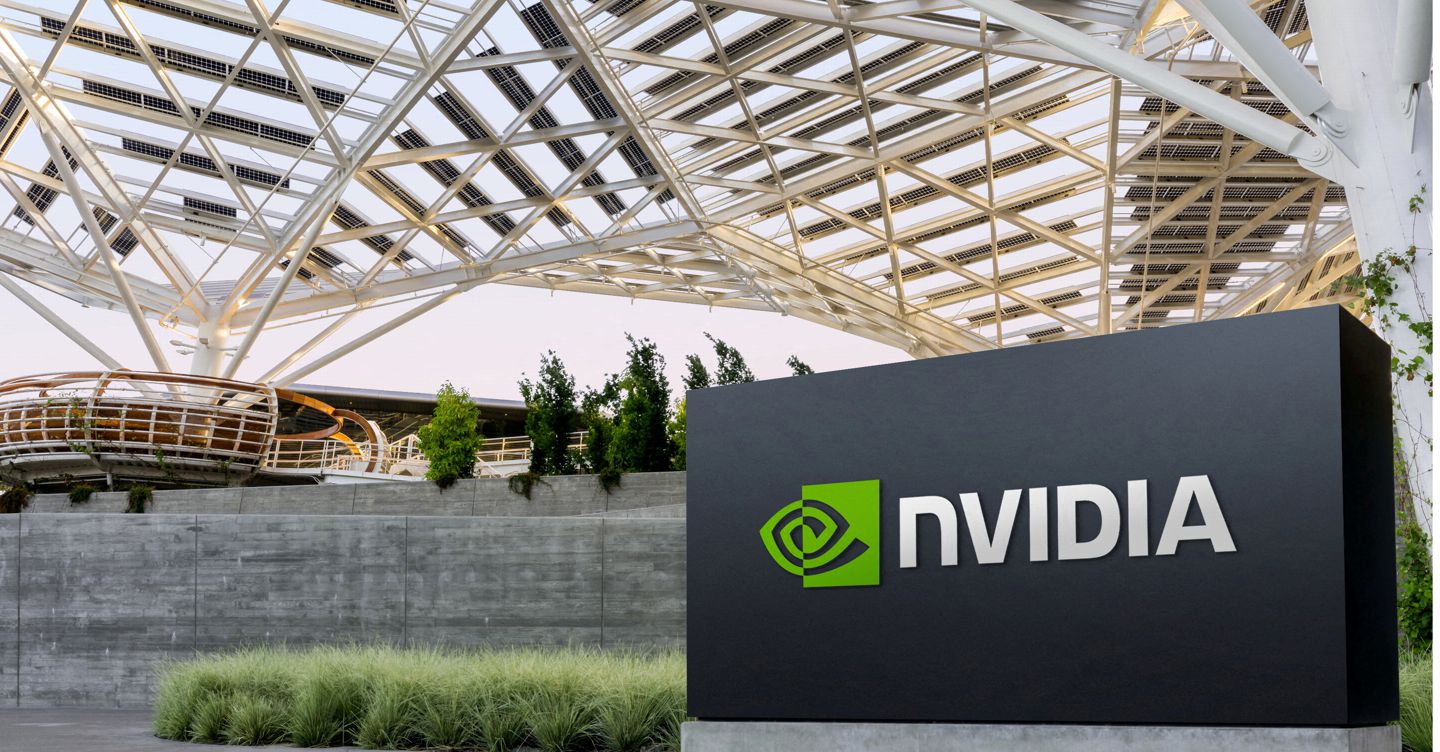
According to a Wall Street Journal report that detonated across financial media over the weekend, chipmaker Nvidia is in advanced talks to backstop roughly $250 billion in financing so that OpenAI — the maker of ChatGPT — can lease and build out a colossal 10-gigawatt data center campus on the grounds of the old Portsmouth Gaseous Diffusion Plant, now rebranded by the Department of Energy as the "PORTS Technology Campus." Separately, Nvidia and OpenAI have discussed financing arrangements for chip purchases that could add another $350 billion on top of that. All told, people briefed on the talks say the full campus, developed in phases, could cost more than $500 billion to complete.
To put that number in perspective: $500 billion is more than the annual GDP of Poland, Belgium, or Sweden. It is more than NASA has spent, total, across its entire 67-year history. And it would be spent building server halls on top of a former nuclear weapons site that, as of this month, is still not finished being decontaminated.
A DEAL THAT LOOKS AN AWFUL LOT LIKE A CIRCLE
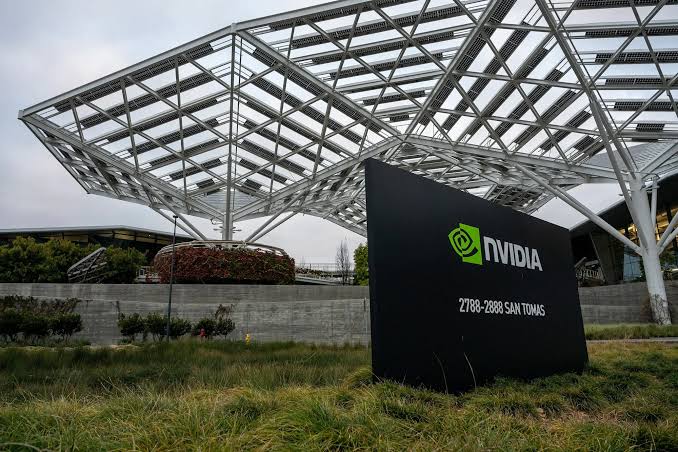
Here is the part that has veteran investors reaching for the antacids: the financing arrangement, as described to the Journal's sources, would have Nvidia guarantee the debt that OpenAI takes on to lease the data center and to buy — you guessed it — Nvidia's own chips. OpenAI, despite being valued in the hundreds of billions of dollars on paper, does not carry an investment-grade credit rating, which under normal circumstances would make lenders nervous about financing anything this size. Nvidia's backstop is designed to solve that problem by putting Nvidia's own balance sheet behind the loans.
In plain English: the world's most valuable chip company would be guaranteeing that OpenAI can borrow the money to buy computers from Nvidia.
"Around and around we go," wrote Michael Burry — the investor made famous by "The Big Short" for correctly calling the 2008 mortgage collapse — in a post on X over the weekend reacting to the report. "Nvidia to guarantee $200 billion of ChatGPT's spending on $NVDA chips." Burry had already disclosed days earlier that he'd added to his short position against Nvidia stock, alongside bearish bets against Micron, Caterpillar, and a leading semiconductor ETF.
Tech commentator Ed Zitron, a longtime and vocal critic of what he calls the AI industry's "bubble" economics, went further. "This is such an insane thing to do on so many levels and it is about as bearish as it gets, especially considering this it is being built BY SOFTBANK!" Zitron wrote, pointing to the involvement of the Japanese conglomerate that also backed WeWork before its spectacular collapse. "Also where's the money gonna come from? Very silly stuff all round."
The developer building the actual campus is SB Energy, the energy subsidiary of SoftBank Group. Under the current plan, the first phase — about 800 megawatts of capacity, less than a tenth of the eventual 10-gigawatt buildout — is expected to come online by 2028. Microsoft, Google, and Anthropic have all reportedly expressed interest in the site as well, suggesting Piketon could eventually host racks belonging to more than one of the world's largest AI labs.
Nvidia's stock dipped slightly on the news, closing down 0.92% at $206.84 on Friday before slipping a touch further in after-hours trading. It was a modest move for a story this size — a sign, perhaps, that after eighteen months of ever-larger AI infrastructure numbers, Wall Street's capacity for sticker shock has been thoroughly exhausted.

WHY A DEAD URANIUM PLANT, OF ALL PLACES
The choice of location is not an accident, and it is not sentimental. The Portsmouth Gaseous Diffusion Plant went into operation in 1954 and ran for nearly half a century, at its peak standing as one of only three uranium enrichment sites in the entire United States and a major contributor to the nation's Cold War nuclear stockpile. The Department of Energy leased it to a private operator, USEC, in 1993, kept it in "safe standby" status after enrichment ended in 2001, and took the site back for full decontamination and demolition in 2011. That cleanup is, by the DOE's own account, still not finished — the grounds still contain uranium hexafluoride processing residue, asbestos, lead, and contaminated groundwater left over from decades of weapons-grade work.
What the site does have, however, is exactly what data center developers are desperate for everywhere else in the country and struggling to find: enormous existing grid connections, huge quantities of water for cooling, heavy industrial permitting already on the books, and a workforce with decades of experience handling large, complex federal facilities. Reusing a site like this sidesteps the single biggest bottleneck now facing the AI industry — the multi-year wait to connect a new mega-facility to the power grid.
Energy Secretary Chris Wright, Commerce Secretary Howard Lutnick, and Interior Secretary Doug Burgum all traveled to Piketon earlier this year to unveil the project, standing alongside SoftBank and SB Energy officials. The Department of Energy has said the campus will eventually draw on roughly 10 gigawatts of new power generation — including a hefty 9.2 gigawatts of natural gas generation — and that SB Energy is partnering with regional utility AEP Ohio on a $4.2 billion investment in new transmission lines and grid upgrades just to make that possible. For scale, 10 gigawatts is roughly enough electricity to power eight million American homes.
Locals in surrounding Pike County have decidedly mixed feelings. A long-running local television investigation, dubbed "Fallout" by Cincinnati's Local 12, has spent years documenting elevated rates of illness among former plant workers and residents near the site, and a community watchdog group called Stop Ohio Data Centers has organized against the buildout, citing both the unresolved contamination and worries about noise, water use, and the natural gas plants needed to power the campus. Supporters counter that the project promises thousands of construction jobs and a tax base transformation for one of the poorer corners of the state.
THE BUBBLE QUESTION NOBODY CAN ANSWER
Burry and Zitron are far from the only skeptics, but their timing captures something that has been building in the market for months. July 2026, by the reckoning of several industry trackers, is the month the AI story stopped being purely about what the models can do and became just as much about who is actually paying for all of it — and whether the money adds up. Circular financing arrangements, where AI chipmakers help fund the very companies that buy their chips, who in turn use those chips to justify more spending, have become common enough that analysts now have a name for the pattern and a growing unease about what happens if the revenue those data centers are supposed to generate doesn't show up on schedule.
Nvidia, for its part, has increasingly positioned itself not just as a chip vendor but as a financier and infrastructure broker for the entire AI buildout — a strategy that lets it lock in demand for its processors years in advance, but one that also means Nvidia's own financial fortunes become entangled with the success or failure of the companies it's underwriting. If OpenAI's revenue growth stalls, or if the AI boom cools faster than expected, Nvidia isn't just watching from the sidelines as a chip supplier — it's on the hook as a guarantor.
Neither Nvidia nor OpenAI has confirmed the terms of the arrangement publicly, and people briefed on the talks caution that nothing is final; the numbers, the structure, and even whether the deal happens at all could still change. But the mere fact that talks of this scale are underway — quarter-trillion-dollar guarantees, on top of hundreds of billions in chip financing, on top of a $500 billion campus — is itself a landmark moment for how the AI industry is choosing to fund its own growth.
EXPERT PERSPECTIVE
Analysts covering the deal for Investing.com described it as signaling "a structural shift in AI infrastructure," arguing that Nvidia's willingness to backstop financing at this scale reflects a deliberate long-term strategy: converting today's hardware dominance into tomorrow's infrastructure control, so that even if individual AI labs rise and fall, Nvidia's chips — and its financing fingerprints — remain baked into the foundation of whichever company ultimately wins. Skeptics like Burry and Zitron see the same maneuver and read it as a warning sign: a company so central to an industry's supply chain that it now has to prop up its own biggest customer's ability to pay.
WHAT THIS MEANS FOR YOU
Even if you've never typed a single prompt into ChatGPT, this deal likely touches you. Data centers of this scale drive up regional electricity demand and, according to multiple recent U.S. energy studies, can push utility bills higher for everyday households living anywhere near the new transmission infrastructure being built to serve them — AEP Ohio ratepayers may eventually see some of that $4.2 billion grid investment reflected on their bills. If you hold index funds or a 401(k) with meaningful tech exposure, Nvidia's balance sheet — and by extension a chunk of the broader stock market — is now more tightly linked to OpenAI's ability to keep paying its bills than it was a week ago. And if you live near Piketon, Ohio, the fight over jobs versus contamination, water use, and gas-plant emissions is no longer hypothetical; it's arriving with bulldozers.
THE BOTTOM LINE
A dead nuclear weapons plant in rural Ohio is set to become one of the most expensive pieces of real estate in the history of computing, financed through a circular arrangement so tangled that even the world's most famous bubble-spotter can't quite believe it's real. Whether Piketon becomes the site that proved AI infrastructure could scale responsibly, or the case study future business schools use to teach the dangers of vendor financing, may not become clear for years. For now, all anyone outside the negotiating room can do is watch the bulldozers move in — and wait to see whether the numbers ever have to add up.
Published By | Tech Wiz