TECHNOLOGY
A Ugandan startup betting that artificial intelligence can solve one of African agriculture's oldest problems — getting capital into the hands of smallholder farmers — has picked up a major continental prize. SANDI AI Technologies, founded by Nabakka Sandra, was named winner of the $50,000 GoGettaz Agripreneur Prize 2026 (reported locally as roughly Shs190 million) on September 13 during the Africa Food Systems Forum 2026 Summit in Kigali, Rwanda, one of the continent's largest annual gatherings on agriculture and food systems. The win puts a Ugandan company at the center of a broader wave of African agritech ventures trying to use data and machine learning to close the financing gap that has long constrained smallholder farming.
The problem SANDI AI is targeting is a familiar one across Uganda and the wider region: farmers who own land, have years of production experience, and sell into established markets are routinely locked out of formal credit because they cannot meet conventional lending requirements such as collateral, land titles banks will accept, or a documented financial history. Traditional lenders, wary of the perceived risk of agricultural lending and lacking data to assess individual farmers, often default to blanket exclusion rather than case-by-case evaluation. The result is a persistent working-capital shortage that limits what smallholders can invest in seeds, fertilizer, equipment or expansion each planting season, even when their underlying farming operations are productive and creditworthy in practice.
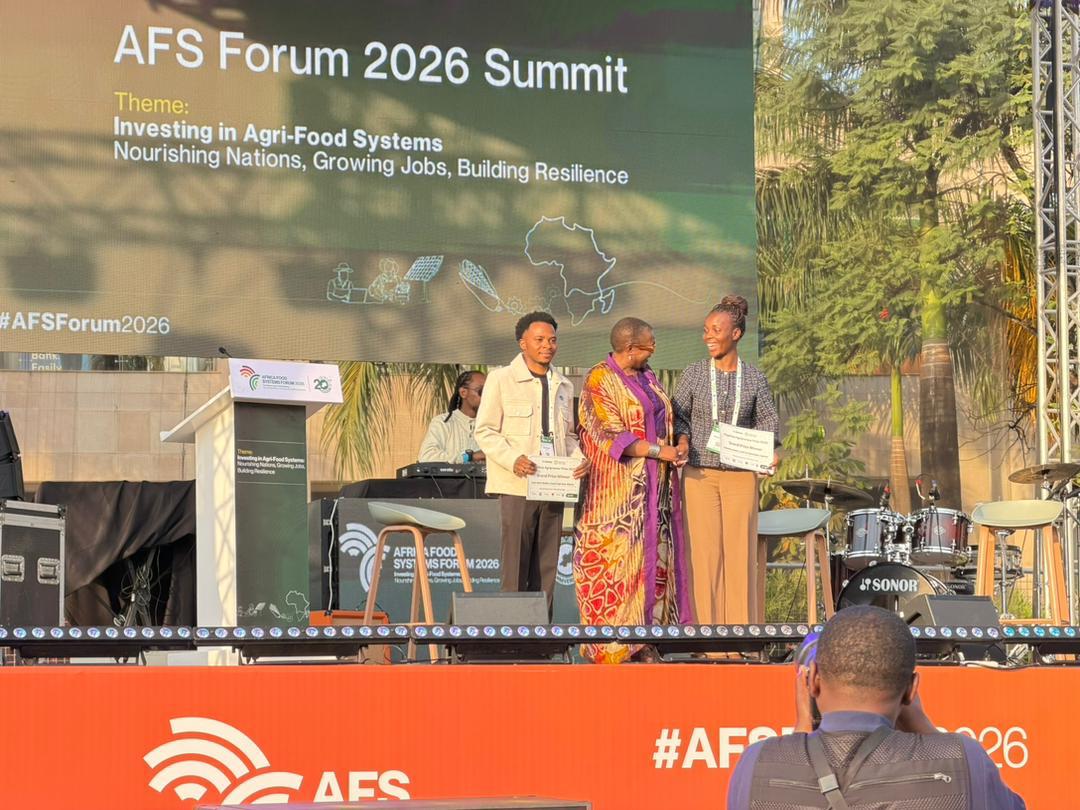
SANDI AI's approach is to combine agricultural data — such as production history, farming practices and market activity — with financial assessment tools to build an alternative risk profile for each farmer, one that lenders can use in place of, or alongside, traditional collateral and credit-history requirements. In effect, the platform acts as a translation layer between the realities of smallholder farming and the risk models that banks and microfinance institutions already use to make lending decisions, aiming to make farmers legible to a financial system that was not originally built with them in mind. By giving lenders a more accurate, data-backed picture of a farmer's likely repayment capacity, the model is designed to unlock loans that would otherwise be denied on paperwork grounds alone, without requiring lenders to take on additional risk than they currently accept for other borrower segments.
Founder Nabakka Sandra framed the venture's mission in explicitly corrective terms, arguing that the exclusion of smallholder farmers from formal finance is a design failure rather than an inevitability. "Farmers should not be limited by systems that were not designed around their realities," she said following the award. Her comments point to a broader critique running through much of Africa's fintech and agritech sector in 2026: that conventional financial infrastructure was largely built around urban, salaried, or asset-heavy borrowers, leaving rural and informal economic activity — which employs the majority of Uganda's population — persistently underserved despite representing a large and creditworthy base of economic activity when properly assessed.
The GoGettaz Agripreneur Prize itself is a pan-African competition that recognizes early-stage ventures working on agricultural innovation, and SANDI AI's win places it among a small cohort of standout companies singled out annually for their potential to scale across the continent. According to reporting on the award, SANDI AI plans to direct the $50,000 in prize funds toward three priorities: further product development to refine its risk-assessment tools, business expansion into new markets, and outreach to additional farming communities that have not yet been reached by the platform. Beyond the immediate use of funds, Sandra has articulated a more ambitious goal of scaling the underlying model across Africa, with the explicit aim of making agricultural financing "smarter, fairer and more inclusive" for a farming population that remains, by most measures, one of the most underserved segments of the continent's financial system.
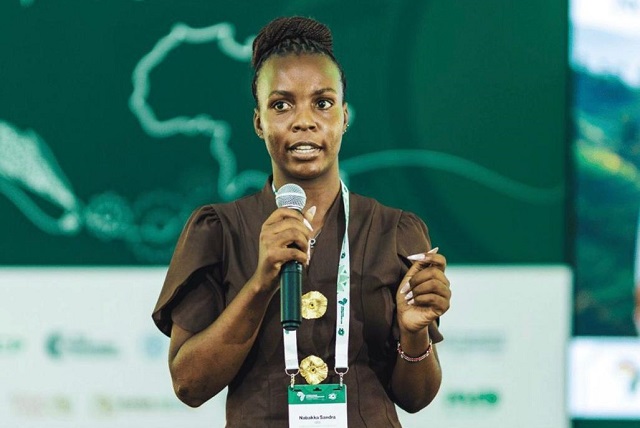
The award also lands amid a broader push by the Ugandan government to position the country as a hub for artificial intelligence and digital infrastructure investment. Officials have set out ambitions tying AI and digital infrastructure development to the country's long-term economic growth targets, framing technology adoption — including in traditionally low-tech sectors like smallholder agriculture — as a lever for structural transformation of the economy. SANDI AI's win, alongside a broader cohort of Ugandan startups working in agritech and fintech, offers a concrete example of that strategy playing out at the company level: rather than treating agriculture and AI as separate policy tracks, ventures like SANDI AI are explicitly building AI tools for the agricultural sector that employs most of the country's workforce.
Why it matters extends beyond one company's prize money. Agriculture remains the backbone of Uganda's economy and the primary livelihood for the large majority of its population, yet access to affordable working capital has long been cited by farmers, cooperatives and development economists alike as one of the single biggest constraints on productivity and income growth in the sector. If AI-driven credit-scoring tools like SANDI AI's can reliably and safely expand the pool of farmers judged creditworthy by formal lenders, the effect could ripple through rural incomes, input use, and ultimately national food production, without requiring lenders to relax their underlying risk standards. The approach also reflects a broader pattern across African fintech, where alternative data — mobile money records, agricultural yield data, satellite imagery — is increasingly being used to build credit profiles for populations that lack conventional financial records, a trend that has already reshaped lending in sectors like small business finance and consumer credit elsewhere on the continent.

Looking ahead, the key indicators to watch will be how quickly SANDI AI can translate its prize recognition and funding into actual partnerships with banks, microfinance institutions or agricultural cooperatives willing to lend against its risk assessments, and how many farmers are actually able to access new credit as a result. Prize wins and media attention are a common milestone for African startups, but the harder test comes in demonstrating measurable loan disbursement, repayment performance, and farmer income impact at scale. Investors and development finance institutions focused on agricultural inclusion are likely to watch SANDI AI's next twelve months closely as a bellwether for whether AI-based alternative credit scoring can meaningfully move the needle on smallholder financing in East Africa, and whether Uganda's broader ambitions to be seen as a regional AI and agritech hub are backed by ventures capable of scaling beyond a single national market.
Published By | Tech Wiz