Science & Technology
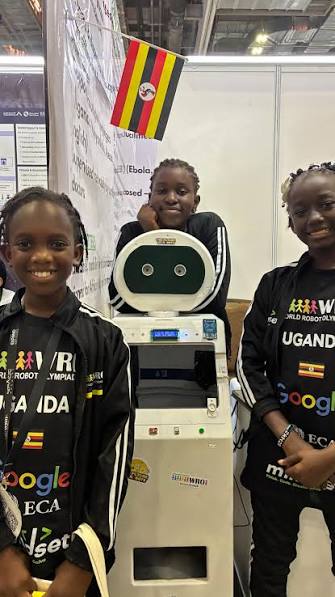
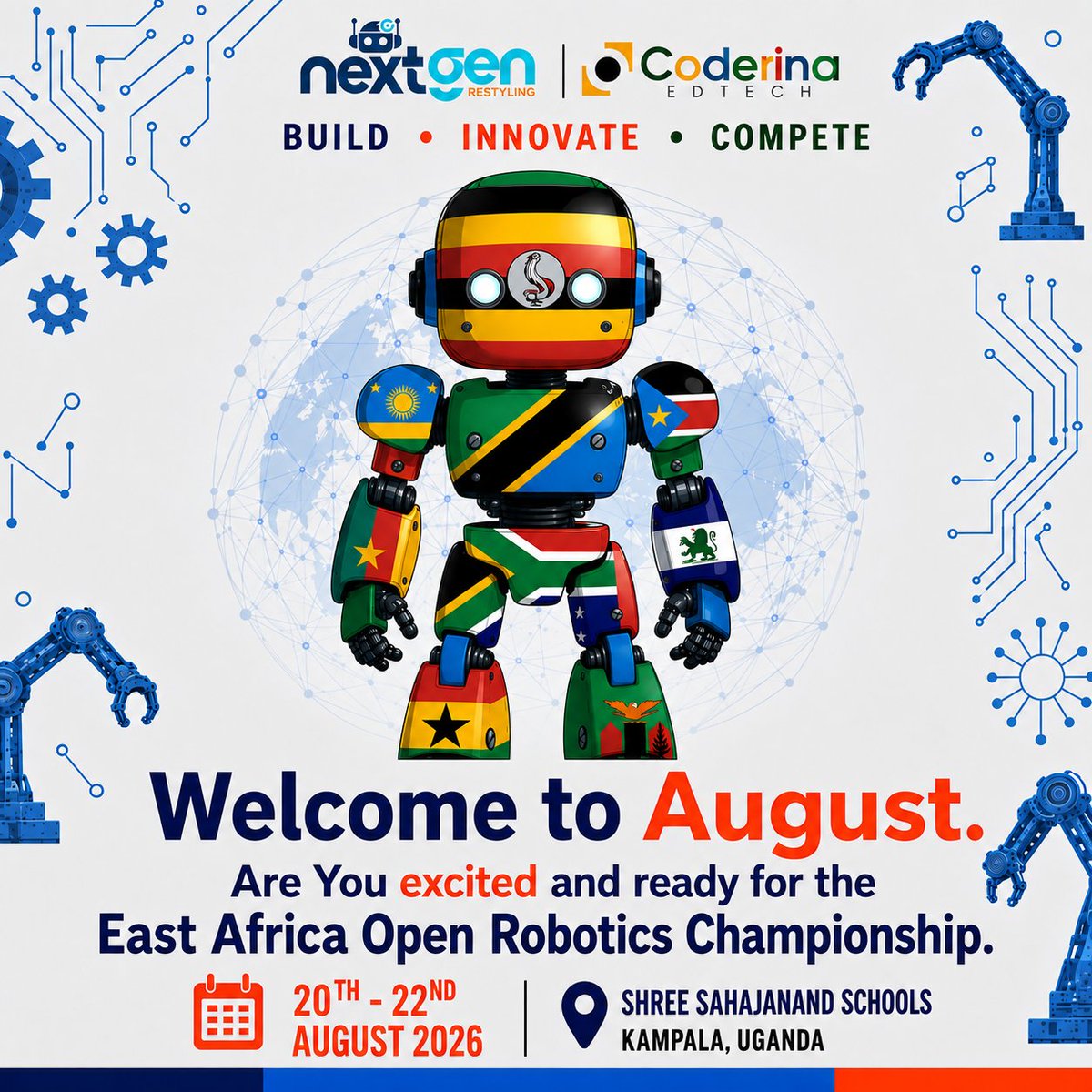
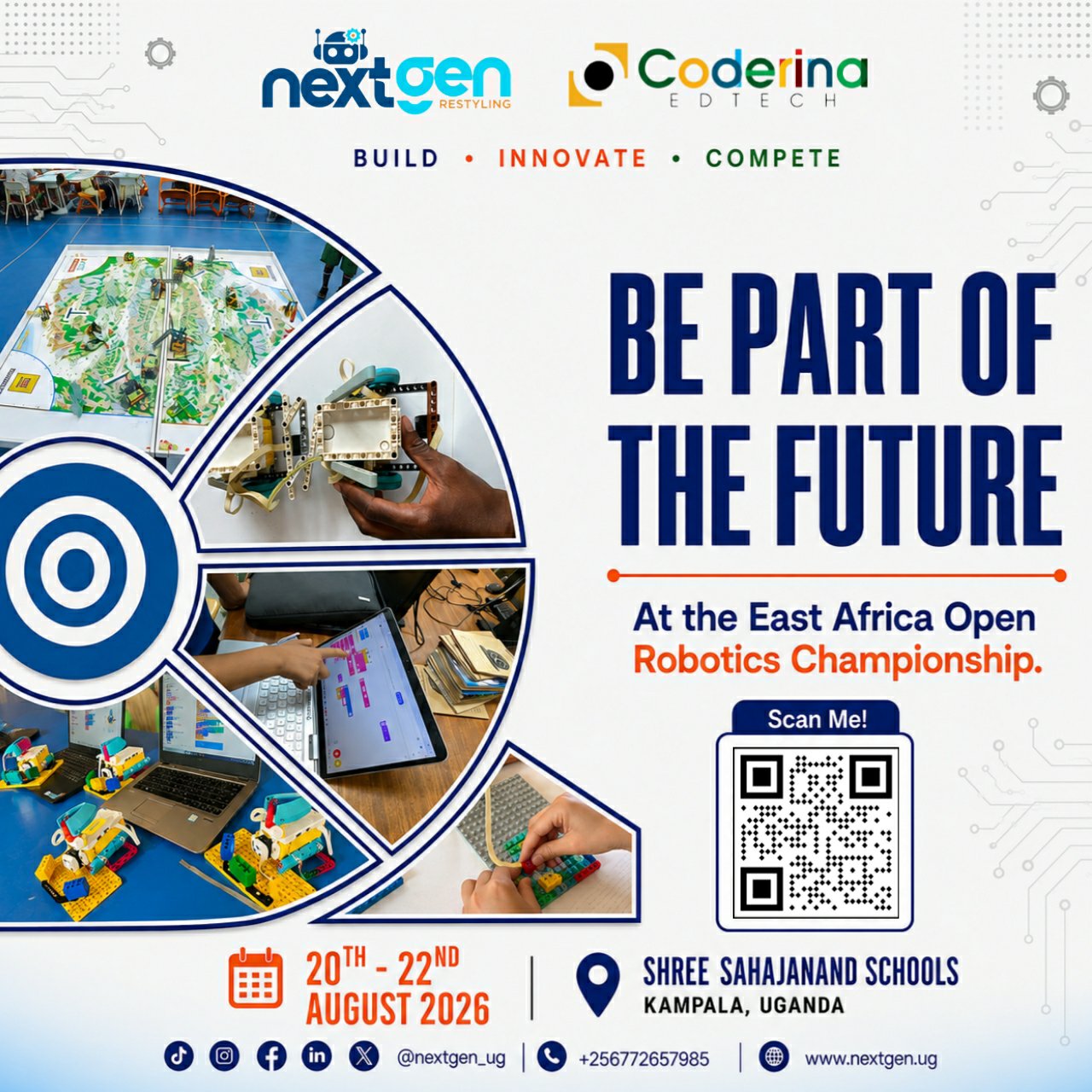
Uganda will next week host the inaugural East Africa Open Robotics Championship, a three-day competition running from August 20 to 22 in Kampala that organisers describe as the first regional robotics event of its kind, drawing young innovators from across East Africa and beyond. The championship is being organised by NextGen Restyling Uganda in partnership with the Ministry of Education and Sports, the Uganda Communications Commission (UCC), and WorldSkills Uganda, and is being framed by its backers as a landmark moment for STEM education in the country.
What the Championship Involves
Teams of young people will design, build and programme autonomous robots to complete a series of engineering challenges, competing across categories that test creativity, teamwork and applied problem-solving. Organisers say participants are expected from Uganda, Kenya, Tanzania and Rwanda, as well as from further afield, including South Africa, Nigeria, Ghana, Sierra Leone, Cameroon, Zambia and Cambodia, giving the Kampala event an international profile well beyond a typical school competition. The championship is explicitly aligned with Uganda's competency-based curriculum, which has been progressively rolled out in secondary schools to emphasise practical, skills-based learning over rote instruction, and with the government's stated national development priorities around science, technology and innovation.
Building on a Growing National Movement
The August championship does not emerge from nowhere. It follows Uganda's third National STEM and Robotics Skills Competition, held in December 2025 at Kabojja International School in Kampala, which brought together roughly 380 learners organised into 48 teams from 30 government, private and international schools, with participants ranging in age from four to 25. At that event, Holy Cross Lake View Secondary School won the First Lego League category, focused on applied science and technology, earning the school a place representing Uganda at the World Advanced League in the United States. Host school Kabojja International School won the First Tech Challenge category, with Kololo Senior Secondary School finishing second. That domestic competition, also organised by NextGen Restyling under WorldSkills Federation Uganda, was cited by organisers as the platform from which Uganda secured the right to host the new regional championship.
Who Is Driving It
Mellon Kenyangi, founder of NextGen Restyling Limited, has been the public face of the initiative, describing the broader competition series as a deliberate investment in Uganda's future workforce rather than a one-off showcase. "We are building innovators, not job seekers," Kenyangi has said of the programme's goals. On the government side, the Ministry of Education and Sports and the UCC have backed the STEM and robotics competitions as part of a wider push, echoed at Uganda's National Science Week 2026, to shift the country's innovation strategy from what officials have called "pathfinding" to "acceleration" in support of Uganda's long-term ambition to build a $500 billion economy. WorldSkills Uganda's involvement ties the competition into an internationally recognised framework for benchmarking technical and vocational skills.
Why It Matters
The championship arrives at a moment when Uganda's government is actively trying to translate youthful demographic weight into an economic asset rather than a liability. Youth unemployment in Uganda remains elevated, estimated at close to 18 percent and driven in large part by a mismatch between graduates' skills and the demands of a modernising economy. Robotics and STEM competitions are positioned by both government and private organisers as one practical response: a pipeline that exposes secondary school and university-age Ugandans to engineering, coding and applied design skills years before they enter the labour market, while also building the kind of technical talent base that could support Uganda's stated ambitions in areas like digital transformation, manufacturing and, eventually, the country's nascent oil and gas sector, which will need locally trained technical personnel. Hosting a regional championship also raises Uganda's profile as a STEM education hub within East Africa, alongside competing national programmes such as Uganda's World Robot Olympiad chapter.
What to Watch
The championship also lands amid a broader flurry of activity in Uganda's science and technology space this year. Uganda has separately partnered with Kenya and Egypt on CLIMCAM, a regional weather-monitoring system expected to be commissioned around the same period, part of a wider pattern of Ugandan participation in cross-border African science initiatives. At the policy level, National Science Week 2026 was built around the theme of moving Uganda from "pathfinding" to "acceleration" in pursuit of the government's long-stated goal of a $500 billion economy, with officials repeatedly pointing to homegrown STEM talent as a precondition for that growth. Robotics competitions of this kind are increasingly framed by Ugandan officials not as extracurricular showcases but as a direct pipeline into that strategy, feeding into technical and vocational training programmes recognised internationally through WorldSkills.
Private-sector and telecom involvement has also been a recurring feature of Uganda's STEM push this year, with companies in the telecommunications and technology space periodically backing school competitions, hackathons and digital-skills programmes as part of broader corporate social responsibility and talent-pipeline strategies. Organisers of the Kampala championship have said they hope the visibility of an international competition will help attract further sponsorship of this kind, both to fund travel and equipment costs for participating Ugandan schools — a persistent barrier for government schools competing against better-resourced private and international institutions — and to seed longer-term partnerships between competition winners and local employers or universities.
In the near term, attention will be on how smoothly Kampala manages an event of this scale and international reach, and on which schools and countries perform best across the various robotics categories. Longer term, the more consequential question is whether the momentum around events like this translates into sustained investment — from government, telecoms operators, and private sponsors — in STEM infrastructure at ordinary government schools, rather than remaining concentrated among the private and international schools that have so far dominated national competition results. Whether Uganda can parlay hosting rights for this inaugural regional championship into a recurring annual fixture, and whether the pipeline of young competitors seen at events like the Kabojja competition ultimately shows up in Uganda's broader innovation and employment statistics in the coming years, will be the real test of whether this week's championship is a genuine turning point or simply a well-publicised showcase.
Published By | Tech Wiz