Written By | Torch Media Africa
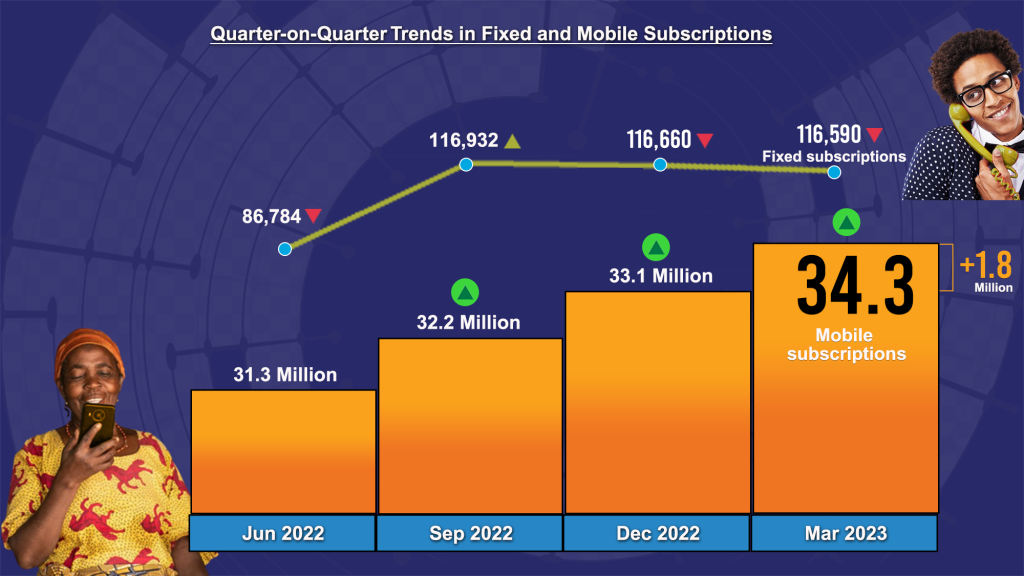
Uganda's telecommunications sector has just posted the best quarter in its history. [Graphics: UCC]
SCIENCE & TECH
Uganda's telecommunications sector has just posted the best quarter in its history. Between April and June 2026 the industry recorded gross revenue of UGX 1.73 trillion, up from UGX 1.60 trillion in the preceding quarter and above the UGX 1.66 trillion of December 2025 and UGX 1.62 trillion of September 2025. The Uganda Communications Commission attributes the rise to data demand, a widening active subscriber base and continued growth in mobile money. On the numbers alone, this is one of East Africa's better digital stories.
Six months before that quarter began, on 13 January 2026, the same regulator ordered every internet service provider in the country to suspend public internet access from 18:00 local time, two days before a general election. The shutdown lasted almost five days. Both facts are true, and they are not in tension — which is precisely the problem. Uganda has built genuine digital depth on top of infrastructure that can be switched off by administrative instruction, and that combination, rather than coverage or affordability, is now the binding constraint on what the sector can become.
The depth is real
Start with the build-out, because it is substantial. Registered mobile subscriptions stood at 64.6 million at the end of June 2026, with active subscriptions — SIMs used at least once in ninety days — at 49 million, up from 47.5 million three months earlier. Active mobile internet subscriptions, measured on a thirty-day window, rose from 17.9 million to 19.7 million in a single quarter. Telecom towers increased from 5,578 to 5,663, and fibre-optic coverage expanded from 71,740 kilometres to 80,257 kilometres — an addition of more than 8,500 kilometres in three months.
Usage is deepening as well as widening. Average monthly spending per user rose to UGX 15,349 in June from UGX 10,932 the previous quarter, with the average monthly data bill climbing from UGX 6,118 to UGX 10,841 and average consumption reaching 3.7 gigabytes per user per month. On-net voice traffic fell to 20.4 billion minutes from 20.9 billion, the familiar signature of a market migrating from circuit-switched calling to internet-based communication.
The payments layer is the deepest part. Bank of Uganda figures reported through the UCC show active mobile money subscriptions at 37.8 million and transaction volumes rising from 2.37 billion to 2.55 billion in the June quarter. For an informal sector that employs the large majority of working Ugandans, mobile money is not a convenience layer over banking; it is the banking system. Operators also paid their statutory 2 percent of gross annual revenue into the Uganda Communications Universal Service and Access Fund — MTN Uganda UGX 54.27 billion and Airtel Uganda UGX 42.9 billion — the mechanism through which commercial growth is meant to subsidise rural reach.
Two structural additions landed in the same quarter. The UCC signed a memorandum of understanding and operational licence agreement with Starlink, clearing satellite service for hard-to-reach communities, which matters in a country where terrestrial economics stop well short of the last districts. And the National Identification and Registration Authority's migration of records into a new national ID system has pushed total enrolments in the population database past 35 million, following a mass registration and renewal exercise that deployed roughly 5,680 biometric kits with iris capture and about 13,000 personnel across 10,717 parishes. Uganda now has, on paper, the three ingredients of a digital public infrastructure stack: identity, payments and connectivity.
The device and usage gap underneath
The headline subscription numbers conceal a familiar asymmetry. Smartphones connected to Ugandan networks reached 20.5 million by June 2026, while basic and feature phones still account for a large share of devices in use. Set that against 64.6 million registered SIMs and 49 million active ones, and the shape of the market becomes clear: a large majority of connections are voice-and-USSD relationships, not data sessions. Active mobile internet subscriptions at 19.7 million imply that fewer than one active SIM in two carries a monthly data session at all.
This is the distinction between access and use that the UCC itself has begun emphasising in its sector reporting. Coverage statistics describe where a signal exists; device statistics describe who can act on it. Uganda's fibre kilometres and tower counts are growing faster than its smartphone base, which means the marginal return on further backbone investment increasingly depends on handset affordability rather than on network reach — a constraint that telecom capital expenditure cannot relieve on its own.
Content consumption shows where the data-capable half of the market actually lives. The UCC reported 11.4 million TikTok users in Uganda against 11 million on WhatsApp and 6.9 million on YouTube, with Netflix at roughly 100,000. Pay-TV held about one million active subscribers. A short-video platform overtaking the messaging application in a market where messaging has historically been the on-ramp to data is a genuine shift, and it also concentrates a very large share of civic conversation on a small number of foreign-owned platforms — which is where the governance problem starts.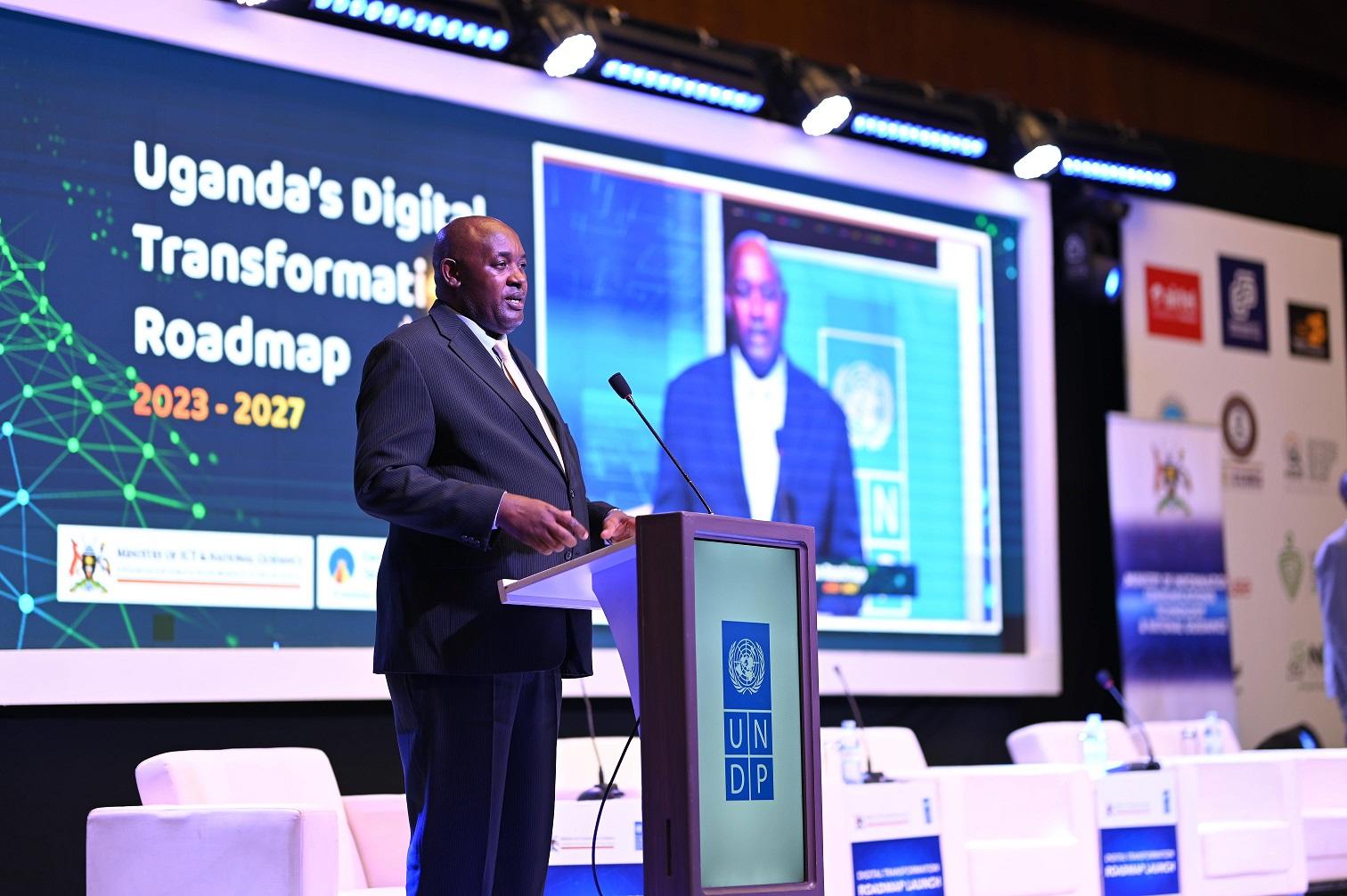
The five days
The January 2026 shutdown exempted a narrow list: hospital systems, core banking platforms, tax and utility systems, immigration and aviation, and the electoral commission portal. Everything else — social media, general web browsing, streaming, personal email, messaging applications — went dark. Internet access was partially restored on 18 January, five days later, with social media and messaging platforms remaining restricted for longer. The pattern matched 2021 almost exactly: a full shutdown covering election day, then a staged restoration with platform blocks persisting.
The direct cost is measurable and, by the standards of the sector's quarterly revenue, significant but not catastrophic. The Cost of Internet Shutdown Tool used by NetBlocks estimates losses of UGX 59.7 billion (about US$16 million) over the shutdown period, with further losses as mobile money and social media restrictions persisted; other estimates run higher once the extended platform blocks are priced in, and industry sources put the hit to the two largest operators at roughly US$15 million. CIPESA's April 2026 assessment of the episode makes the more important point: ride-hailing and delivery, fintech services, e-commerce and digital health providers were all inaccessible, supply chains were unsettled, livelihoods interrupted, and — the part that does not appear in any quarterly report — investors were given fresh reason to question the reliability of Ugandan digital infrastructure.
That last item is the real expense. A five-day outage costs a quarter's worth of transactions in the affected services. A recurring, pre-announced, regulator-ordered outage on a four-to-five-year electoral cycle costs something different: it caps the kind of business that can be built. Any venture whose value proposition requires continuous availability — logistics coordination, merchant payments at scale, telemedicine, cloud services sold to regional customers — has to price in a known, non-diversifiable interruption risk. That is a structurally different investment proposition from the one in Nairobi or Kigali, and it shows up not as a line item but as an absence: the companies that are never founded, the regional data-centre contracts that go elsewhere, the funding rounds that price Uganda as a market to sell into rather than build from.
Ambition on paper
None of this is for want of strategy. Uganda's Digital Transformation Roadmap for 2023/24–2027/28, launched in April 2023 by the Ministry of ICT and National Guidance, is organised around five pillars: digital infrastructure and connectivity; digital services; cybersecurity, data protection and privacy; digital skilling; and innovation and entrepreneurship. Its 2027 targets are ambitious — 95 percent of government services online, 90 percent broadband coverage, 90 percent of citizens accessing services online and 90 percent of SMEs connected. The ministry puts the ICT sector's contribution at over 9 percent of GDP with an average growth rate of 14.8 percent and employment of around 2.3 million people.
The UCC frames its own work under a "Connected Uganda 2030" agenda and has begun funding research directly, awarding UGX 182.2 million across nine projects selected from 212 applications, covering areas including AI-driven cybersecurity and a Luganda–English medical translation tool. That last project is a small but telling signal: local-language natural language processing is exactly the kind of applied work that will not be done for Uganda by anyone else, and doing it domestically is how a market moves from consuming technology to producing it.
The commercial ecosystem is thinner than the infrastructure. Uganda's startup base is concentrated in fintech, agritech and health informatics — Asaak in asset financing, Numida in small-business lending — with a modest number of companies reaching Series A and beyond, and the ecosystem still ranked well outside the continent's leading tier. The demographic input is there: a population overwhelmingly under thirty, an expanding fibre footprint, and broadband prices that have collapsed over the past decade. What is missing is not talent or connectivity but the assumption of continuity that lets capital commit to a ten-year horizon.
The question for the next cycle
Uganda's digital sector will almost certainly keep growing. Subscriptions are rising, data spend per user nearly doubled in a quarter, mobile money volumes are compounding, fibre is being laid at eight thousand kilometres a quarter, and Starlink has just been licensed to reach the places the fibre will not. On every metric the UCC publishes, the trajectory is upward.
But the thing that determines whether this becomes a digital economy rather than a large telecommunications market is not on that dashboard. It is whether the infrastructure is understood by the state as a utility — something with the same presumption of continuous operation as the electricity grid or the water system — or as a controllable medium. January 2026 answered that question for this cycle. The interesting test is what happens between now and the next one: whether the business-continuity frameworks, legal challenges and industry advocacy that CIPESA and others have called for succeed in making the switch harder to reach. Uganda has already built the network. The remaining work is on the assumption that it will stay on.



