Written By | Torch Media Africa
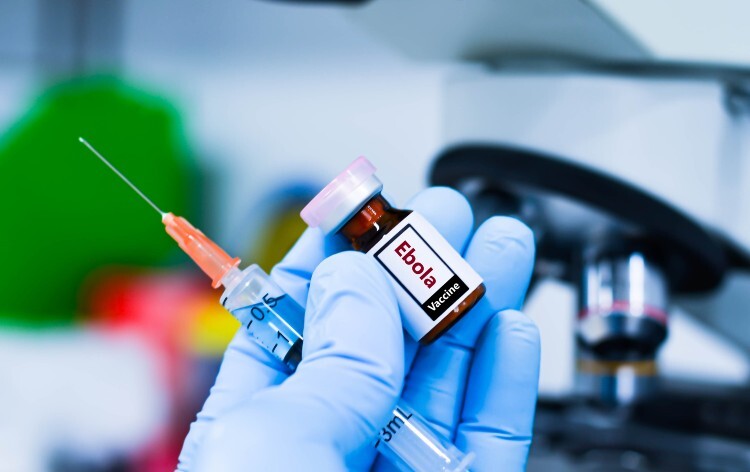
The first volunteers received the ChAdOx1 BDBV candidate on 6 October, months after the largest Ebola outbreak in the history of the Democratic Republic of the Congo spilled into Uganda.
SCIENCE AND TECH
Researchers in Uganda began vaccinating volunteers on 6 October 2026 in a Phase I trial of a candidate vaccine against Bundibugyo ebolavirus, a strain for which no licensed vaccine or specific treatment exists. The trial, held at a clinical research site in Masaka City, follows a UK trial that began in July and is the first African arm of a fast-moving effort to prepare a vaccine against a virus that has killed more than a thousand people in the neighbouring Democratic Republic of the Congo (DRC).
The trial
The candidate is ChAdOx1 BDBV, developed by the Oxford Vaccine Group and the Pandemic Sciences Institute at the University of Oxford. It uses a modified chimpanzee adenovirus platform, the same technology as the Oxford/AstraZeneca COVID-19 vaccine. In Uganda the trial is being implemented by the Medical Research Council/Uganda Virus Research Institute and London School of Hygiene & Tropical Medicine (MRC/UVRI & LSHTM) Uganda Research Unit, with Eugene Ruzagira, the unit's head of clinical research and trials, as principal investigator.
This is a Phase I study. Its first aim is to assess whether the vaccine is safe and whether it produces an immune response in healthy adults. It does not yet show whether the vaccine prevents disease. Reports say Uganda has received about 3,000 investigational doses for the study.
From outbreak to vaccine in weeks
The speed of the effort is itself part of the story. The World Health Organization was alerted to a high-mortality outbreak in the DRC's Ituri Province on 5 May 2026, and the outbreak was declared a public health emergency of international concern on 17 May. The Oxford team has said its UK trial launched within 57 days of that declaration. The Serum Institute of India manufactured roughly 620,000 doses within about two weeks, supplying 4,000 investigational doses for the Oxford study. The Coalition for Epidemic Preparedness Innovations (CEPI) committed up to $8.6 million in funding and has indicated it expects to support later-stage trials aimed at emergency use authorisation if the Phase I results are favourable.
The UVRI had signalled its intentions earlier. In late May, its director, Prof Pontiano Kaleebu, told the Daily Monitor the institute was discussing two candidate Bundibugyo vaccines for Phase I and II trials: one built on a construct similar to the Ebola Zaire vaccine and one, ChAdOx, developed by Oxford scientists. He also noted that UVRI was exploring whether existing Ebola vaccines might offer broader protection across strains. The UK trial, which enrols 50 healthy adults aged 18 to 55 in Oxford, began on 24 July according to one report; Oxford's own announcement was dated 13 July.
The outbreak behind it
Bundibugyo virus disease is one of the rarer Ebola-causing viruses, and unlike Zaire ebolavirus it has no approved vaccine. WHO's 1 August outbreak report said that, as of 30 July, the DRC had reported 3,605 confirmed cases and 1,587 deaths, a case fatality ratio of 44 percent, calling it the largest Ebola outbreak ever reported in the DRC. The outbreak had spread from the initial Mongbwalu health zone to 49 health zones across five provinces, with Ituri accounting for 88 percent of cases. Insecurity and displacement have complicated the response.
Uganda was affected too. WHO's report recorded 20 cases and two deaths in Uganda, with one case also reported in France. Uganda's first confirmed cases, reported in mid-May, included imported infections in Kampala. According to Eastleigh Voice's report on the trial, 18 of Uganda's infected individuals recovered and Uganda declared its outbreak over on 27 August after 42 days without new cases. That detail matters for the trial: with no active transmission in Uganda, the trial in healthy volunteers is a preparedness exercise, building evidence on safety and immunogenicity so that a vaccine can be deployed quickly if the DRC outbreak continues or spreads.
Why it matters
For Uganda, which has managed several Ebola outbreaks and hosts one of Africa's best-regarded virus research institutions, the trial reinforces the country's role as a hub for clinical research on haemorrhagic fevers. UVRI has identified at least 40 viruses since 1936, including West Nile, Zika and Semliki Forest virus. Running a trial at home means local scientists generate data directly on how the vaccine performs in an African population, and that regulators and health authorities here are positioned to act on the results.
The trial also illustrates how the response architecture built after the 2014-16 West Africa epidemic and the COVID-19 pandemic is operating: a pre-existing viral-vector platform, a large-scale manufacturer able to produce doses before efficacy is known, and a funder willing to pay at risk. Whether that model delivers a usable vaccine in time to matter in the current outbreak is still unknown.
How a Phase I trial works, and what comes after
Phase I trials typically enrol small groups of healthy volunteers and escalate carefully, watching for adverse reactions and measuring antibody and cellular immune responses over weeks and months. In practice that means the first Ugandan data will not arrive overnight: volunteers are followed over repeated visits, and regulators and ethics committees review interim safety information before any wider rollout. If the results are encouraging, the next steps normally include larger Phase II studies in more varied populations, including different ages and, eventually, people living in areas at risk of exposure.
Because the Bundibugyo strain has caused far fewer outbreaks than Zaire ebolavirus, there is limited prior evidence on how well any vaccine performs against it. That is one reason researchers are also interested in whether existing Ebola vaccines might offer cross-strain protection, an idea Prof Kaleebu said UVRI is exploring. The answer could shape how future outbreaks of rarer Ebola strains are handled across the region.
Caveats
Phase I trials are small and designed for safety. A good safety and immune-response profile would be a necessary step, not proof of protection. Further studies, subject to regulatory approval, are planned with Ugandan partners, and eventual efficacy evidence would be hard to gather without ongoing transmission, a problem that has historically complicated Ebola vaccine development. Some details in available reporting, such as the UK trial start date and dose counts, differ slightly between sources.
What to watch next
Watch for safety and immunogenicity data from the Oxford and Masaka cohorts, any announcement of Phase II or expanded trials, regulatory decisions in Uganda and elsewhere, how the DRC outbreak evolves and whether it produces new cross-border cases, and whether CEPI and partners move toward late-stage trials aimed at emergency use authorisation.



