Technological Transformation Series
When investors map Africa's technology landscape, their gaze usually settles on Lagos, Nairobi, Cairo, and Cape Town. Togo — a sliver of a country of roughly nine million people wedged between Ghana and Benin — rarely features. Yet over the past five years, this small Francophone state has quietly assembled many of the building blocks that larger economies are still struggling to put in place: a first-of-its-kind subsea cable landing, West Africa's first commercial 5G network, a carrier-neutral national data center, a MOSIP-based biometric digital ID program that neighbors now study, and a homegrown super app that has become one of Francophone Africa's most-watched startups. In March 2026, African Business described Togo's "quiet rise as a startup contender" — a recognition that something distinctive is happening in Lomé.
Connectivity First: Equiano and the 5G Head Start
Togo's digital strategy has been anchored in connectivity infrastructure. In March 2022, Togo became the first African landing point for Google's Equiano subsea cable running from Portugal to South Africa — a coup for a small market, secured in partnership with CSquared and the Société d'Infrastructures Numériques (SIN). Studies projected that average internet speeds would more than double from about 10 Mbps to 21 Mbps by 2025, retail internet prices would fall by around 14 percent, and the cable would indirectly support some 37,000 jobs by 2025.
Togo had already made regional history in November 2020, when Togocom (now Yas Togo), in partnership with Nokia, activated West Africa's first commercial 5G network in Lomé. The 5G rollout remains more symbol than mass-market reality — adoption is hindered by the scarcity of compatible devices and the absence of a clear business model — but the underlying mobile data market is expanding briskly: 4G subscriptions surged 38 percent in 2024 and rose another 10 percent in Q1 2025 to nearly 2.9 million users. GSMA-based analyses have ranked tiny Togo among West Africa's leaders in mobile internet penetration.
Sovereign Infrastructure: The Lomé Data Centre
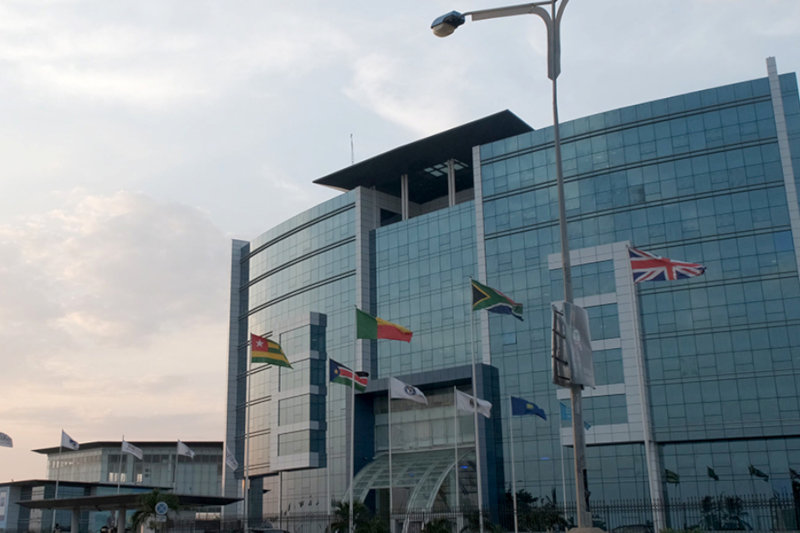
The second pillar is data sovereignty. In June 2021, President Faure Gnassingbé inaugurated the Lomé Data Centre — Togo's first carrier-neutral colocation facility and carrier hotel. The $23.7 million facility was financed through the World Bank's WARCIP program, is owned by SIN, and is operated by Africa Data Centres, a subsidiary of Liquid Intelligent Technologies.
The center has become the anchor for a nascent cloud ecosystem: SIN and Cameroon-based ST Digital signed a partnership to deploy private cloud services at the facility, giving Togolese businesses and government agencies local options for hosting data that previously sat in Europe. Local commentators describe the Lomé Data Centre as the "socle" — the foundation stone — of Togo's digital sovereignty.
Digital Identity at Scale: WURI and MOSIP
Togo's most socially consequential digital program may be its national biometric ID. Under the World Bank-financed West Africa Unique Identification for Regional Integration and Inclusion (WURI) program — a $72 million project in Togo, part of a six-country regional effort — the government is rolling out a foundational digital ID built on MOSIP, the open-source identity platform first developed in India.
Progress has been substantial: by April 2026, Togo had issued six million unique identification numbers, covering the large majority of the adult population. The scheme's credibility is now regional: in November 2025, Senegal's authorities publicly tapped Togo's digital ID experience for inspiration. For a country where many citizens historically lacked any legal identification, the e-ID is the gateway to social protection payments, SIM registration, financial services, and e-government.
Fintech and the Gozem Story
Togo's mobile money market has long been a two-player affair: TMoney (Yas, roughly 60 percent market share) and Flooz (Moov Africa, 40 percent). The market is substantial for the country's size — mobile money transactions reached $1.54 billion in Q1 2024 alone, up 3 percent year-on-year. Government policy has reinforced adoption: about 40 percent of Togolese adults receive government payments directly into mobile money accounts, a legacy of the pioneering Novissi digital cash transfer program launched during the pandemic.
Financial inclusion has risen dramatically — from 18 percent in 2014 to 45 percent by 2017 — though a stubborn 25-percentage-point gender gap in account ownership remains a policy priority.
Into this duopoly stepped Gozem, the Lomé-headquartered "super app" that began in 2018 as a motorcycle ride-hailing service and now spans transport, deliveries, vehicle financing, and digital banking across Togo, Benin, Gabon, and Cameroon. In February 2025, Gozem closed a $30 million Series B round — briefly propelling Togo into Africa's top five startup funding destinations — to expand vehicle financing and digital banking. In October 2025, it launched Gozem Money, a mobile money platform built in partnership with NSIA Bank that is fully interoperable with all of Togo's mobile money operators, directly challenging the TMoney-Flooz duopoly.
An Ecosystem Finding Its Voice
Beyond Gozem, Togo now counts more than 300 registered startups, although only a small share have raised formal external funding. In October 2025, fifteen of the most prominent — including Gozem and fintech pioneer Semoa — formed TogoTech, a collective to advocate for the sector and expand the digital economy.
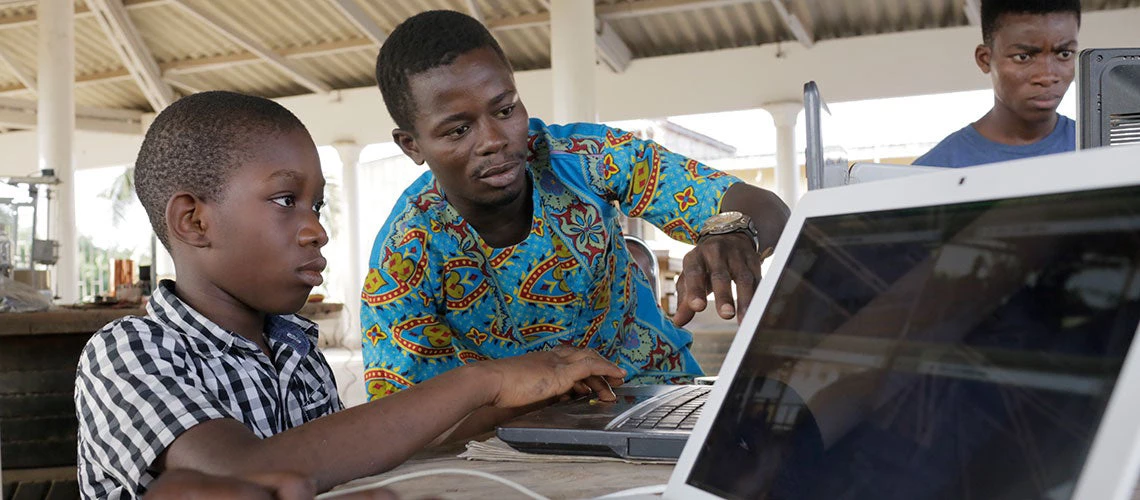
Physical infrastructure is growing too: Djanta Tech Hub, a 3,000-square-metre government-backed campus in central Lomé developed with Nigeria's Co-Creation Hub, houses an incubator, a coding academy, a fabrication lab, co-working space, and a dedicated program for female entrepreneurs.
Policy Architecture: From Togo Digital 2025 to a $100 Million Acceleration
Threading these initiatives together is an unusually consistent state strategy. The Togo Digital 2025 roadmap set targets to digitize 75 percent of administrative procedures (later raised toward 100 percent), extend biometric ID to all citizens, and position Togo as a regional digital hub.
In December 2024, the World Bank approved $100 million in IDA financing for the Togo Digital Acceleration Project, designed to connect roughly 8,000 public institutions to broadband and give more than one million people new or improved internet access. Under the same project, the government plans six regional technology innovation hubs in the prefectures of Tône, Kozah, Tchaoudjo, Ogou, Kloto, and Zio — deliberately pushing digital opportunity beyond Lomé.
The Distance Still to Travel
Togo's digital ascent is real but unfinished:
- Overall internet penetration remains low by global standards
- 5G is a showcase awaiting a market
- The startup ecosystem has produced one breakout company rather than a cohort
- The gender gap in financial account ownership is the widest in the sub-region
- Electricity reliability and device affordability continue to constrain adoption
- The concentration of digital assets in state-linked entities like SIN will require careful governance to keep markets contestable
Yet the direction of travel is unmistakable. By sequencing its bets — cable first, then data center, then identity, then services — and by borrowing credible institutions rather than reinventing them, Togo has built a digital foundation disproportionate to its size. In a region where digital strategies often remain slideware, Togo's quiet execution may prove to be its loudest statement.
Sources: African Business, Biometric Update, World Bank, Togo First, TechCrunch, TechCabal, TechAfrica News, Data Center Dynamics, Connecting Africa, Data Center Knowledge
Published By | Tech Wiz