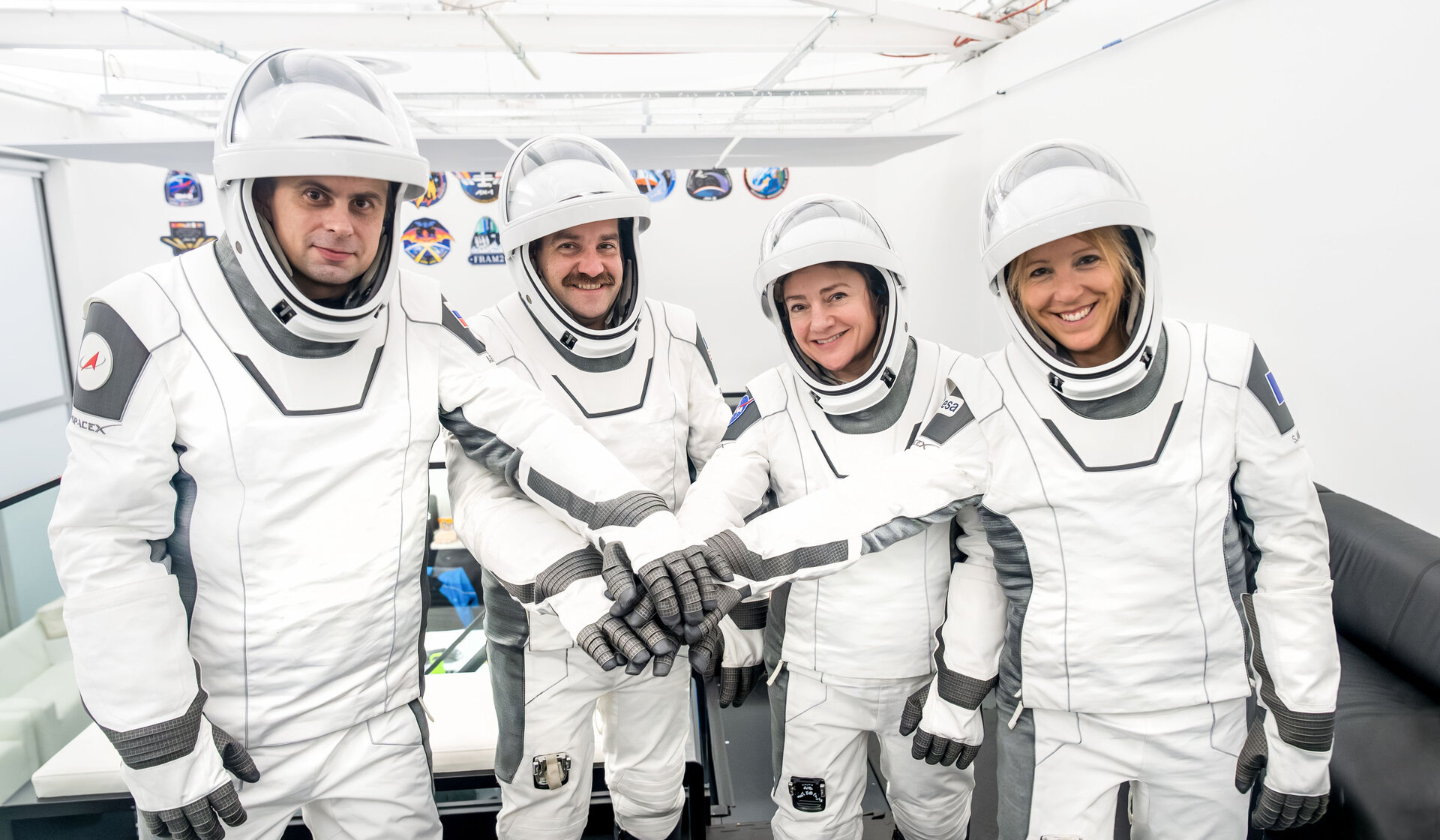
Seven months, 3,300+ orbits, and one heartbreaking wait: Crew-12's Jessica Meir, Jack Hathaway, Sophie Adenot and Andrey Fedyaev are packed and ready — but a fuel leak on their replacement ship has Earth just out of reach
SCIENCE & TECH
Two hundred and fifty miles above your head right now, four astronauts are staring down at Earth, bags essentially packed, waiting for a ride home that keeps getting delayed. They've watched roughly 3,400 sunrises and sunsets from the International Space Station since February. They've conducted hundreds of science experiments, walked in the vacuum of space, and fixed a broken antenna with their bare (gloved) hands. And now, after seven grueling months in orbit, the thing standing between them and solid ground isn't a technical failure of their own spacecraft — it's a leaky valve on the ship meant to relieve them.
NASA astronauts Jessica Meir and Jack Hathaway, European Space Agency astronaut Sophie Adenot, and Russian cosmonaut Andrey Fedyaev make up SpaceX Crew-12, and their long-anticipated homecoming has become an unplanned lesson in the patience required to leave low Earth orbit. The culprit: an oxidizer leak discovered in the propulsion system of the Crew Dragon capsule meant to carry their replacements, Crew-13, to the station. Until that new crew arrives and completes a handover, Meir and her crewmates aren't going anywhere.
A MISSION SEVEN MONTHS IN THE MAKING
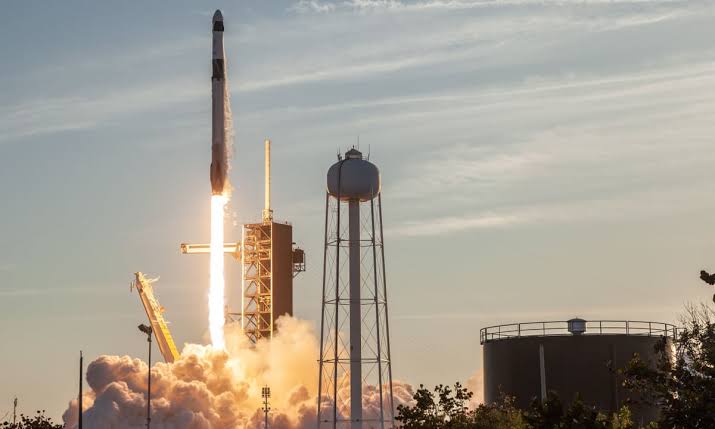
Crew-12 launched from Kennedy Space Center on February 13, 2026, aboard the SpaceX Crew Dragon capsule Freedom, blasting off toward a station that, at the time, was running with a skeleton crew after an earlier mission — Crew-11 — was forced to return to Earth a month ahead of schedule following a medical situation among its astronauts. Crew-12's arrival restored the station to its normal complement of seven crew members, joining NASA astronaut Anil Menon and Roscosmos cosmonauts Pyotr Dubrov and Anna Kikina aboard Expedition 74, which later transitioned into Expedition 75 with Meir at the helm as commander.
What followed was, by any measure, a wildly productive stint in orbit. As commander since July, Meir has overseen a station buzzing with research: investigations into pneumonia-causing bacteria aimed at improving cardiovascular treatments back on Earth, work toward generating intravenous fluids on demand for future deep-space missions (a potential lifesaver for a future Mars crew without a fully stocked medical bay), and studies into how the body's physical characteristics affect blood circulation in microgravity.
The crew's hands were just as busy as their science logs. Meir got to ride the Canadarm robotic arm during a spacewalk — an experience she says stands out above everything else from her second trip to space. "It was the first time that I ever got to ride the Canadarm on a spacewalk," Meir said, "and to ride it with these guys driving me around was the most incredible feeling."
Fedyaev, working with the European Robotic Arm (ERA) on the Russian segment of the station, described his own standout moment in similarly reverent terms: "The most memorable moment in my flight was the work with the ERA manipulator."
Adenot, the French ESA astronaut making her first trip to orbit, was part of a two-spacewalk effort alongside NASA's Anil Menon to fix a malfunctioning antenna — a repair job that took not one but two trips outside the station to nail down. "After two EVAs trying to fix it with Anil, it was a great thing to hear" it was finally working, she said.
And Hathaway, the mission's pilot on his first spaceflight, pointed to a very different kind of milestone: getting the station's Cold Atom Lab — a piece of equipment used to study matter at temperatures colder than anywhere else in the known universe — properly upgraded and running. "Hearing the cheers over the space-to-ground loops when we finally got it properly installed" was one of the mission's most rewarding moments, he said.
THE LEAK THAT WON'T LET THEM LEAVE
By the time late August rolled around, Crew-12 had every reason to believe they'd be home within weeks. Crew-13 — the replacement team of NASA's Jessica Watkins and Luke Delaney, Canadian Space Agency astronaut Joshua Kutryk, and Roscosmos cosmonaut Sergey Teteryatnikov — was slated to launch September 12, kicking off the standard handover period before Crew-12 could finally strap in for their own ride home.
Then came the discovery that has since rippled through NASA's entire ISS crew rotation schedule. On August 29, NASA and SpaceX announced they were adjusting the Crew-13 launch date after engineers identified an oxidizer leak in the Dragon spacecraft's propulsion system during standard prelaunch processing at the launch pad. In plain terms: while running the routine checks every crewed rocket goes through before flight, technicians found propellant escaping from where it shouldn't be — a red flag no space agency in the post-Challenger, post-Columbia era is willing to wave off.
"Joint NASA and SpaceX teams are performing additional tests and data review and will complete any necessary rework prior to launch," the agency said in its August 29 statement, notably declining to commit to a firm new date at the time.
That uncertainty stretched through September. As of NASA's September 16 update, the agencies are now targeting "early October" for the new Crew-13 launch attempt — meaning Meir, Hathaway, Adenot and Fedyaev's seven-month mission is now creeping toward eight months, with their actual departure hinging entirely on a spacecraft that isn't even theirs, being readied by a separate team, thousands of miles away on the ground.
It's a scenario spaceflight watchers have seen before, and not always with a happy ending on the original timeline. Boeing's Starliner capsule famously stranded NASA astronauts Butch Wilmore and Suni Williams at the station for months longer than planned back in 2024 after thruster problems made their return ride unsafe to fly, forcing them to eventually come home on a SpaceX capsule instead. Crew-12's situation is different in the details — this is a scheduling and handover delay, not a "your ride home is broken while you're already up there" scenario — but the emotional weight on the ground and in orbit rhymes all the same: a countdown clock that keeps resetting.

A PRESS CONFERENCE FROM 250 MILES UP
On September 16, with a new NASA cargo ship — the uncrewed Russian Progress 96 resupply vehicle — launching that same morning loaded with nearly three tons of food, fuel and supplies, Crew-12 beamed down to Earth for a scheduled news conference from the space station, fielding questions about their nearly-finished mission and what's next.
The answers were refreshingly, achingly human. Asked what she's most looking forward to back on solid ground, Meir didn't lead with anything space-related at all. "I'm so looking forward to seeing nature again," she said, describing something as simple as "feeling the breeze on my face, the wind rustling through the leaves" as a small miracle after seven months sealed inside a metal tube. But in the same breath, she made clear the trade-off cuts both ways: "I will very, very much miss being weightless all the time and the incredible views."
Most striking of all was what Meir named as her true priority once she's back on Earth — not a shower, not a meal, not fresh air, but her family. "What I'm looking forward to most is seeing my three-and-a-half-year-old daughter," she said — a simple sentence that says more about the human cost of long-duration spaceflight than any technical briefing ever could.
Her crewmates had their own, more lighthearted wish lists. Hathaway, pragmatically, is dreaming of plumbing: "going home and being able to take a nice long hot shower will be very relaxing," he said, a small comfort that's been essentially impossible during seven months of sponge baths and no-rinse shampoo in microgravity. Adenot, meanwhile, is eyeing something altogether more athletic, saying she "loves water sports" and can't wait to get back in the water once her body readjusts to gravity.
THE HANDOVER THAT HAS TO HAPPEN FIRST
Under NASA and SpaceX's standard ISS crew rotation protocol, Crew-12 cannot simply pack up and leave once Crew-13 finally launches — there's a mandatory handover period where the outgoing and incoming crews overlap on the station, briefing each other on ongoing experiments, equipment status, and station operations before the outgoing crew climbs aboard their own capsule for the trip home. Meir is expected to formally hand over station command during this window, transferring responsibility before Crew-12 boards Dragon Freedom for a splashdown off the coast of California — weather at the recovery zone permitting.
That means even once Crew-13 does launch — now targeted for early October — Meir, Hathaway, Adenot and Fedyaev likely won't be home for at least several more days after that, pushing their total mission length well past the eight-month mark from its original planned seven.
In the meantime, the station isn't sitting idle. Even amid the wait, NASA says Meir has been collecting biomedical data for a sleep-quality study called RelaxPro, Menon has been testing lead-free soldering techniques to see whether astronauts could realistically repair electronics in microgravity on a future deep-space mission, Hathaway has been servicing the station's oxygen-generation water filtration system, and Adenot has been putting the European Space Agency's new exercise equipment through its paces in the Columbus module. Meanwhile, the station's Russian cosmonauts have kept busy with power system testing and oxygen generator maintenance — a full slate of work for a crew technically waiting for their exit to open up.

EXPERT PERSPECTIVE
Spaceflight safety experts note that this kind of delay, while frustrating for crews and families, is exactly the system working as intended rather than failing. Finding a propellant leak during routine ground processing — before a rocket ever leaves the pad — is precisely the outcome NASA's extensive prelaunch testing regime is designed to catch. The alternative, discovering a leak after launch with a crew already aboard, is the nightmare scenario every safety review is built to prevent. NASA's approach to Commercial Crew missions since the program's inception has emphasized a deliberately conservative stance: better a frustrating wait on the ground and in orbit than a rushed launch with unresolved hardware questions.
WHAT THIS MEANS FOR YOU
For most of us, four astronauts running a month or so behind schedule feels distant — but it's a window into just how fragile and interdependent modern spaceflight logistics really are. The International Space Station currently has no backup "spare" capsule sitting idle at the pad for emergencies; every seat, every capsule, and every mission is tightly choreographed months in advance, which means a single leaky valve discovered during a routine check can ripple outward to affect an entirely different crew that's already been living in orbit for the better part of a year. It's also a reminder of the quieter human toll behind the impressive photos and mission patches: real people, with real kids growing up on video calls back home, whose "trip" doesn't end on the schedule originally printed on the mission timeline.
WHAT HAPPENS NEXT
NASA and SpaceX say they're continuing tests and data review on the Dragon capsule's propulsion system, with an official new target launch date for Crew-13 expected to be announced once that work wraps up — currently pointed at "early October." Once Crew-13's Falcon 9 rocket lifts off from Cape Canaveral Space Force Station and Dragon docks safely at the station, Crew-12 will begin their handover, and barring further delays, Jessica Meir, Jack Hathaway, Sophie Adenot and Andrey Fedyaev will finally strap into Dragon Freedom for the ride home — a splashdown off the California coast, a reunion with family waiting on the dock, and for one astronaut in particular, a long-awaited hug from a three-and-a-half-year-old who's been watching mom orbit the planet from a screen for the better part of a year.
Published By | Tech Wiz