Written By | Torch Media Africa
SpaceX's giant rocket limps into history on its 14th test, drops off 26 Starlink satellites and gets a cautious early ride home
STARBASE, Texas, 29 September 2026
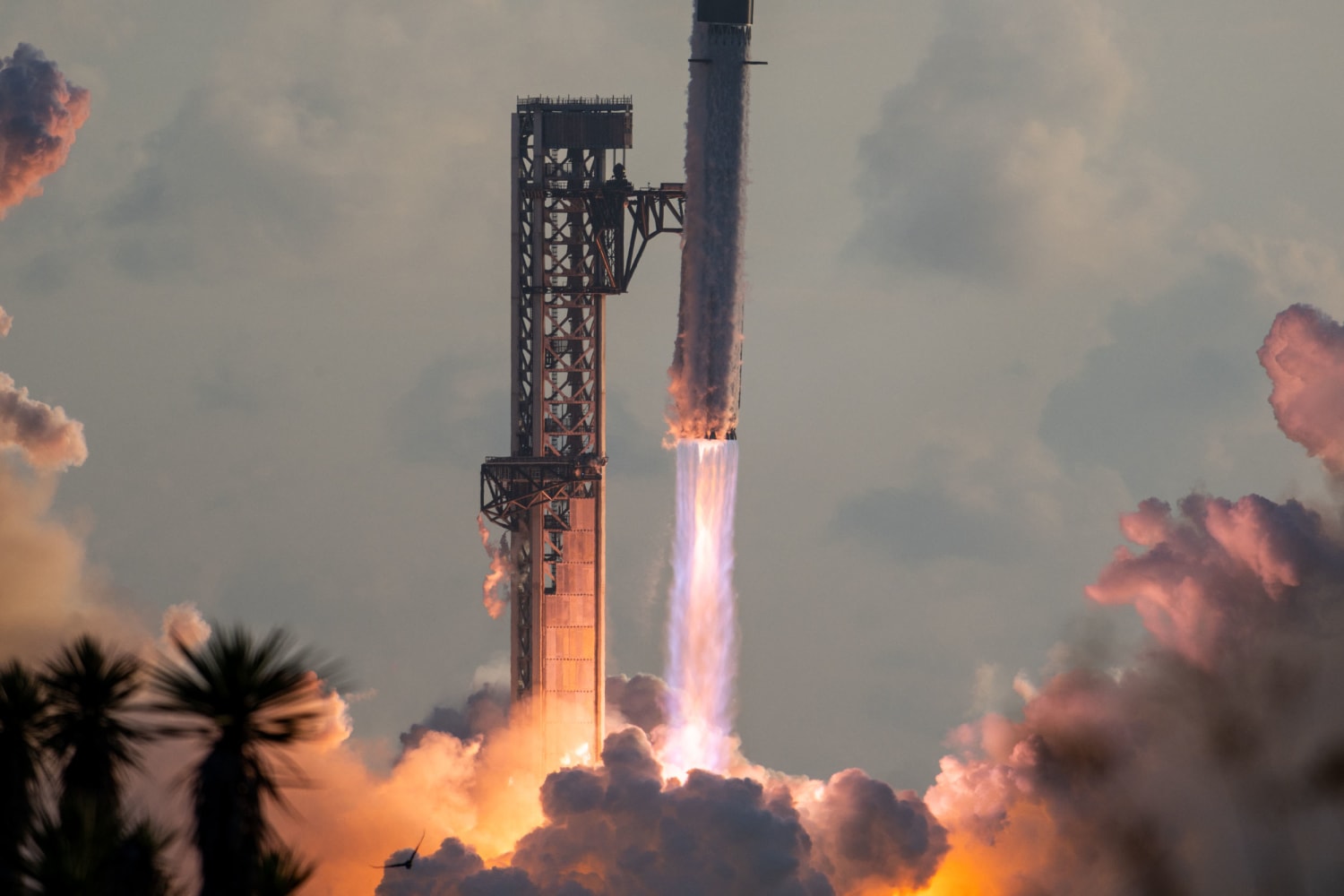
Mission control called it in four words: "Starship is orbital." After years of spectacular fireballs, splashdowns and near misses, the biggest rocket ever built has finally done what it was designed to do. On Monday 28 September 2026, SpaceX's Starship soared out of South Texas, lost an engine along the way, decided to carry on anyway, and reached orbit around Earth for the first time.
It was not a perfect flight. One of the upper stage's six Raptor engines shut down shortly after the stages separated. SpaceX briefly moved to abort the orbital attempt, then reversed course minutes later. And the mission, planned to last around ten hours and six laps of the planet, was cut short after roughly three. But when the dust settled, the 124-metre stack had delivered 26 next-generation Starlink satellites into space, and SpaceX had ticked off a milestone that unlocks everything else on its wish list, from a Moon lander to a fully reusable launch system.
A Drama-Filled Ascent
The launch was the 14th flight test of the Starship programme, known inside SpaceX as IFT-14, and it flew the company's upgraded Version 3 vehicle, which SpaceX began testing in May 2026. The rocket lifted off early Monday morning from Starbase, the company's launch site in South Texas.
The tension came within minutes. Shortly after the upper stage, called Ship, separated from the Super Heavy booster, one of its six Raptor engines shut down early. Flight controllers initially moved to abort the orbital attempt. Then, in a twist that had the live-stream audience holding its breath, they changed their minds. Engineers judged that the vehicle could continue safely on five engines, with everything else working well, and pressed on.
Meanwhile, the Super Heavy booster did its part. It flew a simulated landing over the Gulf rather than attempting a return to the launch tower. SpaceX described it as the cleanest simulated landing it has performed with the V3 booster.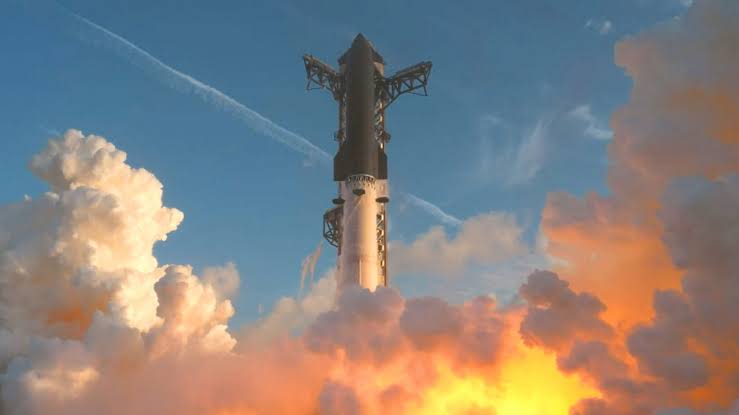
26 Satellites And A Big Number In The Sky
Riding in the Ship's payload bay were 26 third-generation Starlink satellites. They join a constellation of roughly 11,000 satellites already circling Earth. The previous flight, IFT-13, had also deployed 20 V3 satellites, but it stayed on a suborbital path, meaning those craft were not headed for a stable orbit. This time the deployment took place from an actual orbit, the first time these larger satellites have been delivered that way.
That matters because the V3 satellites are much bigger than earlier versions, and they are the reason Starship exists in the eyes of SpaceX's business side. Starlink is the money machine that pays for the ambition.
Why Cut The Flight Short?
The original plan called for Ship to circle the Earth six times over nearly ten hours. Instead, controllers brought it down after about three hours. It reentered over the Pacific and splashed down north of Hawaii. SpaceX offered no official technical explanation, but Elon Musk was clear about the philosophy: "We're being extremely cautious here."
Musk explained that debris from an uncontrolled landing over land would damage the company's reputation, so playing it safe was the priority. With an engine already down, extra caution was hardly surprising. Analysts noted that SpaceX gave no official reason, so any link between the engine loss and the shortened flight remains an inference.
The Heat Shield Question
The safe return matters as much as reaching orbit. Starship's reentry is brutal, and the heat shield tiles have been a persistent headache. During SpaceX's first earnings call on 4 August, Musk said: "I don't want to jinx it or anything, but I think we consider the heat shield problem solved at this point." That confidence stemmed from IFT-13, when a Ship unexpectedly survived intact and was recovered from the Indian Ocean in July. Engineers analysed it and, according to Musk, found no technical obstacles to full and rapid reusability. Fortune reports that heat shield modifications based on that recovered ship are being prepared for upcoming flights.
Flight 14's controlled splashdown adds another data point, though catching a returning Ship is a very different test from splashing one into the sea.
The Money Behind The Rocket
The flight arrives with SpaceX under the financial microscope. The company's second-quarter results showed revenue of $7.8 billion, up 92 per cent from a year earlier. Its Connectivity segment, which is mostly Starlink, brought in $4.3 billion and generated $1.65 billion in operating profit. The Space division, home to Starship development, reported an operating loss of $542 million.
Analysts point out a wrinkle in those numbers: Starlink launches are not charged at market rates, so the Connectivity business carries the launch cost rather than the Space segment. Reaching orbit with a reusable rocket is the way that equation changes. If Starship can fly often and cheaply, launch stops being a cost centre and becomes the moat.
The Motley Fool cautioned that while the achievement is genuine progress, reliable reusable launches remain unrealised.
The Road To The Moon
There is a reason NASA is watching closely. Starship is meant to serve as the lunar lander for the Artemis programme. NASA Administrator Jared Isaacman praised SpaceX for "managing every step in a safe, responsible and especially inspirational way."
SpaceX President Gwynne Shotwell has laid out a pathway: orbital propellant transfer, to be demonstrated through an Artemis III docking next year, then uncrewed cargo missions, with crewed lunar landings targeted for 2028. Artemis III is scheduled for next summer, and the lunar lander competition pits SpaceX against Blue Origin. Getting Starship to orbit is the first prerequisite for all of it, because a lander cannot be refuelled in orbit if it cannot get there in the first place.
What Happens Next
SpaceX has said the next test flight will attempt to catch the returning Ship with mechanical arms at Starbase, a feat so far achieved only with the Super Heavy booster. If it works, the company plans to refly a Starship by the end of the year. That would be a leap from disposable test articles to something resembling an airliner-style operation.
Before any of that, regulators and engineers will comb through the flight data. The lost engine is the obvious first question. Was it a one-off or a sign of a deeper reliability issue? Until that is answered, a ship-catch attempt looks ambitious.
Expert Perspective: Milestone, Not Finish Line
The reaction has split neatly into two camps. Supporters see a programme that has crossed the hardest threshold in rocketry: getting to orbit. NASA's Isaacman was warm in his praise, and Musk's own caution suggests the company is treating the flight as data rather than a victory lap.
Sceptics note that a shortened flight and an engine loss mean the job is not finished. Orbit is the entry ticket. Routine, rapid reuse is the prize. The Motley Fool's assessment captures the mood: real progress, but the reusable era remains a promise. In spaceflight, the distance between a spectacular first and an everyday routine is measured in years and in a lot of hardware.
What This Means For You
If you use Starlink, more and bigger satellites mean the potential for faster and more widely available internet, especially in rural areas. If you follow the Moon race, this is the biggest single step toward a crewed American landing this decade. And if you simply enjoy looking up, expect more launches, more satellite trains crossing the night sky and, eventually, cheaper access to space for everyone from researchers to start-ups.
There is also a broader industrial shift. The company has been reported to be eyeing ideas such as orbital data centres, and a reliable, cheap heavy-lift rocket is the foundation for any such plan.
How We Got Here: A Timeline
The road to Monday's milestone has been long and noisy. SpaceX began testing the V3 version of Starship in May 2026. In July, a Ship from IFT-13 unexpectedly stayed intact and was recovered from the Indian Ocean, giving engineers a rare chance to study a vehicle that had flown the full trajectory. On 4 August, SpaceX held its first earnings call, where it said the next flight would try two historic firsts: delivering operational V3 Starlink satellites to orbit and catching the upper stage at Starbase.
IFT-13 had launched 20 V3 satellites on a suborbital path. IFT-14 raised the bar to a true orbit and 26 satellites. The catch attempt has now been pushed to the next flight, a reminder that even the most confident timelines in spaceflight tend to slide. SpaceX says it wants to prove the reuse concept before Artemis III arrives next summer, when the lander competition with Blue Origin comes into sharper focus.
The Scale Of The Machine
It is worth pausing on the size of what flew. At 124 metres, Starship stacked on its Super Heavy booster is the tallest and most powerful rocket ever launched. It was designed from the very beginning to be fully reusable, with both stages returning to be flown again, a goal that would slash the cost of reaching space if it is ever achieved at scale.
That ambition is why every test flight, however messy, is followed so closely. A conventional rocket is thrown away after one use. Starship's business case only works if it behaves like an aircraft, landing, refuelling and flying again within days. Reaching orbit was the necessary first step on that path, and it is one that many competitors are still trying to match with much smaller vehicles.
The Bottom Line
Starship's first orbit came with an engine out, a cut-short mission and plenty of caveats. It also came with 26 satellites delivered, a booster that came home cleanly in simulation, a controlled splashdown, and the four words mission control had waited years to say. The next test will try to catch the ship. If SpaceX pulls that off, this Monday morning in Texas will be remembered as the day the impossible started looking routine.



