World Politics
Overview
On the night of 14 October, some of Ukraine's most important aerial weapons quietly stopped working as intended. According to a Wall Street Journal investigation published on 20 October, Elon Musk personally ordered a restriction on the military-grade Starlink service used by Ukraine, capping connectivity for terminals travelling at roughly 160 kilometres per hour (100 miles per hour) or faster. The change effectively grounded some long-range strike drones and interceptor drones that depend on satellite links, and it caught Kyiv, and by several accounts parts of the Trump administration, completely off guard.
A week on, the question of who made the decision, and on whose authority, remains contested. Musk says the system is owned and controlled by the US government and that the military and ultimately the president decide on limits. President Donald Trump has denied responsibility. Defense Secretary Pete Hegseth said on 20 October that Washington had not withdrawn Ukraine's access to Starlink. Ukrainian President Volodymyr Zelensky has demanded an explanation from both Washington and SpaceX. The episode is about far more than a technical setting: it exposes how much of a sovereign country's war effort rests on infrastructure controlled by a private citizen and a government that is, at present, at odds with the country it is supposedly supporting.
Background: Ukraine's Dependence on Starlink
Since early in the full-scale invasion, Starlink terminals have served as a backbone for Ukrainian battlefield communications, intelligence sharing, targeting and drone control. There are two related services at issue. Starlink is SpaceX's commercial network. Starshield is a military-grade system that, according to Musk and as reported by CNBC, is owned and controlled by the US government. The WSJ report concerns the military variant used by Ukrainian forces.
The relationship between Musk and Ukraine's war effort has been fraught before. In earlier years, Musk was accused of limiting Starlink coverage near Crimea and of restricting its use for offensive operations, and the question of whether a private company should be able to influence the course of a war has been debated ever since. The 2026 episode revives those fears at a particularly sensitive moment, when Washington's own posture toward Kyiv has become uncertain.
Key Developments: What the Restriction Did
According to the WSJ account as relayed by CNBC and the Kyiv Post, the cap was imposed overnight without warning on 14 October. It limited connectivity for terminals moving at around 160 km/h or more. Ukrainian defence sources said it disrupted interceptor and medium-range strike missions as well as reconnaissance, logistics and communications relays. Units had to investigate outages and switch to backup communications systems.
The effect was uneven. Short-range first-person-view drones, which use direct radio links, were largely unaffected, and stationary frontline terminals stayed outside the restrictions. The greatest risk was to faster drones flying beyond conventional radio range, including long-range strike drones and the interceptors Ukraine uses against Russian jet-powered attack drones, which travel at around 300 km/h. Kyiv asked for the cap to be lifted, saying its interceptors need reliable connectivity at speeds up to 450 km/h. Connectivity for forces on the move was partially restored on 15 October, though officials did not say whether all limits had been removed.
The timing was notable. Russian missile and drone attacks on Ukraine have continued, including a drone strike in the Kharkiv region that reportedly killed six people, three of them children, and Ukraine is simultaneously worried about the delivery of Patriot interceptor missiles, which the Trump administration has not approved for transfer according to a recent think-tank summary. An outage that degrades Ukraine's cheaper interceptor drones lands exactly where Kyiv can least afford it.
Who Gave the Order? Competing Accounts
The WSJ reported, citing US officials and people familiar with the matter, that Musk personally ordered the slowdown. The accounts of what happened around that decision diverge. Some sources told the paper that Musk and Trump spoke by phone shortly after the restrictions became public and that they may also have discussed the matter before the slowdown, while other US officials said Musk acted alone. Reuters had earlier reported that the order to restrict Starshield came from inside the White House. Those two versions cannot both be right, and neither has been publicly confirmed by named officials.
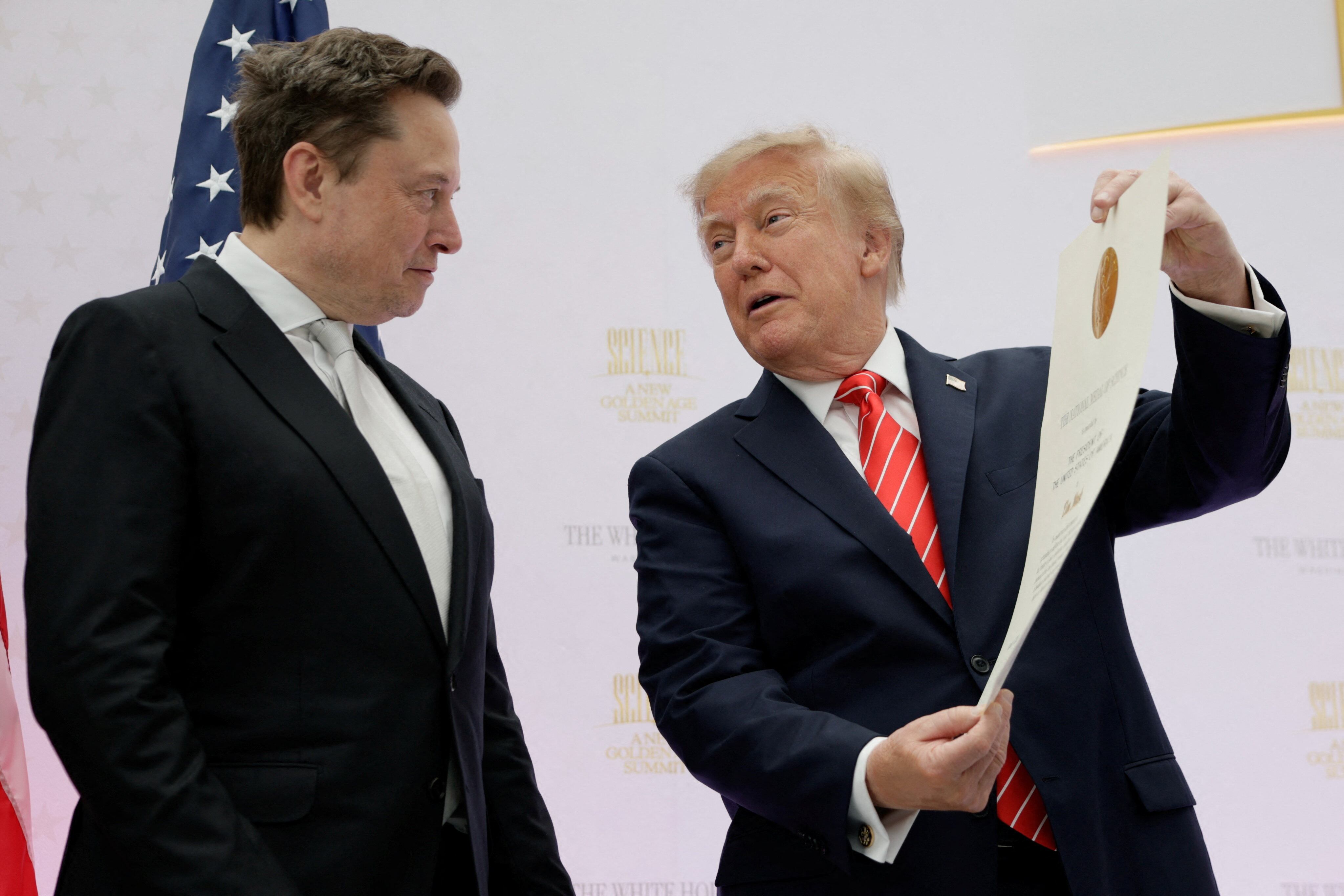
Musk's own position is that responsibility lies with the government. He has said Starshield is owned and controlled by the US government and that the US military, and ultimately the president, decide on limits. Trump denied responsibility the week before the WSJ story ran, and has said he did not know who ordered the slowdown. Hegseth said on 20 October that Washington issued no directive and had not withdrawn Ukraine's access, suggesting instead that the issue concerned the terms of service Kyiv must follow. Taken together, the statements amount to a circle of denials: the owner of the company points to the government, and the government points back to terms of service.
A final caution is in order. Much of this reporting rests on anonymous sourcing, and some details, including whether prior discussions occurred between Musk and Trump, could not be independently confirmed by the outlets summarising the story.
Reactions
Zelensky discussed the matter with Secretary of State Marco Rubio on 20 October and said the situation needs to be resolved. Ukrainian officials have been careful in public, since Kyiv depends on Washington for intelligence, air defence and diplomacy, but the underlying message is unmistakable: a critical capability can be switched off without notice. Zelensky has also said recent US decisions are hard to explain, and has accused Trump of trying to push Ukraine toward surrender, remarks reported in the 20 October FDD briefing.
In Washington, the episode has produced confusion rather than a clear policy line. The WSJ reported that the decision caused confusion within the administration itself. Trump reportedly reacted angrily to reporters' questions on the subject in a live-update account by HuffPost, though that is a secondary summary. The result is a story in which the central facts of who decided what are being litigated in the press while Ukrainian units adapt in real time.
The Wider Diplomatic Context
The Starlink dispute is not occurring in isolation. In recent weeks, Trump has urged Kyiv to stop striking Russian oil refineries, announced a deal to buy Russian diesel, and waived new sanctions on Moscow. Zelensky has said Washington threatened to cut intelligence over the refinery strikes. Reports also say Trump has shelved a bipartisan Russia tariff bill. Meanwhile, Russia has proposed a Trump-Xi-Putin summit in China next month, and US envoy Steve Witkoff held talks in Oslo with Zelensky and European representatives before travelling on to meet Putin with an updated proposal, according to the day's news digests. Zelensky has offered to pause strikes on Russian refineries if Russia reciprocates, while Moscow has rejected the direct talks format Kyiv wants.
Against that backdrop, many Ukrainians and Europeans read the Starlink slowdown as one more pressure point rather than a coincidence. That interpretation is unproven and the administration rejects it, but it shapes how the episode is perceived in Kyiv and in European capitals, which are already worried about a funding gap and about being sidelined from any settlement.
Implications and What's Next
The immediate question is whether the remaining restrictions will be fully lifted and whether Ukraine can obtain written assurances about its access. Ukraine's military will likely accelerate work on alternatives, such as other satellite providers, mesh radio networks and relay drones, but none matches Starlink's coverage and performance, and replacing it takes time. European governments may also face pressure to finance and supply substitutes, a point that could be raised at the next EU meetings.
There is a longer-term lesson about the governance of dual-use infrastructure. If Starshield is a government-owned service operated by a private contractor, then the chain of command should be clear, and it evidently is not. Congressional oversight committees may well ask who has authority over the settings of a system embedded in an allied army's operations. For Ukraine, the practical conclusion is blunt: depending on a single network controlled by a single company, and ultimately by a single government, is a strategic vulnerability. For Washington, the episode is a test of whether it can credibly claim to support Ukraine's defence while its own decisions, or its contractors' decisions, appear to undermine it.
For now, the facts that are established are limited: a speed cap was applied on 14 October, drone operations were disrupted, and service was partially restored the next day. Everything else, including who ordered it and why, remains in dispute.
Published By | Tech Wiz