Written By | Torch Media Africa
Elon Musk's rocket firm launches its second flying-saucer-shaped cargo pod today, alongside 31 customer payloads and a startup's bid to make cancer-drug ingredients in zero gravity
SCIENCE & TECH
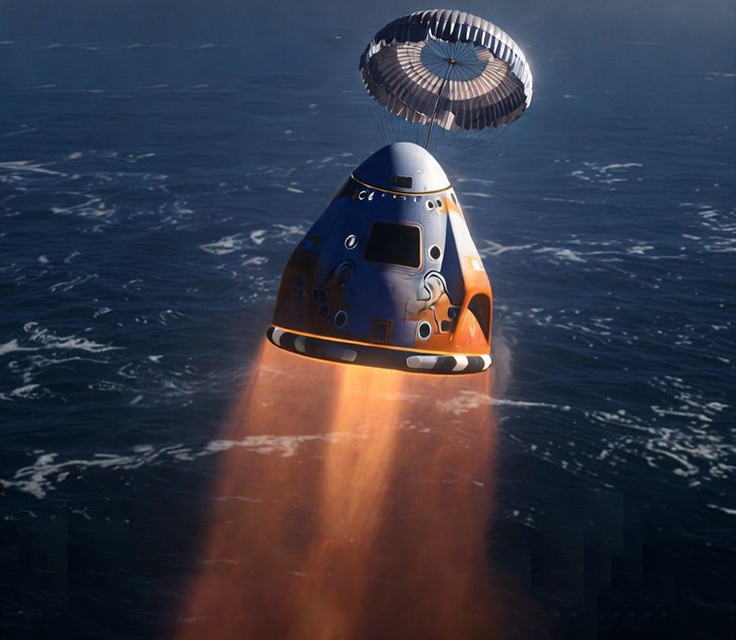
It looks like something out of a 1950s B-movie, it was unveiled with almost no warning, and it could change what we make in space. SpaceX is rolling the dice again on Starfall, its saucer-shaped reentry capsule, and this time it is bringing a crowd.
A Falcon 9 rocket is scheduled to lift off from Space Launch Complex 40 at Cape Canaveral Space Force Station on Tuesday, 20 October, in a one-hour window opening at 6:30 a.m. EDT (1030 GMT). The mission, called Bandwagon-5, is a dedicated rideshare carrying 32 payloads: 31 customer spacecraft plus a Starfall capsule on only its second demonstration flight. Monday's attempt was scrubbed because of poor weather in the booster recovery zone, not at the pad. The 45th Weather Squadron is forecasting a 90 percent chance of acceptable conditions for the new try.
As this article was written, liftoff had not yet been confirmed. Check live coverage for the result.
What on Earth is Starfall?
SpaceX revealed Starfall in June, and barely before it flew. According to an FAA environmental assessment, the capsule is about 0.75 metres (2.5 feet) tall and 3.1 metres (10.2 feet) across, with a mass of roughly 2,100 kilograms (about 4,600 pounds). It can support up to 1,000 kilograms (about 2,200 pounds) of payload. It is not designed for people. Filings describe its job as the "transport and delivery of goods through space".
SpaceX describes it as a "microgravity lab". Zachary Luppen, an avionics supply chain engineer at SpaceX, put it this way: "a microgravity lab researchers and entrepreneurs can leverage to develop their products and innovations." He added that, as the International Space Station has shown, there is "a huge opportunity to benefit life on Earth through microgravity research."
Its first flight launched on a Falcon 9 from the same Florida coast at 6:53 a.m. ET on 23 June. The plan then was for the upper stage to release Starfall after two orbits, so it could fall back through the atmosphere and splash down under parachutes in the Pacific, roughly 800 miles west of California. SpaceX cut the launch broadcast short and did not show the deployment, and the coverage we reviewed does not report how the splashdown went. This second flight is the chance to show the world a repeatable service.
A crowded ride to orbit
Bandwagon-5 is far from a one-passenger flight. Alongside Starfall, the rocket carries a manifest of small satellites and spacecraft:
SpaceX has not said which payloads, if any, ride inside this Starfall.
The rocket's first stage, booster B1085, is flying for the 19th time. About nine minutes after liftoff it is due to land on the droneship A Shortall of Gravitas. A successful touchdown would be the ship's 167th landing and the 672nd Falcon booster landing overall.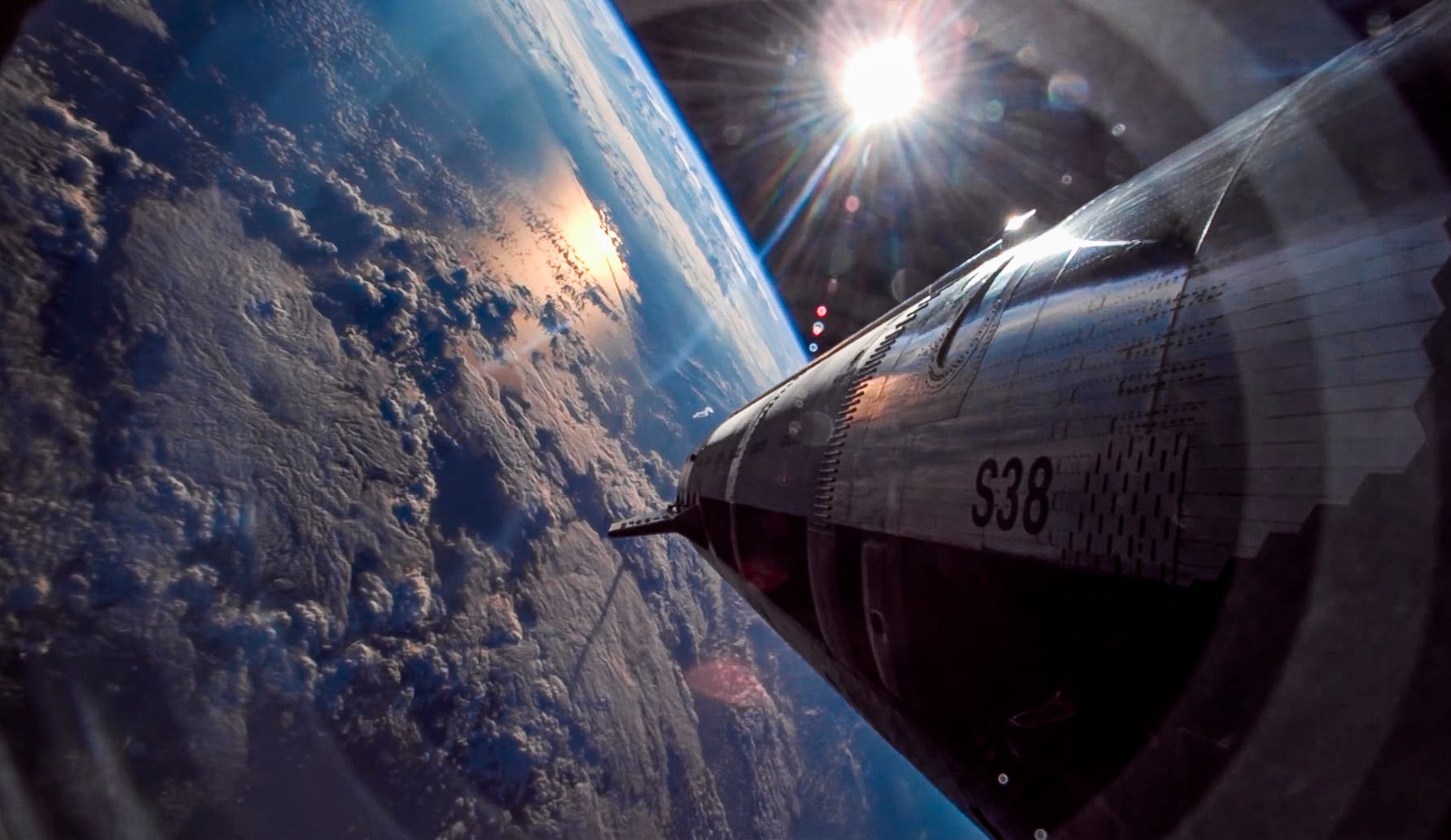
Why space factories matter
Why would anyone want to build things in orbit? Because gravity is annoying. On Earth, gravity makes liquids settle, bubbles rise and crystals grow in lopsided ways. In the near-weightless environment of orbit, some materials behave differently. Scientists have long hoped this could produce better semiconductors, special fibres and, above all, better medicines.
The best-known example is a drug called Keytruda. In 2017, Merck grew the cancer drug's crystals on the International Space Station and found they formed in a single uniform size, where on Earth they formed two. Merck's later injectable took a different route, so no marketed drug can yet be directly traced to that experiment. It is a tantalising hint, not a finished product line.
That is the gap companies like Varda want to fill. Varda, founded in 2021 by Will Bruey and Delian Asparouhov and based in El Segundo, California, builds small spacecraft that fly to orbit on SpaceX rockets, process drugs in microgravity and then return the product in a heat-shielded capsule. It has flown a string of W-series capsules: W-1 landed in Utah in February 2024, the first commercial spacecraft to land on a US military test range. W-2 and W-3 landed in Australia in 2025. W-4 failed to reenter properly and burned up, while W-5 and W-6 returned in January and May 2026.
In a deal reported in May by MIT Technology Review, Varda signed United Therapeutics, led by Martine Rothblatt, to help find new crystal forms of its drugs, with a launch expected in early 2027. Varda's chief strategy officer Michael Reilly called it "the first commercial path to products made in space." He also admitted the obvious problem: "I can't name anything manufactured in space, brought down to Earth, and sold."
The economics: cheap rides change everything
The main reason this idea is back on the table is cost. Launch prices of roughly $7,000 per kilogram to orbit are still steep, so only extremely valuable cargo makes sense. Drugs are the obvious candidate. As MIT Technology Review pointed out, one kilogram of the weight-loss drug Ozempic is worth over $100 million at retail prices.
That is where Starfall comes in. SpaceX owns the rocket, the launch site and the booster that lands itself. If it also owns the capsule that brings cargo home, it can offer a complete round trip to orbit under one roof. Other firms are chasing the same market, including Atmos Space, Lux Aterna and Orbital Paradigm, and Varda has a head start. But none of them also builds the rocket. A SpaceX-built capsule could undercut or even squeeze out smaller rivals, and the fact that Varda's own W-7 hitches a ride on the same rocket shows how closely the competitors and the supplier are tangled together.
There is a second wrinkle. Space-based pharmaceutical work is, as the MIT Technology Review piece notes, a form of reformulation, the sort of tweak drugmakers use to extend patents. And space manufacturing as a whole remains mostly aspirational. For now, the business is more promise than profit.
Beyond medicine
Drugs are only the start. A reusable capsule that can come home with up to a tonne of payload could carry experiments for universities, materials for semiconductor makers, and, eventually, high-value goods that are difficult or impossible to produce under gravity. The FAA language about "future transport and delivery of goods through space" hints at ambitions that go beyond a lab bench.
Some of those uses may sound like science fiction, but the plumbing is real. The capsule's heat shield must survive reentry. The splashdown must be precise and safe. The regulator must sign off at every step. Varda has already shown that this chain can work, with its own Part 450 licence for reentries that runs through 2029 and a heat shield technology (C-PICA) developed at NASA's Ames Research Center.
Expert perspective
SpaceX's own framing is the clearest statement of intent. Luppen's description of Starfall as a lab for "researchers and entrepreneurs" casts the capsule as a platform, not just a one-off experiment. Rothblatt, whose company is paying for those tests, was cautious about what would come out: "One has to do the experiment to find out if that is so."
That caution is worth repeating. Nobody yet knows whether orbital crystals will give patients better drugs. The honest answer is that flights like Bandwagon-5 exist precisely to find out.
What this means for you
In the short term, probably not much. You will not be buying a pill labelled "made in space" next year. But the trend is worth watching for three reasons.
First, cheaper and more frequent trips to orbit and back make space research accessible to far more people. Universities and startups can fly experiments the way they once booked a lab at a research institute.
Second, if drug makers do find better crystal forms in orbit, the long-term payoff could be medicines that last longer on the shelf, work at lower doses or are easier to take. That is a big "if", and it is years away.
Third, it is a sign of how the space industry is changing. A decade ago, bringing something back from orbit was the preserve of governments. Now a commercial firm is putting a saucer on a rideshare rocket with 31 other customers, as casually as a delivery van adds a stop.
If you live in Florida or plan to visit the Space Coast, the launch is a morning show: lift-off is at dawn.
The bottom line
Tuesday's Bandwagon-5 mission is a test of a simple idea: that space can be a place where people make things, not just a place where they look at the stars. If Starfall flies well, SpaceX will have shown a second, quieter product to rival its rockets and Starlink. If not, the engineers will learn what went wrong and try again, as they always do.
Either way, the saucer is not going away. The new space race is increasingly about who can bring the most valuable cargo back home, and SpaceX, as usual, has chosen to compete on every front at once.



