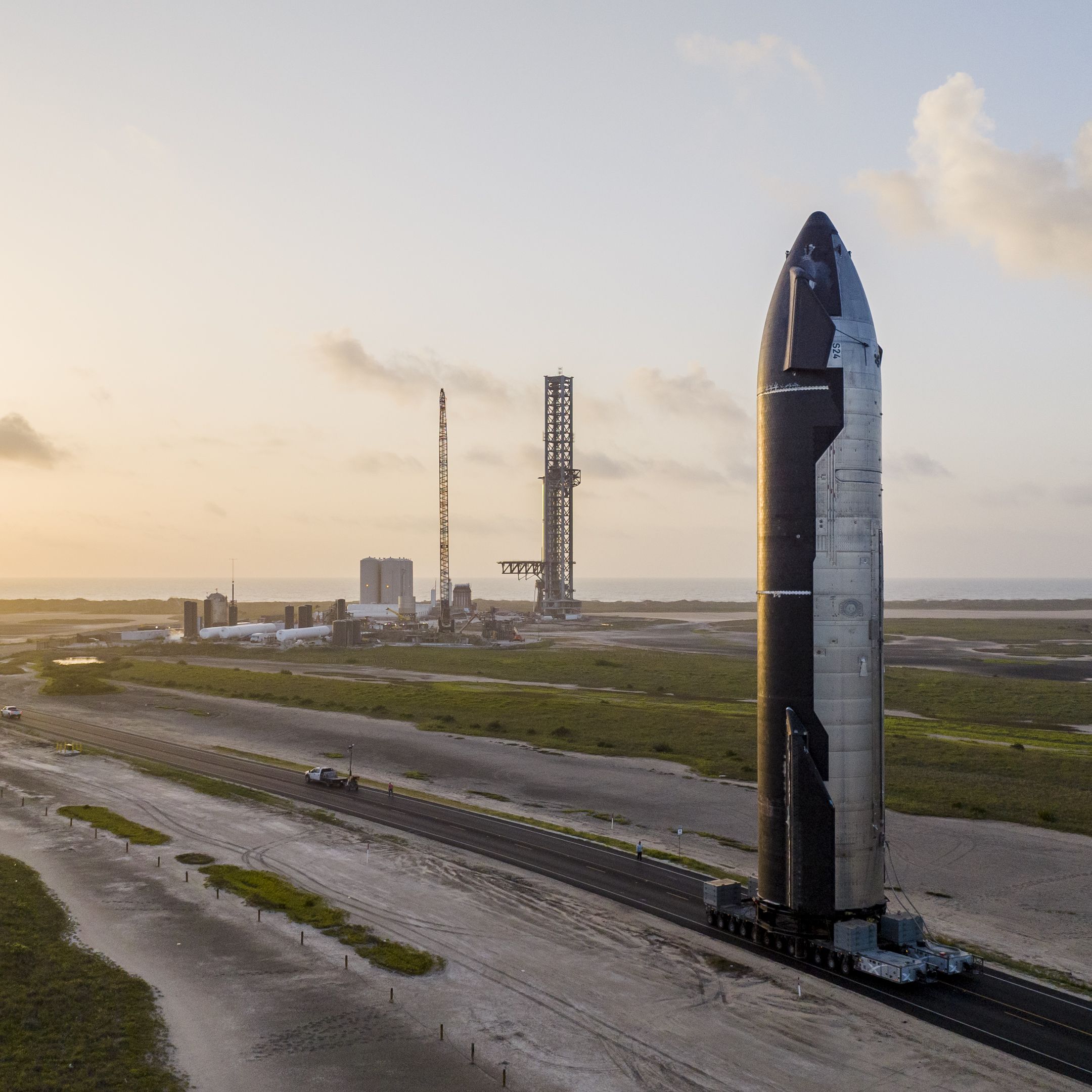
Booster 21 is on the pad and Ship 41 is rolling out behind it, but the FAA hasn't signed off — pushing the most important Starship flight yet to September 28. At stake: SpaceX's first real attempt to put a giant rocket, and 26 next-generation internet satellites, into a full orbit.
Tech & Science
For the first time in its history, SpaceX was supposed to send its towering Starship rocket all the way into orbit this week — not a test hop, not a suborbital arc, but a genuine trip around the planet. Instead, the company is stuck on the ground, waiting on paperwork. SpaceX confirmed this week that Starship Flight 14, the 14th test of the most powerful rocket ever built, has slipped from its planned September 22 target to no earlier than Monday, September 28, after failing to secure final approval from the Federal Aviation Administration. "Now targeting to launch Starship Flight 14 as early as Monday, September 28, pending regulatory approval," the company said, confirming a 75-minute launch window opening at 7:15 a.m. Central time. The hardware, notably, is ready. The holdup is entirely bureaucratic — and it says as much about how seriously regulators are treating this particular flight as it does about SpaceX's famously fast-and-loose testing culture.
WHY THIS FLIGHT IS DIFFERENT
SpaceX has now launched Starship thirteen times, and every single one of those flights, without exception, has flown what's called a suborbital trajectory — enough altitude and speed to test the rocket's systems in space, but calibrated to fall back to Earth on its own rather than complete a lap around the planet. That was a deliberate, cautious choice: it meant that if anything went catastrophically wrong mid-flight, the enormous vehicle — taller than the Statue of Liberty and, when fully stacked, the most powerful rocket ever flown — would come down in the ocean along a predictable, controlled path rather than becoming an uncontrolled hazard circling the globe.
Flight 14 breaks that pattern entirely. For the first time, SpaceX intends to send the Starship upper stage on a full orbital profile, actually circling Earth before reentry, rather than the suborbital "up and mostly over" flight path the company has used for every previous test. That single change is precisely why the FAA is taking extra time: agency rules impose substantially stricter scrutiny on orbital launches specifically because a malfunctioning spacecraft in true orbit — rather than a predictable suborbital arc — creates a real risk of generating space debris that could threaten other satellites or space missions for years afterward. It's the regulatory price of graduating from "test flight" to "operational mission."
Notably, SpaceX has also set aside its ambition to catch the returning Super Heavy booster back at the launch tower with giant mechanical arms — the eye-popping maneuver that made headlines in earlier tests. For Flight 14, achieving orbit takes priority over the show-stopping catch, a sign of how much weight the company is putting on nailing the mission's primary objective.
THE HARDWARE ON THE PAD
The rocket set to attempt this milestone consists of Super Heavy Booster 21, the first-stage core carrying 33 Raptor engines, and Ship 41, the upper-stage vehicle that will actually reach orbit. Booster 21 rolled out to the Starbase launch pad on September 21 after completing a full 33-engine static fire test earlier in the month — a critical rehearsal in which all of the booster's engines are briefly ignited while the vehicle stays clamped to the ground, confirming the propulsion system works before anyone commits to an actual launch. Ship 41 was expected to follow it to the pad shortly after for full stack integration — stacking the ship on top of the booster to form the complete, roughly 400-foot rocket — with SpaceX still needing to complete integrated testing and possibly another static fire before the new September 28 target becomes real.
This isn't SpaceX's first attempt at threading this particular needle. Flight 13, launched July 25 from Starbase, offered a preview of both how far the program has come and how much work remains. All 33 first-stage engines ignited cleanly, the booster separated on schedule, and the Starship upper stage reached space with all six of its own Raptor engines running smoothly — deploying 20 third-generation Starlink satellites from its payload bay along the way and successfully demonstrating the ability to restart its engines in the vacuum of space. The ship then flew a controlled, belly-first reentry through the atmosphere and executed a rocket-powered splashdown in the Indian Ocean roughly 65 minutes after liftoff, remaining fully intact afterward for the first time in the program's history. But the booster's return told a rockier story: only 10 of its 13 engines earmarked for the landing restart actually fired, and just five were still running by the time it hit the water, resulting in a harder-than-planned splashdown at higher velocity than SpaceX wanted. Flight 14 is, in effect, the next exam in a program that has been passing with a steadily rising grade — and an orbital attempt is the hardest test yet.
WHY 26 SATELLITES ARE THE REAL PAYLOAD STORY
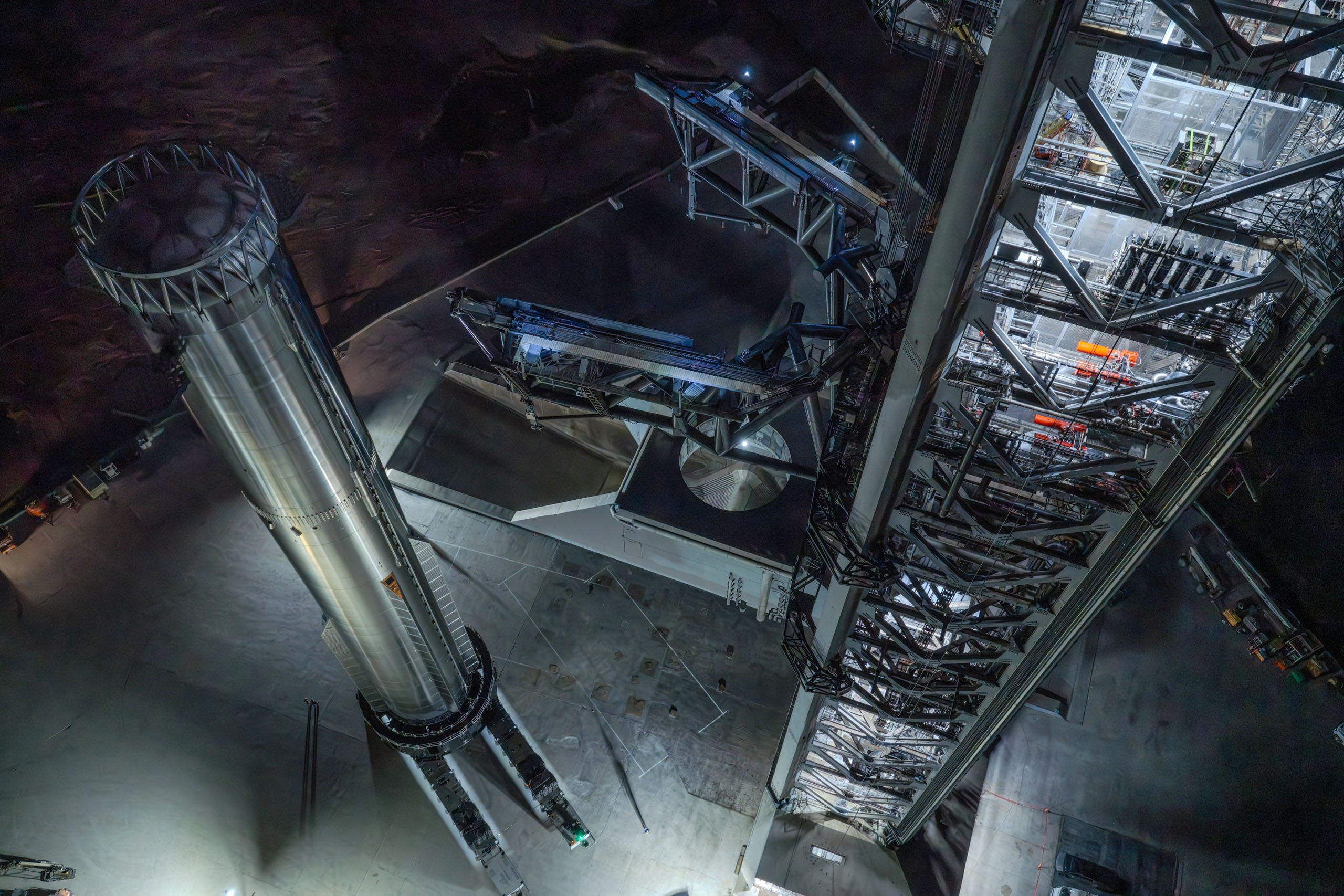
Buried in the flight's technical milestones is a genuinely significant business story: Flight 14 is expected to carry 26 next-generation Starlink V3 satellites, and those satellites are a big part of why Starship needs to fly at all. Starlink V3 units are simply too large for SpaceX's workhorse Falcon 9 rocket to launch in meaningful numbers. Each V3 satellite weighs around 2,000 kilograms — more than triple the roughly 575-kilogram mass of the current V2 Mini satellites that fill most of today's Starlink constellation — and their long, flat design "does not fit inside a Falcon 9 fairing in any useful quantity," according to industry analysis of the design. Starship's dramatically larger payload bay changes the math entirely, capable of carrying up to 60 V3 satellites per flight compared to roughly 27 of the smaller V2 Minis that fit on a Falcon 9.
The performance leap those satellites offer is substantial. Each V3 satellite is designed to deliver around 1,024 gigabits per second of downlink throughput — more than ten times the throughput of a V2 Mini — plus upgraded laser inter-satellite links capable of up to 400 gigabits per second between satellites in orbit. Do the math across a full payload and a single successful Starship Starlink mission would add roughly 61,000 gigabits per second of new network capacity, which industry analysts estimate is about 23 times the capacity added by a comparable Falcon 9 Starlink launch. If SpaceX also lowers V3's operating altitude to around 350 kilometers, versus roughly 550 kilometers for the current constellation, the company says latency could drop below 20 milliseconds — putting satellite internet within range of matching fiber-optic connections for latency-sensitive uses like video calls, competitive gaming and financial trading. In short: Flight 14 isn't just a rocket test. If it succeeds, it's the first real step toward a dramatically faster, more capable version of Starlink than the one most customers use today.
THE HIGHER STAKES — NASA AND ARTEMIS
There's an even bigger program riding on Starship's shoulders than internet satellites: NASA's Artemis moon landing effort. The space agency has contracted with SpaceX to develop a specialized Starship variant as the human landing system that will carry astronauts down to the lunar surface, with the agency currently targeting 2028 for that landing. But that plan depends on capabilities Starship hasn't yet demonstrated on a single test flight — including in-orbit refueling, where multiple Starship tankers would transfer propellant to a lunar-bound vehicle in Earth orbit before it heads to the Moon.
That dependency hasn't gone unnoticed by government watchdogs. The Government Accountability Office has flagged SpaceX's cryogenic propellant management technology — the systems needed to store and transfer super-cold rocket fuel in orbit without it boiling away — as a "top risk" to the Artemis timeline. Every successful milestone Starship clears, including simply reaching a stable orbit for the first time on Flight 14, chips away at that risk. Every slip, delay or partial failure does the opposite, adding pressure to a moon-landing schedule that has already moved multiple times since Artemis was first announced.
WHAT EXPERTS ARE WATCHING
Space industry analysts and outlets tracking the Starship program have been clear-eyed about what Flight 14 represents: not a routine test, but a genuine inflection point in a program that has spent more than two years working through suborbital shakedown flights. Coverage ahead of the launch has repeatedly framed the mission around the phrase "first orbit," noting that everything from the FAA's heightened scrutiny to SpaceX's decision to skip the tower-catch attempt reflects a program treating this flight with unusual seriousness. At the same time, spaceflight trackers have been careful to note that a six-day slip for regulatory paperwork, on a rocket program that has weathered far longer delays for engine issues and weather in the past, is a minor speed bump rather than a red flag — Booster 21's clean static-fire test and Ship 41's on-schedule rollout both point to hardware that's ready to fly the moment the agency signs off.
WHAT THIS MEANS FOR YOU
If you're a Starlink customer, or thinking about becoming one, Flight 14 matters more than the average rocket launch. A successful orbital debut carrying Starlink V3 satellites is the opening move in a plan to dramatically boost the network's speed and reduce the congestion that has slowed service in high-demand areas over the past couple of years — with real potential for satellite internet to start rivaling fiber for latency-sensitive uses. If you follow the U.S. space program more broadly, this flight is also a proxy for how confident to be in NASA's 2028 Artemis moon landing target: Starship's lunar lander variant depends on techniques this same rocket family has to prove out first, and a clean orbital flight would be the clearest evidence yet that the timeline is achievable rather than aspirational. And if you're simply curious enough to watch the launch live when it happens, expect SpaceX to stream it, as usual, from Starbase — just don't be surprised if September 28 slips again. Regulatory approvals and first-of-their-kind rocket flights have a long history of moving dates.
The Bottom Line
For now, the most powerful rocket ever built sits fueled-and-ready in spirit if not yet in fact, a fully assembled Super Heavy booster on the pad and an upper stage close behind it, waiting on a green light that has nothing to do with engineering and everything to do with paperwork. When that light does turn green — whether on September 28 or some date after — Starship will attempt something it has never done in thirteen prior tries: leave the planet, circle it, and come back down in one piece, carrying with it not just a science project but the technological backbone of SpaceX's internet ambitions and a chunk of NASA's plan to put astronauts back on the Moon.
Published By | Tech Wiz