Technological Transformation
A different kind of digital ambition
Most African digital strategies are written around access: more towers, more subscribers, cheaper data. Côte d'Ivoire's 2026 programme is unusual because its organising principle is ownership. Over the past eighteen months Abidjan has commissioned its own national public key infrastructure, broken ground on sovereign data centre capacity, signed a national artificial intelligence partnership with a European rather than American model provider, and set a target for the digital sector to contribute 12 to 15 percent of GDP by 2030. The question the country is answering is not whether Ivorians will be connected, but who will hold the keys, the certificates and the servers when they are.
The scale of the commitment is now visible in budget lines. The 2026 digital budget rises to CFA83.2 billion — roughly US$145.5 million — from CFA68.6 billion in 2025, a 21 percent increase in a single year. That sits inside a much larger envelope: the broader digital strategy is backed by around CFA1.3 trillion, and the artificial intelligence component alone has been described in government briefings as a US$1.8 billion national programme.
The connectivity base is thinner than the ambition
The foundation on which all of this rests is more modest than the headline figures suggest. DataReportal's Digital 2026 report counted 13.4 million internet users in Côte d'Ivoire at the end of 2025, an online penetration rate of 40.7 percent. In other words, close to three-fifths of the population was still offline at the moment the government was signing frontier AI partnerships. This is the central tension in the Ivorian file: a sophisticated top layer being built over an incomplete bottom one.
The state's answer is a national fibre backbone, a project Vinci's Axians subsidiary has been building toward a 7,000-kilometre target, with roughly 5,207 kilometres identified for commissioning. Internationally, Côte d'Ivoire is comparatively well served: it is a landing point for Google's Equiano cable, operational since 2022 with design capacity of about 144 terabits per second, and for the 2Africa system, whose West segment runs from England to South Africa via Senegal, Ghana, Côte d'Ivoire, Nigeria, Gabon, the Republic of Congo, the DRC and Angola, supporting 21 Tbps per fibre pair across eight trunk pairs. Meta announced completion of the core 2Africa system in November 2025, and CSquared activated capacity on 2Africa West on 13 July 2026, explicitly to add route diversity after the 2024 West African cable failures that severed service across a dozen countries. Côte d'Ivoire is also a node on the Djoliba network, the first pan-West African terrestrial fibre ring linking Burkina Faso, Ghana, Guinea, Liberia, Mali, Nigeria and Senegal.
Redundancy, in other words, is no longer the binding constraint on international bandwidth. Last-mile distribution, affordability and digital skills are.
Data centres and the sovereignty argument
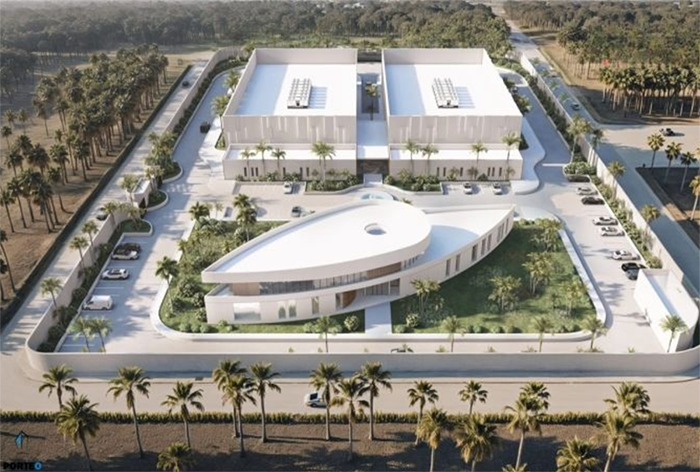
Two facilities define the current build-out. Raxio Group inaugurated Raxio Côte d'Ivoire (CIV1) in Abidjan, a carrier-neutral facility accredited to Tier III standard by the Uptime Institute. Separately, the pan-African cloud provider ST Digital has begun construction of a Tier III data centre at the VITIB technology park in Grand-Bassam — a 4,000-square-metre development that will include modular colocation, a submarine cable landing station and infrastructure designed for AI workloads. The Grand-Bassam site is being marketed explicitly as a data-sovereignty play: Ivorian data and Ivorian websites hosted on Ivorian soil rather than in European or South African facilities.
The most consequential sovereignty move, however, was quieter. On 23 July 2026 the National Agency for Information Systems Security (ANSSI-CI) commissioned the country's national public key infrastructure, replacing dependence on foreign certificate authorities with a domestic trust anchor for digital signatures, secure government services and authenticated transactions. Digital Transition and Technological Innovation Minister Djibril Ouattara made the announcement at a workshop reviewing the 2021–2025 National Cybersecurity Strategy and setting out its 2026–2030 successor. A national PKI is unglamorous infrastructure, but it is the layer on which digital identity, e-signature law and paperless administration all depend — and it is the layer most African states still rent from abroad.
The urgency is well founded. Côte d'Ivoire remains among the African countries most exposed to cyber threat activity, a vulnerability that scales with every service moved online. The country reaffirmed its commitment to a 'trusted digital ecosystem' at Digital Law Days 2026, and cybersecurity is one of five stated priorities for the year alongside expanding internet access, digitising public revenue collection, developing digital skills and inclusion, and promoting technological innovation.
Identity as the gateway
Abidjan hosted the ID4Africa 2026 General Assembly, and the choice of venue was not accidental. Interior Minister Vagondo Diomandé used the platform to frame digital identity as strategic infrastructure for reducing inequality in access to finance, healthcare and social programmes. Côte d'Ivoire is rolling out a foundational digital ID built around the ECOWAS National Biometric Identity Card, designed for interoperability across public services and payment rails — a regional standard rather than a purely national one, which matters in a bloc where cross-border labour mobility is the norm.
Meanwhile the Ministry of Economy, Planning and Development adopted a 2026–2030 Information System Master Plan structured around four priorities: professionalising the IT function within government, establishing an integrated network, deploying shared and secure applications, and modernising technical infrastructure. Minister Ouattara has separately set out a 2026–2028 ministerial roadmap built on seven pillars and roughly 40 flagship projects, and launched Ivoire GovTech Lab, a platform on which government digitalisation projects are published so that startups and SMEs can bid directly online. The stated destination is a paperless public sector by 2030.
The payments layer is already mature — and contested
If government digitalisation is Côte d'Ivoire's newest frontier, mobile money is its oldest and most successful. The country is the largest mobile money market in the WAEMU zone, holding around 40 percent of all open accounts in the union — some 99 million registered accounts — with annual transaction volume exceeding CFA38,000 billion according to BCEAO data. Orange Money, MTN MoMo and Wave compete in a market whose economics were rewritten in 2020 when Wave entered with a flat 1 percent maximum fee on transfers and withdrawals against incumbents charging 2 percent or more.
Wave's next move is more significant than a price war. The company has capitalised Wave Bank Africa in Côte d'Ivoire with roughly US$35 million, obtaining a banking licence under BCEAO supervision. The strategic logic is a pivot from a thin-margin payments business toward deposits and credit — the higher-value activities that mobile money operators have historically been structurally barred from. If it works, it converts a payments rail into a balance sheet, and it does so in the WAEMU's largest market.
The regulatory environment is tightening in parallel. Every WAEMU payment provider must connect to the BCEAO's PI-SPI instant payment rail by 30 September 2026 — a deadline now weeks away — which will make interoperability between wallets, banks and fintechs a legal requirement rather than a commercial choice. For consumers this collapses the walled gardens between providers; for the incumbents it removes network effects as a defensive moat.
Startups, AI and the skills question
Ivorian startup activity is concentrated in fintech, agritech, e-commerce, logistics and education technology — sectors mapped closely onto the real economy. Agriculture contributes more than a fifth of GDP and the country produces roughly 40 percent of the world's cocoa, which makes agritech less a fashion than an obvious application: traceability, input finance and fair-price market access for smallholders are live commercial problems. Ventures such as AYEWO are building around exactly that gap.
The state is funding the pipeline directly. The first Ivoire Tech Forum, held 9–11 July 2025, approved CFA500 million in startup financing, and a second edition is scheduled for the final quarter of 2026. On 29 July 2026 the Ministry of Digital Transition launched two flagship programmes, Ivoire Tech Next 15 and Ivoire Tech Scale Up, offering 24 months of structured support to 30 companies. Twenty startups and ten technology SMEs were assembled for the Côte d'Ivoire pavilion at VivaTech 2026 in Paris, in what officials framed openly as digital diplomacy: a search for partnerships and capital rather than a trade fair appearance.
The AI programme is the most watched element. The Stratégie Nationale de l'Intelligence Artificielle (SNIA 2030), published in 2024, rests on three pillars — investment, inclusion and governance. On 1 September 2026 the government announced a strategic partnership with Mistral AI, the French model developer, signed in Abidjan on 17 August. The engagement begins with an audit of the Ivorian ecosystem to map participants, assess available data and infrastructure, and identify priority use cases across public administration, healthcare, education, agriculture and public services. The choice of a European rather than an American partner is consistent with the sovereignty framing that runs through the entire strategy, and it aligns Côte d'Ivoire with a model provider that has itself been built around arguments about jurisdictional control of weights and data.

The gap that decides the outcome
Côte d'Ivoire has assembled an unusually coherent set of pieces: international bandwidth with genuine route diversity, Tier III domestic data centre capacity under construction, a national trust anchor, a regionally interoperable biometric ID, the WAEMU's deepest payments market, a state-funded startup pipeline and a frontier AI partnership. Very few African countries have all of that in the same eighteen-month window.
What it does not yet have is the base. A 40.7 percent internet penetration rate is the constraint that every other layer is built on top of, and no amount of sovereign infrastructure changes the arithmetic for the roughly 19 million Ivorians who were not online at the end of 2025. Expanding internet access is listed first among the government's 2026 priorities, which suggests the point is understood. The test over the next twenty-four months is whether the CFA83.2 billion digital budget flows disproportionately toward last-mile connectivity and digital skills — or toward the more visible, more announceable projects at the top of the stack. The 12-to-15-percent-of-GDP target for 2030 will be decided in the villages, not in Grand-Bassam.
Published By | Tech Wiz