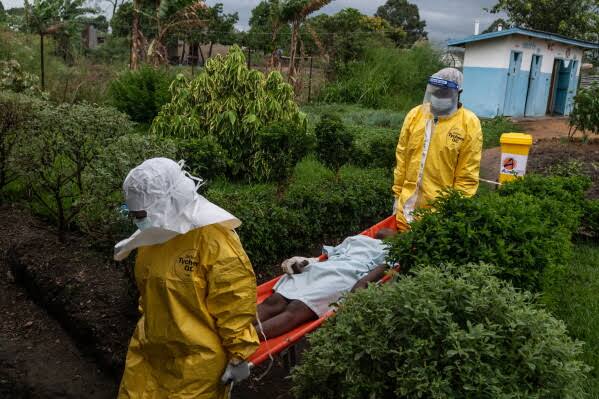
A clean sweep on a demanding metric
A peer-reviewed study published on 1 September in the US Centers for Disease Control and Prevention's journal Emerging Infectious Diseases has put a number on something Uganda's public health system has been building toward for nearly two decades: during a cross-border Bundibugyo virus outbreak this year, the country met every target in the international 7-1-7 timeliness framework, and beat most of them comfortably.
The 7-1-7 benchmark, developed jointly by the World Health Organization and the non-profit Resolve to Save Lives, is deliberately unforgiving. It sets three deadlines: detect a suspected outbreak within seven days of emergence, notify the relevant public health authorities within one day of detection, and complete seven defined early response actions within seven days of notification. It is a metric designed to be missed.
Uganda detected in six days. Notification happened the same day the event was recorded. All early response actions were completed within two days of notification. An incident commander was appointed within three hours of the first case confirmation.
The paper, led by J. Kayiwa and colleagues, is an Early Action Review — a structured after-action methodology — drawing on researchers from Uganda's National Public Health Emergency Operations Centre, the Africa Centres for Disease Control and Prevention, the UK Health Security Agency and the WHO. It was assembled through a two-day workshop of 74 participants from the Ministry of Health and its implementing and development partners, working in nine response-pillar groups to reconstruct the timeline and identify what worked and what did not.
The outbreak
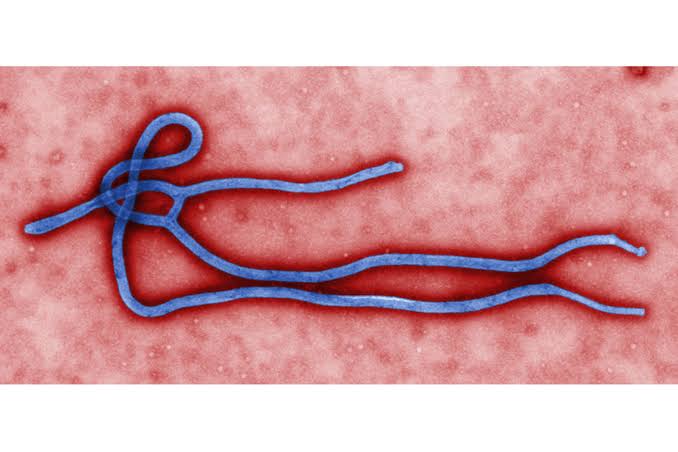
Bundibugyo virus is a documented Ebola species, named for the Ugandan district where it was first identified in 2007. It is one of the filoviruses for which no licensed vaccine and no approved specific therapeutic exists — a materially different situation from Zaire ebolavirus, for which licensed vaccines are available. Licensed Zaire vaccines show early evidence of partial cross-reactive immunogenicity, and candidate Bundibugyo-specific vaccines and therapeutics are undergoing WHO-led prioritisation, but a clinician facing a BVD patient in 2026 has supportive care and little else.
Uganda's index case was a 59-year-old Congolese national who sought care at a private hospital in Kampala on 11 May 2026 and died three days later. Uganda and the Democratic Republic of the Congo declared the outbreak simultaneously on 15 May. The WHO declared a Public Health Emergency of International Concern on 16 May, and the Africa CDC followed with a Public Health Emergency of Continental Security declaration on 18 May.
By 8 July, Uganda had confirmed 20 cases, 15 of them directly imported from Ituri Province in the DRC. The country recorded two deaths. The outbreak was declared over after 42 days passed without a new confirmed case following the discharge of the last patient on 16 July.
What made it work
Three enablers recurred across virtually every response pillar, and none of them was improvised during the emergency.
The first was leadership operating through coordination architecture that already existed: the National Task Force, the Incident Management System and the National Public Health Emergency Operations Centre. These are standing structures with defined roles, which is why an incident commander could be named within three hours rather than negotiated over days.
The second was accumulated institutional experience. Uganda has responded to filovirus outbreaks repeatedly since the Gulu Ebola epidemic of 2000, and that history is embedded in people, protocols and muscle memory rather than in documents alone.
The third was a trained, deployable rapid response workforce — teams that can be sent to a district without first having to be assembled and taught.
The through-line is that Uganda's speed came from preparedness investments made before the emergency, not from decisions made during it. That is the study's central and most transferable claim: institutionalised preparedness, pre-existing coordination architecture and structured after-action methodology produce measurable, reproducible gains in response timeliness.
Where the system still struggled
The review is not a victory lap, and its findings on failure are arguably more useful than its findings on success.
The most consequential clinical problem was diagnostic. The Bundibugyo strain in this outbreak presented predominantly with fever and gastrointestinal symptoms rather than the classic haemorrhagic signs that frontline case definitions emphasise. That atypical presentation delayed clinical recognition, particularly in private healthcare facilities, where staff trained on conventional Ebola definitions were poorly positioned to flag such patients early. The authors argue that BVD-specific job aids incorporating non-haemorrhagic presentations should become standard, replacing generic Ebola definitions that do not reflect the pathogen's documented clinical reality. It is a small, cheap, highly actionable recommendation — and the index case reaching a private Kampala hospital shows exactly what is at stake when it is not in place.
The second weakness was informational. Fragmented digital systems were cited as a bottleneck across the surveillance, logistics and data analytics pillars: parallel electronic platforms, limited real-time stock visibility and poor interoperability. This is a familiar problem in outbreak response globally, and the authors note something uncomfortable about how it was addressed — the proposed fixes remained largely siloed within individual pillars rather than converging on a unified cross-system solution. A coordination problem was met with pillar-specific answers.
The third was the border. Despite 15 of Uganda's 20 confirmed cases being directly imported from Ituri, real-time cross-border surveillance data-sharing was flagged as a bottleneck. The epidemiological link to Ituri was obvious from the outset, yet formal information-sharing mechanisms between Uganda and the DRC were not operating at the speed the situation demanded. Strengthening institutionalised bilateral coordination, coordinating point-of-entry screening and running joint investigations along the Uganda–DRC corridor were among the most frequently proposed immediate actions.

The outbreak Uganda contained is still raging next door
The context that gives Uganda's 20 cases their meaning lies across the border. As of 31 August 2026, the DRC had reported more than 6,100 confirmed cases and nearly 2,950 deaths in the same outbreak — the second-largest Ebola outbreak ever recorded — with case counts still climbing. Ituri Province, the source of most of Uganda's imported cases, remains the epicentre and accounts for roughly 84 per cent of the DRC's confirmed cases. A CDC analysis published in August found that several core response targets on the DRC side, including case detection, contact tracing and safe burials, had not yet been met.
The comparison is not a scorecard between two countries. It is a demonstration that the same pathogen, in the same corridor, in the same months, produces radically different outcomes depending on whether the receiving system has functioning emergency architecture. Uganda's 20 cases and the DRC's 6,100 are the same virus meeting different levels of preparedness.
Why it matters for Uganda's science agenda
The finding lands at a moment when Uganda is explicitly trying to argue that science and technology are economic infrastructure. National Science Week 2026 ran under the theme 'STI Works: Powering Uganda to a US$500 billion economy', and the government has spent five years channelling public investment into science, technology and innovation with the stated aim of moving from a commodity-based economy toward one anchored in industrial production and knowledge systems. The Uganda DeepTech Summit, held under that programme, pushed for urgent alignment of the education system with the demands of an AI-driven economy.
Published By | Tech Wiz