INTERNATIONAL SPACE STATION, in orbit
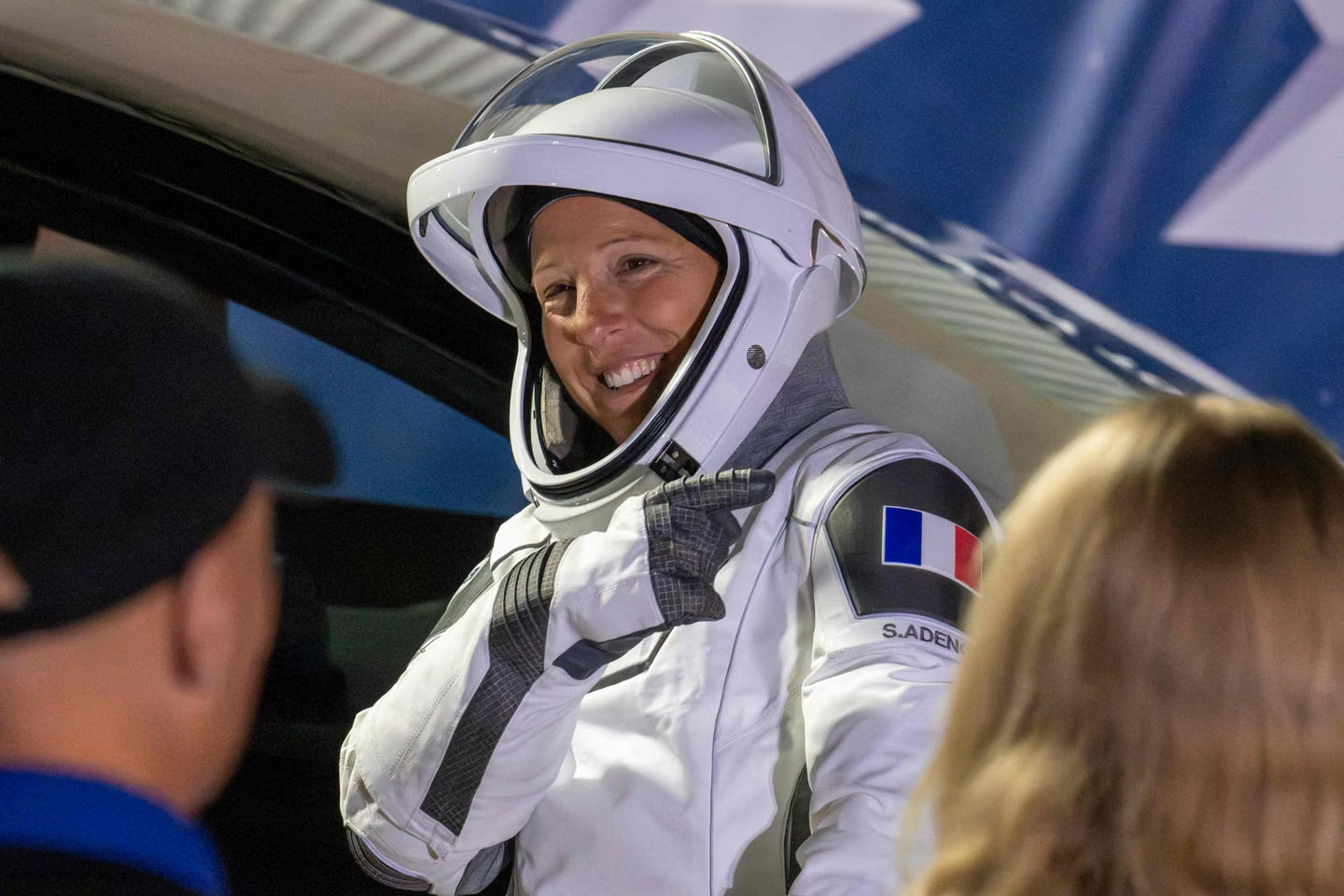
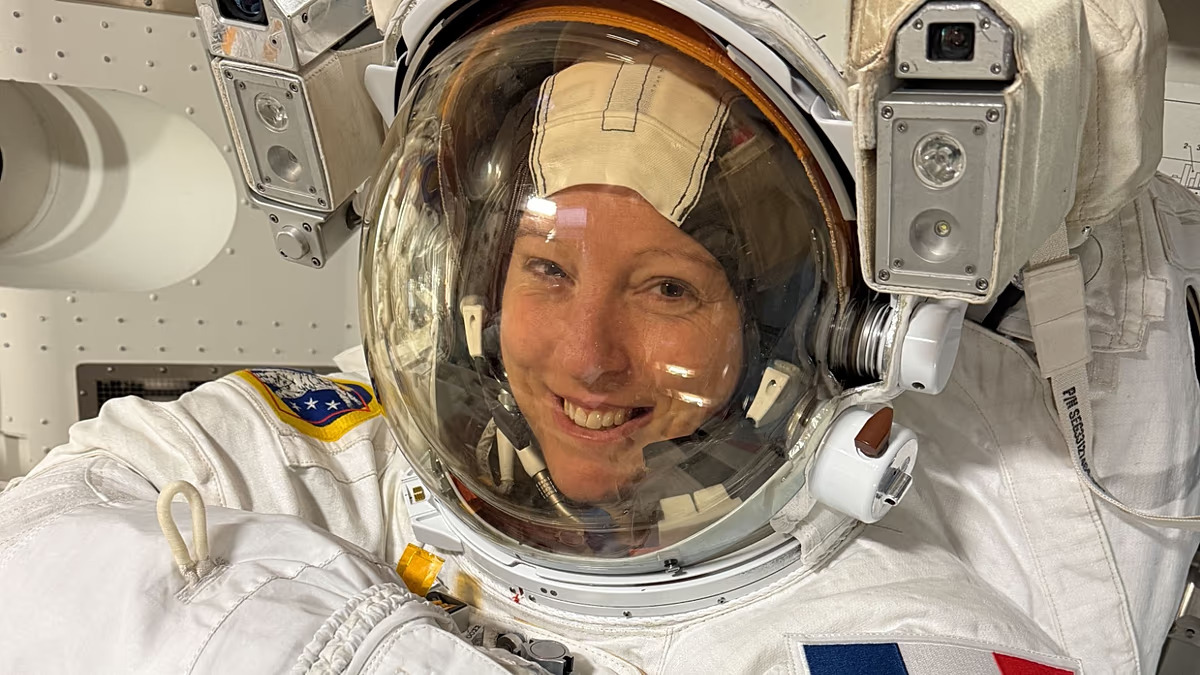
At 8:29 a.m. Eastern time today, a hatch on the International Space Station cracked open 250 miles above the Earth's surface, and out floated Sophie Adenot — engineer, former French Air Force test pilot, mother, and, as of this morning, the first woman from France to ever conduct a spacewalk.
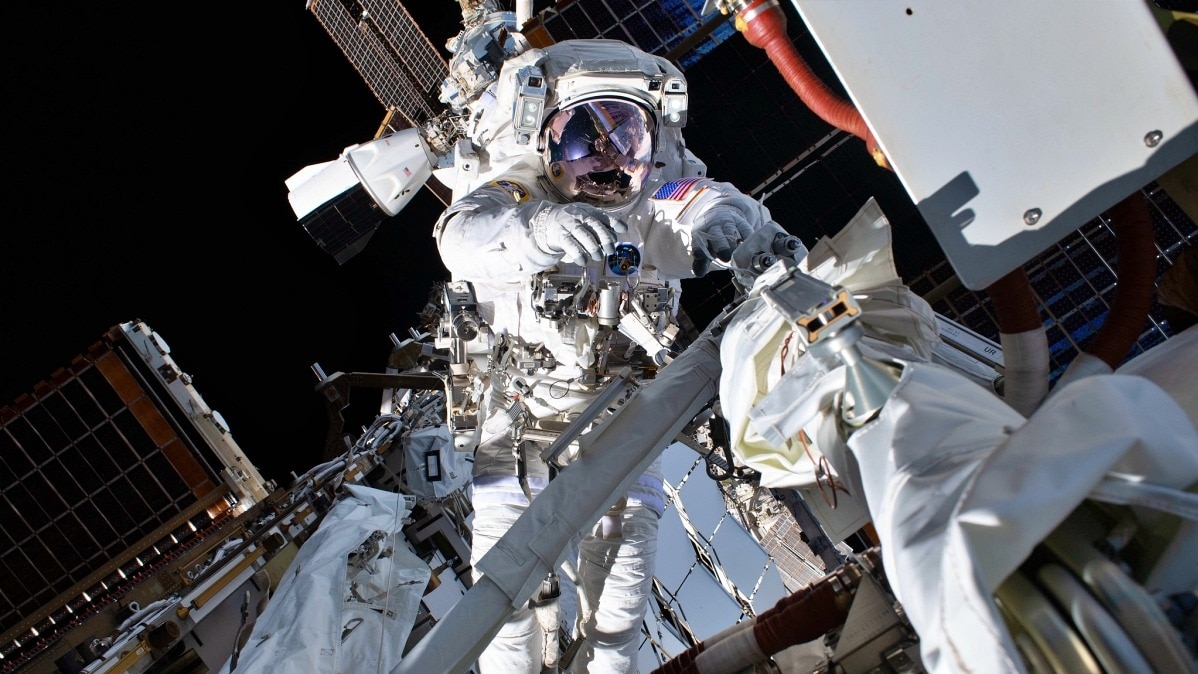
Alongside NASA astronaut Anil Menon, Adenot spent roughly six and a half hours suspended in the vacuum of space, tethered to the outside of the orbiting laboratory, on a mission with real stakes: replacing a piece of hardware that keeps Mission Control in Houston talking to the astronauts living and working on the ISS. It's the kind of spacewalk that doesn't make for flashy movie plots — no dramatic rescue, no satellite capture — but without it, a piece of the station's ability to communicate with Earth would eventually go quiet.
It marked the 97th spacewalk conducted by U.S. astronauts in the station's history, but for Adenot personally, and for France, it was a first of an entirely different order.
The Job: Fixing the Space Station's Phone Line
The target of the day's work was the Space-to-Ground Antenna, known by its acronym SGANT, mounted on the station's Z1 truss — the structural spine that runs along the top of the ISS. NASA describes the SGANT as a critical communications link, the hardware that allows high-speed data — video, telemetry, scientific results, and yes, the astronauts' own calls home — to flow between the station and the ground.
Antennas in orbit don't last forever. Exposed to a punishing cycle of extreme heat and extreme cold every 90 minutes as the station circles the planet, plus a steady bombardment of micrometeorite and orbital debris risk, hardware like SGANT eventually degrades and needs to be swapped for a fresh unit before it fails outright. That was the job today: Menon and Adenot venturing outside to physically detach the aging antenna and bolt a replacement into place, then verify it was transmitting properly before heading back inside.
It's painstaking, methodical work, made harder by the fact that astronauts on a spacewalk — NASA calls them "EVAs," for extravehicular activity — are essentially performing surgery while wearing a pressurized, bulky spacesuit that turns even simple hand movements into a deliberate, energy-sapping effort. Every tool has to be tethered separately so it doesn't drift away into orbit. Every bolt has to be tracked. A six-and-a-half-hour EVA is not unusual by NASA standards, but it is, by any normal human measure, an extraordinary physical and mental endurance test — conducted, in this case, by someone who had never done it before.
Menon, designated "EV1" and identifiable by the red stripes on his suit, led the operation; Adenot, "EV2" in an unmarked white suit, worked alongside him. In the days leading up to the spacewalk, Adenot had been open on social media about the intensity of her preparation. "A successful [spacewalk] starts long before the hatch opens, and that's where my focus has been these past few days: rehearsing, preparing and focusing," she wrote on X ahead of the EVA.
From Helicopter Cockpits to the Vacuum of Space
To understand why Adenot's walk resonates well beyond the technical details of an antenna swap, it helps to know where she came from — because her path to the ISS airlock is one of the more unusual astronaut résumés in recent memory.
Born in 1982 in the small town of Cosne-Cours-sur-Loire in central France, Adenot trained as an engineer, graduating from the prestigious ISAE-SUPAERO institute in Toulouse — France's answer to MIT for aerospace — where she specialized in spacecraft and aircraft flight dynamics. She later added a master's degree in human factors engineering from MIT itself, a discipline focused on the interface between complex machines and the humans who operate them, which turns out to be more or less the entire job description of an astronaut.
But before any of that led to a spacesuit, Adenot spent nearly two decades in military aviation. She joined the French Air Force in 2005 for basic and flight training, and went on to rack up more than 3,000 flight hours across 22 different types of helicopters. In 2018, she graduated with honors from the elite Empire Test Pilots' School at Boscombe Down in the U.K. — one of the most demanding test-pilot training programs in the world — and that same year became the first woman ever certified as a helicopter test pilot in France. From 2019 to 2022, she worked as an experimental test pilot for the French armaments directorate at the Cazaux Flight Test Center, the kind of job that involves strapping into aircraft that haven't been fully proven safe yet and finding out, professionally, what happens.
In November 2022, the European Space Agency picked Adenot from a pool of more than 22,000 applicants to join its newest astronaut class — one of the most competitive selection processes of any kind on the planet. She completed astronaut training at the European Astronaut Centre in Cologne, Germany, and was formally certified as an ESA astronaut on April 22, 2024. On February 13, 2026, she launched to the International Space Station for the first time, beginning a nine-month mission ESA has named "εpsilon" (Epsilon).
Along the way, she's also used her platform to reach far beyond the space community — including, notably, connecting with students in Kenya over a video link from orbit, part of a broader push by space agencies to use astronauts' visibility to inspire interest in science and engineering among young people who rarely see themselves reflected in the field.
Following — and Extending — a Short List of Names
Adenot's spacewalk places her in genuinely rarefied company. She is only the second Frenchwoman ever to fly to space at all, following pioneer Claudie Haigneré, who first flew in 1996. And in stepping outside the station today, Adenot became just the second European woman in history to conduct a spacewalk, following Italian astronaut Samantha Cristoforetti, who achieved that milestone in 2022.
That's a strikingly short list for an activity that's been part of human spaceflight since 1965, when Soviet cosmonaut Alexei Leonov became the first person ever to leave a spacecraft in orbit. Spacewalking remains one of the most physically demanding and highest-risk activities in the astronaut corps' repertoire, and historically, the pool of astronauts selected for it — and trusted with it — has skewed heavily toward a small number of veteran fliers, disproportionately men, from a handful of spacefaring nations. Adenot's walk today nudges that math, incrementally but unmistakably, in a different direction.
Today's spacewalk was also, in its own quiet way, a family and career milestone stacked on top of a national one: Adenot is a mother as well as a test pilot and engineer, part of a wave of parent-astronauts whose spaceflights have helped chip away at old assumptions about who gets to make these trips.
Expert Perspective: Why "Routine" Maintenance Still Matters
Spacewalks like today's rarely generate the same headlines as a crewed lunar landing or a Mars rover touchdown, and NASA and ESA both, by design, describe antenna-replacement EVAs in the driest possible technical language: "nominal," "planned maintenance," "consistent with the station's operational lifespan." But space policy analysts and former astronauts have long pushed back on the idea that this kind of work is somehow less significant than the flashier stuff.
The International Space Station is now well into its third decade in orbit, and keeping it running depends on a continuous, unglamorous drumbeat of exactly this kind of maintenance — batteries, solar array components, cooling system parts, and communications hardware, all of which degrade under the punishing conditions of low Earth orbit and all of which have to be swapped out by human hands, because no robot yet flying can reliably perform the kind of fine, adaptive manual work an EVA requires. Every spacewalk, including "routine" ones, also serves as a live rehearsal for the far riskier, far less routine spacewalks that will eventually be required on the way to the Moon and Mars, where there's no quick return to an airlock and no backup crew a short flight away.
There's also a symbolic dimension that agencies like ESA lean into deliberately. Firsts like Adenot's are, in part, recruitment tools — visible proof, for a new generation of engineering students, test pilots, and scientists in France and across Europe, that the astronaut corps is widening, not just staying static. ESA has been vocal in recent years about wanting its astronaut class to look less like the astronaut corps of the 1960s and more like the population it draws from.
What This Means for You
You don't need to care about orbital mechanics to feel the ripple effects of a moment like this one. Every time a space agency broadens who gets to fly — and who gets to do the most demanding, highest-visibility jobs once they're up there — it reshapes, in a small but real way, who a kid watching the livestream today imagines themselves becoming. Adenot's own outreach to students, including her video calls with schoolchildren in Kenya, is a direct, deliberate attempt to make that connection explicit rather than incidental.
More practically: the International Space Station remains humanity's primary continuously operating research platform in orbit, hosting experiments in medicine, materials science, and biology that regularly filter down into products and treatments back on Earth. Keeping its infrastructure — including its ability to talk to the ground — functioning isn't just an astronaut-corps curiosity. It's the plumbing that keeps decades of ongoing scientific research from going dark.
The Bottom Line
Sophie Adenot spent the better part of a workday today floating outside a spacecraft traveling at roughly 17,500 miles per hour, swapping out a piece of communications hardware most people will never think about, while quietly rewriting what "French astronaut" and "European spacewalker" can look like. It was methodical. It was, by NASA's own description, largely routine. And it was, for a helicopter test pilot from a small town in central France who once became the first woman in her country certified to test-fly military helicopters, still very much a first.
Details of the spacewalk timeline, crew assignments, and hardware were drawn from NASA and ESA mission statements; biographical details were drawn from ESA astronaut records and published profiles of Sophie Adenot.
Published By | Tech Wiz