Written By | Torch Media Africa

A homegrown fintech unicorn, a decade-long technology strategy, and new subsea and data-centre infrastructure are positioning Dakar as West Africa's next digital hub
SCIENCE & TECH
Senegal has spent the past two years assembling the pieces of a technology strategy that stands out even in a region crowded with ambitious digital agendas. The country is home to Wave, one of only a handful of Francophone African fintech unicorns; it has just commissioned Africa's largest submarine cable landing at Dakar; and in 2025 its government launched the New Deal Technologique Horizon 2034, a ten-year, $1.7 billion plan to make Senegal a regional digital hub. Together, these developments mark a shift from Senegal being known primarily for its political stability and agricultural exports toward a more deliberate positioning as a West African technology and fintech centre.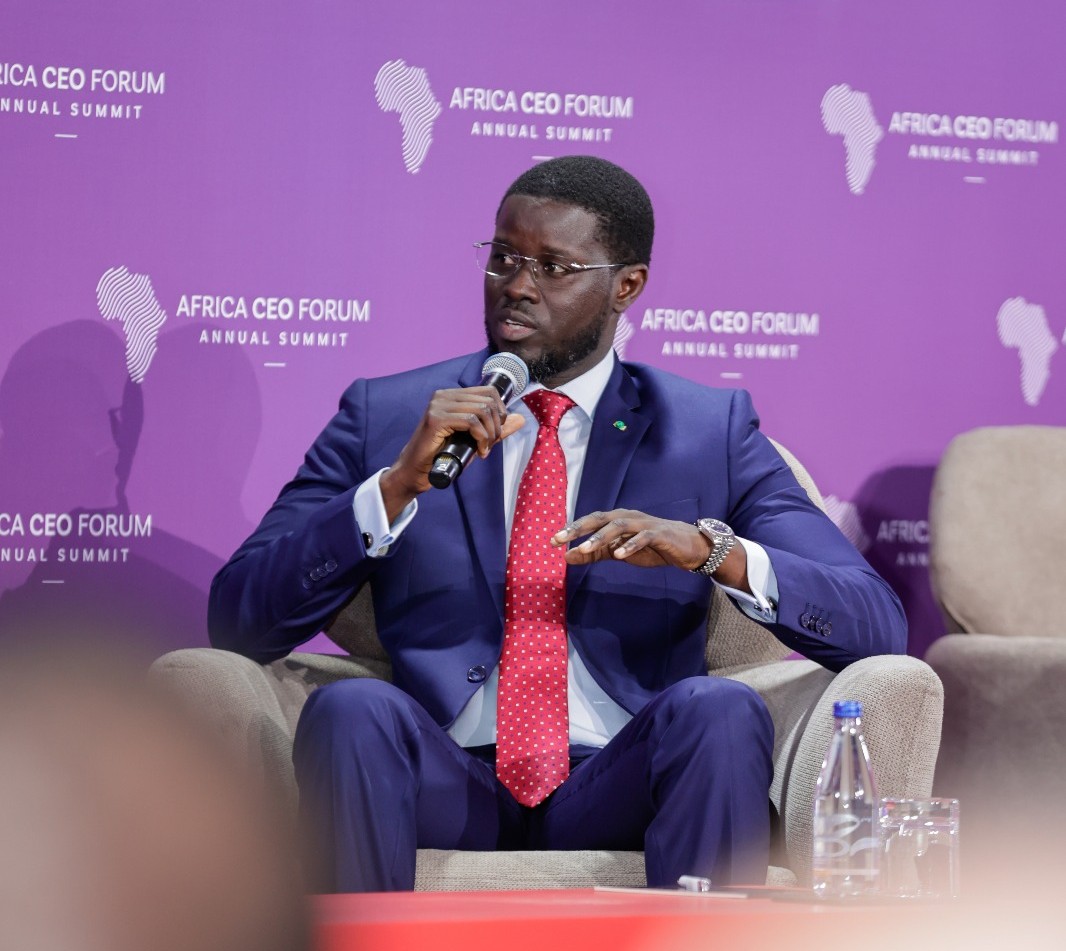
A $1.7 Billion Ten-Year Digital Strategy
In late 2025, under President Bassirou Diomaye Diakhar Faye, Senegal's government launched the New Deal Technologique (New Technological Deal) Horizon 2034, a strategy valued at 1,105 billion CFA francs — roughly $1.7 billion — designed to establish digital transformation as a central pillar of national development through 2034. The plan rests on four strategic pillars: digital sovereignty, digitalisation of public services, development of the digital economy, and positioning Senegal for African leadership in digital technology.
The targets attached to the strategy are specific and ambitious. By 2034, the government wants more than 500 recognised tech startups operating in the country, 150,000 direct jobs and a further 200,000 indirect jobs created in the digital sector, and digital activity contributing 15 percent of GDP — up from a much smaller base today. The plan also calls for training 100,000 IT specialists, certifying 90 percent of the country's digital experts domestically rather than relying on foreign credentialing, and dematerialising 90 percent of public services. The digital sovereignty pillar is explicit about keeping sensitive government and citizen data within Senegalese borders, building sovereign cloud infrastructure and strengthening cybersecurity regulation — a direct response to concerns, echoed by digital rights groups such as Paradigm Initiative, about dependence on foreign cloud providers and the balance between sovereignty ambitions and civil-liberties protections as surveillance and data-localisation rules tighten.
Wave: Francophone Africa's Fintech Standard-Bearer
No single company embodies Senegal's fintech rise more than Wave Mobile Money, which became Francophone Africa's first unicorn in September 2021 after closing a $200 million Series A round that valued the company at $1.7 billion — a valuation industry trackers such as PitchBook still place in the $1 billion to $2.5 billion range as of 2026. Wave's model, built around free deposits and withdrawals paired with a flat 1 percent fee on transfers, undercut the traditional telecom-operator mobile-money pricing that had dominated the region, and the strategy has translated into scale: the company now serves more than 20 million monthly active users — nearly half of Senegal's population — through a network exceeding 150,000 agents and roughly 3,000 employees, and commands more than 50 percent mobile-money market share in its home market.
Wave has expanded well beyond Senegal, building a footprint across roughly eleven African markets including Côte d'Ivoire, Mali, Burkina Faso, Niger, The Gambia, Sierra Leone, Cameroon, Uganda and the Democratic Republic of Congo. In July 2025 the company secured $137 million in debt financing led by Rand Merchant Bank, with participation from British International Investment, Finnfund and Norfund, bringing its cumulative capital raised to roughly $542 million. Beyond consumer payments, Wave increasingly functions as financial rails for small and medium enterprises across its markets, a role that has made it a reference point for how a homegrown platform can outcompete both traditional banks and telecom-operator incumbents in mobile money.
New Subsea Capacity and a Data-Centre Build-Out
Senegal's digital ambitions rest on physical infrastructure that has expanded substantially over the past year. In December 2025, national operator Sonatel commissioned the 2Africa submarine cable's landing at Dakar — part of the largest submarine cable system ever built around the African continent, spanning roughly 45,000 kilometres and connecting 33 countries across Africa, Europe and Asia. The cable's nominal capacity of 180 terabits per second is roughly ten times greater than the capacity of the cables it supplements, and Sonatel owns and operates the Dakar landing station, managing the backhaul that routes international traffic onward. Dakar now hosts landings for five undersea cables in total — ACE, MainOne, SAT-3, SHARE and 2Africa — giving Senegal one of the most diversified international connectivity profiles in West Africa and reducing the risk of the kind of single-cable outages that have periodically disrupted internet access elsewhere on the continent.
That subsea capacity is being paired with new data-centre investment. PAIX Data Centres, backed by pan-African infrastructure investor Africa50, broke ground on a facility in Dakar with a first phase — roughly 918 square metres, 1.2 megawatts of capacity and 330 server racks — scheduled to become operational in 2026. It joins existing facilities including Sonatel's own data centre, the Diamniadio government data centre, the Onix facility that serves as the 2Africa landing station, and Free Senegal's infrastructure. On the access side, the government has also moved to close rural connectivity gaps through a satellite rollout plan aiming to connect one million citizens by 2026, addressing the parts of the country that fibre and mobile towers have not yet reached.
A Startup Ecosystem Still Finding Its Scale
Senegal's broader startup ecosystem presents a more mixed picture than its flagship fintech success suggests. StartupBlink's 2025 rankings placed Senegal 97th globally, with the ecosystem contracting 3.1 percent year-on-year and roughly 62 startups tracked with combined funding just over $24 million for the year — modest figures next to regional leaders such as Nigeria and Kenya. A longer lens tells a more encouraging story: data-provider Tracxn puts cumulative funding raised by Senegalese startups across all rounds at roughly $572 million, a figure dominated by Wave's outsized raises but reflecting real depth beneath the headline company.
The government's response has been to formalise ecosystem support through the Startup Act, whose implementing mechanism — described officially as the country's Startup Ecosystem programme — became fully operational in the past year, alongside plans for a $300 million fund of funds intended to channel private capital into Senegalese technology companies. Officials and regional commentary, including from African Business, now describe Senegal as entering conversations alongside Nigeria, Kenya and South Africa as one of the continent's emerging digital-economy players, even though its startup funding volumes remain far smaller than those three markets. Internet penetration, meanwhile, stood at 60.6 percent as of October 2025 according to DataReportal's Digital 2026 report, covering roughly 11.5 million users — comfortably above the African average of around 39 percent, though still well behind North African leaders such as Morocco, whose penetration approaches 92 percent.
Digital Government and the Sovereignty Question
The dematerialisation target embedded in the New Deal Technologique — digitising 90 percent of public services by 2034 — points to a second front in Senegal's technology push: govtech. Public-service delivery in Senegal, as in much of West Africa, has historically required in-person visits for everything from business registration to tax filing, imposing time and cost burdens that fall disproportionately on citizens outside Dakar. Société Senegal Numérique SA, the state digital agency overseeing implementation of the New Deal, has framed the sovereignty and public-service pillars as interdependent: moving government services online is only trustworthy, in the state's own framing, if the underlying data infrastructure — cloud hosting, cybersecurity, identity systems — remains under Senegalese jurisdiction rather than hosted by foreign providers. That framing has drawn scrutiny from digital-rights organisations, which have flagged the tension between sovereignty-driven data-localisation rules and the risk that expanded state data infrastructure could also expand surveillance capacity absent robust independent oversight — a debate likely to intensify as implementation proceeds through the late 2020s.
Outlook
Senegal's technology story in 2026 is really two stories moving at different speeds. Wave has already demonstrated, at real scale, that a Senegalese-headquartered company can build regionally dominant financial infrastructure and compete directly with telecom incumbents across West Africa. The broader ecosystem around it — measured in startup counts, early-stage funding volumes and global rankings — has not yet caught up, and 2025's ecosystem contraction is a reminder that momentum in African tech is neither linear nor guaranteed. What is different about Senegal's approach compared with earlier waves of continental digital strategies is the scale of committed public capital: $1.7 billion is a substantial fiscal commitment for a country of Senegal's size, and the completion of the 2Africa cable and new data-centre capacity gives the plan physical infrastructure to build on rather than aspirational targets alone. Whether the New Deal Technologique's 2034 job and GDP-contribution targets are met will depend heavily on whether the $300 million startup fund of funds and the broader Startup Act framework can translate Dakar's improved connectivity into the kind of diversified startup base that, so far, has remained thinner than the country's fintech success alone would suggest.



