SCIENCE & TECH
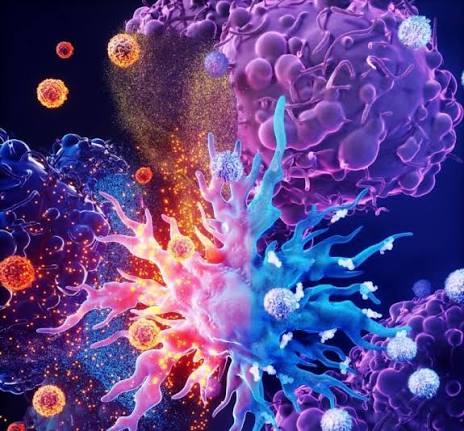
They're called "natural killer" cells for a reason — but for years, cancer researchers have watched these ruthless immune assassins fail spectacularly at their one job whenever they came up against a solid tumor. Blood cancers, sure. Leukemia and lymphoma, no problem. But drop a natural killer cell in the middle of a melanoma or a head-and-neck tumor, and it might as well be unarmed. Solid tumors are fortresses — dense, hostile, and rigged with chemical signals that disarm or repel the very immune cells sent to destroy them.
Now, a team at Stanford Medicine says it has found the combination lock. In a new study published in the journal Science Translational Medicine, researchers describe a way to transform ordinary, blood-circulating natural killer cells into a "tissue-resident" form that can move into solid tumors, survive the hostile environment inside, and kill cancer cells on contact — all without the months-long, patient-specific manufacturing process that many cutting-edge cell therapies require.
In mice, the souped-up cells slowed the growth of multiple types of solid tumors, including melanoma and head and neck squamous cell carcinoma. And when the researchers paired the modified cells with an already-approved cancer antibody drug, the results got dramatically better — tumors that grew unchecked in untreated mice were held in check for a full month in the combination-treated group, with no signs the mice were getting sicker.
“We show that these tissue-resident natural killer cells infiltrate into the solid tumors much better than conventional natural killer cells,” said John Sunwoo, MD, the Edward C. and Amy H. Sewall Professor in Stanford's School of Medicine and senior author of the study. “It was very reproducible, very striking and very clear.”
The Problem With Fighting Solid Tumors
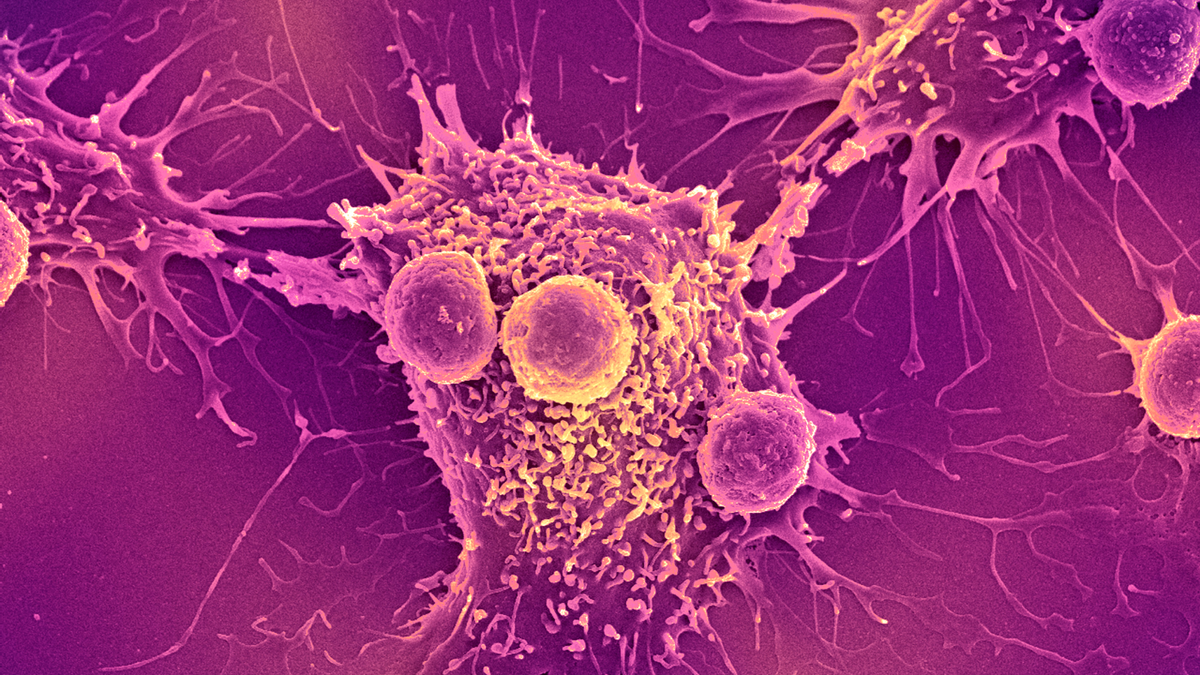
To understand why this matters, it helps to understand why solid tumors have been the immune system's Everest. Cell-based cancer therapies — where a patient's own immune cells are extracted, modified in a lab to better recognize and attack cancer, then infused back into the body — have genuinely transformed outcomes for blood cancers over roughly the last decade. CAR-T cell therapies, for instance, have pushed some leukemia and lymphoma patients into long-term remission after every other option failed.
But solid tumors, which make up the vast majority of cancer diagnoses — breast, lung, colorectal, melanoma, head and neck cancers, and more — have proven much tougher nuts to crack for exactly two reasons. First, they're physically harder for roaming immune cells to penetrate; a tumor's dense structure and abnormal blood supply act like a moat and walls. Second, even immune cells that do get inside often get chemically sabotaged, as tumors pump out signaling molecules that exhaust or actively suppress nearby immune defenses.
Natural killer cells seemed like they should have an advantage here. Discovered in the 1970s and named for their startling ability to recognize and destroy abnormal or virus-infected cells without needing any prior exposure or "training" — unlike T cells, which need to learn to recognize a specific threat first — natural killer cells are the immune system's fastest first responders. The problem was getting them to actually stick around inside a tumor and keep fighting instead of drifting back into the bloodstream or getting neutralized.
Cracking the “Goldilocks” Recipe
The Stanford team, led by Sunwoo along with co-lead authors Nina Horowitz, PhD, Imran Mohammad, PhD, and June Ho Shin, PhD, decided to look at a different population of immune cells almost entirely: the ones that don't circulate through the blood at all, but instead permanently settle down inside body tissues — the skin, the lungs, the liver, mucous membranes — and adapt to their local environment.
“For a long time, the study of immunology and disease in humans was concentrated on the blood immune cells,” Sunwoo explained. “With the advancement of tools and bioinformatics, we are now starting to look more at what's going on in tissue. For most immune cells, the tissue is where the action is.”
These tissue-resident natural killer cells had a confusing reputation in the scientific literature — some studies found them to be sluggish and even immune-suppressing, while others found them to be lethally effective killers. Nobody had cleanly explained why the same broad category of cell could behave in such opposite ways.
The Stanford team eventually traced the discrepancy to a single molecule: TGF-beta (transforming growth factor beta), a signaling protein produced by many cell types, including tumor cells themselves, that helps direct how immune cells develop. It turned out the amount and duration of TGF-beta exposure was everything.
“It's a Goldilocks kind of thing where if you give just enough of a TGF-b signal, then the natural killer cells become tissue resident with strong toxic activity against malignant cells,” Sunwoo said. “If you give too much TGF-b, they're still tissue resident, but they're inhibited and dysfunctional and they don't kill. You need it to be presented to the natural killer cells in just the right amount and in just the right manner.”
Constant, low-grade exposure to TGF-beta — the kind a cell might experience just floating near a tumor for a long time — produced weak, sluggish cells. But a short, sharp burst of the signal, delivered through direct physical contact with human tumor cells, produced the opposite: aggressive, tissue-settling natural killer cells loaded up with cell-killing weaponry, including perforin (a protein that literally punches holes in target cells) and granzyme A (a toxic payload delivered through those holes). The researchers found a reliable biological marker, a surface protein called CD39, that distinguished these lethal cells from their weaker, look-alike cousins.
From Petri Dish to Mice — And Soon, Patients
Armed with a repeatable "recipe" for producing these supercharged cells, the team tested them first in lab-grown tumor organoids, then in live mice bearing human melanoma and head-and-neck tumors. The modified cells didn't just survive inside the tumors — they infiltrated them far more effectively than standard natural killer cells and measurably slowed tumor growth over days and weeks.
The real breakthrough came when the researchers combined the engineered cells with cetuximab, a monoclonal antibody already approved by the FDA for treating metastatic colorectal cancer and advanced head and neck squamous cell carcinoma. Cetuximab works by tagging certain cancer cells so the immune system can find and destroy them more easily — but on its own, Sunwoo noted, it "doesn't work well as monotherapy."
Paired with the supercharged natural killer cells, though, a single dose of the combination suppressed tumor growth in mice far more effectively than either treatment alone, over a full 30-day observation window — and without apparent side effects. “Even at day 30, when the other mice were sick, the mice that received the combination seemed very healthy,” Sunwoo said, though he was careful to add a scientist's caveat: “This was just proof of concept,” and results in mice don't always translate directly to humans.
They don't plan to wait long to find out. Sunwoo's team is now preparing a Phase I clinical trial of the combination therapy in patients with advanced squamous cell carcinoma, which he says could begin before the end of 2026, pending clearance from the U.S. Food and Drug Administration.
The “Off-the-Shelf” Advantage
Perhaps the most practically exciting part of this discovery isn't the biology — it's the manufacturing math. Most cutting-edge cell therapies today are what's called "autologous," meaning they have to be custom-built from each individual patient's own cells, in a process that can take weeks and cost hundreds of thousands of dollars per patient. That's a huge bottleneck: sick patients sometimes can't wait weeks for a bespoke treatment to be grown, and the cost puts these therapies out of reach for huge portions of the world's population.
Natural killer cells have a crucial biological quirk that could change that equation: unlike T cells, they generally don't trigger a dangerous immune rejection reaction when transferred from one person to another. That means, in theory, natural killer cell therapies can be "allogeneic" — made in bulk from a single healthy donor's cells, frozen, and shipped out to treat many different patients on demand.
“It would be almost an off-the-shelf drug,” Sunwoo said. “It could make cell therapy much more accessible to a wider variety of patients.”
According to the Stanford team, cells collected from just one donor could be expanded into roughly 20 treatment doses within about two weeks using their newly patented production method. “They'll be cryopreserved, so we can make a bunch of doses and give it to different patients,” Sunwoo said. “There would be no delay.”
Expert Perspective
This isn't the only lab racing to unlock natural killer cells' cancer-fighting potential — a separate team at McGill University published related work in May 2026 on temporarily disabling the defenses tumors use to repel NK cells, and other groups nationwide have spent the better part of the last five years chasing "off-the-shelf" cell therapy concepts using NK cells, gamma-delta T cells and other unconventional immune populations.
What sets the Stanford work apart, according to the researchers, is the specificity of the mechanism: rather than just throwing more natural killer cells at a tumor and hoping some survive, they've identified precisely which molecular signal, in precisely what dose and duration, converts an ordinary immune cell into a specialized tumor assassin — and found a clean biomarker (CD39) to identify and sort for the right cells at scale. That level of mechanistic precision is what gives an early-stage mouse study enough credibility to justify jumping straight to a human trial.
Independent oncologists will want to see how the therapy performs once it moves beyond Sunwoo's own lab and into a clinical trial with real patients, whose tumors are messier and more variable than lab-grown mouse models. Early success in a Phase I trial — which primarily tests safety rather than effectiveness — would be an important first hurdle, but efficacy data in humans is likely still years away.
What This Means For You
If you or someone you love has ever faced a solid tumor diagnosis — the kind of cancer that makes up the overwhelming majority of cases, from breast and lung cancer to melanoma and head-and-neck cancers — this research points toward a future where immune cell therapy isn't reserved only for blood cancer patients with access to specialized academic medical centers and the ability to wait weeks for a custom-built treatment.
An "off-the-shelf" natural killer cell therapy, if it clears the clinical trial gauntlet in the coming years, could mean cell-based cancer treatment becomes faster to deploy, cheaper to produce, and available to a much broader population of patients — including those in smaller hospitals or lower-resource settings that could never support the infrastructure needed for personalized cell manufacturing.
It's also a reminder that a lot of modern cancer breakthroughs increasingly come not from inventing a brand-new drug from scratch, but from better understanding cells and signals the body already produces — in this case, decoding a decades-old mystery about why the same type of immune cell could act as either a cancer's best friend or its worst enemy, depending on a few molecular details.
To be clear: this is still a mouse study. No human patient has yet received this therapy, and Sunwoo's own caution about extrapolating from animal models to people is worth taking seriously. A Phase I trial, if it begins as planned by the end of 2026, will take time to enroll patients and generate results — realistically, years before this could become an approved treatment available to the public.
Conclusion
For decades, "natural killer" cells have been a tantalizing but underused weapon in oncology's arsenal — fast, aggressive, and uniquely suited to being mass-produced, but stubbornly bad at doing their one job inside the fortress-like environment of a solid tumor. Stanford's newly published recipe — a precisely dosed pulse of TGF-beta delivered through direct contact with tumor cells — appears to finally give these cells the tools and the instincts to break in and fight where it counts.
With a patent application filed, a production method that can churn out 20 doses from a single donor in two weeks, and a Phase I human trial reportedly on the horizon before year's end, this line of research is moving from petri dish to patient faster than many cancer therapies do. Whether the promise holds up outside a laboratory mouse remains the multi-million-dollar question — but for a field that has spent years searching for a scalable way to bring cell therapy to solid tumors, Stanford's "Goldilocks" recipe for supercharged killer cells is one of the more credible contenders to emerge in 2026.
Published By | Tech Wiz