Written By | Torch Media Africa
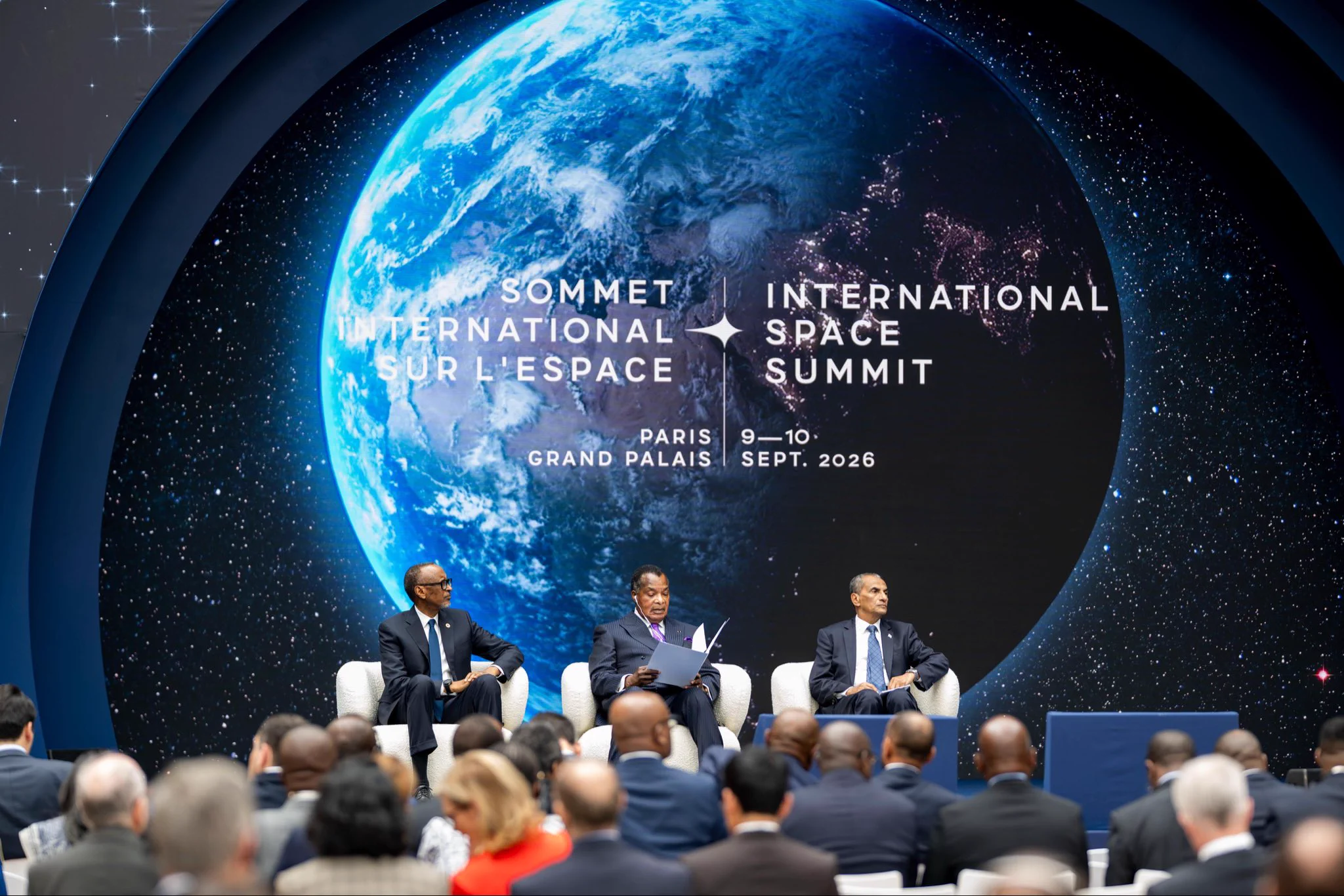
Budgets are up 32%, a continental agency is open in Cairo and new national agencies are forming, but the real test is whether satellites produce services people can use.
Tech
On 12 October 2026, Space in Africa and the African Space Agency (AfSA) announced that Dakar will host the sixth NewSpace Africa Conference from 19 to 23 April 2027. The theme is "Building, Financing and Delivering Africa’s Space Infrastructure". It shows how the sector’s focus is changing. For most of the past two decades, an African space programme was judged mainly by whether it got a satellite into orbit. In 2026, governments, analysts and financiers are increasingly asking what that satellite actually delivers.
This article looks at the money, the hardware and the institutions behind Africa’s space ambitions. It argues that the continent’s next phase depends less on launching more satellites than on building ground stations, data skills and regional partnerships that turn orbital assets into services.
The money is real and growing
According to Space in Africa’s 2026 African Space Budget Report, published in April, African governments allocated US$828.37 million to space activities in 2026, up from US$626.69 million in 2025. That is a 32.2% increase, and spending is about 142% higher than in 2018. The total includes national programmes and African Union contributions to AfSA. The firm values the wider African space economy, including commercial services and downstream applications, at US$24.95 billion in 2024. That is already above its 2022 forecast of US$22.64 billion for 2026. It projects US$39.52 billion by 2030, a compound annual growth rate of 7.97%.
The spending is concentrated in a few large projects. About 79% of South Africa’s space budget goes to the Square Kilometre Array, the radio-telescope project being built jointly with Australia. In late 2025 the South African site recorded "first fringes" using SKA-Mid dishes alongside the existing 64-dish MeerKAT array. In 2024 Morocco signed a US$1 billion deal with Israel Aerospace Industries for two Ofek 13 reconnaissance satellites, which works out to roughly US$202 million a year. Angola has put about 96.7% of its space budget into a single Earth-observation satellite, ANGEO-1. The report warns that relying on one flagship project leaves a national programme vulnerable to any delay or funding gap.
A fleet of small satellites
Africa’s presence in orbit is still small. Space in Africa counts 68 satellites launched by African countries after Algeria launched ALSAT-3A and ALSAT-3B from China in January 2026. The SpaceHubs Africa tracker lists 69 satellites, of which about 30 are active. Egypt’s SPNEX was launched on a Chinese Lijian-1 rocket on 10 December 2025. For comparison, African Business reports that US-based entities launched about 3,700 satellites in 2025 alone.
The makeup of the fleet is the more important point. Of the 68 satellites, 31 (46%) are nanosatellites, many roughly the size of a loaf of bread. Fifty are in the small class (pico to mini), and only 18 weigh more than 1,000 kg. In an April 2026 analysis, Space in Africa argued that many nanosatellite missions, including GhanaSat-1, Kenya’s Taifa-1, Nigeria’s EduSat-1 and Zimbabwe’s ZimSat-1, had short working lives and limited documented impact. A 1U CubeSat imaging at around 50 metres often adds little beyond the free 10-metre images from Europe’s Sentinel-2 satellites.
The Angola lesson: prove value first
The most useful case study comes from Angola’s National Space Program Management Office (GGPEN). Its general manager, Dr Zolana João, told Space in Africa that Angola used nanosatellites only to train engineers and chose not to launch them. Instead, it invested in ground infrastructure and in services built on existing satellite data. The best-known result is a revenue project for the Ministry of Finance. AI-based satellite mapping expanded the taxable property register from 450,000 to 11 million properties. With that result in hand, GGPEN won financing for ANGEO-1, a full Earth-observation satellite whose budget also covers training and downstream services. It then opened a €5 million hub linking startups to the Angosat-2 communications satellite, paid for by local and foreign investors rather than the state.
The economic argument is straightforward. The World Economic Forum estimates that downstream applications could account for up to 94% of the potential value of Earth observation by 2030. By that measure, a country’s first space investment should often be a professional ground station and a team of data analysts, not a satellite of its own. Dr João also notes that 100 km of road, at about US$2.5 million per kilometre, costs about as much as three working satellites. He argues that funding is less of a constraint than a clear account of what a programme will deliver. The talent problem is real as well. Engineers trained on one-off missions often find no follow-on project at home and move abroad.
Institutions are catching up
The institutions to manage this are only now taking shape. AfSA was inaugurated on 20 April 2025 at the Egyptian Space City in Cairo, under Council President Dr Tidiane Ouattara. Its mandate is to cut duplication across the AU’s 55 member states and act as the continent’s single contact point for international partners. In 2026 it is still hiring staff and setting up processes. Several national moves have followed in recent weeks:
Pooling instead of duplicating
The most promising projects are shared ones. AfDevSat, a climate-monitoring satellite backed by Egypt, Ghana, Kenya, Nigeria, Sudan and Uganda, was expected to launch by the end of 2024 but slipped. Space in Africa still rates a 2026 launch as likely. In May 2026, ministers from Kenya, Rwanda, South Sudan and Uganda agreed at the Connected Africa Summit in Nairobi to jointly fund a feasibility study for the Northern Corridor Regional Communication and Broadcasting Satellite Initiative. The study is expected to take 12 to 18 months. On the industrial side, Nigeria has issued a tender for a modular satellite assembly, integration and testing (MAIT) facility, which would reduce reliance on foreign test centres.
Big gaps remain. No proposed African spaceport has started construction, so any regional satellite will almost certainly launch from outside the continent. Nearly every national programme relies on foreign partners in China, Europe, the United States, India or Israel for hardware and launches. Commercial satellite internet is also expanding fast, with Vodacom Lesotho launching a Starlink-based enterprise service and Paratus Namibia launching Eutelsat OneWeb, both in October 2026. That growth raises a further question about whose infrastructure Africa’s connectivity will depend on.
What to watch
Conclusion
Africa’s space sector has more money, better institutions and a more honest debate about results than at any point in its history. The risk is that rising budgets go into launches that look good but deliver little. Evidence from Luanda to Kigali suggests that the strongest programmes treat a satellite as one part of a service chain, starting with a clear national problem, then the ground station and data team, with the satellite last. The countries that follow that order are most likely to show the value of their space programmes in tax revenue, harvests and flood warnings.



