Written By | Torch Media Africa
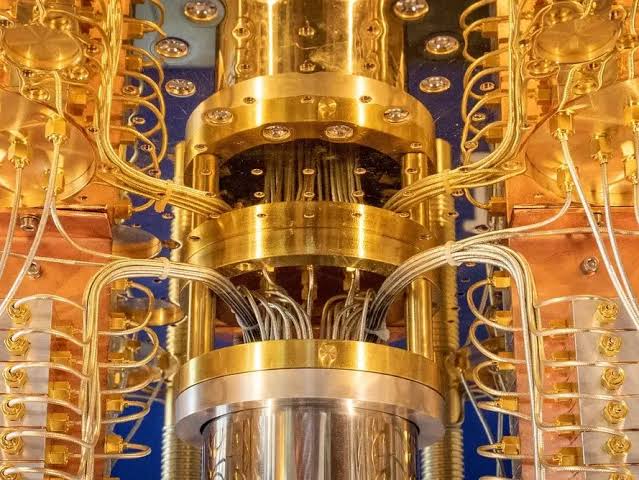
Swedish physicists say they have found a shortcut that makes some quantum computer operations MORE THAN 1,000 TIMES FASTER — collapsing thousands of painstaking control cycles into a single pulse.
SCIENCE & TECH
Every quantum computer on Earth is racing a clock it cannot see.
The moment a quantum machine begins a calculation, the universe starts trying to ruin it. A stray electrical hum. A flicker of heat. A single cosmic ray arriving from a star that died before our solar system existed. Any of these can knock a fragile quantum state off course and destroy the information it carries. The longer an operation takes, the more chances the universe gets.
This is the reason quantum computing has spent two decades being perpetually five years away. It is not that the machines cannot compute. It is that they cannot compute for long enough.
Now a team at Chalmers University of Technology in Sweden, working with a colleague at Tianjin University in China, says it has found a way to slash the time a whole category of quantum operations takes — not by a few percent, not by double, but by a factor of more than a thousand.
Their paper, "Single-Period Floquet Control of Bosonic Codes with Quantum Lattice Gates," was published in Physical Review Letters and announced this week. If it survives contact with a real laboratory, it removes one of the most stubborn bottlenecks standing between today's temperamental prototypes and the fault-tolerant quantum computers that governments and corporations have spent billions chasing.
The Tyranny of the Clock
"The fundamental building blocks of quantum computers, known as qubits, are so sensitive that even the smallest disturbance can cause the quantum state to deviate from the target, resulting in the loss of information," said Lei Du, a researcher in Applied Quantum Physics at Chalmers and the study's lead author. "If too many errors accumulate before they can be corrected, the computation can fail."
Ordinary computers have this problem too. Cosmic rays really do flip bits in the memory of ordinary laptops. The difference is that classical error correction is a solved problem — cheap, fast, and so routine that most people never learn it is happening. Quantum error correction is neither cheap nor fast, because you cannot simply copy a quantum state to check it against a backup. The laws of physics forbid it.
So the field has had to invent stranger solutions. And one of the strangest, and most promising, is the bosonic code.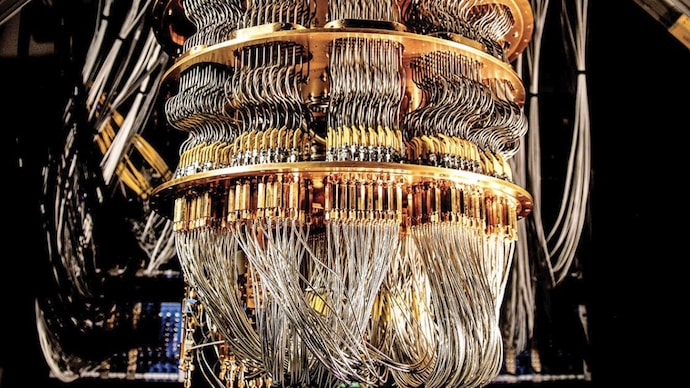
Don't Trust the Qubit. Trust the Room.
A conventional quantum computer stores its information in individual qubits — tiny circuits, trapped ions, or single atoms, each holding one delicate unit of quantum information. Protecting that information usually means surrounding each fragile qubit with a crowd of additional qubits whose only job is to watch it and catch mistakes. Estimates for how many physical qubits are needed to produce one reliable "logical" qubit have historically run into the hundreds or thousands, which is a large part of why useful quantum machines remain out of reach.
Bosonic codes take a different route.
"Rather than storing quantum information in individual qubits, bosonic codes encode information in the microwave fields found within superconducting circuits," explained Tangyou Huang, a researcher in Quantum Technology at Chalmers and a co-author of the study. "This approach has been shown to provide stronger protection against certain types of errors."
The intuition is worth sitting with, because it is genuinely beautiful. Instead of writing your data on one fragile object and hiring a hundred guards, you write it into the standing pattern of a microwave field filling a superconducting resonator — the shape of a note humming inside a metal cavity. A single dropped photon does not erase a note. It slightly alters its shape, in a way that can be detected and undone. The redundancy is built into the physics of the field itself, rather than bolted on with extra hardware.
Bosonic codes have been one of the most closely watched ideas in the field for years, for exactly this reason. They have also carried one enormous practical liability.
Thousands of Cycles, and Every One a Risk
Storing information in a microwave field is one thing. Doing anything useful with it is another.
Quantum operations on bosonic states are notoriously difficult to create and control. The established technique, known as Floquet control, works by driving the quantum system with a periodic control signal — a rhythmic push, repeated over and over, each cycle nudging the field a little closer to the desired shape. Building up a useful operation this way has typically required the system to be guided through thousands of repeated driving cycles.
Every one of those cycles is time. And every unit of time is another opportunity for the environment to intrude.
It is a maddening trap: the very encoding scheme that best protects quantum information from errors has been the one that takes longest to manipulate, handing back in exposure much of what it gained in protection.
The Lego Castle
The Chalmers approach attacks the problem from an unexpected direction. Rather than optimising the assembly process, Du and Huang changed what is being assembled.
At the heart of the work is a concept the same team proposed only recently: quantum lattice gates, a universal set of elementary building blocks for controlling bosonic quantum states. Think of them as shortcut commands — prefabricated operations rather than long sequences of individual instructions.
"You can think of it like building a large Lego castle," Huang said. "Instead of assembling it brick by brick and risking mistakes along the way, quantum lattice gates act like pre-built Lego modules that can be connected quickly and efficiently."
The new paper's central result is that these gates can be implemented within a single driving cycle rather than several thousand.
"Our method shows that a diverse range of quantum operations on bosonic states can be completed within a single driving cycle, rather than the several thousand cycles that have been required previously," Du said. "This makes the operations both faster and more efficient, while reducing the risk that disturbances will corrupt the information before the process is finished. It represents an important step towards fault-tolerant quantum computers."
That is where the thousand-fold figure comes from. It is not a marketing number derived from an optimistic benchmark. It is the ratio between "several thousand periods" and "one."
The Catch You Should Know About
Here is the caveat that separates responsible reporting from hype, and the Chalmers team states it plainly themselves: this is a theoretical study.
No microwave cavity has yet been driven through a quantum lattice gate in a single period in a laboratory. The result is a mathematical demonstration that it can be done, along with a control scheme for doing it. The gap between "the equations permit this" and "the fridge in the basement actually did it" has swallowed plenty of promising quantum proposals before.
What makes this one more credible than most is that it does not require new hardware.
"A key advantage of our approach is that it can be implemented using existing superconducting quantum circuit platforms," Huang said. "We are already discussing possible experimental realisations with colleagues at Chalmers, and we hope to see a demonstration of the method in the near future."
That matters enormously. Superconducting circuits are the technology behind the best-funded quantum efforts in the world, and Chalmers itself is building a 100-qubit superconducting quantum computer in-house. The researchers are not asking anyone to invent a new machine. They are proposing a better way to drive the machines that already exist — and the people who would test it work down the corridor.
Expert Perspective and the Money Behind It
The work sits inside one of the most heavily backed quantum programmes in Europe. Funding came from the Wallenberg Centre for Quantum Technology — a twelve-year, one-billion-Swedish-krona effort explicitly intended to put Sweden at the front of the field — together with the Knut and Alice Wallenberg Foundation and, on the Chinese side, the National Natural Science Foundation of China. The authors are Tangyou Huang, Lei Du and Lingzhen Guo, split between Chalmers and Tianjin University.
That Swedish-Chinese collaboration is itself a small story in an era of hardening technological borders. It is also a reminder of how the physics community actually works: quantum error correction is a fundamental problem, and fundamental problems have never respected passports.
The independent significance of the claim rests on a simple test that any physicist will apply. Speeding up a gate is only a win if fidelity holds. A thousand-fold faster operation that is ten times less accurate is worse than useless. The paper's argument is that a single-period implementation reduces the total window in which decoherence can act, which should cut error rates rather than raise them — but the decisive evidence will come from measured gate fidelities on real hardware, not from the theory.
"Our results address one of the major bottlenecks in the field: how to quickly and reliably create and control the error-correcting quantum states that could play an important role in future quantum computers," Du said.
What This Means For You
Nothing, this week. Nobody is putting a bosonic code in a phone.
But the reason governments and companies care about the pace of quantum error correction is worth understanding, because the applications are not abstract. A fault-tolerant quantum computer would let chemists simulate molecular reactions exactly rather than approximately — the single most plausible route to designing new drugs, better batteries and industrial catalysts from first principles instead of by trial and error. It would transform how we model energy systems and optimise logistics networks. And it would break the public-key cryptography that currently protects essentially every banking transaction, medical record and encrypted message on the planet.
That last point is why the timeline matters to ordinary people. Encrypted data being harvested today can be stored and decrypted later, once a sufficiently capable quantum machine exists — a strategy security professionals grimly call "harvest now, decrypt later." The migration of the world's systems to post-quantum cryptography is a project measured in decades, and every result that shortens the road to fault tolerance tightens that deadline.
A thousand-fold speedup in one class of operations does not, on its own, deliver a code-breaking machine. It does move a wall that has been sitting in the way for years.
The Verdict
Quantum computing has a long and slightly embarrassing history of breathless announcements that turned out to describe a step rather than a leap. This is a step. It is theoretical, unverified in hardware, and confined to one family of error-correcting codes.
But it is a step aimed squarely at the field's real enemy, which was never a shortage of qubits. It was always time.
If the Chalmers team is right — and the experiment they need is being discussed with colleagues in the same building — then a class of operations that used to demand thousands of rhythmic pushes will need exactly one. In a discipline where the entire game is finishing before the universe notices what you are doing, that is not a marginal improvement.
That is a different game.



