WASHINGTON, D.C.
Show Me The Money: Who Got What
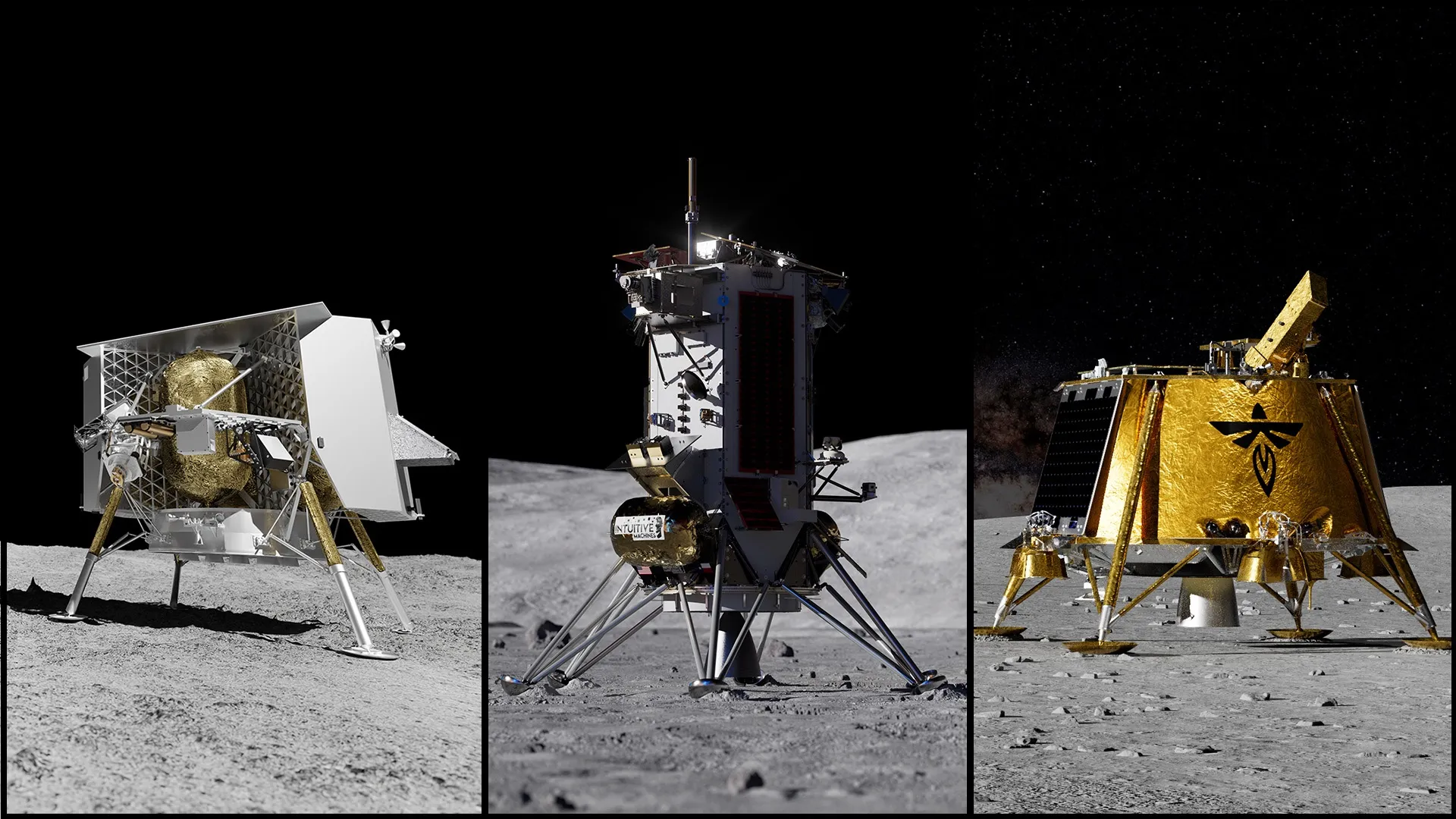
The numbers break down like this. Astrobotic, the Pittsburgh-based lunar logistics company, picked up the lion's share at $297.9 million for two separate lander deliveries. Firefly Aerospace, based in Texas, landed a $144.2 million contract for one mission. Intuitive Machines, out of Houston — the company that made headlines becoming the first private outfit ever to softly land a spacecraft on the Moon — picked up $148.3 million, also for a single delivery.
All four missions fall under NASA's Commercial Lunar Payload Services program, known in the industry by its acronym, CLPS (pronounced, appropriately, "clips"). Think of CLPS as NASA's version of hailing an Uber to the Moon: instead of building and owning every rocket and lander itself the way it did during Apollo, the agency pays private companies for the ride and the delivery, then focuses its own resources on the science payloads going along for the trip.
"These new awards to our commercial partners, totaling nearly $600 million to land more missions on the Moon with science payloads, demonstrate our commitment to accelerating our effort to build a long-term presence on the lunar surface, and give us more opportunity to develop the skills we need to prosper there," said Lori Glaze, associate administrator for NASA's Human Spaceflight Mission Directorate.
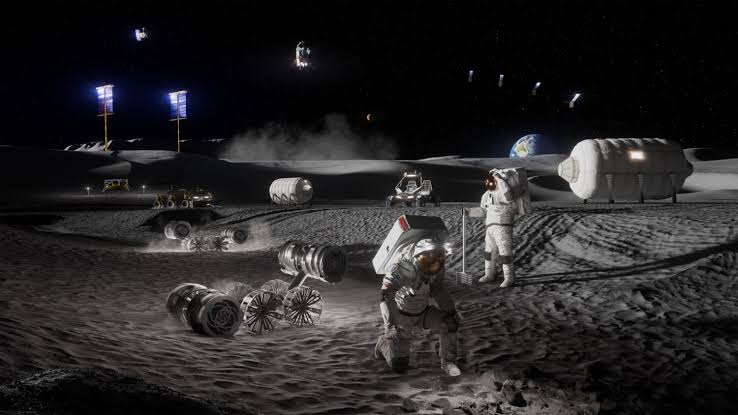
Crucially, none of the three companies are starting from scratch. Each will fly upgraded versions of landers that have already made the trip to the Moon before, letting NASA move faster by building on hardware with a track record rather than gambling on brand-new, unproven designs. NASA currently has 17 separate lunar surface deliveries in the pipeline through various commercial partners — this batch of four is simply the newest wave.
"We're building a proving ground for Moon Base operations," said Ryan Stephan, NASA's acting director of cargo landers for the Moon Base program. "Accelerating our Moon mission ordering cadence and launch opportunities enable us to move quickly to learn, iterate, and improve."
The Real Star Of The Show: Three Boxes Of Instruments
Here's the twist that makes this round of missions genuinely interesting to scientists, even if the dollar figures are what grab headlines: every single one of the four landers, regardless of which company built it or where on the Moon it touches down, will carry the exact same trio of NASA science instruments.
That's not an accident or a cost-cutting shortcut — it's the entire point.
The first instrument is the Stereo Camera for Lunar Plume Surface Studies, or SCALPSS, a set of four cameras that use stereo photogrammetry — essentially the same principle that lets your eyes perceive depth — to build detailed 3D images of what happens when a lander's rocket engine slams into the lunar surface during descent. Because the Moon has no atmosphere to slow down or soften the blast, landing engines kick up sprays of abrasive dust and debris that can travel at extraordinary speeds, potentially damaging nearby equipment or other spacecraft. By watching this happen across four different landers, with different engines, different fuels, and different landing sites, NASA scientists hope to build far more accurate computer models predicting how dust behaves — a problem that becomes urgent fast once you start planning for multiple spacecraft landing near each other, as any real "base" would require.
The second instrument, the Laser Retroreflector Array, sounds almost quaint by comparison: a passive device about the size of a cookie, built from eight quartz prisms mounted in a small dome, that simply bounces laser beams back at whatever spacecraft or lander fires them at it. It requires no power, no batteries, and no maintenance, meaning it can sit on the lunar surface essentially forever, acting as a permanent, precise location marker that future orbiters and landers can use to pinpoint their exact position. NASA plans to scatter more of these arrays across the Moon over time, gradually building out a navigation network — something like the lunar equivalent of GPS satellites, except fixed to the ground.
The third instrument, the Linear Energy Transfer Spectrometer, tackles perhaps the least visible but most dangerous hazard of them all: radiation. Without a thick atmosphere or global magnetic field to shield it the way Earth is shielded, the Moon's surface is bathed in a steady stream of cosmic and solar radiation that poses a serious long-term health risk to astronauts. The spectrometer will measure the intensity and type of radiation at each of the four landing sites, using a compact, flight-proven silicon detector, feeding data that engineers will use to design safer spacecraft, shielding, and habitats for the humans who eventually follow.
"By flying the same science instruments on multiple landers, we will better understand potential hazards during landing and build out a global network of environmental data and location markers on the Moon," said Joel Kearns, NASA's deputy associate administrator for exploration in the agency's Science Mission Directorate. "It's akin to having weather stations in different locations on Earth. These three payloads are flight-proven and their data is critical to supporting safe human exploration of the lunar surface."
Not Just Landers: NASA's Bigger Wish List
The four lander missions are just one piece of a much larger buildout NASA revealed alongside the funding announcement. The agency is also weighing a proposal to send a rover called PROMISE — short for Polar Rover for Observation, Mapping, and In-Situ Exploration — to the lunar surface. PROMISE would essentially be a hybrid built from engineering know-how developed for NASA's Mars rovers, Perseverance and Curiosity, repurposed to study both the Moon's surface and what lies beneath it, while hunting for resources that could one day support a permanent base.
Beyond that, NASA says it plans to solicit proposals for additional landers carrying a power-and-avionics technology demonstration, another package of science instruments, and an optical imager specifically for the lunar South Pole — the region NASA has targeted for its eventual permanent outpost because of the ice believed to be trapped in permanently shadowed craters there. The agency also intends to open a broader solicitation for Moon Base technology demonstrations, and to begin pursuing a dedicated lunar communication and navigation relay constellation — essentially a network of satellites that would keep the Moon in constant contact with Earth and help spacecraft navigate the lunar surface far more precisely than is currently possible.
This all fits into a timeline space watchers have been tracking for months: NASA has said it wants to ferry astronaut crews to a semi-permanent base near the lunar south pole by 2032, with a fully permanent outpost — complete with power from a nuclear reactor — targeted for 2036.
What This Means For You
It's easy to hear "$600 million" and "the Moon" and assume this is a story that only matters to astronauts and space nerds. It isn't.
For starters, this is public money, and it's part of a much larger, sustained federal investment in returning Americans to the lunar surface and staying there — spending that ripples through the economy via thousands of engineering jobs at companies like Astrobotic, Firefly, and Intuitive Machines, and the dense web of suppliers and contractors behind them. When NASA money flows into three mid-sized private space companies rather than a single giant contractor, it also spreads out economic benefit and, NASA argues, sparks more competition and innovation than a single monolithic program would.
There's a technology trickle-down angle too. Instruments built to survive the Moon's brutal radiation, extreme temperature swings, and abrasive dust tend to find their way, in modified form, into technologies much closer to home — from more resilient satellite communications to better radiation shielding for medical equipment. Lunar navigation technology, similarly, has a long history of informing the GPS and positioning systems embedded in everyday consumer electronics.
And if you're the kind of person who finds the whole enterprise of returning to the Moon thrilling on its own terms, this batch of missions matters for another reason: it's a genuine step-change in pace. NASA is essentially running a live experiment in whether commercial partnerships can get humanity back to the Moon — and keep it there — faster and cheaper than a government-only approach ever could. The verdict on that experiment is still years away, but late 2028 just became a date worth circling.
The Bottom Line
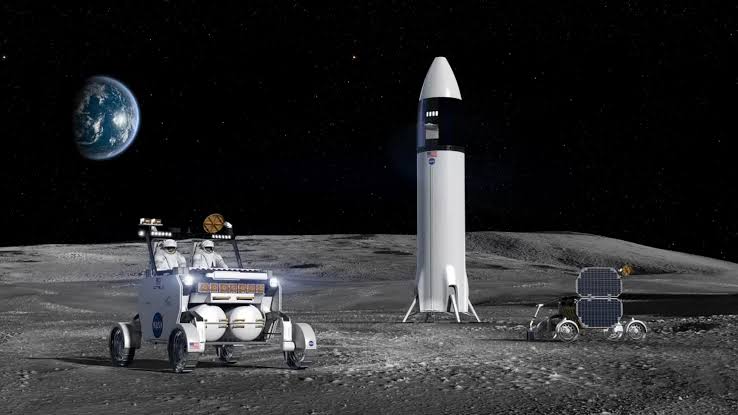
Four landers. Three companies. One shared set of instruments designed to answer the unglamorous questions — how dust behaves, how to navigate precisely, how much radiation is lurking — that will ultimately decide whether NASA's dream of a permanent lunar outpost is actually survivable. It isn't as flashy as a crewed launch or a dramatic splashdown, but this is what building a Moon base actually looks like in practice: incremental, instrumented, and increasingly commercial.
If everything goes to plan, by the time these four landers touch down in late 2028, NASA will have a genuinely global dataset — literally, global on the Moon — to lean on as it starts moving from robotic scouting missions toward the far riskier business of putting boots, and eventually homes, on the lunar surface for good.
Sources: NASA official press materials (nasa.gov); ScienceDaily; Scientific American; Washington Times; Houston Innovation Map; and additional reporting on NASA's Commercial Lunar Payload Services program.
Published By | Tech Wiz