Written By | Torch Media Africa
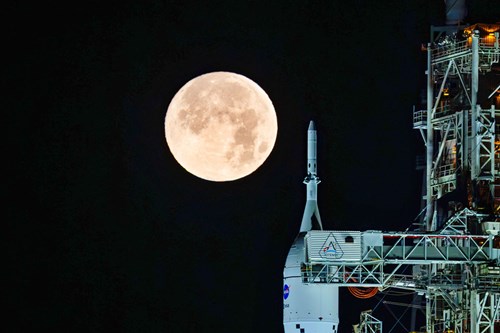
Stubby rockets, a slimmed-down spacesuit and a high-stakes showdown between SpaceX and Blue Origin: inside the Artemis update that could decide whether America beats China back to the Moon.
KENNEDY SPACE CENTER, Florida
NASA wants to put boots on the Moon again as early as 2028, and it is betting on a plan with more moving parts than a Swiss watch factory. At a briefing dubbed 'Artemis Acceleration' at Kennedy Space Center on Friday, October 23, agency leaders laid out how they intend to turn a once-sluggish programme into a sprint for a crewed lunar landing as early as 2028.
Speaking alongside Associate Administrator Amit Kshatriya and Artemis programme manager Jeremy Parsons, NASA Administrator Jared Isaacman promised the mission would be more than a nostalgic replay of 1969. 'This will not be a repeat of the flags and footprints,' he said, according to Spectrum News coverage. The long-term goal, he added, is a permanent base on the Moon, then on to Mars.
The catch? Getting there requires two private companies' lunar landers, a rocket that is still being stacked, an upper stage that has just been swapped out, and a spacesuit that has been put on a diet. Here is the full story of the plan, and why its critics are nervous.
Artemis III Gets a Big Rewrite: A Test Flight, Not a Landing
The headline shift happened earlier this year. Isaacman announced in February 2026 that Artemis III would no longer try to land on the Moon, because the programme was not ready. Instead it became a low-Earth-orbit rehearsal, targeted for no earlier than summer 2027, flying from Launch Complex 39B aboard the Space Launch System, or SLS.
The crew, according to Spectrum News, is Commander Randy Bresnik, mission specialists Andre Douglas and Frank Rubio, and European Space Agency pilot Luca Parmitano. Over roughly two weeks, they will practice the rendezvous and docking manoeuvres that a real lunar landing would depend on. NASA slides described by NASASpaceflight show the Orion capsule docking with a prototype of Blue Origin's Blue Moon lander on flight day three, then later docking with a SpaceX Starship on flight day eight.
The Blue Moon docking is expected to last about two days, though the lander could technically loiter in orbit for up to a month; NASA wants to limit that to protect the vehicle. The Starship demonstration is shorter, about two hours, and the crew will not enter it. Parsons noted the Starship in question carries a docking system built into its nose cone.
It is a pragmatic reset. Rather than gamble four astronauts on an untested landing, NASA will first prove the awkward handshake between a capsule and two very different spacecraft.
The 'Stubby' Rocket Rolling Out in Florida
Inside the giant Vehicle Assembly Building, the hardware is slowly taking shape. NASA has finished the first phase of stacking the twin solid rocket boosters, and the orange core stage is due to be lowered between them the following week, NASASpaceflight reports. The Artemis III stack will be unusually short: because the mission stays in low Earth orbit, it needs no upper stage, and a cylindrical spacer will position Orion so it still fits existing ground equipment.
That stubby rocket will roll to Pad 39B first for a fuelling test with no capsule on top. The test matters because hydrogen leaks at the tail service mast umbilicals dogged the first two Artemis missions. NASA began redesigning those connectors in April, but the tanking test has slipped to several months from now. Spectrum News reports a year-end tanking test is planned ahead of the launch, with assembly and integration time cut roughly in half.
Anyone who remembers the delays and scrubbed countdowns of Artemis I knows that fuel leaks are the kind of gremlin that can eat months. Watch this test closely.
Big Rocket Shake-Up: The Upper Stage Switcheroo
One of the biggest decisions is what pushes astronauts beyond Earth orbit on Artemis IV. NASA cancelled the long-planned Exploration Upper Stage earlier in 2026 after cost and schedule overruns. The older interim stage, derived from a design whose production line has closed, exists in only three units: two have flown and the third has been reassigned to Artemis IV.
NASA has now picked United Launch Alliance's Centaur V as its standard upper stage going forward, NASASpaceflight says, including a high-energy version and a variant stretched to hold more propellant. The agency will choose between the last old stage and a stretched Centaur V for Artemis IV around next summer, close to the Artemis III launch window. Switching would mean modifying the mobile launcher's ground connections.
The upgrade is partly forced by physics. Orion's European-built service module has limited performance for a round trip to the Moon, especially now that NASA has dropped the Near Rectilinear Halo Orbit, tied to the paused Lunar Gateway station, in favour of a low lunar orbit. That orbit is considered safer but demands more fuel.
A Spacesuit on a Diet
Perhaps the most striking announcement is the 'sortie suit'. NASA awarded spacesuit contracts to Axiom Space and Collins Aerospace in 2022, but Collins withdrew in 2024, leaving Axiom on the hook. Its AxEMU suit passed a 2024 preliminary design review but was already over its weight allowance. Testing once expected in 2025 slipped to 2027.
NASA's Office of Inspector General called the earlier timeline 'overly optimistic' and warned that if delays follow historical averages, suits might not be ready until 2031, far too late for a 2028 landing. So NASA has told Axiom to develop a lighter, simpler version with fewer interfaces to the lander. It will be certified for surface stays of at least two hours at a time, but not for the permanently shadowed craters near the lunar south pole and not for long multi-outing campaigns.
Two hours is a thin slice of Moon time. Apollo 11's single moonwalk lasted about two and a half hours, while Apollo 17 crews completed three outings totalling more than seven hours. The compromise is that the first crew gets there; the full-featured suit follows later.
Two Landers, Two Wildly Different Routes
NASA is deliberately refusing to pick a winner yet. For Artemis IV, which Spectrum News and Space.com describe as targeting early 2028 near the lunar south pole, both Blue Origin's Blue Moon and SpaceX's Starship remain in play, and the agency says it wants to keep both options open as long as possible. The first crewed lunar landing since Apollo 17 in 1972 could therefore use either.
The Blue Moon plan, as described by NASASpaceflight, is a relay race. Three transfer stages assemble in Earth orbit, a Mk2 crew lander launches on a New Glenn rocket from Launch Complex 36B and docks with them, and the stack heads to an elliptical polar orbit around the Moon. Orion launches separately and joins them there. Two astronauts move into the lander, and a remaining transfer stage lowers it to low lunar orbit before the final descent. That convoluted sequence exists because Orion cannot reach low lunar orbit on its own.
The Starship plan leans on refuelling. A depot Starship launches to Earth orbit and is topped up by multiple tanker flights. The lander Starship then docks with the depot to fill its tanks, climbs to a higher staging orbit, and refuels again from a second round of tanker deliveries. Orion docks with the lander in Earth orbit and the combined stack performs the push toward the Moon. NASA is also studying changes to Orion to conserve fuel for the journey home.
Neither approach is simple. Both rely on technologies, such as in-orbit transfer of super-cold propellant, that have not yet been shown at this scale. That is exactly why Artemis III exists.
Warning Lights: The Safety Panel Speaks
Not everyone is cheering. Orbital Radar's briefing for October 23 notes that NASA's safety advisory panel has raised concerns about Artemis IV and about future access to low Earth orbit, linking lunar plans to the continuity of crewed operations in orbit. The summary describes a programme-risk warning rather than a cancellation or a revised launch date, and does not detail the panel's findings, so it is worth watching for follow-up.
Other risks are on the table. Hydrogen leaks could still ambush the tanking test. The inspector general's warning about suits remains in the background. The sortie suit's limits narrow what astronauts can do on the surface. And low lunar orbit means more propellant, with less margin for error.
Expert Perspective: Schedule vs. Safety
Space policy watchers describe the update as an attempt to square a political deadline with engineering reality. The article from Space.com notes the urgency: China has similar lunar goals, and US officials argue America must lead to set norms of responsible behaviour on the Moon. NASASpaceflight characterised the central challenge as fitting vehicles, stages and interfaces into one coherent architecture, and noted that most of the briefing repeated earlier updates, with the main novelty being the first public images of crew-cabin hardware from SpaceX and Blue Origin.
In other words, the plan is coherent on paper but untested in practice. Each dependency, a fuelling test, a refuelling demonstration, a suit certification, adds a chance of slippage. Isaacman's pitch is that parallel paths and a shorter stacking schedule give NASA more ways to win.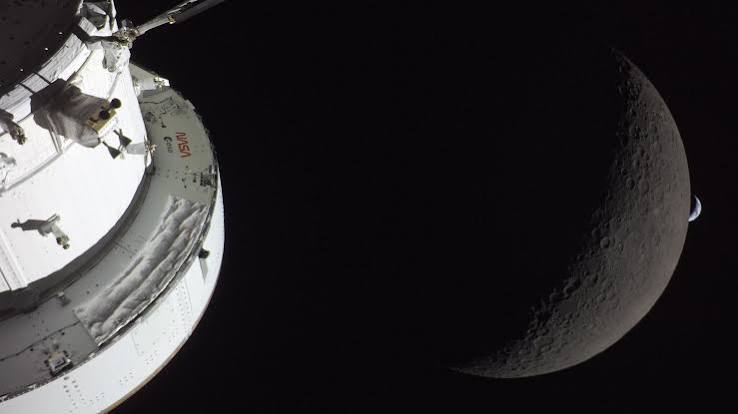
What This Means for You
If you are a space fan, mark summer 2027 on your calendar. Artemis III will fly four astronauts on a roughly two-week Earth-orbit mission, and you will be able to follow dockings with two commercial spacecraft that may later carry people to the Moon.
If you are a taxpayer, the programme is a bet that public-private competition can cut costs and speed things up. Isaacman has pointed to lunar rovers under development by Lunar Outpost and Venturi Astrolab and to the goal of cheaper transport of mass to orbit and the Moon as part of a longer-term lunar base. Watch for cost updates and schedule changes.
And if you simply love a good race, this is one: SpaceX and Blue Origin against each other, the United States against China, and an agency against its own history of delays.
The Bottom Line
Artemis in October 2026 looks less like a victory lap and more like a high-wire act. The rocket is being stacked, the capsule is built, the landers are in development and the suits are being trimmed to fit a deadline. Success would deliver the first human steps on the Moon in more than half a century, in 2028. Failure of any single link, from hydrogen seals to propellant transfer, could push the date well beyond.
For now, NASA's message is simple and bold: the Moon is back on the schedule. Whether the schedule holds depends on the tests still ahead, starting with a stubby rocket at Pad 39B and four astronauts who will spend two weeks in orbit rehearsing the most delicate dance in spaceflight.



