TECH & SCIENCE
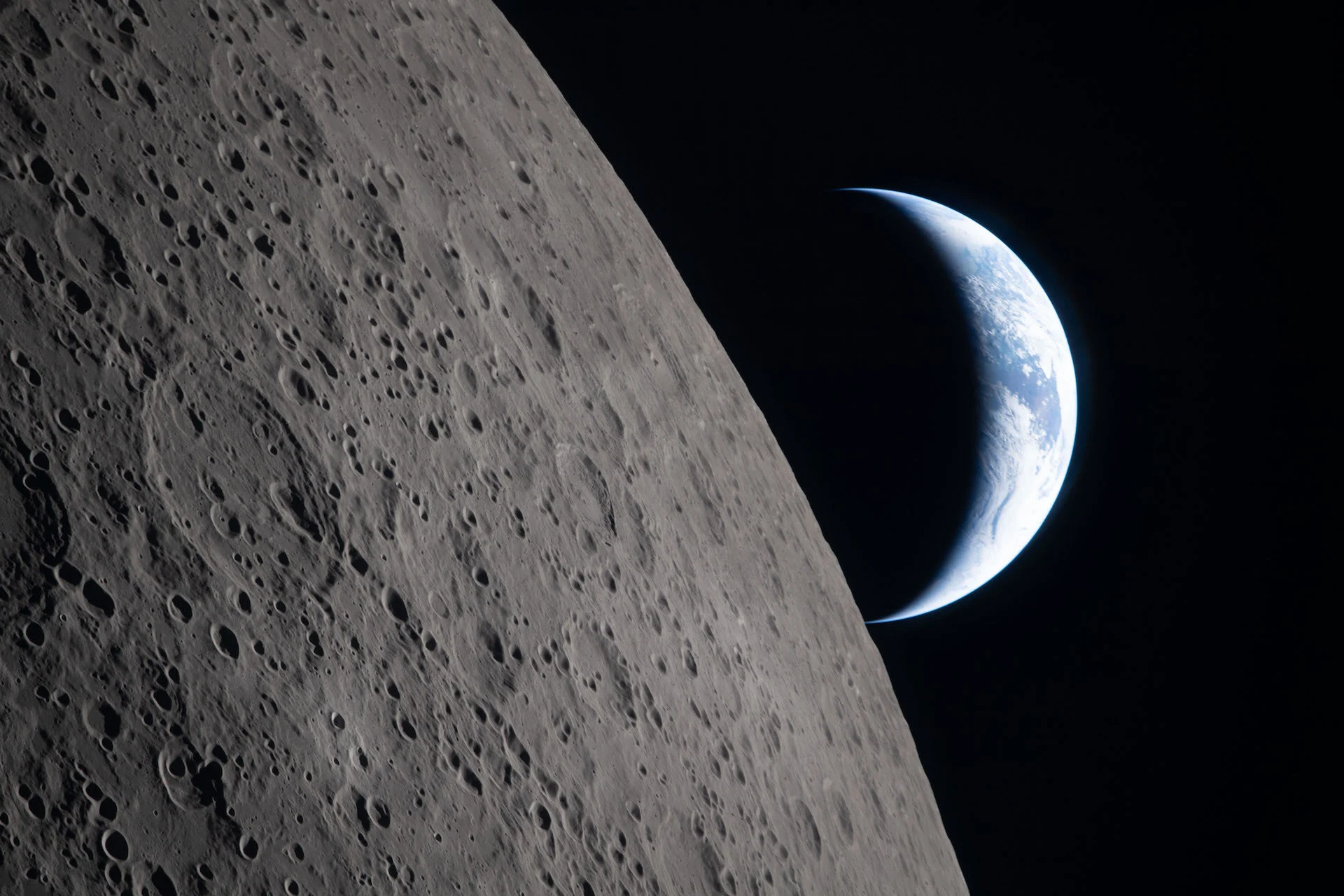
More than 11,000 images, 8.5 hours of astronaut audio and a record of mysterious flashes on the lunar surface are now public. Scientists call it the first planetary dataset gathered mainly by humans in over half a century.
WASHINGTON
Imagine being handed the holiday photo album of the most exclusive trip in the solar system — and being told you can keep every single picture. That is essentially what NASA did on Wednesday, throwing open the vault on the scientific haul from Artemis II, the mission that carried four astronauts around the Moon and back earlier this year.
The numbers are staggering. More than 800 gigabytes of lunar science data, some of it never seen before, has been uploaded to NASA's Planetary Data System, the agency's public library for planetary science. Inside are over 11,000 full-resolution images and videos of the Moon, snapped by the crew's handheld cameras and by the cameras on the Orion spacecraft itself. There are also 8.5 hours of audio recordings in which the astronauts describe, in real time, what they were seeing out the window.
NASA says the release is the first planetary science dataset captured primarily by humans in more than half a century. The last time people gathered that kind of first-hand lunar evidence, Apollo's crews were still bringing home rocks in aluminium boxes and the internet did not exist. Now the whole world gets to rummage through the results — scientists, students, space nerds and armchair astronomers alike.
What is actually in the data dump?
According to NASA's announcement, posted on 7 October 2026 by Public Affairs Officer Molly Wasser, the package includes far more than pretty pictures. Alongside the 11,000-plus images and videos are crew-annotated frames, on which the astronauts marked up what they spotted, and the long audio logs of their scientific commentary.
The agency also published three companion documents to help researchers make sense of the mountain of material: an Artemis II Preliminary Lunar Science Report, an Artemis II Lunar Science Operations Report and an Artemis II Lunar Science Data User Guide. Together they explain what the crew did, how the science plan was built and carried out, and how to actually use the files without getting lost.
NASA describes the collection as "a powerful lunar science dataset ripe for exploration and analysis," and stresses that it complements decades of data from Apollo and from robotic missions. In other words, it is not meant to replace what we already know about the Moon — it is meant to fill in the gaps that robots simply cannot.

Four astronauts, one very picky job
The crew of Artemis II was NASA astronauts Reid Wiseman, Victor Glover and Christina Koch, joined by Canadian Space Agency astronaut Jeremy Hansen. Their trip was not a sightseeing cruise. Before launch, the four trained in classrooms, in simulations and in field environments, learning lunar geography, geology and the art of scientific observation.
That training shows in the results. NASA says the value of the dataset lies partly in the astronauts' split-second decisions about which targets to photograph, their perception of colour, and their notes on things that change over time. A camera bolted to a probe does exactly what it was programmed to do. A trained human with a window can say, "Wait — look at that," and swing a lens toward something nobody planned for.
Flight Day 6, 6 April 2026, was the big one: lunar flyby day. The crew rotated through roles, with some members taking photographs while others made annotations and recorded their observations. It was a carefully choreographed scramble, squeezed into a limited window as Orion swung around the Moon.
The flashes in the dark
If there is one detail in the release that has space fans buzzing, it is the flashes. As Orion passed behind the Moon, the crew reported pinpricks of light on the dark lunar surface. As Sky & Telescope reported in April, the crew counted six flashes, each lasting less than a tenth of a second — far too brief to be caught in the astronauts' photographs.
The best explanation is meteorite impacts: small space rocks smashing into the lunar surface at tremendous speed. In the new data release, NASA shows crew annotations on an eclipse visualisation, with several bright points circled, including impact flashes. Wiseman and Glover marked their sightings in blue and green, while Hansen used red. The crew noted that several circled observations were probably the same impact events seen at different times by different people — a useful cross-check that the flashes were real and not a trick of the eye.
There is a delicious bit of history here. The Apollo 17 crew saw three impact flashes in 1972. Amateur astronomers first recorded similar events from Earth in 1999 during the Leonid meteor shower, and well over 400 impact flashes have been confirmed since. The Artemis II crew saw twice as many in their brief flyby as Apollo 17 saw during an entire mission. Sky & Telescope noted that the crew's training to watch for such events may have helped. Most of the flashes happened near the Moon's equator or in its southern hemisphere.
Why a few blinks of light matter
It might sound like a curiosity, but impact rates are a serious business when you plan to put people and expensive hardware on the lunar surface. Earth's atmosphere burns up most small space debris before it reaches us. The Moon has no such shield. Tiny pieces of rock arrive at full speed, and they can threaten equipment, habitats and, eventually, the people living in them.
Planetary scientist Benjamin Weiss of MIT told Sky & Telescope that the observations form "a unique dataset." He explained that crater counts reveal impacts from objects larger than about 100 metres, while impact pits on Apollo samples point to objects around 100 microns across. Almost nothing was known about the size range in between. The Artemis II observations, he said, are "in the intermediate range that's not probed by crater observations, either from samples or from orbital images."
Weiss also pointed out an advantage the Moon has over Earth-based meteor watching. Meteor observers see only a small patch of sky and must deal with the way objects melt in our atmosphere. On the Moon, the whole night side is visible at once with no atmospheric bias. He called the Moon "a gigantic photographic plate" that continuously records impacts of every size.
Put simply, those six blinks may help engineers decide how thick to make the walls of the first lunar bases.
A first for the public, too
Perhaps the most tabloid-friendly twist is who gets to play with the data. It is not locked away in a government archive for a chosen few. The Planetary Data System is open to the global science community and the public. A graduate student in Nairobi, a retired geologist in Ohio or a teenager with a laptop and a lot of curiosity can download the same files as NASA's own researchers.
NASA and the British Astronomical Association are also inviting amateur astronomers to help by monitoring the unlit part of the Moon for impact flashes themselves, ideally with video, since the events are so fleeting. Combine amateur sky-watching with the crew's observations and scientists get a much richer picture of how often the Moon is being hit.
There is a catch, of course. Eight hundred gigabytes is not a casual weekend download, and making sense of thousands of images takes skill. That is why the user guide and the preliminary science report matter. Expect the first wave of papers, student projects and viral image-processing experiments to appear in the coming weeks and months.
The road to Artemis III and beyond
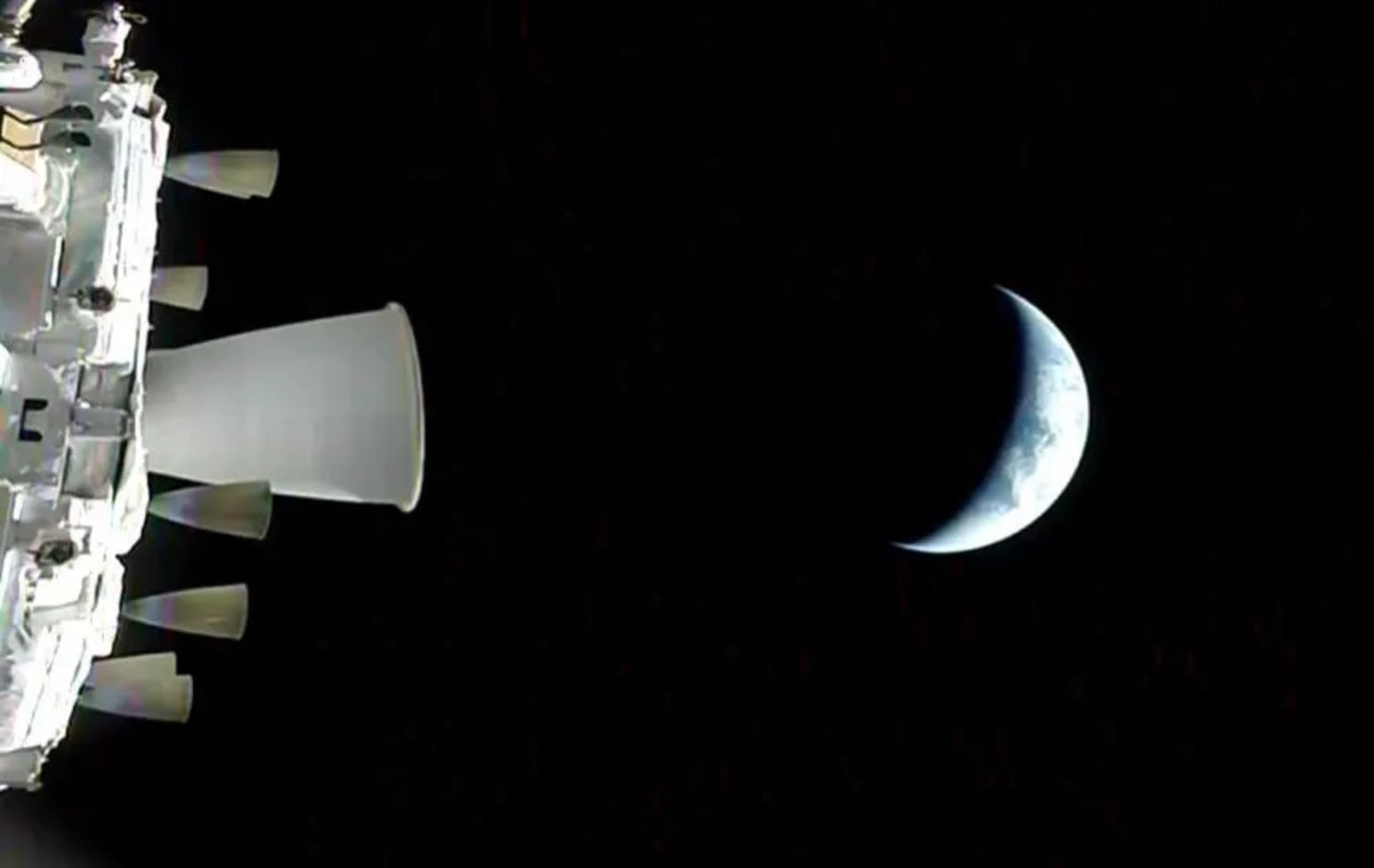
NASA says the information is already informing plans for Artemis III and later missions. That mission is meant to move from flying around the Moon toward the long-term goal of working on its surface, and every detail about the terrain, lighting and hazards helps planners pick where to go and what to carry.
Recent headlines suggest the next crewed Artemis mission is on track for 2027, though one astronaut cautioned that "anything can happen" — a reminder of how often spaceflight schedules slip. Reports have also described SpaceX studying a simplified Starship approach for Artemis III to get astronauts to the Moon faster. Those plans are still evolving, and readers should treat timelines with healthy scepticism.
What is not in doubt is the importance of Artemis II as a proving ground. It showed that a crew could fly around the Moon, do real science from a moving spacecraft and bring back results of a quality that scientists are excited to analyse. That groundwork is what the next missions will build upon.
What this means for you
For most people, this story is not about gigabytes. It is about access. The raw material of lunar science is now available to anyone with an internet connection, which means the next big insight about the Moon could come from someone with no connection to NASA at all.
It also means better odds for future astronauts. Understanding how often small meteoroids strike the Moon helps designers protect crews, power systems and habitats, which in turn helps keep costs and risks down for the missions that follow. And if you simply love space imagery, you are about to see a flood of new, high-resolution Moon pictures taken by human hands.
If you want to take part, the simplest first step is to read NASA's data user guide and browse the images in the Planetary Data System. Amateur astronomers can look into the impact-flash monitoring effort run with the British Astronomical Association.
The bottom line
Half a century after Apollo, humans have once again gone to the Moon, looked hard, taken notes — and this time shared everything. Four astronauts, 11,000 images, 8.5 hours of commentary and a handful of mysterious flashes now sit in a public archive, waiting for the next curious mind to find what the crew might have missed.
The Moon has been recording its own history for billions of years, written in craters and, as Weiss put it, on a gigantic photographic plate. With the Artemis II data online, we finally have a fresh set of eyes — human ones — helping us read it.
Published By | Tech Wiz