Technological Transformation
A Sahelian Economy Betting on Bandwidth
Mauritania is not usually the first country that comes to mind when discussing Africa's technology story — its 4.7 million people are spread across a vast, largely desert territory, and its economy has long been defined by iron ore, fisheries and, more recently, offshore gas. But 2026 has been a pivotal year for the country's digital infrastructure and financial technology sectors, as a second submarine cable, a newly launched sovereign national cloud, an expanding mobile money market and a modernizing regulatory regime combine to reposition Mauritania as a more connected node between West Africa, Europe and the wider Sahel.
The government's digital ambitions are backed by a sharp increase in public investment: the ministry overseeing digital transformation saw its 2026 budget rise to $24.2 million, up 104.6% from the prior year, part of a broader National Digital Transition Agenda that has aimed, since 2022, to grow the digital sector's contribution to roughly $700 million, or nearly 8% of GDP.

Closing the Connectivity Gap: A Second Submarine Cable
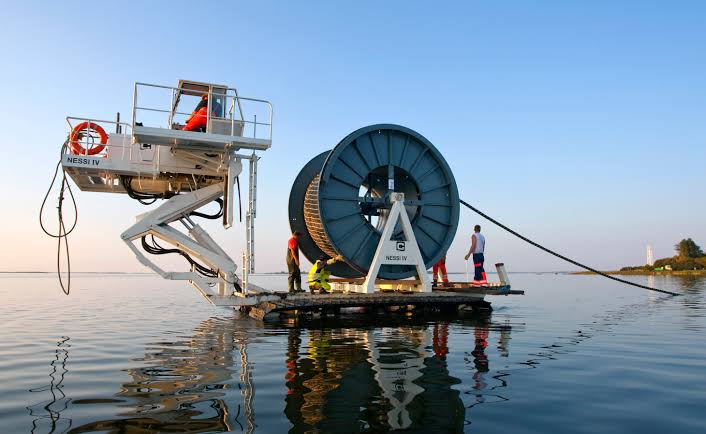
For years, Mauritania's international bandwidth depended overwhelmingly on a single subsea cable route, leaving the country's internet infrastructure vulnerable to outages and constraining capacity growth. That is changing with the extension of the EllaLink submarine cable system to Nouadhibou, the country's second-largest city. The project involves a new 500-kilometer branch connecting to EllaLink's existing transatlantic trunk route and a newly built cable landing station in Nouadhibou, giving Mauritania a second, diverse and more secure international gateway. Alcatel Submarine Networks was selected to build the two-fiber-pair system, which will deliver an initial capacity of 200 gigabits per second, scalable up to 12 terabits per second, linking Mauritania directly to Europe and, via EllaLink's broader network, to South America.
Coastal installation work is scheduled for completion by August 2026, with commercial service expected to go live in early 2027. The project is co-financed by the European Investment Bank and the European Union's Connecting Europe Facility, reflecting Brussels' broader strategy of financing African digital infrastructure that also serves European connectivity interests. On the domestic side, Mauritania's terrestrial fiber-optic network has expanded to more than 9,100 kilometers, and the country's international internet capacity has grown to over 500 gigabits per second, according to national digital transformation officials. Mobile 4G coverage now reportedly reaches 86% of the population, though estimates of overall internet penetration vary widely — DataReportal put the figure at 37.4% at the start of 2026, while government officials have cited figures above 80%, a discrepancy that likely reflects differing methodologies between household survey data and mobile-network coverage claims.
Three telecom operators anchor Mauritania's connectivity market: incumbent Mauritel (operating under the Moov Mauritel brand and majority-owned by Maroc Telecom), Mattel (owned by Telecel), and Chinguitel. In March 2026, regulators introduced new mobile phone clearance rules and an accompanying digital platform, tightening oversight of device registration in a market where authorities have grown increasingly focused on curbing grey-market handset imports and strengthening SIM registration compliance.
Digital Sovereignty: Mauritania's National Cloud
On June 29, 2026, Mauritania officially launched a national cloud platform in Nouakchott designed to host government data and digital public services domestically rather than on foreign-owned infrastructure. The launch was framed explicitly around the concept of digital sovereignty — a theme that has gained traction across African governments wary of dependence on cloud providers headquartered outside the continent, particularly for sensitive citizen and financial data. The national cloud complements Mauritania's broader policy architecture, which now includes a National Digital Transformation Agenda, a national cybersecurity strategy, a national broadband strategy, and a National AI Strategy covering 2025 to 2029 — an unusually comprehensive policy stack for a country of Mauritania's size and income level, though implementation capacity remains a key open question. Mauritania ranked 165th globally in the United Nations' 2024 E-Government Development Index, underlining how much ground the country still has to make up even as its policy framework matures.
Mobile Money and the Fintech Awakening
Financial technology is arguably where Mauritania's digital transformation is most visible to ordinary citizens. Mobile money usage is rising, particularly in urban areas, signaling a gradual shift away from cash and toward digital payment channels in a market historically underserved by traditional banking — a large share of Mauritanians remain unbanked. Mattel, one of the country's three telecom operators, has launched Mechili, a digital payment platform run through its Mattel Money subsidiary and licensed by the Central Bank of Mauritania (BCM) as an electronic money institution; it joins established mobile money products such as Bankily, which has been expanding digital banking access across the country.
Underpinning this growth is GIMTEL, Mauritania's national interbank switch, whose members include the Central Bank of Mauritania, national postal operator Mauripost, and the country's commercial banks. In 2025, GIMTEL was certified in the Visa Global Registry of Service Providers, bringing the switch into compliance with international card network standards and paving the way for stronger interoperability between banks, telecom operators and global payment providers. The BCM has separately pursued an interoperable mobile payment project intended to let customers use bank cards seamlessly across any connected point-of-sale terminal or ATM in the country, reducing settlement delays through instant transfer capability. Between 2024 and 2026, the central bank has focused its modernization agenda on formalizing mobile money frameworks, strengthening regulatory oversight of electronic money issuers, and encouraging broader digitization of financial services — including, notably, a 2024 partnership with Germany's Giesecke+Devrient to explore the technical feasibility of a central bank digital currency.
The ecosystem's growing maturity will be on display at the Fintech Mauritania Hackathon, scheduled for September 28-29, 2026, in Nouakchott — a forum organized around the foundational building blocks of a digital economy: payment systems, digital identity, data management, connectivity, regulation and trust. The event reflects a deliberate effort by Mauritanian authorities and private-sector players to position Nouakchott as a fintech convening point within the wider West African and Sahelian region, an area where cross-border mobile money interoperability remains a persistent structural challenge for regional trade under the African Continental Free Trade Area.

Digital Identity and the KYC Backbone
None of Mauritania's fintech ambitions can succeed without a reliable digital identity layer, and 2026 has brought incremental progress here as well. Financial institutions and licensed electronic money issuers are now expected to apply tiered know-your-customer (KYC) thresholds calibrated to transaction risk, alongside Arabic-capable optical character recognition (OCR) systems that can extract identity fields directly from national ID cards — a technical detail that matters in a country where Arabic is the dominant administrative language and where manual data entry has historically been a bottleneck to fast, low-cost account opening. These identity and compliance investments are explicitly linked to Mauritania's broader financial inclusion strategy, which UNCDF's Policy Accelerator programme has been supporting as the country works to bring a larger share of its population into formal financial services for the first time.
A Regional Digital Corridor in the Making
Taken together, Mauritania's 2026 initiatives — a second submarine cable diversifying its international bandwidth, a sovereign national cloud hosting government data domestically, a strengthening interbank switch enabling real interoperability, a growing mobile money and fintech market, and a maturing digital identity and KYC framework — represent a coordinated, if still early-stage, attempt to build genuine digital infrastructure in a part of the Sahel that has historically lagged behind West Africa's coastal tech hubs. The scale remains modest compared with Nigeria, Kenya or Egypt, and execution risk is real given Mauritania's administrative capacity constraints and the UN's low ranking of its e-government services. But the combination of European co-financing for hard infrastructure, central bank-led payments modernization, and an unusually complete digital policy architecture suggests Mauritania is positioning itself to capture more of the region's digital economy growth over the remainder of the decade — bandwidth, and the financial services built on top of it, chief among the tools it is betting on.
Published By | Tech Wiz