Written By | Torch Media Africa

The centerpiece of Malawi's 2026 digital agenda is the rollout of a nationwide digital identity wallet.
Technological Transformation
Malawi rarely features in continental conversations about Africa's technology boom, overshadowed by the fintech giants of Nigeria and Kenya or the data-center ambitions of South Africa and Egypt. Yet 2026 is turning into a genuinely pivotal year for the landlocked Southern African nation's digital economy. A long-anticipated national digital identity wallet is set to launch in September, the mobile-money duopoly that dominates everyday finance is being pushed toward more sophisticated services, and regulators are tightening oversight of a fintech sector still finding its footing. All of this is unfolding against a stark backdrop: barely one in five Malawians has access to the internet, and the country's own digital economy strategy is now widely acknowledged to have fallen well short of its connectivity targets.
The Nzika Wallet: Malawi's National Digital ID Goes Mobile
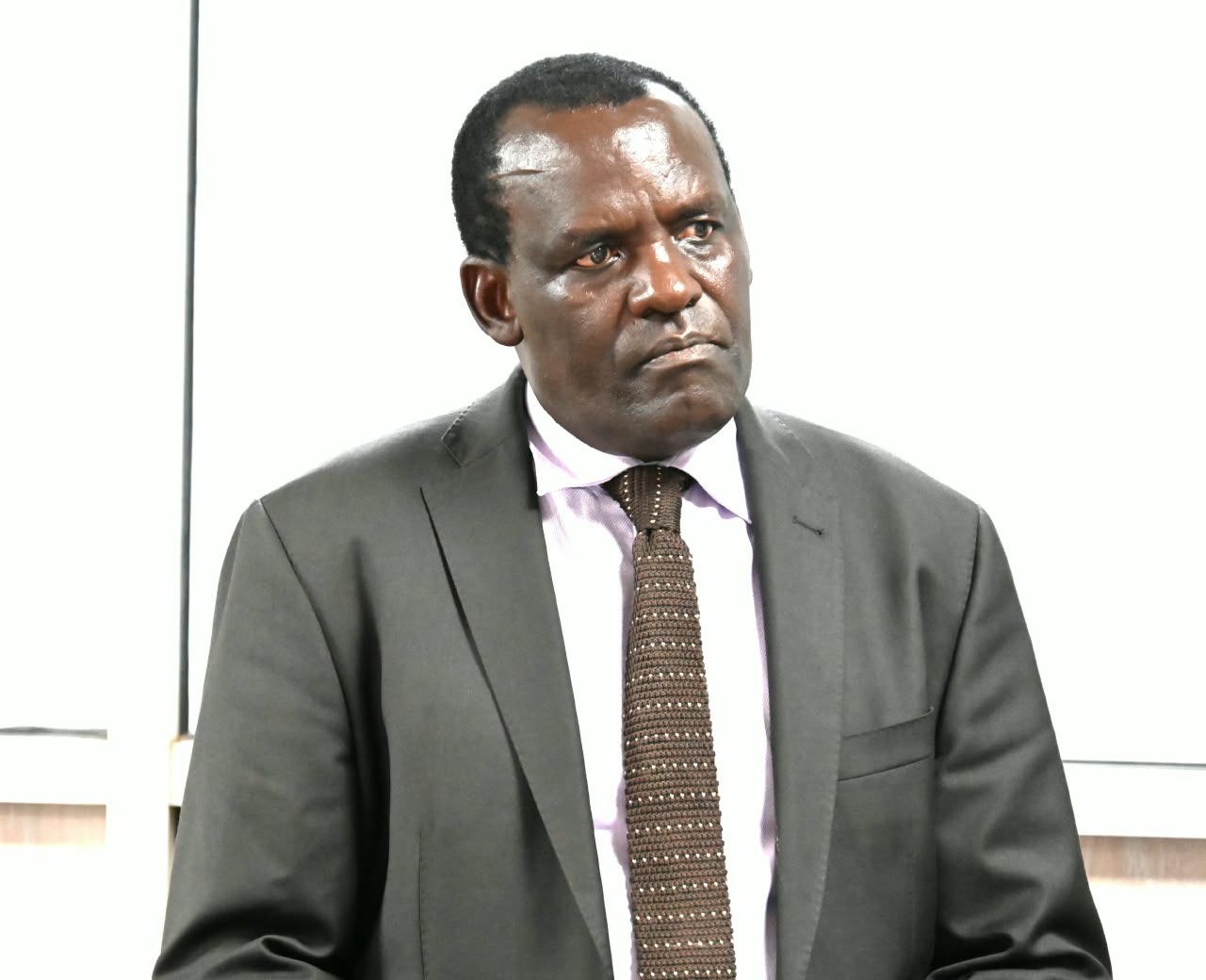
The centerpiece of Malawi's 2026 digital agenda is the rollout of a nationwide digital identity wallet. Mphatso Sambo, Principal Secretary at the National Registration Bureau (NRB), announced at the ID4Africa Annual General Meeting in Addis Ababa that the agency had successfully piloted the Digital ID Wallet and was moving to nationwide implementation. That implementation now has a firm date: the Nzika Wallet mobile application is scheduled to go live for Malawians in September 2026, allowing citizens to access and verify their national identity credentials directly from a smartphone rather than relying solely on the physical national ID card.
The scale of the underlying identity system is significant for a country of Malawi's size. The NRB has issued national identity cards to more than 12.5 million registered Malawians aged 16 and above, and officials argue that making that identity verifiable on a smartphone will meaningfully cut the long-term cost of producing and replacing physical cards while accelerating financial inclusion. The wallet is also expected to streamline everyday interactions with government and financial services — from renewing identity documents to paying utility bills — as part of a broader push toward a less cash-dependent, more digitally verifiable public administration. The timing is notable: smartphone penetration in Malawi has been projected to reach around 30 percent, a threshold officials view as finally sufficient to justify a mobile-first identity rollout after years in which low device ownership made such a shift impractical.
A Mobile Money Market Built on Two Rivals
Malawi's financial-inclusion story continues to run almost entirely through two mobile money platforms: Airtel Money and TNM Mpamba. Rather than competing on branch networks, both providers have built dense, hyperlocal agent networks that carry the weight of an increasingly cashless retail economy in a country where formal bank branches remain scarce outside urban centers. Subscriber figures underline how central telecom infrastructure has become to daily financial life — Airtel Malawi reported roughly 8.1 million subscribers and TNM around 5 million by the end of December 2024, with both companies reporting more than 2 million registered mobile-money users and holding roughly comparable market share of the mobile-money segment specifically. TNM has signaled plans to upgrade its Mpamba platform with more innovative and accessible services, while Airtel Money has pursued product development aligned with Airtel Africa's group-wide strategy of deepening financial-services penetration, including expanded merchant payment tools and micro-lending features.
This duopoly structure sits at the heart of Malawi's National Strategy for Financial Inclusion III (NSFI III), which covers the 2024-2028 period and sets a target of extending formal financial service access to 95 percent of adults by 2028. The strategy leans heavily on mobile money, digital payments, and rural-focused financial services to close the inclusion gap, treating telecom-based finance as the primary rail through which underserved and rural populations will be brought into the formal financial system — a pragmatic bet given how limited traditional banking infrastructure remains across much of the country.
Regulators Tighten Oversight as the Fintech Sector Matures
As mobile money and adjacent digital financial services expand, Malawi's regulatory apparatus has been playing catch-up. The Reserve Bank of Malawi has made strengthening the licensing and oversight of electronic money issuers and payment service providers a stated priority, part of a broader effort to build a regulatory framework capable of supervising a fintech ecosystem that, while still modest by regional standards, is growing more complex. Malawi's fintech sector remains small in absolute terms compared with peers such as Kenya or Nigeria, but 2026 industry tracking counts more than a dozen active fintech startups operating in the country, spanning payments, lending, and adjacent digital financial services, with digital financial services increasingly framed by both government and industry as the primary lever for extending access to Malawi's large rural population.
The Connectivity Gap That Undercuts the Digital Ambition
Malawi's digital-transformation ambitions continue to run up against a hard infrastructure ceiling. DataReportal's Digital 2026 analysis put the country at 4.02 million internet users as of October 2025, an internet penetration rate of just 18.0 percent of the total population — among the lowest in Southern Africa. Fixed broadband penetration is negligible, with World Bank data showing only around 16,790 fixed broadband subscriptions nationally as of 2023, meaning internet access for the vast majority of connected Malawians runs almost entirely through mobile networks. On that front there has been more encouraging progress: 4G network coverage was estimated at close to 79 percent of the population in 2025, giving mobile broadband a much wider reach than fixed infrastructure could plausibly achieve in a landlocked, largely rural country. As a landlocked nation, Malawi has no direct submarine cable landing of its own and instead reaches international bandwidth via regional partners connected to systems such as the East African Submarine System (EASSy).
The gap between ambition and outcome is starkest when measured against Malawi's own targets. The government's Digital Economy Strategy, covering 2021 to 2026, set a goal of reaching 80 percent internet access by 2025, up from roughly 14 percent in 2021. With the strategy's horizon now closing and actual penetration sitting closer to 18 percent, that target will clearly go unmet, underscoring how far infrastructure investment has lagged the policy rhetoric around digital transformation. Industry analysts and the Malawi Internet Community have also flagged resilience concerns following the 2024 undersea cable disruptions that caused widespread outages across parts of Africa, prompting local efforts to diversify and harden the country's international connectivity pathways.
A Test Case for Leapfrogging Under Real Constraints
Taken together, Malawi's 2026 digital story is one of genuine, concrete progress unfolding inside tight structural limits. The Nzika Wallet represents a serious, funded push to modernize identity infrastructure for over 12 million registered citizens; the Airtel Money-TNM Mpamba duopoly continues to carry the bulk of everyday digital financial activity in the near-total absence of dense bank branch networks; and the NSFI III strategy gives policymakers a credible, time-bound framework for extending inclusion further into rural areas. But none of this changes the fact that fewer than one in five Malawians currently has internet access, that fixed broadband is close to nonexistent, and that the country's own five-year digital economy targets have fallen well short. Malawi's experience is, in that sense, a useful test case for a broader African pattern: mobile-first financial and identity services can scale rapidly even where underlying connectivity infrastructure remains thin, but that leapfrogging has real limits, and closing the infrastructure gap will ultimately determine how much further Malawi's digital economy can go beyond mobile money and identity verification into richer services like e-commerce, telehealth, and digital education.