SCIENCE AND TECHNOLOGY
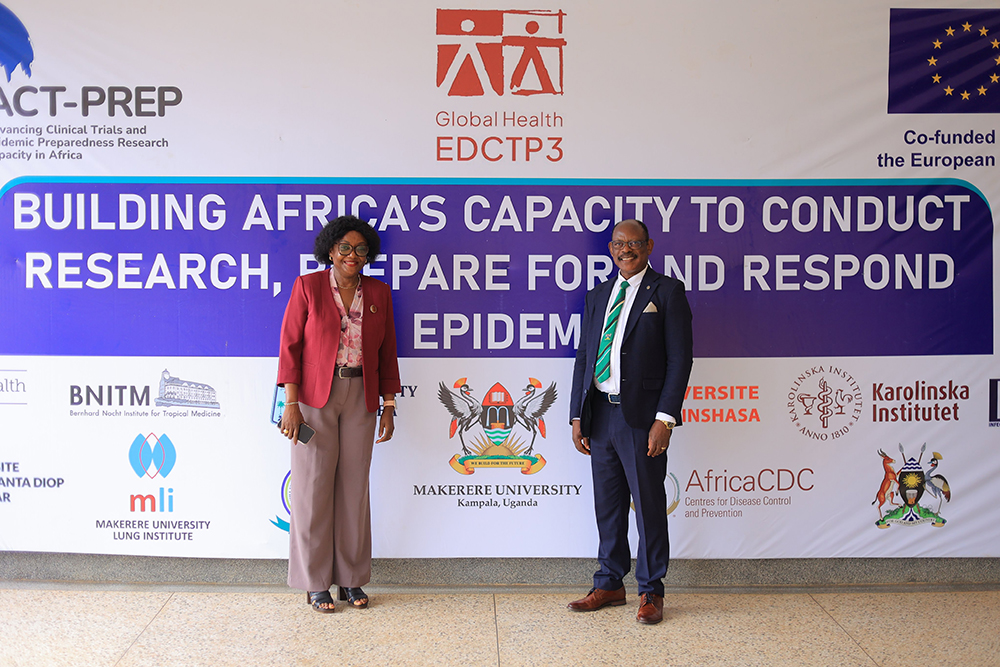
Makerere University has been named scientific leader of a five-year, roughly €12.7 million (about Shs56 billion) European-funded programme to help African countries run clinical trials quickly during disease outbreaks. The project, known as ACT-PREP, puts a Ugandan institution at the head of a continental consortium at a time when health security and research independence are high on African policy agendas.
What was announced
The Daily Monitor reported on 28 September that Makerere had secured the grant for Advancing Clinical Trials and Epidemic Preparedness Research Capacity in Africa (ACT-PREP), funded through the European Union and the Global Health EDCTP3 partnership. According to the EDCTP3 project page, the funding is €12,751,864.50 over the period 1 June 2026 to 31 May 2031. The European and Developing Countries Clinical Trials Partnership, based in The Hague, is the coordinator, while Makerere is the scientific project leader.
The Monitor's report quoted an unnamed minister saying that African nations cannot afford to wait for emergencies before developing local solutions. Reports differ slightly on consortium size: the Monitor refers to 11 partner organisations while the EDCTP3 page lists 12 beneficiaries, so it is safest to describe it as a consortium of about a dozen institutions.
Who is involved
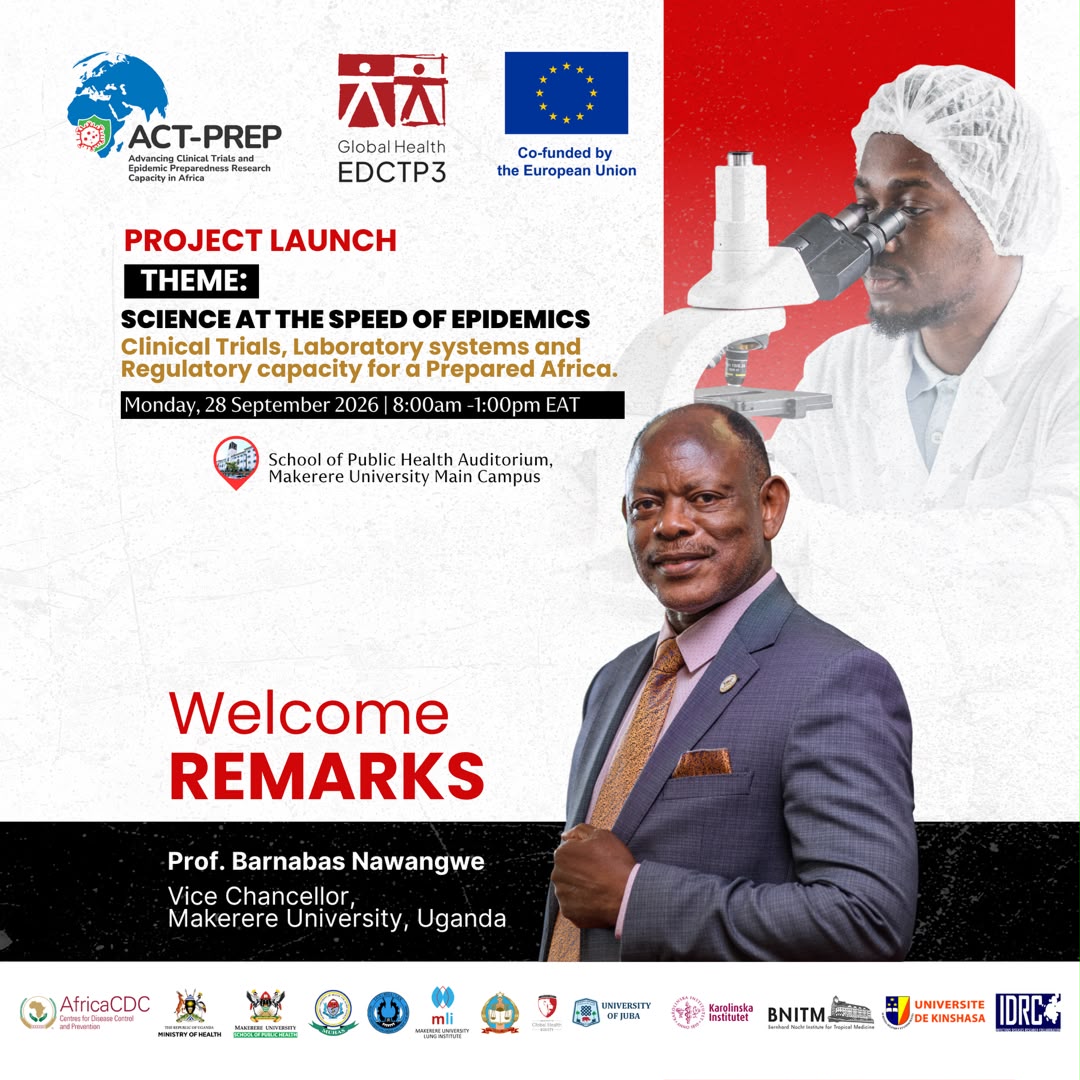
The EDCTP3 page lists partners in Uganda, Tanzania, the Democratic Republic of Congo, Somalia, Rwanda, Senegal, Ethiopia, South Sudan, Sweden and Germany, together with the Africa Centres for Disease Control and Prevention (Africa CDC). The Bernhard Nocht Institute for Tropical Medicine in Hamburg describes itself as a partner and says the network involves ten African and two European institutions working with national public health institutes. The mix of African public health institutes, universities and Africa CDC is intended to link research capacity with the agencies that actually respond to outbreaks.
What the money is for
The stated objective is to institutionalise clinical trial preparedness within national public health systems so that countries can detect outbreaks and launch research quickly. The target diseases include HIV/AIDS, malaria, tuberculosis, neglected tropical diseases and emerging infections, and the Hamburg institute's description cites COVID-19 and Ebola as the kind of events the work is meant to prepare for.
The EDCTP3 page lists concrete deliverables: training more than 700 senior researchers in advanced methods, supporting 15 PhD students and 10 postdoctoral scientists, training 80 clinical trial monitors, upgrading at least five laboratory facilities, developing standardised research protocols for rapid outbreak response, setting up mentorship and exchange programmes, and creating a platform for sharing resources and protocols. The Hamburg description adds work on diagnostics and surveillance for high-consequence pathogens, laboratory quality management, biosafety and data management, train-the-trainer courses in Good Clinical Laboratory Practice, frameworks for data and sample sharing, and field-testing through prevalence studies and outbreak investigations, with at least 100 fellows and trainees a year. A call for PhD and postdoctoral fellowships was publicised in late August.
Why it matters for Uganda
Uganda has repeated experience of outbreaks, including Ebola, and has a research base to match, but trials in outbreaks have often depended on sponsors and protocols from outside the continent, and slow regulatory and ethics approvals have cost time. A programme built around standard protocols, trained monitors and pre-agreed data-sharing arrangements is meant to shorten the gap between an outbreak declaration and the first participant enrolled.
The award also fits a pattern at Makerere. Its African Centre of Excellence in Bioinformatics at the Infectious Diseases Institute launched an upgraded high-performance computing cluster in May 2025 with NIH support, expanding capacity fivefold to more than 3,800 compute cores, according to Nile Post. Computing capacity for genomics, together with trial-readiness capacity, makes a plausible foundation for Uganda to act as a regional hub for outbreak research.
The timing matters too. Funding for health research in Africa has been uncertain, and a multi-year European commitment led from Kampala gives the university stability and influence over how continental capacity is built. Leading a consortium also brings management obligations: the project must coordinate partners across at least ten countries, which is a test of administrative capacity as much as science.
Caveats
The coverage so far is mostly announcements of intent and planned outputs. There is no reporting yet on the first activities, the lab sites to be upgraded, or the fellowships awarded. Capacity-building programmes are also judged by what happens after funding ends: whether trained monitors are retained, whether upgraded labs keep working, and whether governments adopt the protocols as part of their own systems. The EDCTP3 page speaks of institutionalising preparedness within national public health systems, which is the right goal but is the hardest to achieve in five years.
What to watch
Look for the project kick-off and the first announcements of which laboratories will be upgraded, since those will show how evenly the benefits are spread across the partner countries. Watch the fellowship selections and whether Ugandan applicants are well represented. Watch whether Uganda's Ministry of Health and national regulators commit to using the standard protocols, and whether the programme is tested in a real outbreak before 2031. Finally, note how the wider health research funding picture moves, because ACT-PREP's results will depend on the surrounding system as much as on the grant.
Published By | Tech Wiz