Written By | Torch Media Africa
About 230 outsourcing firms and 15,000 young workers have made Antananarivo a French-speaking back office for Europe and, increasingly, a source of AI training data.
Indian Ocean / Southern Africa
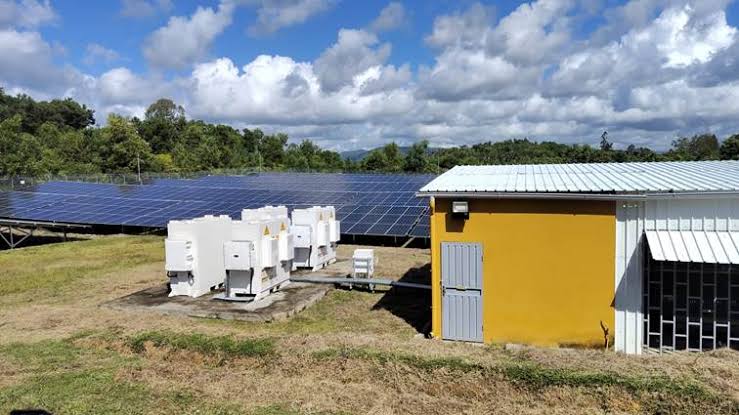
On 8 October 2026, Madagascar's Council of Ministers requisitioned the state utility JIRAMA to buy 18 diesel generators of 1 MW each from a Russian company, Malmekhservice, without a public tender. The government justified this with the energy state of emergency it had renewed on 29 September. The aim is to add 18 MW to the Antananarivo interconnected grid, which technicians estimate is enough to close the capital's current supply gap. Residents of the capital have been facing four to six hours or more of rotating power cuts a day. The country's most dynamic export-services industry operates in the same city under the same conditions.
That industry is business process outsourcing (BPO): call centres, back-office data processing and, more and more, data annotation for artificial-intelligence models. Over fifteen years it has grown from a few firms into one of the largest formal employers of young people in Madagascar. This article examines that industry, what supports it and what threatens it. The country's earlier digital-public-infrastructure programmes (biometric ID, the e-Ariary pilot and World Bank-funded digital-foundations projects) are left aside here.
The scale of the industry
According to figures attributed to the Ministry of Digital Development and summarised by the Malagasy job platform Asako in May 2026, Madagascar has about 230 outsourcing companies, up from around ten fifteen years ago. Together they employ roughly 15,000 people directly in BPO roles, mostly in Antananarivo. The wider digital sector, which includes BPO, telecoms and digital services, accounts for about 23,000 direct jobs, or 3.4% of formal employment, and roughly €365 million in annual revenue, close to 2% of GDP. GOTICOM, the ICT industry association founded in 2000, has about 80 member companies, including equipment suppliers, IT service firms, BPO operators and contact centres.
The mix of work has changed. According to the government's digital strategic plan, as reported, 51% of BPO employees now work in computer-based data processing, 31% in traditional customer-contact centres and 18% in combined call-and-data roles. In other words, the industry has shifted from mainly voice work to mainly data work. The fastest-growing area is data labelling for AI. Offshore providers are setting up dedicated annotation teams, which rely on careful, bilingual staff to tag the text, images and audio used to train machine-learning models.
Industry players report about 32% annual growth and say more than 500 French companies have moved some operations to Madagascar. These figures come from the sector itself, without published methodology, and should be read as indications of direction. The government's target is more ambitious: 25,000 additional direct jobs and a digital sector worth 6% of GDP by 2028.
Why Madagascar wins contracts
The main advantage is cost. Asako's survey reports that a Malagasy agent costs a client roughly €400–600 a month, compared with €1,200–1,500 for an experienced agent in Casablanca. Morocco is still the leading French-language outsourcing destination, with around 75,000 sector employees, but its wages have risen by about 18% since 2020. Tunisia, the other traditional option, has high staff turnover. Other factors favour Madagascar too: a time zone of GMT+3, only one or two hours ahead of France, a reputation for clear, neutral French, and international bandwidth that is very good by regional standards.
That bandwidth comes from several submarine cables: EASSy, LION and METISS, plus the 2Africa branch landed at Mahajanga through a partnership between Telma (part of the Axian group) and Vodafone. Telma's national fibre backbone is the main terrestrial route linking the large cities. DataReportal's Digital 2026 report puts the median fixed-line download speed at about 32 Mbps in late 2025, which is enough for voice-over-IP and data work in a well-equipped business park.
Wages and jobs
For workers, BPO is one of the few ways into formal employment that does not require connections or an elite degree. A new agent in Antananarivo earns 500,000–700,000 ariary a month net. A high-performing agent with bonuses can reach 750,000–900,000 ariary. Supervisors earn 800,000–1.2 million, and operations managers 1.5–3 million. By comparison, the private-sector minimum hiring wage was 262,680 ariary at the start of 2026. Under a decree published on 29 June 2026, it rose to 300,000 ariary from March, with back pay owed, and goes up again to 315,000 ariary from October 2026. Unions had asked for 360,000. So a newly hired call-centre agent earns about twice the legal minimum.
Most of the workforce is young: non-managerial staff make up about 85% of call-centre employees, with an average age of around 25. The work is demanding. Shifts follow European hours, performance is tracked daily on handling time and first-call resolution, and turnover is high on some teams. Promotion can be fast, though, and the average manager is only about 29.
Public policy is now focused on training. In late January 2026 the government launched ASAN'AI, a World Bank-supported programme run through the Integrated Growth Poles (PIC) project. Its goal is to train 1,300 young people free of charge over 15 months, 1,100 as production agents and 200 as middle managers, with Concentrix, Intelcia, Konecta and Connecteo as industry partners. The curriculum covers CRM tools, multichannel customer service and AI data annotation, the skills employers say they cannot find. The Université Virtuelle Publique, launched in February 2026 with World Bank support, and the Skills4Job programme are meant to widen access to training further.
An enclave in a country that is mostly offline
The difficulty is that this export industry sits inside a country that remains largely offline. DataReportal counted 6.71 million internet users at the end of 2025, a penetration rate of about 20.4%, and the number of users grew by only 2.4% over the year. About 80% of Malagasy people do not use the internet. Madagascar has 21.8 million mobile connections, about 66% of the population, and 76% of them are classed as broadband, but many SIMs are used only for voice, SMS and mobile money. There are about 4.15 million social-media identities (12.6% of the population) and around 610,000 LinkedIn members.
So the BPO sector depends on a small, mostly urban, French-speaking, secondary-school-educated workforce. That has two consequences. First, the labour pool is limited by the reach of the education system and of connectivity, not by demand, which explains why training programmes like ASAN'AI are now central to policy. Second, the industry's growth has done little to connect the rest of the country. Without deliberate policy, an export sector can do well while domestic digital adoption stays almost unchanged.
Power, politics and the risk to contracts
Electricity is the most immediate problem. In July 2026, JIRAMA reported a 25 MW production shortfall on the Antananarivo grid and imposed rolling cuts of about an hour and a half per district. By June, its management had already said publicly that load-shedding would not end this year. The coming dry season threatens water levels at the Andekaleka hydropower plant, which would reduce supply further. Large BPO operators run backup generators and UPS systems, but that adds to costs. Smaller firms, freelancers and the home-based annotation workers the sector increasingly uses are much more exposed to outages.
Power shortages also have political consequences. The Gen Z protests that started on 25 September 2025 over water and electricity cuts led to the fall of President Andry Rajoelina's government and the arrival of Colonel Michaël Randrianirina's 'Refondation' transition. A year later, the outages continue. The no-tender generator purchase from a Russian supplier has been welcomed by residents tired of blackouts, but governance advocates criticise it, and it may concern European clients whose procurement and compliance teams monitor political risk. The macroeconomic backdrop is also weak: the 2026 amending finance law cut projected growth from 4.8% to 3.8%, and inflation was 8.6% in June.
The AI question
Generative AI is both the main threat and the main opportunity for Madagascar's industry. Chatbots and automated agents are taking over the simplest, highest-volume customer-contact work, which is exactly where offshore destinations compete on price. On the other hand, the move into data processing and annotation puts Madagascar in the supply chain that builds AI models. Industry accounts describe AI tools being added to Malagasy centres, such as suggested replies, smart call routing and real-time sentiment analysis, with agents handling complex complaints, negotiations and sensitive cases. If that holds, the sector's value per worker could rise even as total headcount growth slows.
Madagascar's position is fragile, though. Data-annotation work moves easily to wherever it is cheapest, and buyers increasingly ask for data-protection guarantees, security certifications and reliable uptime. Those are areas where an energy emergency and a military-led transition count against the country.
What would strengthen the sector
Conclusion
Madagascar has built a real digital-services export industry out of a cost advantage, a language and good undersea connectivity. About 230 firms, 15,000 jobs and wages around twice the minimum show this is not hype. But the industry is an enclave: a mostly online export sector inside a country where four out of five people are offline, running on diesel backup because the grid cannot meet demand in the capital. Over the next two years, whether it can climb from voice work to data work and from data work to trusted AI services will depend less on its workers than on whether the state can keep the power on, provide credible governance and spread digital skills beyond Antananarivo.



