Written By | Torch Media Africa
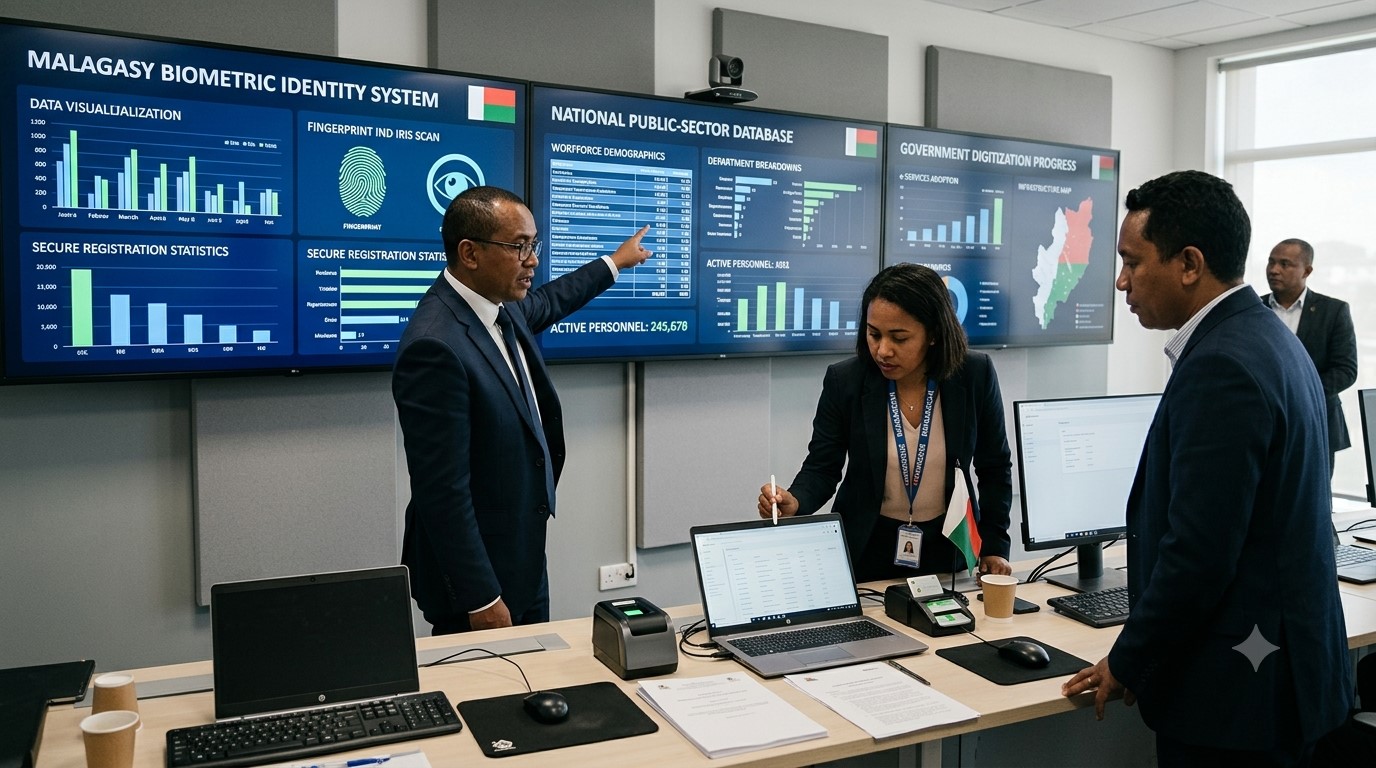
A $543 million World Bank push is rebuilding Madagascar's digital foundations from the ground up — but four in five Malagasy are still offline
MADAGASCAR
Madagascar is not a country that comes up often in conversations about Africa's digital transformation, overshadowed by the continent's better-known tech hubs in Lagos, Nairobi and Cairo. Yet over the past eighteen months, the Indian Ocean island nation has quietly assembled one of the more ambitious government-led digital infrastructure programs on the continent, built almost entirely around two World Bank-financed projects, a central bank digital currency pilot, and a biometric identity rollout that recently outran its own targets. The scale of the effort is unusual for a country where roughly three-quarters of the 31-million-strong population still has no internet access at all — a gap that frames everything else happening in Madagascar's tech sector in 2026.
PRODIGY and DECIM: The $543 Million Foundation
At the center of Madagascar's digital push are two World Bank-financed programs that together represent roughly $543 million in committed financing. The Digital and Economic Connectivity for Inclusion in Madagascar project, known as DECIM and backed by $400 million, has already distributed 664,000 digital devices across the country while expanding fiber-optic infrastructure, electricity access and internet connectivity in underserved regions. Its companion program, the $143 million Digital Governance and Identification Management System Project, or PRODIGY, is more foundational still: it is building the biometric national identity system, the civil registry modernization, and two renewable-energy-powered data centers that will underpin every other digital government service the country plans to launch.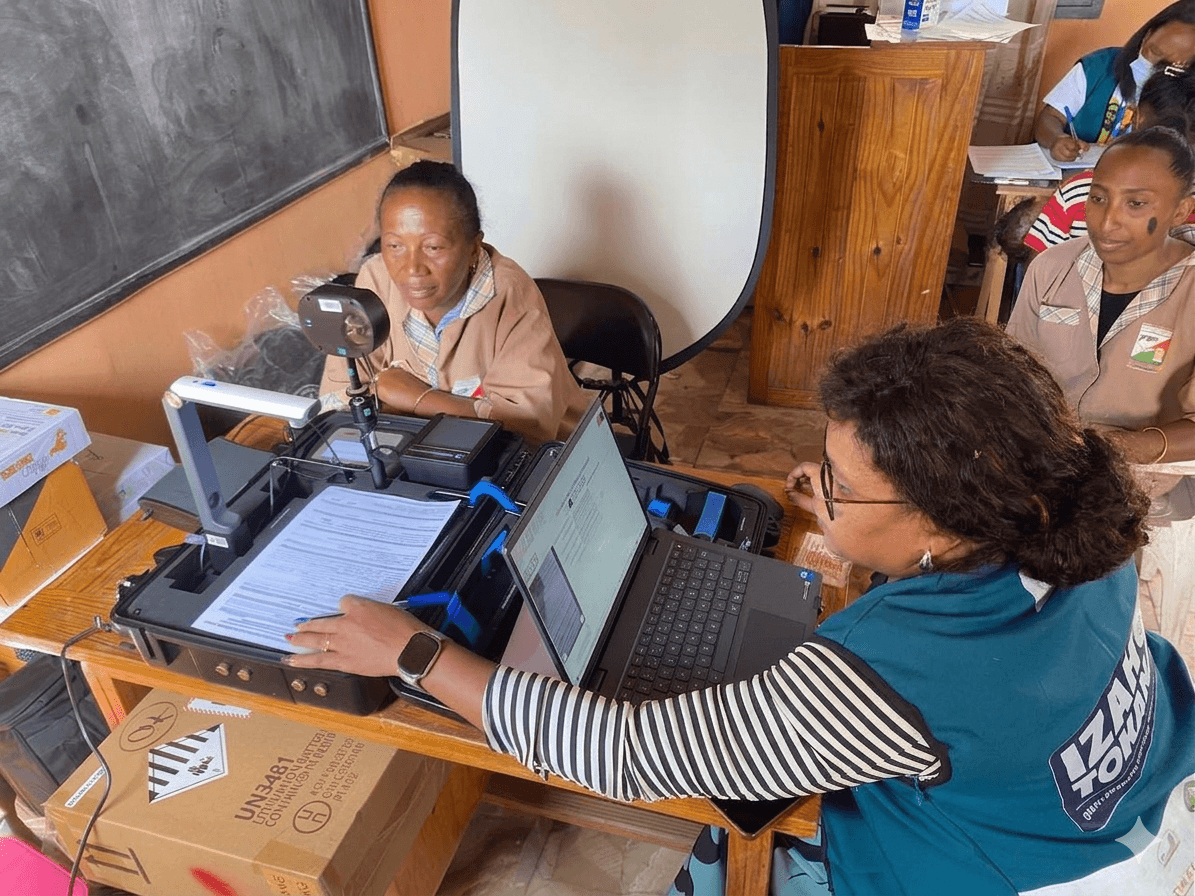
PRODIGY has not had a smooth run. Its implementation timeline was extended to a new closing date of June 30, 2026, after the project failed to fully meet earlier milestones, according to World Bank project documentation. The revision was not merely a delay; it restructured how the project procures the underlying identity infrastructure, shifting toward national and direct procurement methods intended to speed up local sourcing and reduce the international-tender delays that had previously stalled contract awards, including at least one contract cancellation. Despite that rocky history, the identity rollout itself has moved with striking speed once it began: Madagascar enrolled 2.6 million people into its digital identity system in just two months between April and June 2026, comfortably surpassing the government's own target of 2 million enrollments for the period. Using nearly 2,500 multimodal biometric registration kits deployed nationwide, enrollment teams achieved an average capture time of roughly 10 minutes per person, including full biometric data collection, in a country where difficult terrain, dispersed populations and patchy connectivity make mass registration campaigns logistically punishing. Laxton supplied the biometric enrollment hardware, while IN Groupe — under an €8.5 million contract awarded in 2025 — built the database infrastructure powering the system, and the Malagasy Senate has since approved the legislative framework needed to move toward a full national biometric ID card.
Orinasa: Cutting Business Registration From Two Weeks to Eight Hours
One of the clearest early payoffs from this infrastructure investment is Orinasa, a digital business-registration platform developed by Madagascar's Economic Development Board (EDBM) together with the country's newly created digital governance unit and the PRODIGY project. Before Orinasa, registering a new business in Madagascar typically required around five separate in-person visits to EDBM offices spread over roughly two weeks, a process that discouraged formalization and pushed many small enterprises to operate informally rather than navigate the bureaucracy. Orinasa has compressed that same process to an average of eight hours from start to finish, enabled by secure, automated data exchange between government information systems that previously operated as disconnected silos. For a country trying to expand its tax base and formal private sector, a same-day business registration process is a structural change with implications well beyond the tech sector itself — it is a direct test of whether Madagascar's new digital identity and civil-registry infrastructure can translate into measurable gains in ease of doing business.
e-Ariary: A Central Bank Digital Currency Goes Nationwide
Perhaps the most technically ambitious element of Madagascar's digital transformation is monetary rather than administrative. The Banky Foiben'i Madagasikara, Madagascar's central bank, launched a nationwide pilot of a central bank digital currency, the e-Ariary, on May 23, 2025, running for an initial ten-month trial period. The bank selected eCurrency Mint's DSC3 technology platform, deployed in partnership with PayLogic SA, specifically for its ability to integrate into Madagascar's existing financial ecosystem rather than requiring a parallel infrastructure build. The solution operates as what its developers describe as a post-quantum digital bearer instrument, designed to function even in areas with limited connectivity — a critical requirement in a country where reliable internet access remains the exception rather than the rule outside major cities.
Central bank governor Aivo Andrianarivelo has been explicit about the motivation: reducing reliance on physical banknotes, which are expensive for the central bank to print, distribute and manage across an island nation with difficult internal logistics. "We hope that, by the end of this process, the use of banknotes will decline, as managing them is very expensive for the Central Bank," Andrianarivelo said of the pilot. Beyond cost savings for the monetary authority, the stated goals include lowering transaction costs for ordinary users, improving financial traceability in an economy where informal cash transactions dominate, and expanding access to formal financial services in rural areas that mobile money networks have not fully penetrated. Madagascar joins a small but growing group of African central banks — alongside Nigeria's eNaira and various pilots elsewhere on the continent — testing sovereign digital currency as a financial-inclusion tool rather than purely as a payments-modernization exercise.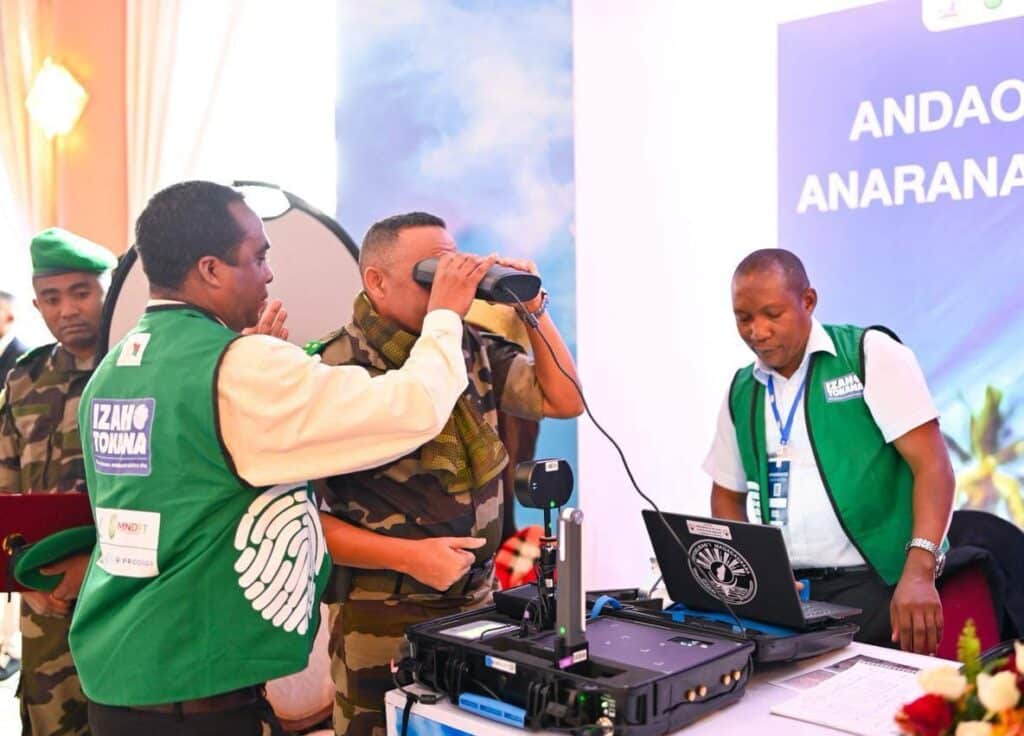
Mobile Money's Quiet Dominance
While the e-Ariary pilot and biometric ID rollout generate headlines, the more entrenched digital financial infrastructure in Madagascar remains mobile money, led by Telma's MVola platform alongside Orange Money and Airtel Money. An estimated 60 percent of Madagascar's adult population now uses one of these three services for routine daily transactions — paying electricity bills, buying groceries, or sending money to relatives in rural areas — with MVola alone reporting more than 10 million subscribers. That network is underpinned by roughly 15,000 physical cash-withdrawal points across the Orange Money and MVola agent networks combined, plus Airtel's own distribution, forming a de facto financial access grid in a country where formal bank branches remain sparse: Madagascar's banking penetration rate stands at only 17.9 percent, according to fintech sector data, leaving mobile money as the primary — sometimes only — financial services touchpoint for millions of households.
Industry observers characterize Madagascar's fintech landscape in 2026 as defined by gradual, necessity-driven inclusion rather than the venture-backed disruption narrative common in West African or East African tech hubs. The ecosystem remains telecom-led and bank-supported rather than built around a large independent startup scene, with an estimated 20 fintech and digital financial service providers operating in the market, most concentrated in payments and remittances. The digital payments market as a whole is projected to grow by roughly 21 percent annually between 2023 and 2027, reaching a market volume of approximately $2.18 billion by 2027, according to Statista Market Insights forecasts — modest by regional standards but a meaningful trajectory for an economy still building its basic financial rails.
Cables, Connectivity and the Rural Gap
Madagascar's international bandwidth has improved substantially on paper: the island is now connected to four major submarine cable systems — EASSy, LION/LION2, METISS, and 2Africa, which landed at Mahajanga in February 2023 and became operational later that year. The 2Africa system in particular was expected to significantly expand Madagascar's international connectivity capacity, feeding into Telma's roughly 10,000-kilometer national fiber-optic backbone. Yet capacity at the coast has not resolved access at the household level. As of early 2025, only about 6.6 million Malagasy were online — roughly 20.4 percent of the population — leaving an estimated 25.8 million people entirely offline. Fixed broadband penetration remains negligible, at approximately 0.11 connections per 100 people as of 2023, meaning that for the large majority of connected Malagasy, mobile networks are not a complement to home broadband but the only connection that exists. The fragility of even this mobile-first connectivity was underscored in May 2026, when submarine cable cuts affecting the EASSy and SEACOM systems caused internet traffic in Madagascar to drop by an estimated 10 to 25 percent, a reminder that the country's four-cable redundancy has not fully insulated it from the periodic outages that affect the wider East African cable corridor.
A Startup Ecosystem Still Finding Its Footing
Unlike Kenya's Silicon Savannah or Nigeria's Lagos-centered fintech cluster, Madagascar has not yet produced a venture-backed startup ecosystem of comparable scale. Development partners including the World Bank and the United Nations Capital Development Fund have instead prioritized a more infrastructure-first sequence: expanding mobile and internet connectivity, digitizing public services and payments, and only then supporting digital entrepreneurship and small and medium enterprise growth on top of that foundation. This sequencing reflects a pragmatic bet by Malagasy policymakers and their financing partners — that a functioning national identity system, a modernized payments rail, and a genuinely useful e-government platform like Orinasa need to exist before a broader startup economy has the infrastructure to build on. Mobile penetration has reached approximately 75 percent of the population, well ahead of the roughly 40 percent internet penetration figure, illustrating the gap the country is trying to close between basic phone access and genuine digital participation.
Outlook
Madagascar's technology transformation in 2026 is best understood not as a startup story but as a state-capacity story: a government, financed heavily by the World Bank, attempting to build the biometric, payments and connectivity foundations that better-known African tech ecosystems assembled a decade or more ago. The early results — 2.6 million biometric enrollments in two months, an eight-hour business registration process, a nationwide central bank digital currency pilot — suggest the foundational layer is advancing faster than skeptics of the earlier, delayed PRODIGY timeline might have expected. Whether that foundation translates into broader digital and economic inclusion will depend on closing the connectivity gap that still leaves four in five Malagasy offline, and on whether the state-led digital infrastructure eventually becomes a platform private entrepreneurs can build on, rather than an end in itself.



