Technology Transformation
Liberia's digital economy is being rebuilt around a single, painful lesson: in 2024, an undersea cable cut outside its territorial waters severed the country's primary link to the global internet, exposing how fragile connectivity is for a nation dependent on a single submarine cable landing. Two years on, that shock has become the organizing logic behind almost every major digital initiative in the country — a second submarine cable, an inland fiber build-out, a national digital identity program tied to SIM registration, and a mobile money market that has quietly become the primary financial account for a large share of the population. None of it is dramatic by the standards of Africa's larger tech hubs, but together the pieces mark one of the more coherent digital-infrastructure pushes underway in a small, post-conflict West African economy.
The 2024 Blackout That Changed Liberia's Digital Calculus
For years, Liberia's international bandwidth ran through a single dominant submarine cable connection, a single point of failure that a 2024 subsea cable cut — outside Liberian territorial waters but still capable of isolating the country — turned into policy priority number one. The disruption forced the Ministry of Posts and Telecommunications, under President Joseph Nyuma Boakai, Sr., to make cable redundancy the centerpiece of its digital strategy rather than a nice-to-have. That reframing shows up directly in the 2025-2029 Ministry of Posts and Telecommunications Strategic Plan, titled 'Digital Liberia: Equity, Sovereignty and Innovation for a Connected Future,' which sets universal connectivity, digital inclusion, e-governance and a national digital addressing system as its core pillars.
A Second Lifeline Under the Atlantic: The Amilcar Cabral Cable
The centerpiece of Liberia's redundancy plan is the Amilcar Cabral submarine cable, a 3,555-kilometer system built under the ECOWAS regional broadband backbone program to connect Cabo Verde to five mainland neighbors: Guinea, Guinea-Bissau, Liberia, Sierra Leone and The Gambia. Liberia's Ministry of Posts and Telecommunications began site assessments for the cable's Liberian landing point in Buchanan, Grand Bassa County, in February-March 2025, surveying five candidate sites including Small Fanti Town, Big Fanti Town and Upper Buchanan. A follow-up technical mission by the Tactis consulting team conducted further site inspections and stakeholder consultations in Buchanan from July 14 to 18, 2025, working alongside ECOWAS and World Bank partners who co-launched the project as a deliberate response to the 2024 outage. The cable is designed to have a 25-year operational lifespan and, once landed, would give Liberia its first redundant international gateway — reducing the risk that a single offshore cable fault can again cut the country off from the global internet.
Fiber's Long Crawl Inland
Landing a cable only solves half the problem; Liberia's deeper structural gap is inland distribution. Private operators are extending fiber-optic lines from the Buchanan landing corridor toward Rivercess, Sinoe, Maryland, Grand Gedeh and Nimba counties, with the backbone already reaching Loguatuo on the route from Monrovia. Separately, a USAID-backed partnership with CSquared is building a 350-kilometer open-access fiber backbone intended to extend internet access to as many as one million Liberians who currently sit outside any fixed-broadband footprint. On the mobile side, industry reporting has flagged Liberia as approaching a 5G rollout, layered on top of MIGA's 2023 guarantee — a $81 million political-risk cover issued to Orange Cote d'Ivoire Participations for Orange Liberia's tower and fiber build-out, part of a plan to construct 450 telecom towers in rural areas by 2026, including 74 towers covered directly under the MIGA guarantee.

Mobile Money's Quiet Boom
While cables and towers dominate the infrastructure narrative, the more immediate change in ordinary Liberians' lives has come through mobile money. Orange Money crossed one million subscribers in March 2025, and MTN Mobile Money (operated by Lonestar Cell MTN) reported 1.28 million users by the end of the year — together reaching more than 2.2 million people in a country of roughly 5.6 million, according to reporting compiled by The Fintech Times and Transfi. Financial inclusion still has a long way to go: the World Bank estimates only 35 to 40 percent of Liberian adults hold a formal financial account, with mobile money now the primary vehicle for that access. Regulatory structure is catching up to the market's growth. The Liberia Telecommunications Authority (LTA) in 2026 required telecom operators to legally separate their telecom and fintech businesses, granting Orange Money a standalone license independent from Orange Liberia's core telecom operations — part of a broader push toward an electronic payment switch intended to bring real-time, interoperable payment processing across providers. The fintech ecosystem beyond the mobile network operators remains thin — fewer than 20 to 30 independent fintech and digital financial service providers are active in the country, with Ecobank Liberia among the few bank-led digital players — meaning growth for now is being driven by telecom incumbents rather than a homegrown startup wave.
Digital Liberia 2025-2029 and the National ID Push
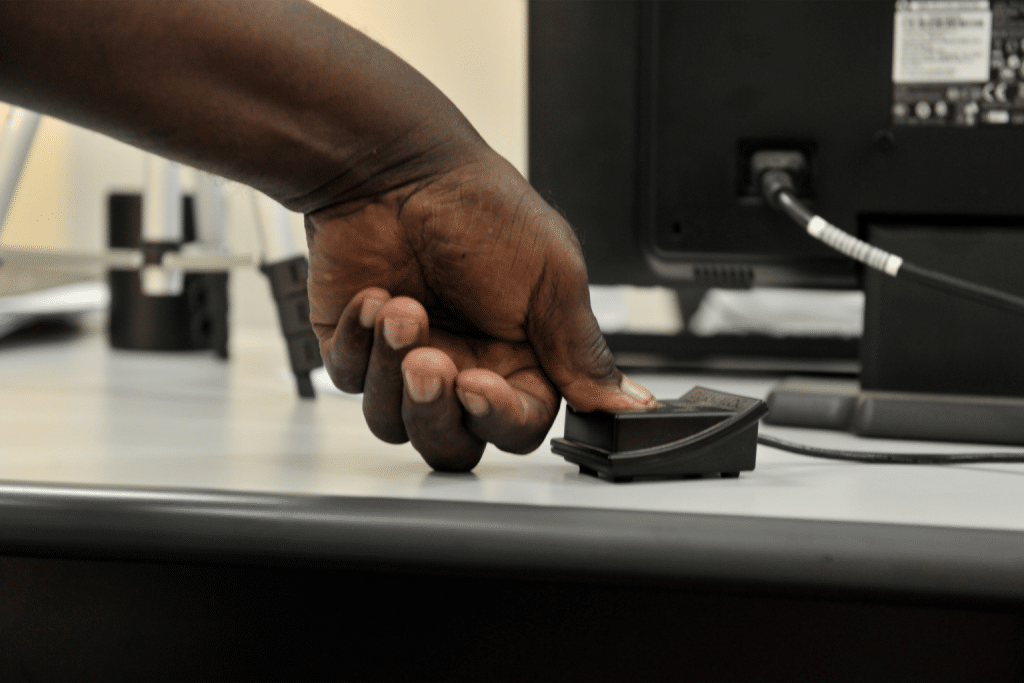
Underpinning all of this is a renewed push on digital identity. The Governance Reform Accountability Transformation (GREAT) project, launched by Liberia's Ministry of Finance and Development Planning on March 20, 2025, in Monrovia, is funded through a $30 million commitment under the World Bank's ID for Development (ID4D) program and aims to enroll at least two million Liberians in the National Identification Registry (NIR). Crucially, the NIR has signed a memorandum of understanding with the LTA making the national ID card a mandatory requirement for SIM card registration — directly linking the identity program to telecom access and, by extension, to mobile money adoption. Officials have described the national ID system as a driver of the broader digital economy, since a verified identity layer is a prerequisite for scaling e-governance, banking know-your-customer processes and cross-border ECOWAS digital trade. The World Bank convened a 'Digital Liberia Week' in Monrovia in October 2025 to coordinate donors and government agencies around these overlapping priorities — cables, fiber, identity and e-governance — under a single roadmap rather than as disconnected donor projects.
Conclusion
Liberia is not building a tech hub in the mold of Lagos, Nairobi or Cairo; it is instead rebuilding basic digital resilience after a wake-up-call outage exposed how thin its connectivity margins were. The Amilcar Cabral cable's Buchanan landing, the CSquared and private fiber extensions into the interior, the MIGA-backed rural tower rollout, and the GREAT digital ID project are all, in effect, insurance policies against a repeat of 2024 — while mobile money's rapid uptake shows that once basic connectivity exists, adoption of digital financial services can move faster than the infrastructure supporting it. The next two to three years, as the second cable lands and the national ID program scales past two million enrollees, will determine whether Liberia converts this infrastructure catch-up into a durable base for broader digital-economy growth, or whether it remains perpetually one cable cut away from disruption.
Published By | Tech Wiz