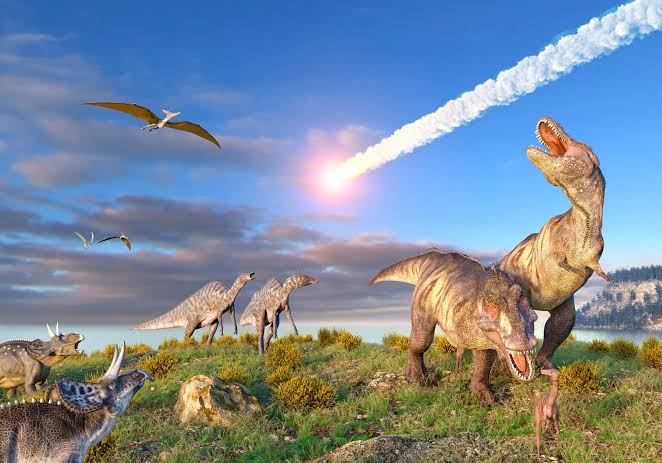
A stunning new study flips 4.5 billion years of cosmic terror on its head. Those planet-cracking impacts we’ve always cast as agents of extinction? New supercomputer models say they may have been the very furnaces where life first stirred - each one blasting out up to 100 times the hot-spring activity of all Yellowstone.
SAN ANTONIO, Texas
For as long as humans have looked up in fear, the asteroid has played one role in our imagination: the bringer of doom. The space rock that ended the dinosaurs. The extinction-level event of a hundred disaster movies. The thing NASA scans the skies for and Hollywood sends Bruce Willis to blow up. Death, from above, on a planetary scale.
Now a team of scientists at the Southwest Research Institute (SwRI) in Texas has published research that turns that entire story inside out. In a paper released in the journal AGU Advances and splashed across science headlines this week, they make a jaw-dropping case: the same brutal bombardment that scarred the infant Earth may have been the thing that made it habitable in the first place. The killers, it seems, may also have been the creators.
Rewinding to hell
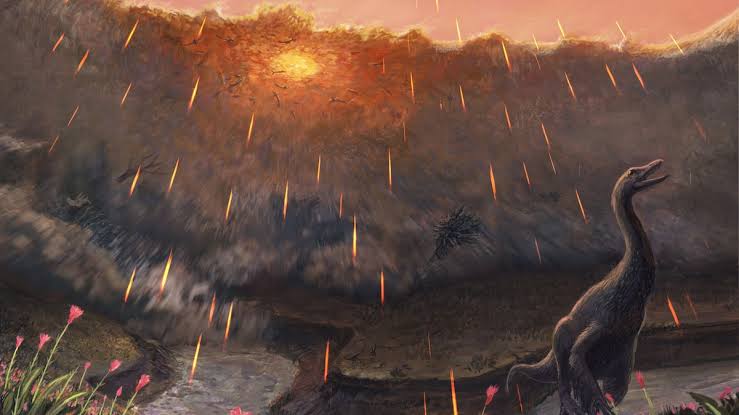
Picture Earth roughly 4.3 to 4.5 billion years ago. This was not the blue marble of your screensaver. It was a hellscape - a young, molten-skinned world being pelted relentlessly by asteroids screaming in at tens of thousands of miles per hour. Each colossal strike vaporized rock, hurled molten debris across the landscape, and shattered enormous volumes of the planet’s crust. It is, on its face, the least hospitable environment imaginable.
And yet, somewhere in that chaos, life got its start. How the transition from dead chemistry to living biology happened remains one of the deepest unanswered questions in all of science. The SwRI team thinks the answer may have been hiding in the wreckage the impacts left behind - specifically, underground.
“This modeling is both novel and crucial for understanding the earliest environments life may have emerged from,” said Amanda Alexander, the SwRI scientist who is first author of the study. “While often considered catastrophic in the context of dinosaur extinction, impact bombardment was also likely critical for creating environments for prebiotic chemistry.”
The secret was permeability
Here is the elegant mechanism at the heart of the research. When a giant asteroid slams into a planet, it does not just gouge a crater on the surface. The shock wave fractures the rock far below, riddling the crust with cracks, pores, and pathways. Scientists call this property “permeability” - the degree to which fluids can move through solid stone.
The SwRI researchers used a sophisticated “shock physics code” - a supercomputer program that simulates how high-speed impacts blow apart solid rock - to measure, for the first time in a comprehensive way, exactly how much permeable, fractured crust each impact would have produced. They ran simulations across a whole range of asteroid sizes and speeds, tested different rock compositions and starting temperatures, and then calculated the water-permeable volume each collision left behind.
Why does that matter so much? Because a cracked, porous crust is an invitation for water. And when you push water down into rock that is being heated - both by the leftover energy of the impact and by Earth’s own internal geothermal furnace - you get one of the most life-friendly environments known to nature: a hydrothermal system. Think of the geysers, hot springs, and bubbling pools of Yellowstone, where microbes thrive in mineral-rich heated water. Many origin-of-life researchers believe environments exactly like these - warm, wet, chemically busy - are where the first self-replicating molecules could have assembled.
One hundred Yellowstones from a single rock
The scale the models revealed is almost hard to believe. According to the simulations, a single large asteroid impact during Earth’s early bombardment could have generated as much as 100 times the hydrothermal activity found across the entire Yellowstone region today. Not a hundred hot springs - a hundred Yellowstones’ worth of geothermal plumbing, from one strike.
Now multiply that by a bombardment that went on for hundreds of millions of years. “Because life could have originated or evolved in hydrothermal environments, it is important to understand and quantify the generation of these systems by impacts on the early Earth,” Alexander said. The picture that emerges is of a young planet whose entire near-surface was, for eons, a churning patchwork of warm, mineral-laced, chemically active nurseries - exactly the kind of place where the raw ingredients of biology could mix, react, and eventually catch fire into life.
Habitable to the depths - for 800 million years
The study’s most striking claim concerns how long these conditions lasted. Using a “bombardment history model” to add up the cumulative effect of countless recurring impacts, the SwRI team estimates that the upper five-mile (eight-kilometer) shell of Earth’s crust was likely highly permeable around 4.3 billion years ago - and that a significant chunk of that volume may have stayed permeable all the way until about 3.5 billion years ago.
That is an 800-million-year window of a planet-wide, water-soaked, heat-driven subsurface habitat. “These results show that impacts were instrumental in driving hydrothermal changes to the early Earth’s crust, with important consequences for the geochemical evolution of near-surface environments,” Alexander explained. In other words, the impacts didn’t just create momentary hot spots. They fundamentally re-plumbed the young planet in a way that persisted for the better part of a billion years - comfortably overlapping the window in which the earliest known life is thought to have appeared.

The death-and-life duality gets a second act
What makes this moment in science especially rich is a companion finding that surfaced almost simultaneously. Separate research pairing fresh analysis of samples from the Chicxulub crater - the very scar left by the asteroid that killed the dinosaurs 66 million years ago - with geological modeling concluded that the hydrothermal habitat created by that impact lasted around 8 million years. That is four times longer than earlier estimates.
Put the two studies side by side and a haunting symmetry emerges. The Chicxulub impact famously wiped out roughly three-quarters of all species on Earth. But in cracking the crust and driving hot water through it, it also carved out an underground habitat that sheltered and nourished microbial life for millions of years afterward. The same rock that ended one age of life quietly seeded another. Death and creation, it turns out, may be the two faces of every great impact.
The perspective: why scientists are excited
For decades, the study of life’s origins has been split among competing venues. Some researchers champion deep-sea hydrothermal vents; others favor warm little ponds on the surface, drying and rewetting to concentrate chemistry; still others look to the chemistry delivered by comets and meteorites themselves. What the SwRI work does is dramatically expand the real estate available for the experiment of life to run.
If the models are right, early Earth was not sprinkled with a handful of rare oases. It was, for hundreds of millions of years, saturated with impact-forged hydrothermal systems from pole to pole and miles deep. The odds of the right chemistry finding the right conditions somewhere, sometime, go up enormously when the entire crust is a laboratory.
Alexander is careful to note that much work remains - the next step is to better define the precise chemistry and characteristics of these ancient systems, since not every warm, wet rock is automatically a cradle for biology. The study proves the plumbing existed on a vast scale; it does not yet prove life used it. But it moves the bombardment from the “obstacle” column firmly into the “opportunity” column of the origin-of-life ledger.
What this means for you - and for the search for aliens
You might reasonably ask why a story about rocks hitting Earth four billion years ago matters to anyone in 2026. The answer reaches all the way to the biggest question humanity has ever asked: are we alone?
Impacts are not unique to Earth. Every rocky world in every solar system gets bombarded, especially early in its life. If asteroid strikes are not just survivable but actively helpful for kick-starting biology - if they reliably manufacture warm, wet, chemically active habitats wherever they land - then the recipe for life may be far more common across the galaxy than we dared assume. The cratered, seemingly dead surfaces of Mars, the icy moons of Jupiter and Saturn, and countless exoplanets suddenly look less like graveyards and more like potential nurseries that simply had their ingredients delivered by the same violent postal service that battered the young Earth.
It also reframes how we think about our own existence. The next time you see a headline about an asteroid making a “close approach” to Earth and feel that primal flicker of dread, remember this study. The very same class of object we now guard against with telescopes and planetary-defense missions may be the reason there is anyone here to do the guarding. We are, quite possibly, the descendants of a catastrophe.
The bottom line
Science occasionally hands us a discovery that does more than add a fact - it rewrites a villain into a hero. For all of human history the asteroid has been our cosmic boogeyman, the random death sentence from the dark. The Southwest Research Institute’s new models suggest the truth is far stranger and far more generous: that the hammer blows which scarred the infant Earth also drilled the wells, stoked the furnaces, and mixed the broth from which everything living may ultimately have sprung.
The dinosaurs, in the end, may have simply been on the wrong side of a bargain the universe has been striking since the beginning. Every impact takes. And every impact, it now seems, may also give. Four and a half billion years later, the givers and the taken are the same rocks - and we are the improbable, grateful result.
Sources: Southwest Research Institute; ScienceDaily; AGU Advances (Alexander, Marchi & Johnson, “Widespread Impact-Induced Crustal Permeability on the Early Earth,” 2026, DOI 10.1029/2025AV002097); Phys.org; SciTechDaily; Space.com; EarthSky.
Published By | Tech Wiz