Written By | Torch Media Africa

Across East Africa, revenue authorities are turning the humble sales receipt into a real-time data feed
Technology Transformation
Most discussion of African technology focuses on consumer products: mobile wallets, ride-hailing apps, e-commerce marketplaces. One of the most consequential digital systems on the continent gets far less attention because it lives in the back office. Across East Africa, revenue authorities are turning the humble sales receipt into a real-time data feed. Each electronic invoice issued at a till in Nairobi, Kigali, Kampala or Dar es Salaam now travels to a government server, where it can be matched against what the seller declares, what the buyer claims as an expense, and what customs recorded at the border.
The fiscal stakes are large. The OECD's Revenue Statistics in Africa 2025 put the average tax-to-GDP ratio across 38 African countries at 16.1% in 2023. That was a third consecutive annual rise, but still well below Asia-Pacific (19.6%), Latin America and the Caribbean (21.3%) and the OECD (33.9%). Twenty of the 38 countries collected less than 15% of GDP. As concessional aid shrinks and Eurobond markets stay expensive, closing that gap through better compliance, rather than higher rates, has become a priority for finance ministries. Digital invoicing is the main tool they are using.
Kenya: from receipts to a full transaction trail
Kenya has gone furthest. The Kenya Revenue Authority (KRA) collected a record KSh2.844 trillion in the year to June 2026, up 10.6% from the previous year's growth of 6.8%. Some reports note that this still fell short of a KSh2.969 trillion target. KRA credits much of the improvement to technology: integrating its iTax platform with other government systems, using AI-powered analytics and cargo scanners, and above all expanding the electronic Tax Invoice Management System (eTIMS), which had 750,915 taxpayers onboarded by June 2026.
eTIMS began as a way to issue compliant invoices. It has since become a verification engine. From 1 January 2026, KRA began validating income-tax returns against eTIMS invoices, withholding-tax records and customs import data. Expenses not backed by an eTIMS invoice can be disallowed. In August 2026 KRA linked eTIMS to IFMIS, the government's financial-management system, so supplier invoices to the state are checked automatically. In September a public notice required businesses using TIMS or eTIMS to keep accurate stock records covering goods received, sold, transferred, returned or written off. That means inventory is becoming part of the electronic record KRA can reconcile against returns. Access has widened as well, through USSD, an Android app and even a WhatsApp channel, so that micro-businesses without accounting software can issue invoices.
Sector integrations show what real-time visibility can do. KRA integrated 143 betting and gaming firms into its systems, and betting excise rose 24.9%, finishing 15.9% above target. A fuel-station module links forecourt controllers and point-of-sale systems directly to KRA, although reporting in February 2026 found that only about 500 stations had been onboarded and most were still outside the system. On the digital economy, the Significant Economic Presence Tax roughly doubled to KSh1.609 billion after the Finance Act 2025 removed the KSh5 million threshold for non-resident digital income. From September 2026, Google began withholding 5% from Kenyan creators' YouTube earnings.
The headline numbers hide a structural limit, however. Five sectors (manufacturing, energy, financial services, ICT and wholesale trade) produced 62% of KRA's collections while making up just 27.4% of nominal GDP. Corporation tax grew 14.0%, with banks alone paying 26.1% of it. PAYE grew only 6.7% as formal employment slipped from 15.7% of total employment in 2022 to 15.3% in 2025. Digital invoicing is very good at squeezing more out of businesses that already transact formally. Whether it can bring in the informal majority is much less clear.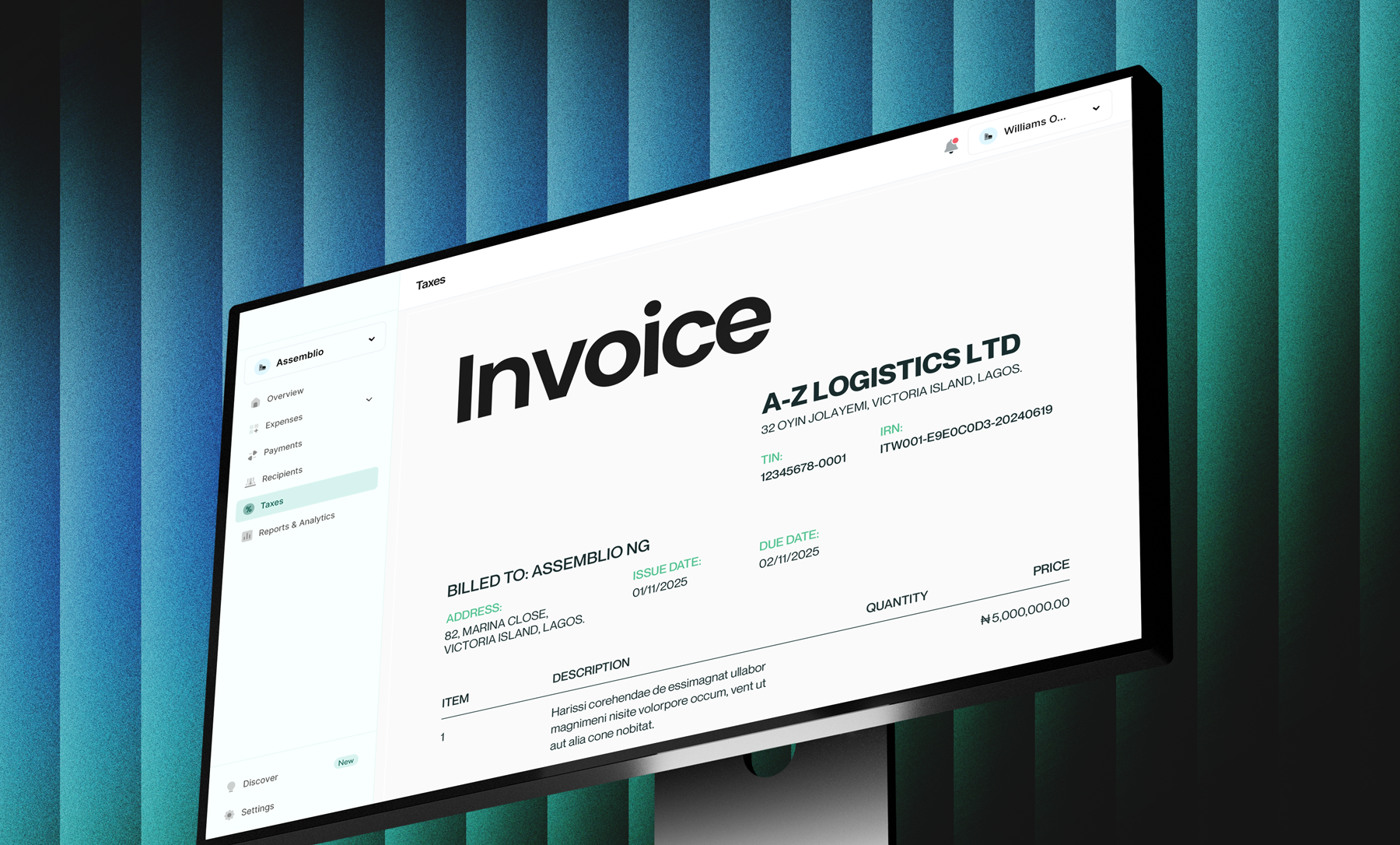
Tanzania: fiscal devices and a softer tone
Tanzania's approach rests on Electronic Fiscal Devices (EFDs) and Virtual Fiscal Devices (VFDs), backed by the public slogan "Whenever you sell, issue receipt. Whenever you buy, demand receipt." The Tanzania Revenue Authority (TRA) announced a record TZS 37.957 trillion for 2025/26, 105.24% of its TZS 36.066 trillion target and 17.6% more than the year before. December 2025 alone brought in TZS 4.13 trillion, the highest monthly figure on record. The target for 2026/27 is TZS 41.83 trillion.
TRA links the gains to modernised digital systems, and in mid-October Parliament's Budget Committee commended its digital tax platforms. Notably, Commissioner General Yusuph Mwenda has paired digitisation with reassurance, stating on 19 October that no business would be closed over tax challenges. The political lesson is that digital enforcement creates friction, and authorities that want traders to adopt devices voluntarily must avoid making technology look like a tool of punishment.
Rwanda: paying consumers to police receipts
Rwanda offers the most interesting design innovation: getting buyers to enforce compliance. Under a ministerial order, a final consumer who asks for an Electronic Billing Machine (EBM) invoice is entitled to a reward of 10% of the VAT shown on it. The response in 2025/26 was striking. Registered participants rose from 74,964 in June 2025 to 1,096,931 by the end of June 2026. Invoices requested through the scheme covered VAT output of Rwf105.8 billion, and Rwf4.2 billion in rewards was paid to consumers. A single February 2026 payout sent about Rwf1.33 billion to 157,029 people. Another 43,243 taxpayers adopted EBMs during the year.
The Rwanda Revenue Authority collected Rwf3,956.4 billion in 2025/26, 104.2% of its Rwf3,795.4 billion target. The reward scheme turns millions of shoppers into auditors at a cost of a few billion francs. It is a template other authorities are studying, because it addresses the oldest weakness of fiscal devices: sellers who simply do not issue receipts when nobody asks.
Uganda: expanding the mandate beyond VAT
Uganda's Electronic Fiscal Receipting and Invoicing Solution (EFRIS) shows the next step: extending e-invoicing beyond VAT-registered firms. General Notice No. 2218 of 2025 made EFRIS mandatory in designated sectors regardless of VAT status, exempting businesses with annual turnover under UGX 10 million, and the Uganda Revenue Authority reissued reminders in August 2026. Practitioner analysis of Finance Ministry figures puts the EFRIS register at 93,670 taxpayers in 2024/25, up 20%, with usage at 78.4% in June 2025 against an 85% target. Proposed amendments would raise the penalty for failing to issue an e-invoice to double the tax due or UGX 200,000 per invoice, whichever is higher.
The risks in the data layer
These systems are powerful, and that creates risks that deserve as much attention as revenue gains.
Why it matters beyond tax
The most important long-term effect may be outside the tax office. A business with two years of verified electronic invoices has, in effect, a credit history. Lenders, insurers and procurement agencies could use that data, with consent, to price risk for small firms that banks have traditionally ignored. Rwanda's consumer-reward model also suggests that digital public infrastructure works best when citizens gain something visible from taking part.
East Africa is quietly building some of the most sophisticated tax-administration technology among emerging markets. The challenge now is to make sure that the invoice, once the most ordinary scrap of paper in a shop, becomes a foundation for a fairer fiscal contract and not just a sharper instrument for taxing the same few firms.