Written By | Torch Media Africa
Astronomers Just Caught a Black Hole That's Been Playing Hide-and-Seek for 94 Years — And It Finally Blinked
Astronomers Just Caught a Black Hole That's Been Playing Hide-and-Seek for 94 Years — And It Finally Blinked
DATELINE: BALTIMORE / WASHINGTON, D.C. — July 14, 2026
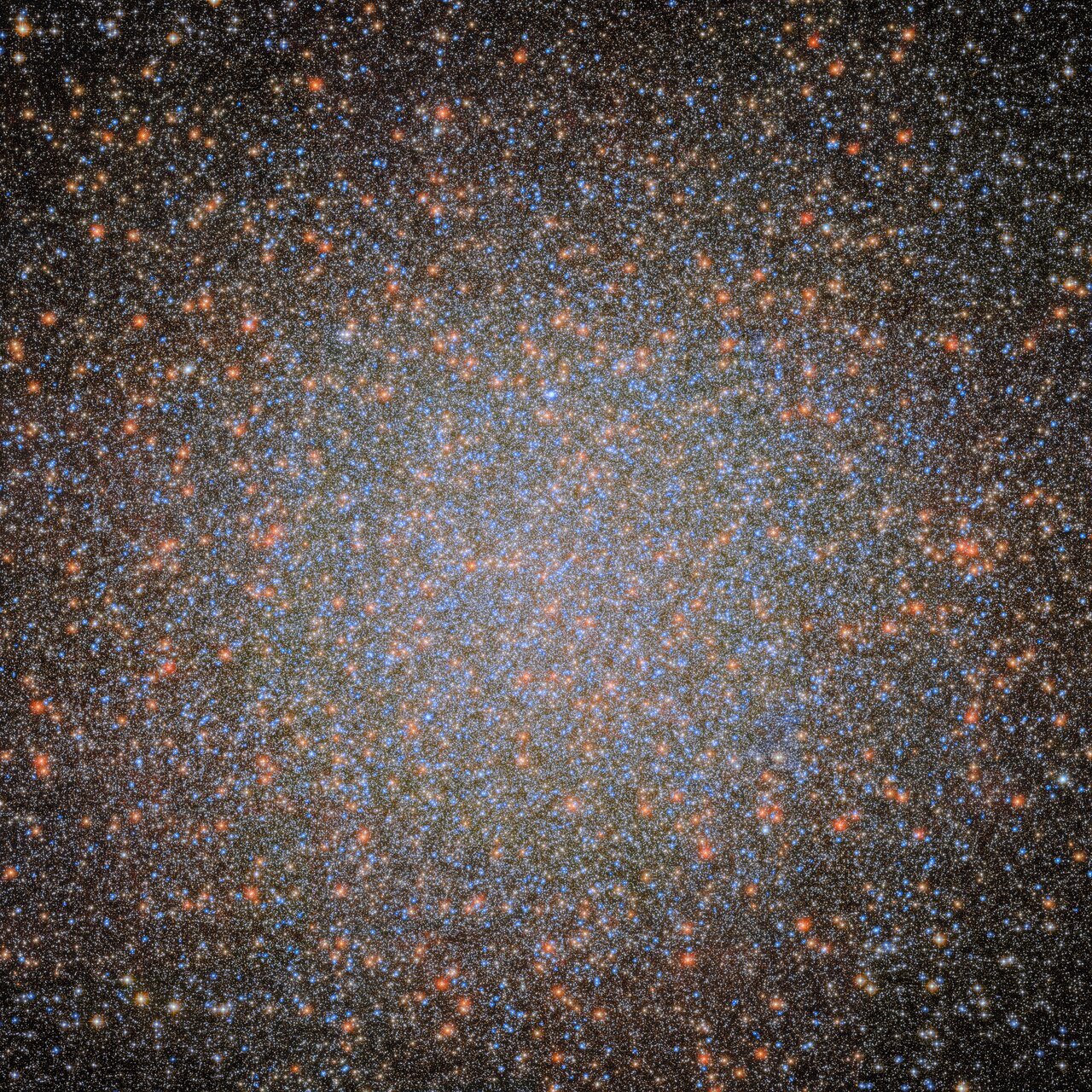
For decades it has been the biggest missing-persons case in the night sky. Omega Centauri, the largest and brightest globular star cluster visible from Earth, was supposed to be crawling with black holes — the dead husks of thousands of exploded stars packed into a ball ten million strong. Astronomers ran the numbers, checked the physics, and knew the black holes had to be there. And yet, for years, the cluster kept its secret. Every black hole in Omega Centauri was invisible, untraceable, a ghost.
That changed this week. On Monday, a team of astronomers announced in The Astrophysical Journal Letters that they had finally caught one red-handed — using two of NASA's most powerful eyes on the universe, the Hubble Space Telescope and the James Webb Space Telescope, and more than 20 years of patiently hoarded data. They found it not by seeing it — you cannot see a black hole — but by catching it in the act of quietly, invisibly tugging on a star for nearly a century.
They named it oMEGACat BH-2. And its discovery is being called one of the most important black hole finds of the decade.
A Cosmic Waiting Game Ninety-Four Years in the Making
Here is what makes this story almost unbelievable: the black hole and its companion star have been locked in a gravitational dance so slow, so vast, that a single orbit takes 94 years to complete — longer than most human lifetimes. That makes it the longest-period black hole binary system ever confirmed by scientists, smashing the previous record.
To put that in perspective, Earth completes a lap around the Sun in 365 days. The International Space Station orbits our planet in about 90 minutes. But this star, trapped in the gravitational grip of an invisible black hole roughly 18,000 light-years from Earth, takes nearly a full century to complete a single loop. Anyone who watched this cosmic waltz begin as a child would need to live past 90 to see it finish.
"With the Hubble and Webb data, we were able to see the motion of the visible main sequence star that is part of this binary, which is about 18,000 light-years away in the dense environment of Omega Centauri," said Matthew Whitaker, an astronomer at the University of Utah and lead author of the new study.
The black hole itself weighs in at just 4.46 times the mass of our Sun — startlingly light by black hole standards, and lighter than many scientists expected to find lurking in such a dense stellar environment. It's not glamorous. It's not a supermassive monster like the one at the center of our galaxy. It is, by black hole standards, almost modest. But its very existence — and the bizarre, decades-long orbit it shares with its stellar companion — is exactly what astronomers have been hunting for since Omega Centauri first became a suspect.
Why This Star Cluster Has Baffled Scientists for Years
Omega Centauri isn't just any cluster of stars. Located in the southern sky and visible to the naked eye from much of the Southern Hemisphere, it is the largest globular cluster orbiting the Milky Way, containing an estimated 10 million stars crammed into a ball roughly 150 light-years across. It's so massive, and so dense, that some astronomers suspect it isn't a "normal" star cluster at all — but the stripped-down core of a small galaxy that our own Milky Way swallowed billions of years ago.
That density is exactly why it should be teeming with black holes. When massive stars die, they collapse under their own gravity and explode as supernovae, sometimes leaving behind a black hole remnant. In a cluster with 10 million stars, statistically there should be hundreds, if not thousands, of these stellar corpses scattered throughout. But black holes emit no light. They don't glow, they don't twinkle, and they don't announce themselves. The only way to find one is to catch it interacting with something else — bending light, siphoning gas, or, as in this case, tugging almost imperceptibly on a companion star's position in the sky.
For years, that search came up nearly empty. A handful of possible intermediate-mass black hole candidates had been proposed in Omega Centauri's dense core, but a confirmed, cleanly measured stellar-mass black hole — the more "ordinary" kind, formed from a single collapsed star — had eluded astronomers. Until now.
The Detective Work: Two Decades of Starlight, a Fraction of a Pixel
So how do you catch something invisible? You watch, patiently, for a very long time. The team used a technique called astrometry — essentially, tracking the precise position of a star in the sky over years and years, looking for the tiniest wobble that would reveal an unseen companion's gravitational pull. It's less like snapping a photo and more like watching a buoy bob in the ocean and calculating the size of the submarine passing beneath it from the ripples alone.
Researchers combed through more than two decades of archival Hubble Space Telescope images of Omega Centauri, then layered in fresh, high-resolution observations from the James Webb Space Telescope to sharpen the picture. The precision required was almost absurd: astronomers were measuring shifts in a star's position down to a fraction of a single pixel on the telescopes' detectors — a display of technical accuracy that would have been unthinkable a generation ago.
What emerged was unmistakable: a visible, ordinary main-sequence star being pulled into a long, looping 94-year orbit by something with mass but no light. Do the math on the gravity involved, rule out every other explanation, and the only thing left that fits is a black hole.
Scientists say the black hole and its stellar partner likely didn't form together. Instead, in the crowded, chaotic environment of Omega Centauri — where stars are packed closely enough to gravitationally jostle one another over cosmic time — the two probably found each other later, captured into orbit through a close encounter deep in the cluster's core.
Why Astronomers Are Genuinely Excited (Not Just Being Polite)
It would be easy to shrug this off as a niche astrophysics footnote — a black hole, sure, but not exactly Earth-shattering news, right? Scientists studying the discovery insist otherwise, and the reason comes down to one of the hottest topics in modern astrophysics: gravitational waves.
When black holes eventually merge — a process that can take millions or billions of years — they send ripples through the fabric of spacetime itself, detectable by instruments like LIGO here on Earth. Dense star clusters like Omega Centauri are considered prime "nurseries" for exactly this kind of black hole pairing. Understanding how binaries like oMEGACat BH-2 form, and how common they are, gives scientists a crucial data point for predicting — and eventually interpreting — the gravitational wave signals detectors are picking up from across the universe.
As the research team put it, understanding how black holes form and then dynamically pair up "is vital, because it affects our ability to interpret and understand gravitational wave events. Environments like Omega Centauri are the primary places where we think binaries are merging and creating these waves."
In other words: this isn't just about finding one hidden black hole. It's about calibrating our entire understanding of how the universe's most violent, invisible collisions come to be.
What This Means for You
You don't need a telescope in your backyard for this discovery to matter. Every confirmed black hole detection sharpens the models scientists use to interpret gravitational wave data — the same data that, over the next decade, is expected to reveal entirely new physics about the early universe, the life cycles of stars, and possibly even hints about the nature of gravity itself.
There's also a more human angle here. This discovery is a reminder of just how much of the universe remains invisible to us — and how much patience it takes to find it. Nobody stumbled onto oMEGACat BH-2 by accident. It took more than 20 years of accumulated data, two of the most sophisticated space telescopes ever built working in tandem, and a research team willing to measure changes smaller than a pixel. It is, in its own quiet way, one of the great detective stories of modern science: no fingerprints, no photographs, just decades of starlight and the discipline to notice a 94-year-long wobble that shouldn't have been there.
If you've ever looked up at a clear night sky and wondered what's really out there, Omega Centauri is proof that even the objects we can see with the naked eye are hiding secrets that take a generation of scientific effort to uncover.
Looking Ahead
This is very likely not the last hidden black hole astronomers pull out of Omega Centauri. With a confirmed detection method now validated, researchers are expected to comb through the cluster's remaining archival data — and future Webb observations — hunting for the hundreds of other black holes that theory says must be lurking there. Every one they find adds another piece to the puzzle of how black holes form, pair up, and eventually collide across the vast timescales of the cosmos.
For now, though, oMEGACat BH-2 holds the title: the loneliest, slowest-dancing black hole binary ever confirmed, silently spinning through a 94-year waltz 18,000 light-years from home — and the astronomers who finally caught it watching.



