SCIENCE & TECH
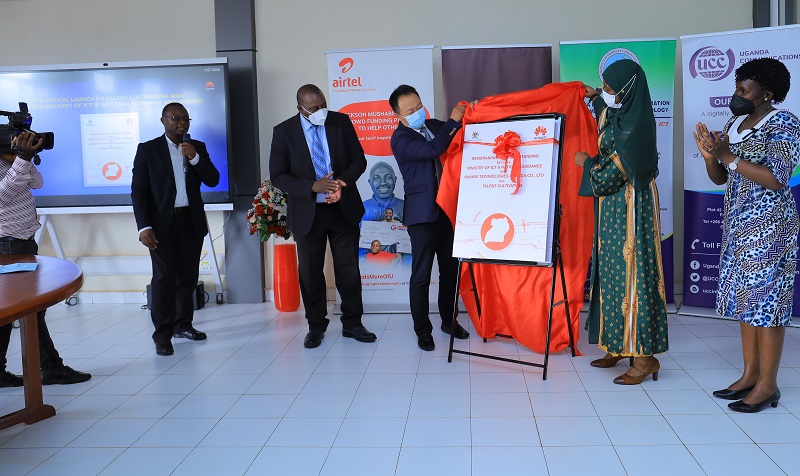
Uganda's technology sector spent the past two weeks in a familiar but intensifying rhythm: government, telecom operators, and a major foreign vendor coordinating on skills development, even as the same operators warn that the country's digital infrastructure needs stronger defenses against cyberattacks. On August 21, Huawei Technologies Uganda held a campus recruitment and talent drive at Kyambogo University, one of the country's leading technical training institutions, aimed at identifying and developing young ICT talent and tightening the link between universities and industry. The event built on a broader Talent Cultivation memorandum of understanding between Huawei and Uganda's Ministry of ICT and National Guidance, with Airtel Uganda joining as a partner offering internship placements to participating students. At the same time, Airtel has been pressing publicly for the creation of a national cyber resilience framework, arguing that Uganda's critical infrastructure and essential services remain exposed to attack without one.
What is happening
The Kyambogo recruitment drive targeted final-year students and recent graduates looking for a foothold in Uganda's technology sector, with Huawei using the visit both to scout talent for its own operations and to reinforce a training partnership that predates this specific event. That underlying partnership — a Talent Cultivation MoU between Huawei and the Ministry of ICT and National Guidance — commits Huawei to providing capacity-building support across several in-demand technical domains: 5G networks, artificial intelligence, cybersecurity, cloud computing, and big data. Uganda's ICT Minister, Dr. Chris Baryomunsi, has championed the arrangement as part of a broader effort to align university curricula and graduate skills with what the country's fast-growing technology sector actually needs.
Airtel's role extends beyond the recruitment event itself. The telecom operator, through its Chief Technology Officer Rajesh Agrawal, has framed its participation as part of a broader "digital transformation drive" and has specifically pledged internship placements for students at the Uganda Institute of Information and Communications Technology (UICT), positioning those students as direct beneficiaries of the Huawei-government partnership. This is not the first time the three parties — government, Huawei, and Airtel — have collaborated on ICT capacity-building; a similar tripartite arrangement dates back to at least 2022, when the companies and ministry first signed on to jointly "transform Uganda through ICT."
Running in parallel with this talent-development push, Airtel Uganda has been publicly advocating for the establishment of a formal national cyber resilience framework — a coordinated set of policies, standards, and response mechanisms designed to help the country prevent, detect, respond to, and recover from cyberattacks targeting critical infrastructure and essential services. The call comes as Uganda's digital footprint has expanded rapidly: more government services, financial transactions, and everyday communication have moved online, widening the potential attack surface for the country's telecoms, banks, and public institutions.

The bigger policy picture
Both threads — talent development and cyber resilience — sit inside a larger government initiative: the Ministry of ICT and National Guidance's five-year strategic plan, covering fiscal years 2025/26 through 2029/30, which was formally launched alongside a new set of Service Delivery Standards at the National ICT Innovation Hub. The plan is itself an extension of Uganda's longer-running Digital Transformation Roadmap, first launched with support from the United Nations Development Programme, which set ambitious connectivity and digitization targets: 95 percent of government services moved online, 90 percent of the country covered by broadband, 90 percent of citizens able to access services online, and 90 percent of small and medium enterprises connected to the internet. The roadmap also calls for expanding Uganda's National Backbone Infrastructure to reach at least 73 additional districts and 20 major towns, extending connectivity to administrative offices, schools, government agencies, and hospitals that currently lack it.
Minister Baryomunsi has described the broader digital transformation effort as the start of a process capable of reshaping "our nation's future," language that reflects how central ICT policy has become to Uganda's economic diversification strategy — one that, notably, is unfolding at the same time the country is racing toward its first oil production and touting rising business confidence across other sectors. Science, technology, and innovation more broadly have been positioned by officials as a route to shift Uganda's economy away from commodity dependence and toward industrial production and knowledge-based growth, with public investment in the sector increasing over the past five years.
Who is involved
Huawei Technologies Uganda is the most visible corporate actor in the talent-development story, using campus recruitment as both a corporate hiring tool and a visible demonstration of its MoU commitments to the government. Airtel Uganda, led on the technical side by CTO Rajesh Agrawal, occupies a dual role — a partner in the talent pipeline through UICT internships, and an outspoken advocate on the separate but related issue of national cyber resilience. The Ministry of ICT and National Guidance, under Minister Chris Baryomunsi, is the government's central coordinating body for both efforts, having launched the five-year strategic plan and Service Delivery Standards, and having brokered the original Talent Cultivation MoU with Huawei. Kyambogo University and UICT serve as the primary academic institutions channeling students into these industry partnerships, reflecting a broader government push to formalize academia-industry links across Uganda's technical education system.
Why it matters
For young Ugandans entering a difficult job market, formal talent pipelines backed by large employers like Huawei and Airtel offer a comparatively rare, structured route into stable technology employment — a meaningful proposition in a country with a large youth population and persistently high youth unemployment. For the government, deepening ties with major telecom and technology vendors supports its broader digital transformation targets, which depend not just on physical infrastructure like broadband backbone but on a domestic workforce capable of building, maintaining, and securing that infrastructure over time.
The cybersecurity dimension carries its own distinct stakes. As Uganda pushes more government services, financial transactions, and private-sector operations online in pursuit of its digitization targets, the country's exposure to cyber risk grows in tandem. Airtel's public call for a national cyber resilience framework signals that at least some major private-sector players view Uganda's current policy and institutional response to cyber threats as insufficiently coordinated relative to the pace of digitization — a gap that, if unaddressed, could undermine confidence in the very digital services the government is trying to expand, from mobile money to e-government platforms to the increasingly digitized banking sector that has posted strong recent economic indicators.
What to watch
Several developments are worth tracking in the coming months. First, whether the government responds concretely to Airtel's call for a national cyber resilience framework, whether through new legislation, a dedicated agency, or a formal public-private coordination mechanism — or whether the proposal stalls without government action, as similar sector-specific policy asks sometimes do. Second, how many students from the Kyambogo recruitment drive and the broader UICT partnership convert into actual Huawei hires or Airtel internships, which would offer a concrete measure of whether these MoUs are translating into real youth employment rather than remaining largely symbolic. Third, progress against the Ministry of ICT's five-year strategic plan targets — particularly broadband coverage and the expansion of the National Backbone Infrastructure into unconnected districts — as benchmarks for whether Uganda's digital transformation ambitions are being met on schedule. And finally, whether other major telecom and technology operators in Uganda, beyond Airtel and Huawei, begin echoing similar calls for stronger national cybersecurity coordination, which would suggest the concern is industry-wide rather than isolated to a single company's public messaging.
Published By | Tech Wiz