Written By | Torch Media Africa
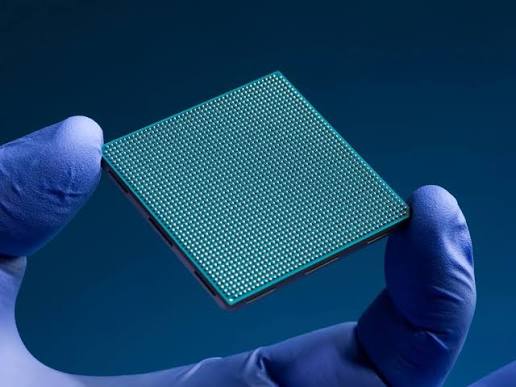
The chip is the High Performance Spaceflight Computing (HPSC) processor, built under a $50 million NASA-Microchip contrac
NASA and Microchip Technology have built a palm-sized space computer 500 times more powerful than today's hardware — giving rovers and probes the ability to think, adapt, and decide for themselves.
PASADENA, Calif.
The subject line read "Hello Universe." A test message, three words, sent from inside a clean room at NASA's Jet Propulsion Lab. But the device that sent it was anything but ordinary: a new computer chip, smaller than a human palm, designed to survive the killing radiation of deep space. In those three words lies a revolution in cosmic exploration.
The chip is the High Performance Spaceflight Computing (HPSC) processor, built under a $50 million NASA-Microchip contract. NASA's original target was 100 times the computing power of current radiation-hardened chips. Actual performance? Five hundred times — a leap beyond the aging RAD750 PowerPC chip that has been the backbone of NASA deep-space missions for over two decades.
The Problem: Space Is Hard on Computers
Space is brutally hostile to electronics. Beyond Earth's magnetosphere, high-energy cosmic rays can flip binary digits, corrupt data, or permanently damage chips. Consumer processors would fail quickly. The solution has been "radiation-hardened" chips — expensive, slow, and conservative. The RAD750, designed in the early 2000s, runs at roughly 200 MHz (a 1998 desktop PC) and has flown on over 150 missions. It is reliable but increasingly limiting: modern missions generate more data than the chip can process, and the 20-minute communication delay to Mars means rovers can't wait for human approval in an emergency.
The Solution: RISC-V, Multi-Core, and 500x Power
The HPSC uses RISC-V — a modern, open-source architecture free from proprietary licensing. It is also multi-core, with vector processing units and dedicated deep-learning accelerators. A spacecraft with HPSC can run AI inference in real time, onboard. A Mars rover could analyze images and decide to drill or retreat within seconds, not hours or days.
"This processor will enable autonomous spacecraft to use AI to respond in real time to complex situations," NASA stated.
Testing: From the Lab to "Hello Universe"
Two variants exist: radiation-hardened for deep space, and radiation-tolerant for low-Earth orbit. Integration tests at NASA's Goddard Space Flight Center have been striking. The "Hello Universe" email — sent by JPL engineers from the chip itself, a callback to 1969's "lo" message — went through complete. Formal space qualification is ongoing.
What the HPSC Makes Possible
Expert Perspectives
"This is the generational leap we have been waiting for," said one aerospace professor. The shift to open-source RISC-V also positions NASA to benefit from global investment, reducing costs compared to legacy space processors.
What This Means for You
The satellites providing GPS, weather forecasts, and broadband are all limited by onboard computing. HPSC-class chips will deliver better services and faster emergency warnings — for hurricanes, wildfires, floods — potentially saving thousands of lives. And for human expansion to the Moon and Mars, the HPSC is foundational: you cannot send humans without autonomous emergency computing.
Conclusion: The Mind of the Machine
For most of spaceflight history, spacecraft have been obedient tools, waiting for Earth's commands. The HPSC does not overcome the speed of light. But it gives spacecraft a mind capable of reasoning during the long minutes of delay — to adapt, learn, and make good decisions in the absence of human guidance.
"Hello Universe" was not just a technical milestone. It was a declaration of a new kind of exploration: machines intelligent enough to help us decide where to go next.



