Written By | Torch Media Africa
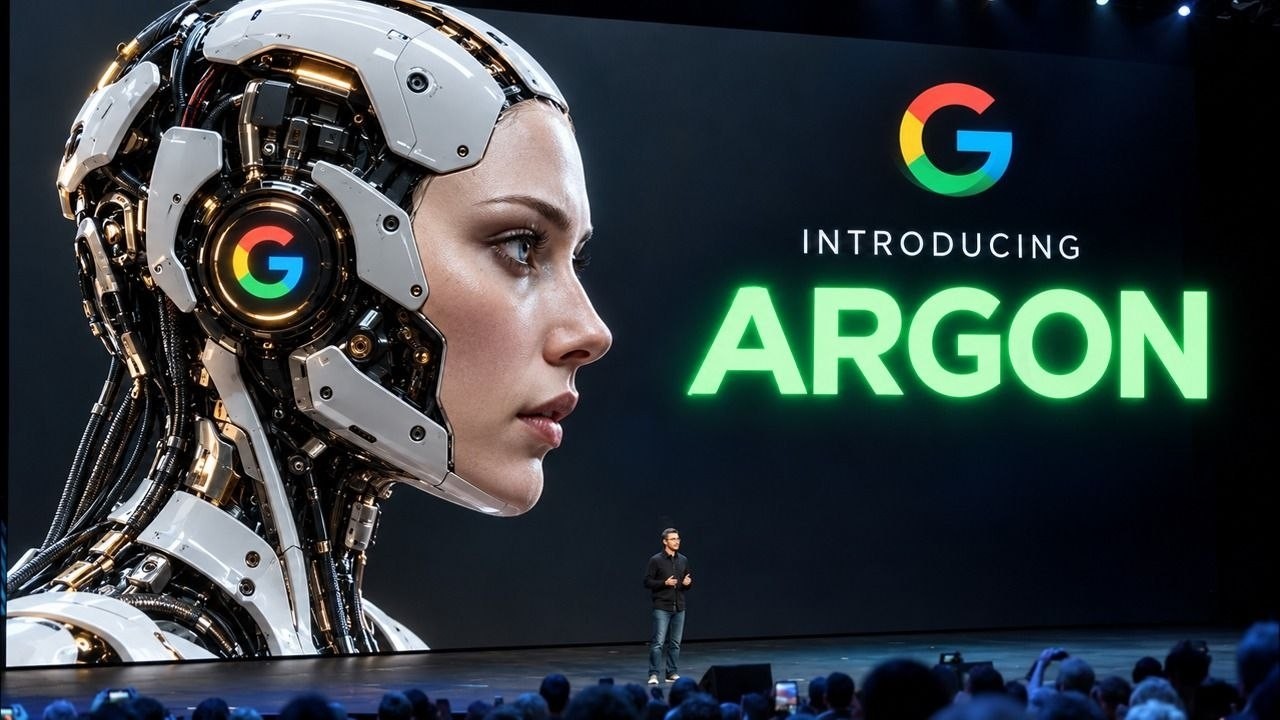
Gemini 4 Argon tops OpenAI and Anthropic on most tests, undercuts rivals on price, and is being handed first to cybersecurity defenders — the rest of us must wait
MOUNTAIN VIEW
The AI arms race just lurched in Google's favour, and the company is being unusually cautious about who gets to touch the prize. Gemini 4 Argon, unveiled on 30 September 2026, has leapfrogged rivals on a majority of published tests, produces fewer made-up answers than almost anything else on the market, and costs a fraction of what OpenAI's flagship charges. Yet you cannot simply sign up and chat with it. For now, Google is locking its newest brain behind a velvet rope reserved for vetted cybersecurity teams and government testers.
It is a dramatic reversal. For months, the chatter in Silicon Valley was that Google had slipped behind in the frontier-model race, with OpenAI's GPT-6 Astra and Anthropic's Claude Opus 5.5 setting the pace. Independent analysts now say that story is over.
A Scoreboard Google Has Waited a Long Time For
Start with the numbers, because they are the reason the industry is buzzing. According to a VentureBeat analysis of the benchmark tables Google published at launch, Argon leads outright on 12 of 18 disclosed benchmarks and ties for first on one more. Google's own comparison, as reported by The Rundown, put the tally at 13 of 19 against GPT-6 Astra and Claude Opus 5.5.
The margins on some tests are striking. On Harvey's Legal Agent Benchmark, which measures how well an AI can handle real legal work, Argon scored 19.6 per cent. GPT-6 Astra managed 5.4 per cent and Claude Opus 5.5 just 3.8 per cent. On AutomationBench, which tests whether a model can carry out multi-step business tasks on its own, Argon hit 51.3 per cent against 42.5 per cent for Claude and 41.4 per cent for Astra.
In software engineering, the arena where AI labs have been fighting hardest, Argon posted 77.9 per cent on DeepSWE v1.1, narrowly ahead of Claude at 74.2 per cent and Astra at 74.1 per cent. On LVBench, a test of understanding long videos, it scored 91.7 per cent, beating Astra's 87.5 per cent and Claude's 83.7 per cent. And on the Vals Finance Agent v2 benchmark it reached 65.4 per cent, well clear of Claude's 58.6 per cent and Astra's 53.5 per cent.
Google also says Argon can produce up to one million output tokens in a single response, a huge jump from the 64,000-token ceiling of its previous generation, and it carries a one-million-token context window — enough to swallow several long novels at once.
The Independent Verdict: Google Is Back in the Big Three
Company-chosen benchmarks always deserve a pinch of salt, which is why third-party analysis matters. Artificial Analysis, an independent AI evaluation firm, ranked Gemini 4 Argon (high) at 53 on its Intelligence Index, a dead heat with GPT-6 Astra (max) at 53 and one point ahead of OpenAI's GPT-6.1 Sol (max) at 52. For context, Google's previous Gemini 3.1 Pro Preview scored 30 and Gemini 3.8 Flash scored 41 on the same scale. In other words, Google has jumped more than 20 points in a single generation.
Artificial Analysis headlined its write-up that Google is "back as one of the top three labs in intelligence achieved." The model also took first place on the Arena text leaderboard on 30 September, though that ranking was flagged as preliminary.
Argon's agentic abilities, meaning its skill at working through tasks with tools and minimal human help, also impressed. The firm reported it ranks first on its AutomationBench-AA at 78 per cent. On Terminal Bench 4 it scored 57 per cent, which Artificial Analysis noted trails only Anthropic's Claude Opus and Claude Sonnet variants.
Fewer Fibs: The Hallucination Headline
Perhaps the most eye-catching figure for everyday users is not about raw brainpower at all. It is about honesty. Artificial Analysis measured Argon's hallucination rate, the tendency to confidently invent facts, at 15 per cent. That is, in the firm's words, the lowest of any model scoring 45 or above on its Intelligence Index. GPT-6 Astra came in at 51 per cent and GPT-6.1 Sol at 54 per cent.
Anyone who has watched a chatbot confidently cite a court case that never existed will understand why that matters. If the figures hold up in the wild, Argon could be the first top-tier model that professionals feel moderately safe relying on for research, legal drafting and financial analysis — exactly the areas where it posted its biggest benchmark wins.
Security researchers will also note a separate result. On the Gray Swan indirect prompt-injection benchmark, which measures how easily hidden malicious instructions can hijack an AI agent, Argon had a 0.7 per cent attack success rate. Claude Opus 5.5 and Claude Fable 5.1 sat at 1.0 per cent, while GPT-6 Astra suffered an 8.5 per cent rate.
Price War: One-Fifth of the Cost
Then there is the price tag. During an introductory period, Google is charging developers $2 per million input tokens and $10 per million output tokens. Afterwards the rate doubles to $4 and $20, which matches Claude Opus 5.5's post-introductory pricing. By comparison, GPT-6 Astra is priced at $10 and $50 per million tokens, so Argon's introductory rate works out at about one-fifth of OpenAI's. Cached inputs get a 95 per cent discount.
Argon is also a chatty thinker. Artificial Analysis found it averages about 62,000 output tokens per task, against 27,000 for GPT-6 Astra, so the per-token savings partly evaporate. Even so, the firm calculated that at current discounted pricing Argon costs $1.99 per Intelligence Index task, roughly 60 per cent of GPT-6 Astra's $3.26. Once discounts end, that figure climbs to $3.98 — which would make it more expensive than Astra on that measure.
Why You Can't Use It Yet
Here comes the twist. Google is not throwing the doors open. Initial access is limited to select vetted security teams through its Fairwind programme for trusted cyber defenders, plus voluntary pre-release access for the US government. Google says it intends to widen availability "as soon as possible", first to paid API customers and Google AI Ultra subscribers, but has announced no timeline.
Why the caution? The cyber angle is the clue. Reporting on the launch says the model was provided to trusted defenders without the usual cyber guardrails, so that they can probe software for weaknesses at full power. Wiz, the cloud security firm, is already using Argon through a Scan for Good initiative, and reports say the model helped uncover a critical vulnerability in a healthcare system that exposed personal information.
That is the double-edged sword of modern AI. A model clever enough to find hidden flaws in code is, in the wrong hands, clever enough to exploit them. By putting defenders first, Google is effectively giving the good guys a head start before the model reaches the public.
What Google Says It Is Already Using It For
Google also published a list of internal uses that read like a flex. According to the launch details, Argon helped deliver a 40 per cent improvement over baseline in a quantum-computing optimisation task, and its memory optimisation work freed more than 300 tebibytes across Google's data centres. It has been used to migrate C and C++ code to the memory-safe Rust language in projects including the Zircon kernel and core libraries.
One example stands out: in the libgav1 video decoder, Argon replaced 32,000 lines of code with SIMD-optimised routines, and the resulting decoder was 2.7 times faster than a Rust port. These are Google's own claims and have not been independently reproduced, but they hint at where the company sees the technology heading — deep inside the plumbing of the internet.
Expert Perspective: Read the Fine Print
Analysts are praising the results while urging calm. The write-ups note that Argon's leadership is "breadth-based," not total. GPT-6 Astra still leads by 10.5 points on FrontierSWE v2, 65.5 per cent to Argon's 55.0 per cent, and remains stronger on Terminal-Bench Science 0.1 and Terminal-Bench 4.0. Claude Opus 5.5 leads on Terminal-Bench 4.0 and PostTrainBench. The sober conclusion from reviewers is that model choice remains workload-dependent, and that most customers will have to wait for broader API access before they can test real production performance.
There is also the matter of verification. Much of the early evidence comes from Google itself, and the Rundown noted the absence of attributed reactions from rival labs. Independent tests, such as those from Artificial Analysis, are the stronger signal, and they largely back up Google's story on intelligence and hallucination, while reminding buyers that cost and verbosity complicate the price picture.
The Bigger Picture: A Three-Way Race
Step back, and the real story is that the frontier is now a genuine three-horse race. OpenAI has been busy: its recently released GPT-6.1 Sol sits just a point behind on the independent index. Anthropic's Claude family still owns the crown on certain coding-terminal tests. And Google, written off by some a few months ago, has produced a model that ties for first on overall intelligence while undercutting everyone on headline price.
For the industry, a three-way race means faster releases, falling prices and louder claims. For governments, it raises the stakes on safety testing; the fact that Google voluntarily offered the US government pre-release access shows how seriously labs now treat the national-security side of their most capable systems.
What This Means for You
If you are an ordinary user, the immediate answer is: very little, yet. You cannot download Argon today, and Google has given no date. But the effects will trickle down. Expect the next versions of Google's consumer products to get noticeably smarter once the model becomes widely available, and expect rivals to respond with their own upgrades and price cuts.
If you use AI for work, the hallucination numbers are the ones to watch. A lower rate of confident nonsense could make AI assistants safer for drafting contracts, summarising financial reports or conducting research — but no model is error-free, and a 15 per cent rate still means roughly one in seven answers in that test contained a fabrication. Always check anything that matters.
If you are a business customer, start planning. Argon's introductory pricing is a bargain, but remember it doubles later and that the model uses far more tokens per task than its rivals. Budget on the post-discount price, not the teaser rate.
And if you simply worry about online safety, the Fairwind approach is, on balance, good news. Giving defenders a powerful bug-hunting tool before attackers can get one is exactly the sequence security experts want. The risk is that similar capability will be available to everyone soon enough.
The Bottom Line
Gemini 4 Argon is Google's loudest answer yet to the question of whether it can still compete at the cutting edge. On the evidence so far, it can. It ties for the top spot on independent intelligence rankings, claims the lowest hallucination rate among top-tier models, and arrives at a price that makes rivals look pricey. The caveats are real: much of the data is self-reported, rivals still win on key coding tests, and the public cannot try it.
The next few weeks will decide whether Argon is a lasting leap or a launch-day mirage. When the gates finally open to paid developers and Ultra subscribers, the world will find out whether the model that tops the charts can also top the real world. Until then, the keys belong to the defenders — and the race for the AI crown is wide open.



