SCIENCE AND TECH.
It was the kind of Tuesday that sends a shockwave through Silicon Valley before the coffee's even gone cold. On August 5, in a single, tightly choreographed announcement, Google blew up the leadership structure of the most valuable artificial intelligence operation on the planet — and by Wednesday morning, investors, engineers, and rival AI labs were still trying to figure out exactly what had just happened.
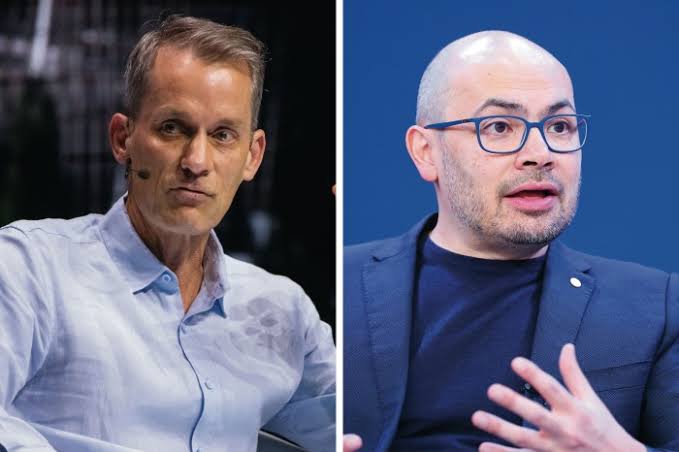
Demis Hassabis, the 49-year-old chess prodigy turned Nobel Prize-winning scientist who has run Google DeepMind since its 2014 acquisition, is stepping down as chief executive. In his place: Koray Kavukcuoglu, DeepMind's longtime chief technology officer, who becomes senior vice president of Google DeepMind, reporting straight to Alphabet and Google CEO Sundar Pichai.
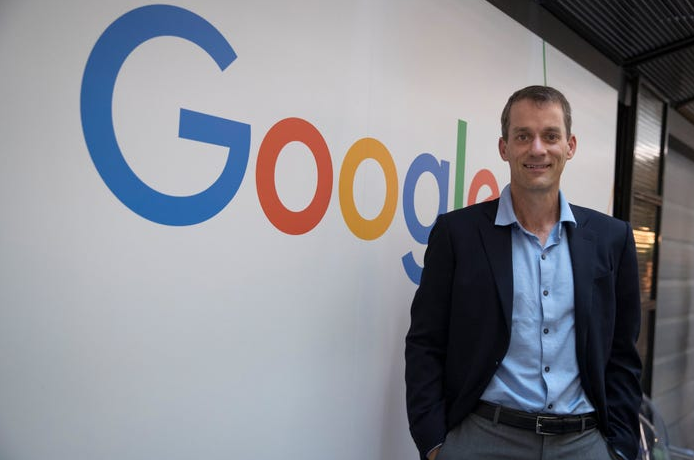
That alone would have been the biggest tech story of the week. But Google wasn't finished. In the same breath, the company confirmed that Jeff Dean — its legendary chief scientist and a 27-year company veteran so revered inside Google that engineers half-jokingly swap "Jeff Dean facts" the way physicists swap Einstein jokes — is leaving entirely. Dean isn't retiring. He's launching a new AI startup, and he's taking three of Google's most decorated researchers with him.
By the time markets absorbed the news, Alphabet's stock had shed roughly 4 to 6 percent, erasing tens of billions of dollars in market value in a single trading session. For a company that has spent the past two years positioning itself as the safe, deep-pocketed alternative to OpenAI and Anthropic in the AI arms race, it was a brutal, very public gut-check.
THE MAN WHO SAW AGI COMING
Hassabis isn't going far, and he isn't going quietly. In a statement released alongside the announcement, he framed the move not as a retreat but as a repositioning for what he believes is an approaching civilizational turning point.
"We have arrived at a pivotal moment in human history," Hassabis said. "I've been working towards AGI my whole life and now, like many of you, I feel it is close at hand. It's critical that we collectively get the next steps right to ensure this all goes well for humanity and we usher in an incredible new age of discovery and wonder."
Under the new arrangement, Hassabis becomes chairman of Google DeepMind and takes on a brand-new title: chief scientist of Alphabet, the parent company that oversees Google, Waymo, and a sprawling portfolio of moonshot bets. He'll also keep steering Isomorphic Labs, DeepMind's AI-driven drug discovery spinout, which has quietly become one of the most closely watched biotech plays in the industry.
Pichai, for his part, leaned into the mythology. "Demis has described us as standing in the foothills of the singularity," Pichai said, invoking the long-theorized moment when machine intelligence would overtake human intelligence across the board. "He and I have been long discussing a role that allows him to put his full attention on actively shaping the future of AGI."
Translation, according to several industry watchers: Hassabis is being freed from the grind of quarterly roadmaps, product launches, and internal reorgs so he can play statesman — flying to Davos, testifying before parliaments, and shaping how the world's governments regulate the very technology his lab is racing to build. One analyst described it more bluntly, telling reporters the move was less a demotion than a "formalization" of a shift that had already been quietly underway for roughly a year, with Kavukcuoglu running day-to-day research operations in all but name.
THE QUIET DEPARTURE THAT WASN'T QUIET AT ALL
If Hassabis's move was a carefully managed transition, Jeff Dean's exit landed like a bombshell.
Dean is, by any measure, one of the most influential engineers in the history of computing. He co-created foundational systems — MapReduce, Bigtable, Spanner, the Google File System — that quietly underpin much of the modern internet, and later became one of the architects of Google's deep-learning push. Losing him after 27 years is, several former colleagues said privately, akin to a law firm losing its founding partner and half the litigation team on the same afternoon.
Because Dean isn't leaving alone. He's co-founding a new company called Discovery Loop alongside fellow Google veterans Sanjay Ghemawat — his longtime coding partner and co-creator of several of those same foundational systems — plus Oriol Vinyals and Quoc Le, two of the researchers most closely associated with Google's large language model breakthroughs, including work that fed directly into the Gemini model family.
Discovery Loop's pitch, according to people briefed on the plan, is audacious even by AI-startup standards: automate the scientific method itself. The company intends to start by turning AI loose on machine-learning research and engineering — essentially building AI systems that design and improve other AI systems — before expanding into hardware design, drug discovery, and clean energy research. It's a bet that the next major leap in AI won't come from a bigger chatbot, but from AI systems that can independently generate and test scientific hypotheses at a scale and speed no human lab could match.
And in a twist that says as much about the current AI economy as anything else, Google isn't treating this as a hostile departure. Alphabet is becoming a founding investor in Discovery Loop, will serve as its cloud infrastructure partner, and has agreed to supply the compute power the young company will need to get off the ground in its first year. Venture firms Khosla Ventures and Radical Ventures are also on the cap table, with Radical managing partner Jordan Jacobs taking a board seat. The company has not disclosed the size of the funding round or its valuation, but industry watchers note that any startup founded by Jeff Dean would likely command a valuation in the hundreds of millions before writing a line of code, given his track record and the current frenzy for AI research talent.
Discovery Loop is structured as a public benefit corporation, a legal designation that requires the company to weigh its stated social mission — in this case, accelerating scientific discovery — alongside shareholder profit, a structure that has become fashionable among AI labs eager to signal that they're not purely profit-driven (OpenAI's original nonprofit structure and Anthropic's public-benefit-corporation status set the template).
WHY WALL STREET FLINCHED
None of this happened in a vacuum. Google has spent the last 18 months locked in an increasingly expensive, increasingly personal race against OpenAI and Anthropic for AI supremacy — a race measured in billions of dollars of data center spending, aggressive talent poaching, and near-weekly model releases. Losing the CEO of your flagship AI lab and your chief scientist on the same day, even under the friendliest possible framing, reads to investors as instability at exactly the moment the company can least afford it.
The stock reaction — a 4 to 6 percent single-day drop that wiped out tens of billions in market capitalization — suggests the market isn't fully buying the "this was planned all along" narrative, whatever the official talking points say. Tech analysts pointed to a familiar pattern: when a company's most identifiable, most trusted technical leaders step back simultaneously, investors tend to price in execution risk first and ask questions about strategy second.
There's also the uncomfortable optics of watching top talent walk out the door to build a competitor — even a friendly, Google-funded one. Discovery Loop isn't positioning itself as a rival AI chatbot company, but "automating scientific discovery" overlaps meaningfully with ambitions Google DeepMind has stated for itself for years, including projects like AlphaFold and various AI-for-science initiatives. Some observers see the new venture less as a clean break and more as Google outsourcing a high-risk research bet to a vehicle it can still fund and benefit from without carrying it directly on its own balance sheet.
WHAT THE EXPERTS ARE SAYING
Industry analysts who cover the AI labs have offered a range of readings. Several noted that Kavukcuoglu's promotion is unlikely to change DeepMind's day-to-day trajectory much, since he has effectively been running research operations for some time — meaning Gemini development, frontier model research, and the Gemini consumer app are unlikely to see any near-term disruption. The bigger open question, they say, is what happens to Google's internal "brain trust" now that two of its most senior technical minds are stepping back from operational roles within the same news cycle.
Others have framed Hassabis's move in more philosophical terms, arguing that a Nobel laureate spending his time shaping AGI policy and safety strategy, rather than approving product roadmaps, could be exactly what the moment calls for — assuming you believe, as Hassabis clearly does, that AGI truly is close at hand. Not everyone in the field shares that timeline, and skeptics have long accused leading AI labs of talking up imminent AGI partly to justify enormous valuations and capital expenditure.
WHAT THIS MEANS FOR YOU
If you're an everyday Gemini user, don't expect your app to change overnight — Kavukcuoglu has effectively been steering the ship for a while, and the transition is designed to be invisible at the product level. But the reshuffle is a signal worth paying attention to for a broader reason: it's a window into how seriously the people actually building these systems are taking the idea that transformative, human-level AI could arrive within the next few years, not decades.
Whether or not you buy Hassabis's timeline, the fact that Google is restructuring its entire AI leadership around the premise — freeing its most famous scientist to focus purely on "getting AGI right" — tells you something about where the smart money and the smart engineers think this is all heading. It's also a reminder that the AI talent war isn't just about who can pay the biggest salary anymore; it's about who gets to chase the biggest, strangest ideas, even if that means Google quietly bankrolling its own former employees to compete with a piece of itself.
CONCLUSION
For now, Google DeepMind rolls on under new day-to-day leadership, Hassabis ascends to a loftier, more ambassadorial perch, and Jeff Dean rides off with three of Google's sharpest minds to try to teach machines how to do science on their own. It's a lot of upheaval dressed up in careful corporate language — but strip away the statements and the org charts, and what's left is a simple, slightly unsettling fact: the people closest to the frontier of artificial intelligence are rearranging their own lives around the belief that the frontier is about to move very, very fast.
Published By | Tech Wiz