Written By | Torch Media Africa
Bank of Ghana statistics reported by Ghanaian media show the scale. Mobile money transactions were worth GH¢447.4 billion in February 2026
West Africa
A payments system that has outgrown the word 'pilot'
Ghana is often described as a West African fintech success story, but the most useful way to understand it in 2026 is as a layered money system. At the base sits mobile money, now so large that it behaves like national infrastructure. Above it sits a fast-growing bank-run instant payment rail. And at the edge, newly legalised and still unlicensed, is a virtual-asset sector that the state has decided to regulate rather than ignore. This article reads the latest Bank of Ghana (BoG) data and the 2025 virtual-asset law to ask a simple question: is Ghana building an open, interoperable digital financial system, or three parallel ones?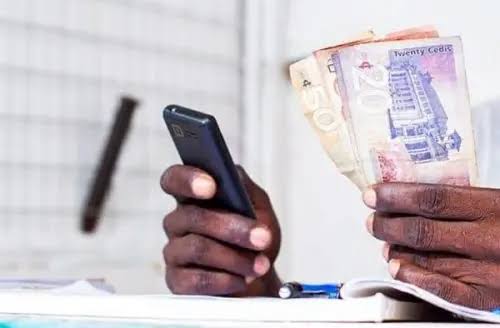
Mobile money by the numbers
Bank of Ghana statistics reported by Ghanaian media show the scale. Mobile money transactions were worth GH¢447.4 billion in February 2026. They reached GH¢484.6 billion in March and GH¢493.2 billion in April, carried by 967 million transactions in that single month. By June 2026 the value was GH¢492.9 billion on 954 million transactions, compared with GH¢323.2 billion in June 2025, an increase of roughly 52 percent in a year (our calculation from the reported figures).
The account base tells a similar story. Registered mobile money accounts rose from 76.4 million in June 2025 to 84.6 million in June 2026, passing 80.5 million in December 2025. Wallet float, the money customers hold in their wallets, hit a record GH¢40 billion in June 2026, up from GH¢28.9 billion a year earlier, roughly 38 percent growth. The agent network is close to one million registered agents, with 546,000 active. For a country of about 34 million people, with mobile penetration above 130 percent according to GSMA and US trade authorities, registered accounts exceed the population because many people hold wallets with more than one provider.
Registered versus active: reading the fine print
The headline account figure needs careful reading. Only 26.4 million of the 84.6 million registered accounts were active in June 2026, about 31 percent by our arithmetic, and the active count has barely moved: 26 million in April, 26.4 million in June. That pattern suggests growth is increasingly coming from deeper use by existing customers, shown by float and value, rather than new users. Notice also that June's transaction value (GH¢492.9 billion) was marginally below April's (GH¢493.2 billion), the first sign of a plateau after a steep climb. The year-on-year surge is real, but part of it reflects inflation and cedi dynamics, and month-to-month growth has slowed to low single digits: March to April was about 1.8 percent.
The wallet float figure is the quiet signal of trust. Customers who leave GH¢40 billion in wallets are treating mobile money as a place to hold value, not only a conduit. That raises the stakes for the prudential framework that holds the float in trust accounts at regulated banks, and for the interoperability that lets users move it freely.
Interoperability: the promise and the proportion
Ghana's interoperability push, under which wallets on different networks and banks can transact, is among the continent's most cited reforms. The numbers show it working but small in proportion. In June 2026 interoperable transactions numbered 33.5 million and were worth GH¢6.2 billion, up from 31.7 million transactions worth GH¢5.8 billion in April. Set against total mobile money activity, that is only about 3.5 percent of volume and 1.3 percent of value (our calculation). Most transactions still occur inside a single provider's ecosystem, where network effects favour the dominant operator.
The parallel bank-run rail is growing faster. GhIPSS Instant Pay processed GH¢79 billion in April 2026, up from GH¢71.5 billion in March, a 10.5 percent monthly rise, across about 19.9 million transactions. The average ticket is therefore far larger than the average mobile money transfer, around GH¢4,000 compared with roughly GH¢510 for mobile money in April, which implies the two rails serve different needs: Instant Pay for larger bank-to-bank and business flows, mobile money for everyday retail. The BoG's National Payment Systems Strategy for 2025-2029, which covers interoperability, open banking and digital payments, is intended to knit these rails together.
The infrastructure beneath the apps
The payments boom rests on connectivity that has improved but remains exposed. Trade-agency reporting counts five submarine cable landings with an estimated 2,905 gigabits of capacity, and notes that severed cables in March 2024 disrupted services for weeks. Starlink began operating in Ghana in August 2024, and in 2023 the government chose a neutral shared 5G network rather than a spectrum auction, later advancing an OpenRAN-based consortium called NextGen. Ghana also claims the only Tier IV data centre in West Africa. These are dated reference points, and readers should check current deployment status, but they show a country that has treated shared infrastructure and domestic hosting as policy priorities.
Identity is the other foundation. The Ghana Card, the national biometric ID, is the basis for SIM and wallet verification and for the government's wider digital agenda. Regulatory depth is substantial, from the 2008 Electronic Transactions Act and 2012 Data Protection Act to a 2019 Payment Systems law that requires operators to have at least 30 percent local ownership. That localisation preference, along with 2021 BoG guidelines on domestic processing of card transactions, has encouraged a local fintech industry, with firms such as Zeepay, Hubtel, ExpressPay and Nsano among those named by industry reports.
The crypto turn: from tolerance to licensing
The newest layer is virtual assets. On 12 December 2025 Parliament passed the Virtual Asset Service Providers Bill, and on 24 December the President assented to it as Act 1154. The law makes the Bank of Ghana the lead supervisor through a Virtual Assets Department, with the Securities and Exchange Commission co-regulating securities-linked activity and the Financial Intelligence Centre coordinating anti-money-laundering work. BoG licensing categories include wallet providers, exchanges and trading platforms, stablecoin issuance, tokenisation and lending. The SEC's categories include exchanges, ETFs, brokerage and managers.
Implementation has moved in stages. In January 2026 the SEC said it was finalising a VASP regulatory sandbox; in February the BoG and SEC issued a joint marketing notice barring mass promotion without authorisation; and on 10 March the SEC named its sandbox participants. The sandbox runs for 12 months, and market-ready firms can move to an activity-based licence after six. The BoG had expected its application process and fee pages to be available by the end of September 2026, though a source reviewed for this article cautions that the official gazetted text should be checked before relying on commencement dates, and the status of that process has not been independently confirmed. Public reports do not specify capital requirements or penalties.
Why the crypto rulebook matters for payments
At first glance, crypto regulation and mobile money look like separate stories. In practice they are two answers to the same demand: cheaper, faster value transfer in a country with a weak cedi history and a large diaspora. By pulling exchanges and stablecoin issuers inside the perimeter, Ghana aims to protect consumers and capture anti-money-laundering visibility. It also creates a possible bridge between wallets, bank rails and regulated stablecoins, an option that could eventually challenge the incumbents. The BoG has also continued to explore a central bank digital currency, the eCedi, though no large-scale launch has been confirmed in the sources reviewed.
Risks and what to watch
Four risks stand out. Concentration comes first: a few operators dominate mobile money, and interoperability is still marginal. Dormancy comes second: more than two-thirds of registered accounts are inactive, which weakens inclusion claims. Cost comes third, as digital-service taxes and levies, including the 15 percent VAT on digital services with additional levies noted by US trade officials, can erode affordability. Implementation comes fourth: a licensing regime is only as credible as the speed and clarity of its first approvals.
For the coming year, watch the share of interoperable transactions, the growth in active rather than registered accounts, the first full crypto licences, and whether the BoG's 2025-2029 payments strategy delivers open banking. If interoperable volume climbs well above 3.5 percent and active users begin to rise, Ghana will have moved from a large mobile money market to a genuinely open digital financial system. If not, it will have three well-regulated silos.



