Technological Transformation
From Experiment to Infrastructure
Ghana's technology sector has spent the past decade earning comparisons to Kenya and Nigeria as one of West Africa's more promising digital economies. In 2026, the comparison is shifting from potential to plumbing: rather than another year of headline-grabbing app launches, Ghana is quietly rebuilding the underlying rails — tax collection, identity, payments and connectivity — that determine whether a digital economy actually functions at national scale. The government's Ministry of Communication, Digital Technology and Innovations, under Minister Sam George, has framed this explicitly as infrastructure-first: a four-pillar strategy built around infrastructure, skills, trust and innovation, paired with roughly 15 new and revised bills working through Parliament to modernize communications regulation, data governance, cybersecurity oversight and emerging-technology rules in what officials describe as the most comprehensive overhaul of the sector since 1996.
That legislative push sits alongside a parallel three-pillar economic strategy — digitalization of public services, development of exportable digital products, and integration into regional and global markets through the African Continental Free Trade Area — that the ministry has pitched as a route to positioning Ghana as a continental leader in digital outsourcing and services exports, not just a consumer of imported technology.
The Ghana Card Becomes a Payments Rail
The most consequential — and most contested — development this year is the National Identification Authority's plan to add a digital wallet to the Ghana Card. The card was originally architected around three profiles: the e-ID (already active), the e-passport (activated in 2022) and a planned e-wallet that NIA officials have described publicly since September 2024 as part of the authority's income-generating strategy. As of early 2026, the NIA had registered more than 19.4 million Ghanaians and issued over 17.2 million active cards, covering roughly 86% of eligible residents — a distribution footprint no private fintech or bank could replicate on its own.
If activated, the wallet would let cardholders withdraw cash at ATMs, pay in stores and online, send remittances to more than 200 countries, and access insurance and emergency-assistance products, all authenticated through the national identity system rather than a separate bank or mobile-money account. The NIA is also reportedly exploring a partnership with the Ghana Gold Board to use the card as a platform for tokenized gold trading, aimed at improving transparency in a sector long associated with informal and illicit flows.
The plan puts the NIA in direct, structural competition with Ghana's mobile money operators — MTN Mobile Money, Vodafone Cash and AirtelTigo Money — which have spent years building trust and agent networks the government wallet could bypass entirely, since every cardholder is already enrolled with no acquisition cost. It has also exposed a regulatory gap: the NIA does not operate under Bank of Ghana licensing despite proposing to run what is functionally a national payment system, and analysts have called for the central bank to clarify its supervisory authority, for the Data Protection Commission to publish an audited framework for how transaction data will be stored and shared under the Data Protection Act, 2012 (Act 843), and for Parliament to revisit the NIA's founding legislation before any wallet goes live. Ghana would not be alone in this approach — Benin and Djibouti have unveiled similar identity-linked wallet plans, and Nigeria's Central Bank has pushed to anchor financial services to its National Identification Number — but Ghana's card already has the enrollment base to make the shift fastest.
Taxing the Digital Economy: E-VAT Goes Live
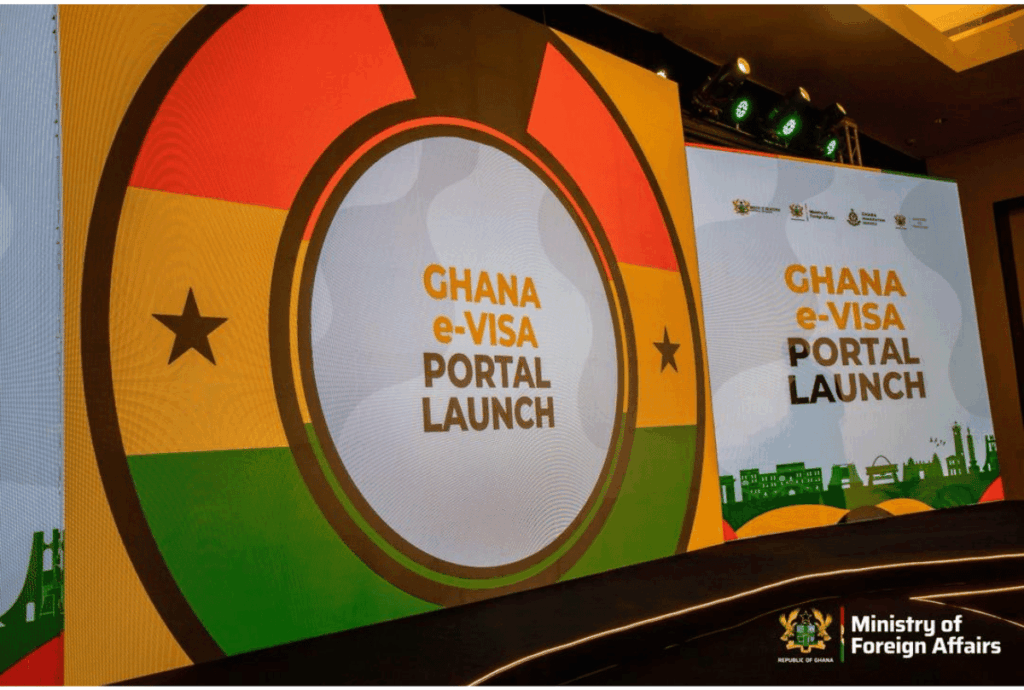
On the revenue side, the Ghana Revenue Authority's electronic VAT system took effect on January 1, 2026 under the Value Added Tax Act, 2025 (Act 1151). Every VAT-registered business, including those on the VAT Flat Rate Scheme, must now transmit invoices and credit notes to the GRA's Virtual Sales Data Controller for real-time validation before they can be issued to customers — a shift from periodic filing to continuous, transaction-level digital reporting. Alongside the e-invoicing mandate, the government abolished the COVID-19 Health Recovery Levy and cut the effective VAT rate from 21.9% to 20%, while simultaneously extending digital VAT enforcement to cross-border e-commerce through fiscal devices designed to track previously hard-to-reach online transactions. The reform follows a multi-year e-VAT piloting process the GRA describes as complete, positioning Ghana among a small group of African tax authorities — alongside Kenya, Nigeria and Egypt — moving toward mandatory e-invoicing as both a compliance and revenue tool.
Connectivity: Cables, Towers and Data Centers
Ghana's physical digital infrastructure continues to expand on the back of both submarine cable capacity and inland investment. Accra sits on six submarine cable systems, including SAT-3, MainOne, WACS, Glo-1 and ACE, and the 2Africa cable's West African segment lands with roughly 21 terabits per second per fiber pair across eight fiber pairs — a total trunk capacity of up to 180 Tbps once fully lit. On the terrestrial side, the Ministry of Communications' rollout plan calls for 4,400 new telecom sites over three years, split between 3,200 new 4G sites and 1,200 5G sites targeted for completion by 2026, aimed at closing rural coverage gaps that have persisted even as Accra and Kumasi approach saturation. Fiber-infrastructure operator CSquared has laid more than 1,300 kilometers of metro fiber across Ghana's four largest cities, underpinning a data center market that a January 2026 market briefing from the Data Governance in Africa initiative described as maturing toward genuine carrier-neutral, colocation-grade facilities rather than single-tenant enterprise server rooms.
A Startup Ecosystem Turning Structural
Ghana's startup ecosystem counted more than 250 active tech ventures as of the first quarter of 2026, with roughly 40 considered high-growth or exit-track companies. Ghanaian startups raised over $120 million in 2025 across fintech, agritech, healthtech and edtech, and the ecosystem has begun to show the layered maturity of a market moving past its first generation of founders: 42 startups have raised more than $500,000 in institutional capital, 18 have reached Series A or later, and three companies — mPharma, Zeepay and Hubtel — have each surpassed $100 million in cumulative funding. The Ghana Startup Act, passed in 2023, continues to provide the legal scaffolding — tax incentives, a formal startup registry and streamlined incorporation — that underpins the ecosystem's growth.
That momentum is playing out against a difficult continental funding backdrop. African tech startups raised just $260 million in the second quarter of 2026, a 40% year-on-year decline that puts the continent on pace for its weakest fundraising year since 2023, according to industry trackers. Ghana's relative resilience — anchored by fintech, agritech and logistics rather than the consumer-app models that dominated the 2021-2022 funding boom — has made events like the Ghana Hubs Summit 2026, held in Kumasi in July and organized by hub network HapaSpace, more consequential than in past years: the two-day gathering brought together hub leaders, entrepreneurs and ecosystem partners specifically to address funding constraints, skills shortages, infrastructure gaps and regulatory uncertainty, with sessions on responsible AI adoption, green jobs and support mechanisms for the innovation hubs that increasingly function as the ecosystem's early-stage backbone in a tighter capital environment.
What It Adds Up To
None of these threads — a national ID doubling as a payments network, mandatory e-invoicing, expanding fiber and 5G, or a startup scene consolidating around fewer but larger winners — is individually unique to Ghana. Several African governments are pursuing identity-linked payments, digital tax reform and hub-based ecosystem building simultaneously. What distinguishes Ghana's 2026 moment is the degree of coordination across ministries: the Communications Ministry's infrastructure and legislative push, the NIA's identity-payments convergence, and the GRA's real-time tax visibility are converging on the same underlying bet — that a government which controls identity, payment rails and tax data can build a more resilient digital economy than one relying solely on private mobile-money operators and card networks. Whether that bet pays off will depend on execution details that remain unresolved as of mid-2026: Bank of Ghana's supervisory posture toward the NIA wallet, the pace of rural 4G/5G buildout against the 2026 target, and whether tighter continental venture funding forces Ghanaian startups to lean more heavily on the state-backed infrastructure now being built around them.
Published By | Tech Wiz