LOS ANGELES, CALIFORNIA
Sixty miles northeast of downtown Los Angeles, in a narrow mountain corridor most Californians have never heard of, two of the most dangerous fault lines in North America meet at a single point. Scientists have a name for it now: the earthquake gate. And according to a new study that has sent tremors through the seismology world this week, that gate is under more pressure than it has been in a thousand years — and it may be the single most important geological feature standing between Southern California and its next great catastrophe.
The study, led by geophysicist Liliane Burkhard and published in the Journal of Geophysical Research: Solid Earth, delivers a verdict that reads like disaster fiction, except every word is peer-reviewed science: stress along the southern San Andreas and San Jacinto fault systems has now reached, and in places exceeded, the highest levels recorded in the past 1,000 years.
"Southern California faces a significant and growing seismic risk, and the time to prepare is now and not after the next earthquake," Burkhard said — a warning notably blunt for a field usually allergic to anything resembling prediction.
What Is the "Earthquake Gate"?
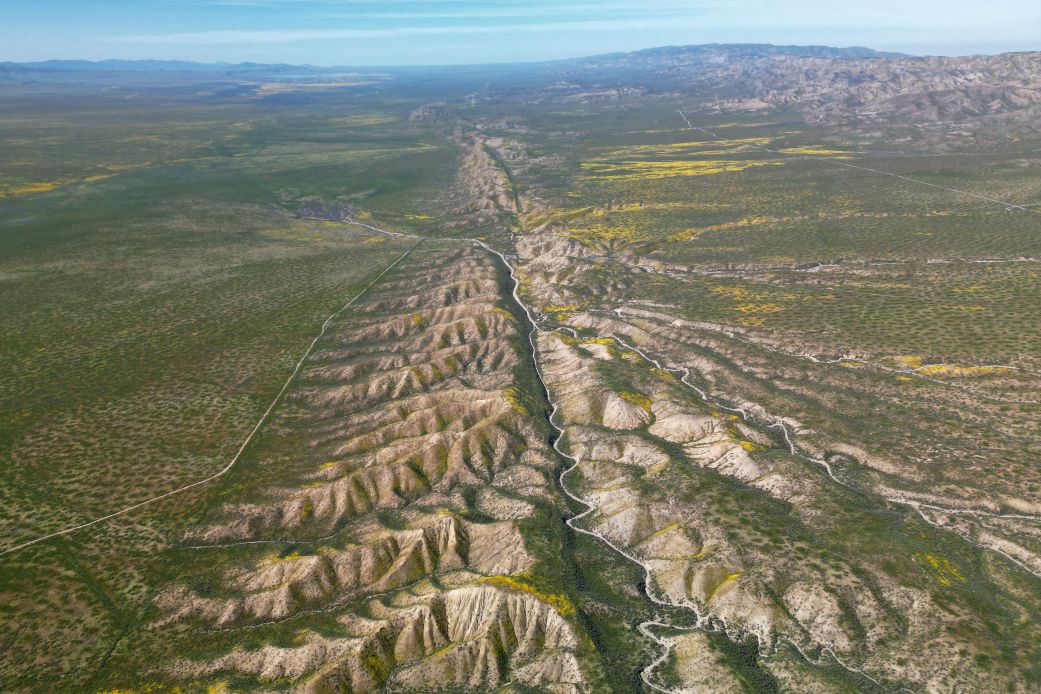
Southern California sits atop a tangle of fault lines, but two stand above the rest in destructive potential: the San Andreas Fault, the famous 800-mile crack running nearly the length of California, and the San Jacinto Fault, a slightly less famous but no less dangerous system running parallel through the Inland Empire.
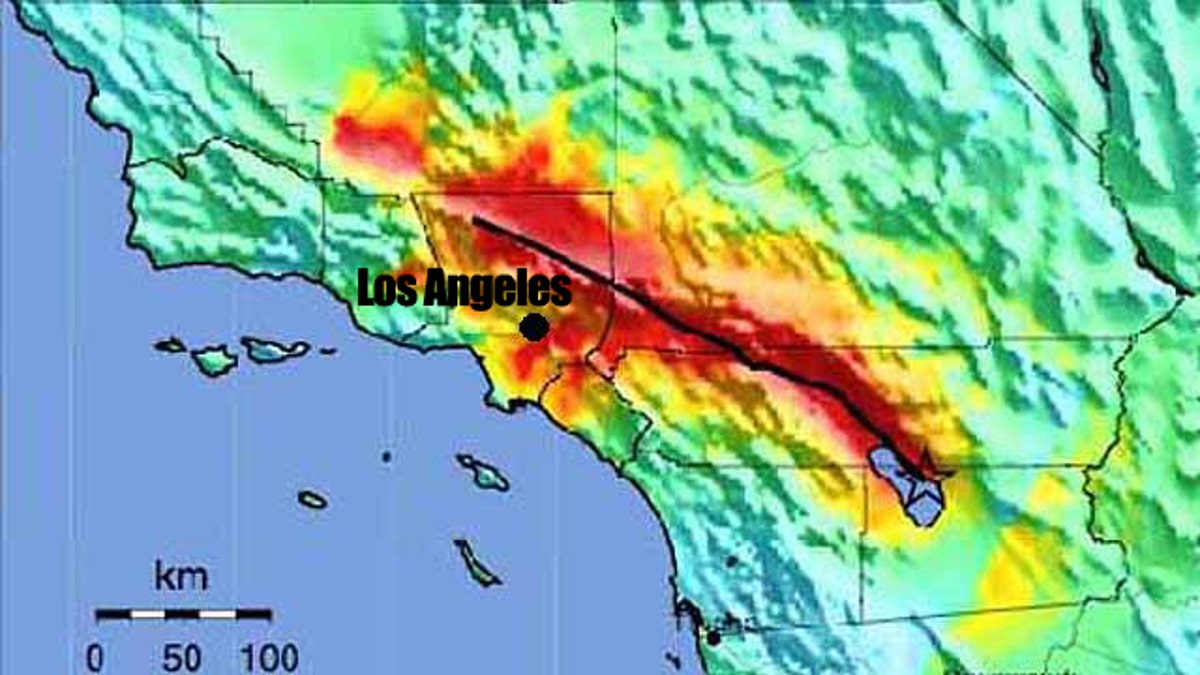
These two giants meet — or rather, nearly meet — at Cajon Pass, a mountain corridor north of San Bernardino best known as the route Interstate 15 takes to Las Vegas. Geologically, Cajon Pass functions like a gate between two enormous rooms full of stored energy. When stress is unevenly distributed, the gate stays shut: an earthquake on one fault stays contained. But when stress levels on both sides are roughly equal and high, earthquakes can historically jump through the gate and combine into a single, much larger event.
That is almost exactly the configuration Southern California is approaching right now.
A Magnitude 7.8 Nightmare Scenario
If the gate does open — meaning a rupture on one fault triggers a cascading rupture across the other — the result would not be a typical California earthquake. A joint rupture spanning both systems through Cajon Pass could produce a magnitude 7.4 to 7.8 event, dwarfing the 1994 Northridge earthquake (magnitude 6.7) by orders of magnitude in both energy release and affected area.
The study found more than a 50% chance of a magnitude 6.7 or higher earthquake along the southern San Andreas in the coming decades — and that figure doesn't account for the added risk of a combined, gate-crossing rupture.
Why Now? The 160-Year Wait
The southern San Andreas has not experienced a "major rupture" in roughly a century and a half. Stress that would normally have been released through periodic earthquakes has instead continued to accumulate, decade after decade.
Think of it like a debt that keeps compounding interest because no one has made a payment in 160 years. Burkhard's millennium-long model suggests the fault system is now holding more pent-up stress than at virtually any point in the historical record her team could reconstruct.
The research team's approach — building a physics-based earthquake cycle model validated against a thousand years of geological evidence — is a significant advance. By stitching together paleoseismic data, radiocarbon-dated sediments, tree-ring anomalies, and historical accounts, the researchers established a baseline against which today's stress levels are measured — and today's levels are at or beyond the top of that historical range.
Expert Perspective: Prepare, Don't Panic
Seismologists have been quick to stress that this is a long-term risk assessment, not a prediction of an imminent earthquake. Elevated stress does not mean an earthquake is guaranteed tomorrow, next month, or even next year.
But Burkhard and her colleagues are explicit that "long-term" should not be confused with "not urgent." Their core message is that the kind of joint, multi-fault rupture scenario their model flags has historically been treated as a worst-case hypothetical — and their data suggests it should now be treated as a realistic planning scenario.
That distinction matters for how cities prepare. Building codes, emergency response plans, and infrastructure investments have historically been calibrated against single-fault rupture scenarios. A combined event crossing Cajon Pass would test water systems, highways, power lines, and emergency response across multiple counties simultaneously.
What This Means for You
If you live anywhere in the Greater Los Angeles area, the Inland Empire, or broader Southern California, this study is a direct, practical nudge rather than an abstract headline. Earthquake preparedness — securing heavy furniture, knowing evacuation routes, keeping a stocked emergency kit, and understanding your building's seismic retrofitting status — has always been recommended. This research adds real, peer-reviewed urgency to that advice.
It's also worth noting what this study does not say. It does not predict an earthquake will strike next week, next month, or even necessarily in the next decade. What it does establish, with unusual scientific confidence, is that the underlying conditions for a large, potentially multi-fault earthquake are more favorable right now than at any point researchers can reconstruct over the past millennium.
For homeowners, that might mean finally scheduling that seismic retrofit inspection. For renters, it might mean checking whether your building has had foundation bolting. For everyone, it likely means dusting off — or assembling for the first time — the earthquake emergency kit you've been meaning to put together.
The Bottom Line
Earthquakes have always been the defining anxiety of life in Southern California — background noise that residents learn to live alongside without dwelling on it daily. Burkhard's research doesn't change the fundamental fact that a major earthquake has always been a question of "when," not "if." What it changes is the confidence with which scientists can now say the conditions for the worst version of that "when" — a combined, gate-crossing rupture spanning two of the region's most dangerous faults — are more closely aligned today than they have been in ten centuries of reconstructed history.
The gate at Cajon Pass has held before. Whether it holds the next time stress on both sides reaches a breaking point is not something any model can promise. What they can promise is that the time to prepare, in Burkhard's own words, is now — not after.
Sources: Journal of Geophysical Research: Solid Earth; ScienceDaily; FoxLA; EarthSky; CNN; LiveScience; Newsweek; FoxWeather; Euronews
Published By | Tech Wiz