Written By | Torch Media Africa
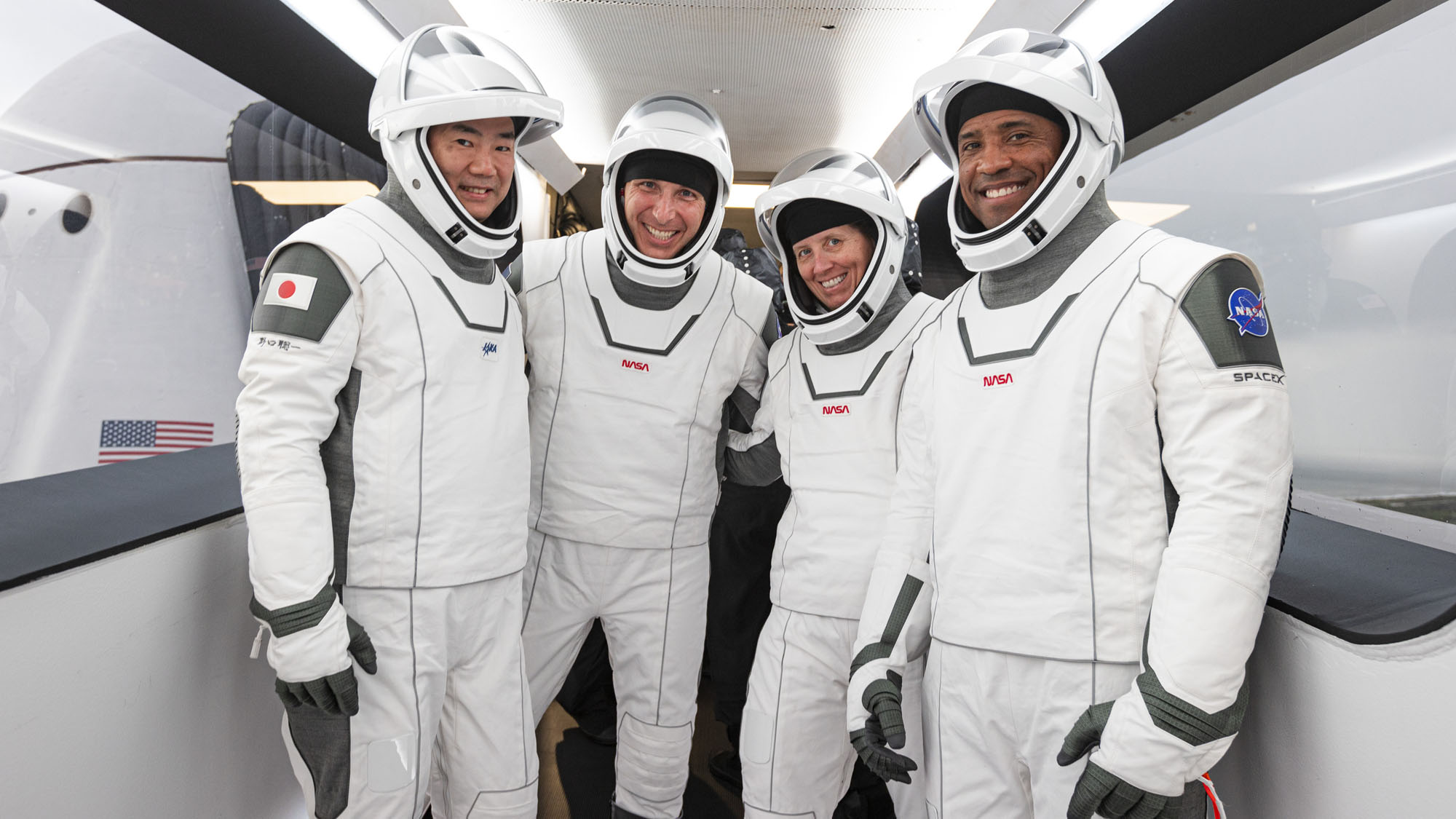
A geologist, a fighter pilot, a former submariner and a naval aviator are about to spend six months living 250 miles above your head — and one of them is about to make history for an entire country.
SCIENCE & TECH
The countdown clock at Cape Canaveral is ticking toward one of the more quietly remarkable missions of the year. On October 1, no earlier than 11:10 a.m. Eastern time, a SpaceX Falcon 9 rocket will thunder off Space Launch Complex 40 carrying four people who, until a training pool in Houston brought them together, had never worked as a team — and who are now about to trust each other with their lives for the next six months aboard the International Space Station.
This is NASA's SpaceX Crew-13 mission, the thirteenth operational flight of NASA's Commercial Crew Program, and it arrived at Kennedy Space Center this past weekend for the final stretch of preparation after clearing a Flight Readiness Review on September 25. The crew has been in quarantine at Johnson Space Center in Houston, the standard pre-flight isolation NASA uses to make sure nobody carries so much as a cold up to a space station where there's no hospital and no going home early.
MEET THE CREW: A GEOLOGIST, A ROOKIE, AND TWO FIRSTS
Commanding the mission is Jessica Watkins, a NASA astronaut and geologist making her second trip to orbit after flying on SpaceX Crew-4. Watkins is one of the most scientifically credentialed astronauts on NASA's active roster, and her return to the commander's seat marks her as one of the more experienced hands guiding a new generation of Commercial Crew flights.
Flying as pilot is Luke Delaney, a NASA astronaut and former naval aviator making his first trip to space. As pilot, Delaney will share responsibility for Dragon's operation with Watkins throughout the flight, including the automated but closely monitored docking sequence at the station's Harmony module forward port.
Rounding out the crew are two mission specialists making history in their own right. Joshua Kutryk, a Canadian Space Agency astronaut and former fighter pilot, becomes the first Canadian ever to fly under NASA's Commercial Crew Program — a milestone Canada's space agency has been building toward for years as it deepens its role in the post-shuttle era of American spaceflight. And Sergey Teteryatnikov, a Roscosmos cosmonaut and former submariner, brings a background that could hardly be more different from his crewmates' aviation pedigrees, yet is oddly well-suited to the kind of enclosed, high-stakes, mission-critical environment a submarine and a space station have in common.
The crew will fly aboard a Crew Dragon capsule named Grace, riding atop a flight-proven Falcon 9 Block 5 booster. If the timeline holds, they'll dock with the ISS roughly a day after launch and settle in for a stay of about 180 days — call it six months living, working, and running experiments in microgravity, some 250 miles above the planet, before splashing down in the Pacific Ocean no earlier than March 2027.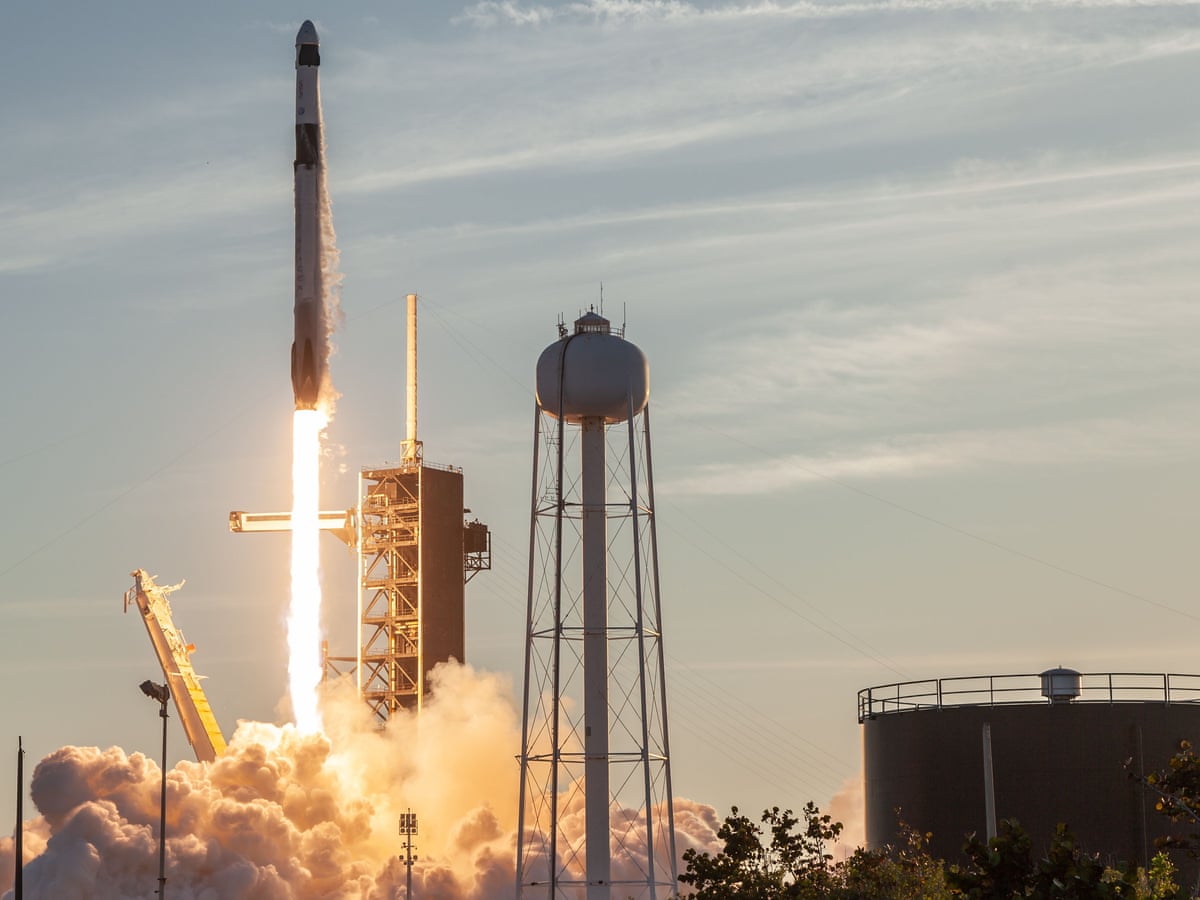
A COSMIC CHANGING OF THE GUARD
Crew-13's arrival isn't happening in isolation — it's the second half of a carefully choreographed handoff. Currently aboard the ISS is the outgoing Expedition 75 crew: NASA's Jessica Meir, serving as commander, and Jack Hathaway, alongside ESA astronaut Sophie Adenot and Roscosmos cosmonaut Andrey Fedyaev. That quartet has been in orbit for roughly eight months and is gearing up to hand over the station — and the keys, figuratively speaking — to Watkins and her crew before heading home.
In the days leading up to the handover, NASA says the outgoing crew has been busy wrapping up an unusually hands-on set of experiments: practicing lunar landing simulations and atmospheric reentry procedures using their own Dragon spacecraft's controls, essentially rehearsing skills that will matter enormously once NASA's Artemis program starts sending crews back to the Moon and, eventually, beyond.
Once Crew-13 arrives, the station will briefly be more crowded than usual before the Expedition 75 crew departs, giving the incoming team a short handover window to absorb months of institutional knowledge — which experiments are running, which equipment needs attention, and the thousand small operational details that don't make it into any official mission log — before their predecessors close the hatch and head for splashdown.
THE SCIENCE: BONE LOSS, STRESS, AND WHY YOUR BODY HATES SPACE
It's easy to treat astronaut missions as adventure stories, but Crew-13 and the crew it's relieving are, first and foremost, running a floating laboratory — and some of what they're studying could matter to people who will never leave Earth's gravity.
One major line of research focuses on space-induced bone loss, a condition that NASA researchers describe as looking remarkably similar to osteoporosis here on Earth. Blood samples drawn from crew members before, during, and after their missions are helping scientists understand exactly how microgravity strips minerals from bone — knowledge that has direct relevance not just to future Mars-bound astronauts, but to millions of people on Earth living with age-related bone density loss.
A second study, nicknamed RelaxPro, is looking at the mind rather than the skeleton. Using saliva samples, researchers are tracking how stress, disrupted sleep patterns, and immune-system function shift during long-duration spaceflight, and testing whether structured mindfulness techniques can blunt some of that strain. Anyone who has ever pulled an all-nighter and felt their immune system crash a few days later will recognize the basic phenomenon; the ISS crew is essentially running an extreme, meticulously monitored version of it.
A third area involves manual piloting studies tied to lunar landing simulations, testing how well astronauts' cognitive function and fine motor control hold up under microgravity when they're asked to fly a simulated landing by hand rather than letting automation do the work — a direct pipeline of lessons for the crewed lunar landings NASA hopes to fly later this decade. Rounding things out, departing crew members are undergoing cardiovascular fitness assessments and testing lower-body negative pressure suits, a piece of equipment designed to ease the brutal readjustment the human body goes through in the first hours and days back under Earth's gravity after months of floating free.
EXPERT PERSPECTIVE
Spaceflight officials have been candid that Crew-13 is as much about the Commercial Crew Program's steady maturation as it is about any single crew member's story. NASA has spent years building out a rotation system with SpaceX that treats crew swaps almost like clockwork — a level of routine that would have sounded like science fiction in the shuttle era, when each flight was a singular, nail-biting event. That said, officials stress that "routine" never means "risk-free": every Falcon 9 launch, every Dragon docking, and every spacewalk still carries real hazards, and Flight Readiness Reviews like the one Crew-13 passed on September 25 exist precisely because there is zero tolerance for treating any of it as an afterthought.
For Canada, Kutryk's flight carries an outsized weight that goes beyond one mission. The Canadian Space Agency has spent decades building its astronaut program in the shadow of NASA and Roscosmos, contributing robotics expertise — most famously the Canadarm — rather than fielding large numbers of its own spacefarers. Kutryk becoming the first Canadian to fly under the Commercial Crew Program specifically is being treated at home as a marker of just how far that partnership has come, and a preview of a bigger Canadian role in NASA's Artemis-era plans, where Canada has already committed to flying an astronaut around the Moon.
WHAT THIS MEANS FOR YOU
You don't need to care about rockets to be affected by what happens on this mission. The bone-density research alone speaks to a health issue that touches an enormous, aging population on Earth — osteoporosis affects tens of millions of people, and any insight into how and why bones lose density faster in some conditions than others has a research pipeline that runs directly back to labs studying astronauts in orbit.
More broadly, missions like Crew-13 are the unglamorous, unbroken thread connecting today's routine ISS rotations to tomorrow's crewed missions to the Moon and Mars. Every lunar landing simulation run today, every stress-response data point collected today, is training wheels for missions that won't launch for years, but that NASA, the Canadian Space Agency, ESA and Roscosmos are all actively preparing for right now, together, despite geopolitical tensions that complicate almost every other form of cooperation between those same countries.
CONCLUSION
Barring a last-minute scrub, four people who trained together for months but had never flown together before will strap into a capsule named Grace on October 1 and ride a column of fire into orbit, trusting a piece of engineering and each other with everything. Somewhere over the next six months, they'll swap places with a crew that has already spent eight months up there, hand off a station that never stops running experiments, and quietly add another chapter to humanity's slow, expensive, absolutely necessary practice run for living somewhere other than Earth. Watch for confirmation of the October 1 launch window as final checks continue this week.



