Written By | Torch Media Africa
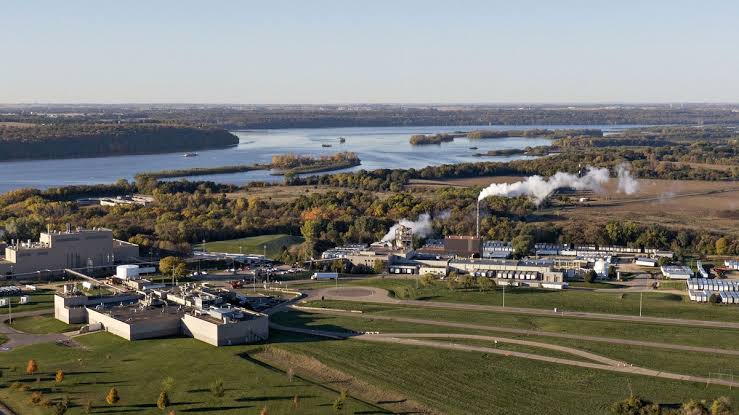
Danish scientists have found the hidden weak spot in PFAS, the indestructible toxic chemicals lurking in 176 million Americans' tap water
AARHUS, DENMARK
For over seventy years, the chemical industry built an empire on a promise: a class of synthetic compounds so stable they would resist heat, water, oil, and time itself. They went into non-stick pans, rain jackets, firefighting foam, fast-food wrappers, and eventually, your bloodstream. Called per- and polyfluoroalkyl substances — PFAS, or "forever chemicals" — they earned that nickname because almost nothing on Earth can break them down.
Almost nothing. This month, researchers at Aarhus University announced they'd found a genuine weak spot — a previously overlooked mechanism that rips these molecules apart using only intense ultraviolet light and the water the PFAS sits in. No added chemicals. No exotic catalysts. Just light, water, and a newly understood culprit: the hydrogen radical.
WHAT MAKES PFAS SO HARD TO KILL
These chemicals get their stability from carbon-fluorine bonds, among the strongest in organic chemistry — like a knight in chemical armor. That made them commercially valuable, but also an environmental nightmare. PFAS don't break down in soil, water, or the human body. According to the Environmental Working Group, federal testing data from March 2026 found that roughly 176 million Americans — more than half the country — live in communities with PFAS-contaminated drinking water, across 9,728 known sites. Health risks include kidney and testicular cancers, liver damage, thyroid disease, immune suppression, and developmental harm. The EPA has spent years wrestling with regulations, and as of May 2026 was still proposing rollbacks and delays criticized by environmental groups.
Current treatment methods mostly relocate the problem — filtering PFAS with activated carbon or reverse osmosis traps them, but disposal requires energy-intensive incineration or burial, delaying contamination rather than solving it.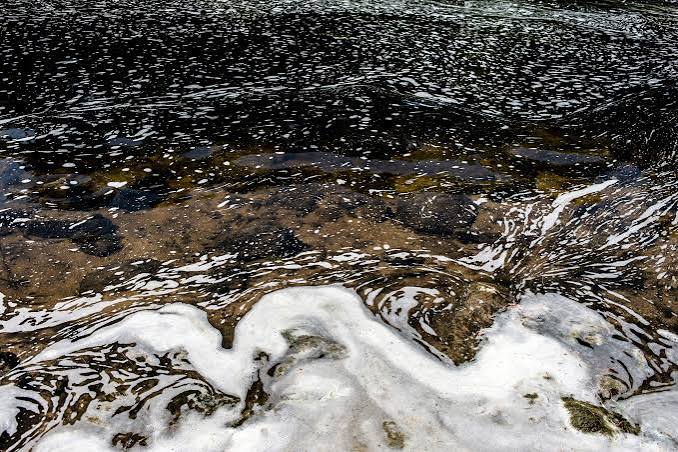
THE HYDROGEN RADICAL TWIST
That's where the new research, published in Environmental Science & Technology, changes things. The team — researchers Lu Bai, Shuang Luo, and led by Associate Professor Zongsu Wei at Aarhus University's Centre for Water Technology — set out to understand what actually drives PFAS breakdown under intense UV light. The assumption was that other reactive species did the work. Instead, they found that hydrogen radicals — short-lived fragments produced by water molecules themselves when struck by high-energy UV light — were the dominant force, stripping fluorine atoms off one at a time and breaking the once-indestructible chains into less toxic byproducts.
"We know PFAS are extremely stable because of strong carbon-fluorine bonds," Wei explained. "By identifying hydrogen radicals as a dominant driver, we now have a clearer direction for designing more efficient technologies to actually destroy these chemicals, rather than just removing them."
The team tested the process on GenX, a newer PFAS compound, achieving up to 49.1 percent degradation within five hours — without adding any chemical reagents. They also identified that the reaction works best at UV wavelengths below 300 nanometers, giving water-treatment engineers a concrete parameter to build around.
WHY THIS TOOK SO LONG TO FIND
Observing that something works is different from understanding why. Earlier UV studies focused on other reactive species like hydroxyl radicals, largely because hydrogen radicals are notoriously short-lived and difficult to detect. By isolating this pathway, Wei's team has handed engineers a simpler blueprint: maximize hydrogen radical generation using UV light and water already present, paring the process down to its essential physics.
FROM THE LAB TO YOUR TAP
This is a laboratory finding, not a deployed technology. Five hours of high-intensity UV to degrade half of one PFAS compound is meaningful, but scaling that to city water volumes — while managing energy costs — remains a major engineering challenge. Still, experts call it a genuine shift, reframing the question from "what chemicals do we add?" to "how do we maximize natural radical chemistry?" — a potentially cheaper, simpler path forward.
WHAT THIS MEANS FOR YOU
If you're one of the 176 million Americans with contaminated tap water, this won't change your glass tomorrow. But it's one of the more promising developments in a long, discouraging story about an intractable crisis. And it arrives at a politically fraught moment, with the EPA softening federal limits and pushing compliance deadlines, leaving more burden on states and utilities. A cheaper, simpler destruction method could eventually shift the cost-benefit calculation toward aggressive cleanup.
For consumers, the research is a reminder that the PFAS story isn't static — new findings make the problem look worse, while advances like this suggest humanity might eventually have real tools to fight back. For a chemical family that has spent seventy years living up to its "forever" nickname, a plausible path toward "not forever" counts as real news.
THE ROAD AHEAD
Wei's team plans to test the process against more PFAS compounds and explore integration into existing infrastructure. Other research groups will likely incorporate these findings, accelerating the push toward affordable, scalable destruction technology. For now, the takeaway is cautiously hopeful: the chemical armor that made PFAS so useful — and so disastrous — finally has a documented crack. It took seventy years and a very specific kind of light to find it. What happens next depends on how quickly engineers can turn a lab insight into something that runs at the scale of a city's water supply.



