Written By | Torch Media Africa
A hidden structure left behind by dying cells explains a decades-old mystery about how infections evade the body's defenses
MELBOURNE, AUSTRALIA
Every day, tens of billions of cells in your body die through apoptosis — a carefully choreographed cleanup process scientists thought left no trace behind. They were wrong.
Researchers at La Trobe University in Melbourne have discovered that dying cells leave behind a sticky residue at the site of death — which they've dubbed "the footprint of death." Published in Nature Communications and highlighted by ScienceDaily, Newsweek, and others, the discovery reveals how viruses like influenza may exploit the body's own cleanup machinery to spread undetected.
THE DISCOVERY
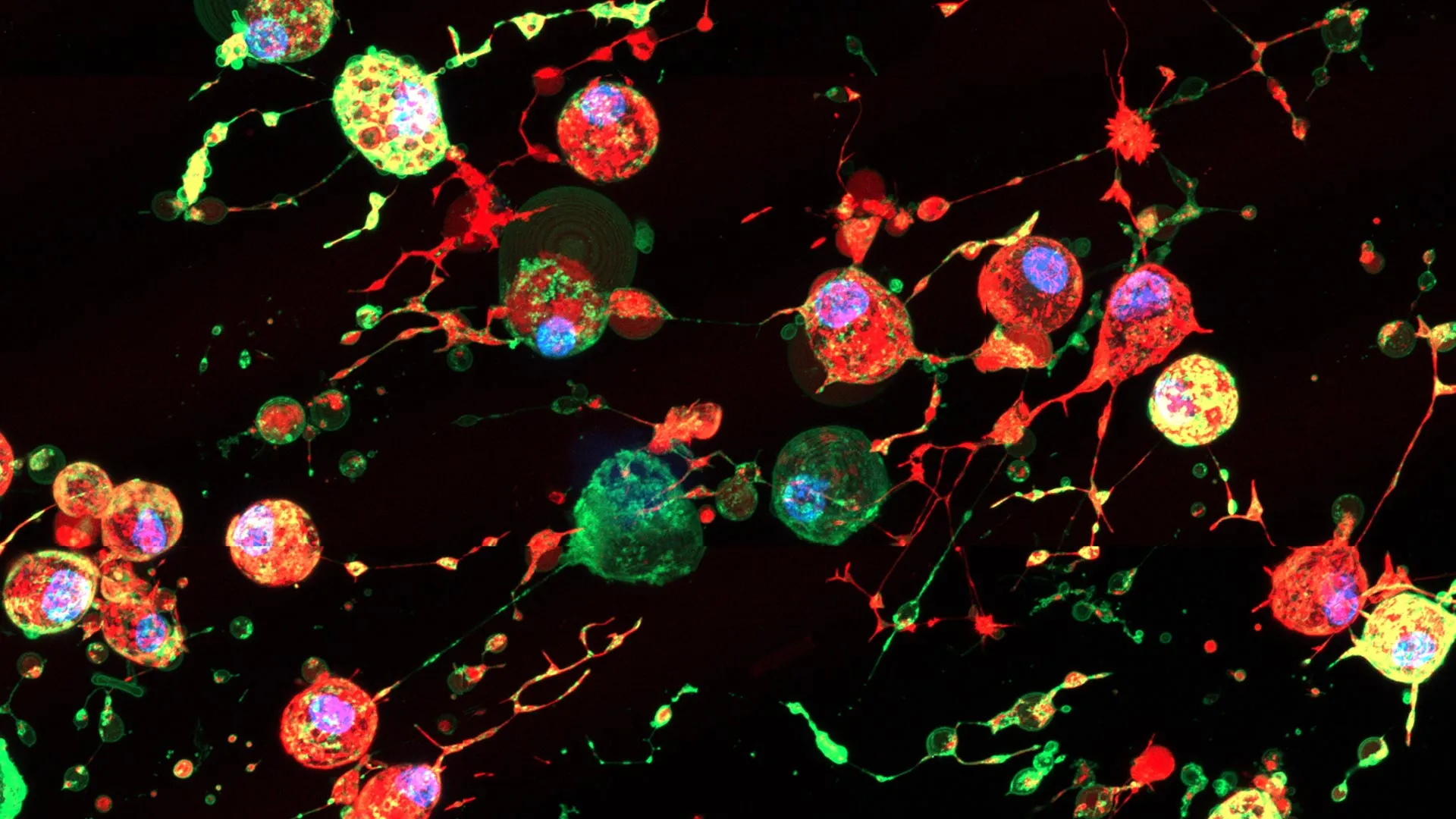
Using high-resolution live-cell imaging, PhD candidate Stephanie Rutter and Professor Ivan Poon's team at the La Trobe Institute for Molecular Science found that as cells undergo apoptosis, they don't vanish cleanly. Instead, they leave behind a membrane-encased residue built from actin scaffolding protein — formally named the FOotprint Of Death (FOOD). Within this footprint, they identified a new category of extracellular vesicles called F-ApoEVs.
WHY IT MATTERS
These F-ApoEVs display phosphatidylserine — an "eat-me" signal that summons phagocytes to clear debris through efferocytosis. When this process fails, chronic inflammation and autoimmune diseases like lupus can result. The footprint acts as a homing beacon that keeps the body's tissue-clearing system efficient.
THE TWIST
Here's the darker finding: when an influenza-infected cell dies, viral particles can become trapped inside the F-ApoEVs within the footprint. As phagocytes engulf what they believe is harmless debris, they inadvertently take in live virus — giving pathogens a camouflaged route into new host cells while evading antiviral defenses. The virus doesn't fight the immune system; it rides along inside it.
THE EXPERT TAKE
Professor Poon says this newly uncovered mechanism opens new avenues for medical research — potentially allowing scientists to dial the cleanup process up to fight infection faster, or down to prevent chronic inflammation linked to autoimmune conditions.
WHY NOW?
Apoptosis is one of the most studied processes in biology, yet this structure remained hidden because earlier research relied on static snapshots. It took live, high-resolution tracking of individual dying cells to catch them in the act.
THE BOTTOM LINE
Cell death isn't the clean, silent process textbooks described. Dying cells leave behind a structural "footprint" loaded with signals meant to summon help — and at least one major viral pathogen appears to have learned how to forge those signals to its advantage. The La Trobe team hasn't just named a new biological structure; they've identified a new front in the invisible war between our immune system and the pathogens trying to outmaneuver it.
Sources: Nature Communications, ScienceDaily, Newsweek, New Atlas, La Trobe University



