Written By | Torch Media Africa
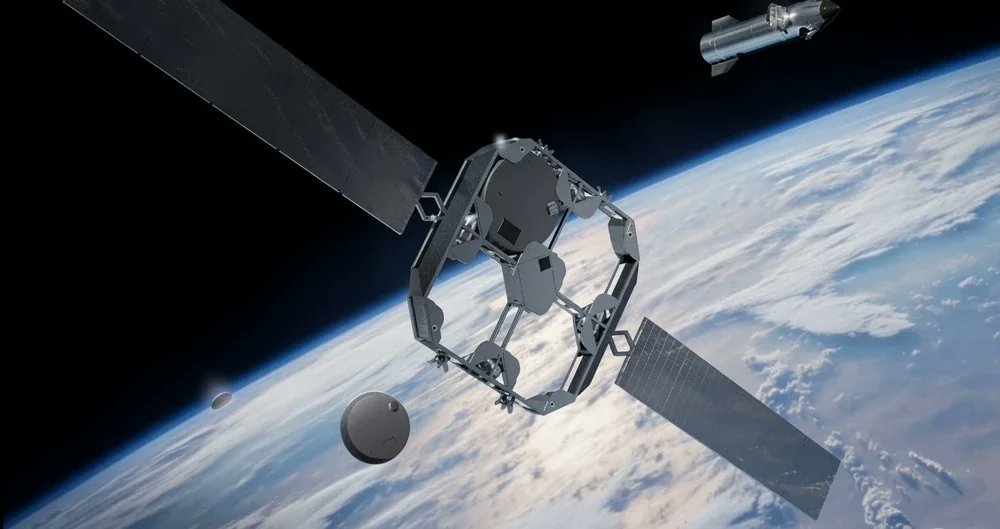
SpaceX just launched a secretive, hockey-puck-shaped capsule called "Starfall" — and it could turn Earth's orbit into the world's strangest factory floor.
SpaceX just launched a secretive, hockey-puck-shaped capsule called "Starfall" — and it could turn Earth's orbit into the world's strangest factory floor.
CAPE CANAVERAL, Fla.
At 6:43 a.m., a Falcon 9 rocket thundered off the pad at Space Launch Complex-40. Nothing about the liftoff looked unusual. But tucked inside was something nobody outside SpaceX had ever seen fly before: a flat, disk-shaped capsule, roughly the size of an oversized hockey puck, cryptically named Starfall.
Within hours, that capsule was supposed to do something almost nothing else in spaceflight does routinely — go to orbit, do a job, come home, and land where a recovery boat could find it. If it works, SpaceX isn't just testing a new spacecraft. It's betting that manufacturing things in zero gravity — then mailing them back to Earth — is about to become a real business.
A Hockey Puck With a Mission
Starfall doesn't look like anything from the Apollo or Shuttle eras. According to FAA documents, the vehicle is about 10.2 feet wide and only 2.5 feet tall — a squat, flying disk built to survive reentry and deliver up to 2,200 pounds of cargo back to Earth.
The capsule is built in two main pieces. The top plate houses the cargo bay and attitude-control hardware. Underneath sits a carbon-fiber heat shield that absorbs reentry heat and stores compressed gas for thrusters and parachutes. No wasted parts, no frills — built to be mass-produced.
For this debut flight — the Starfall Demo mission — SpaceX is targeting a splashdown roughly 700 nautical miles off the U.S. West Coast. FAA approval authorizes two such reentries, suggesting a second capsule is already in the pipeline.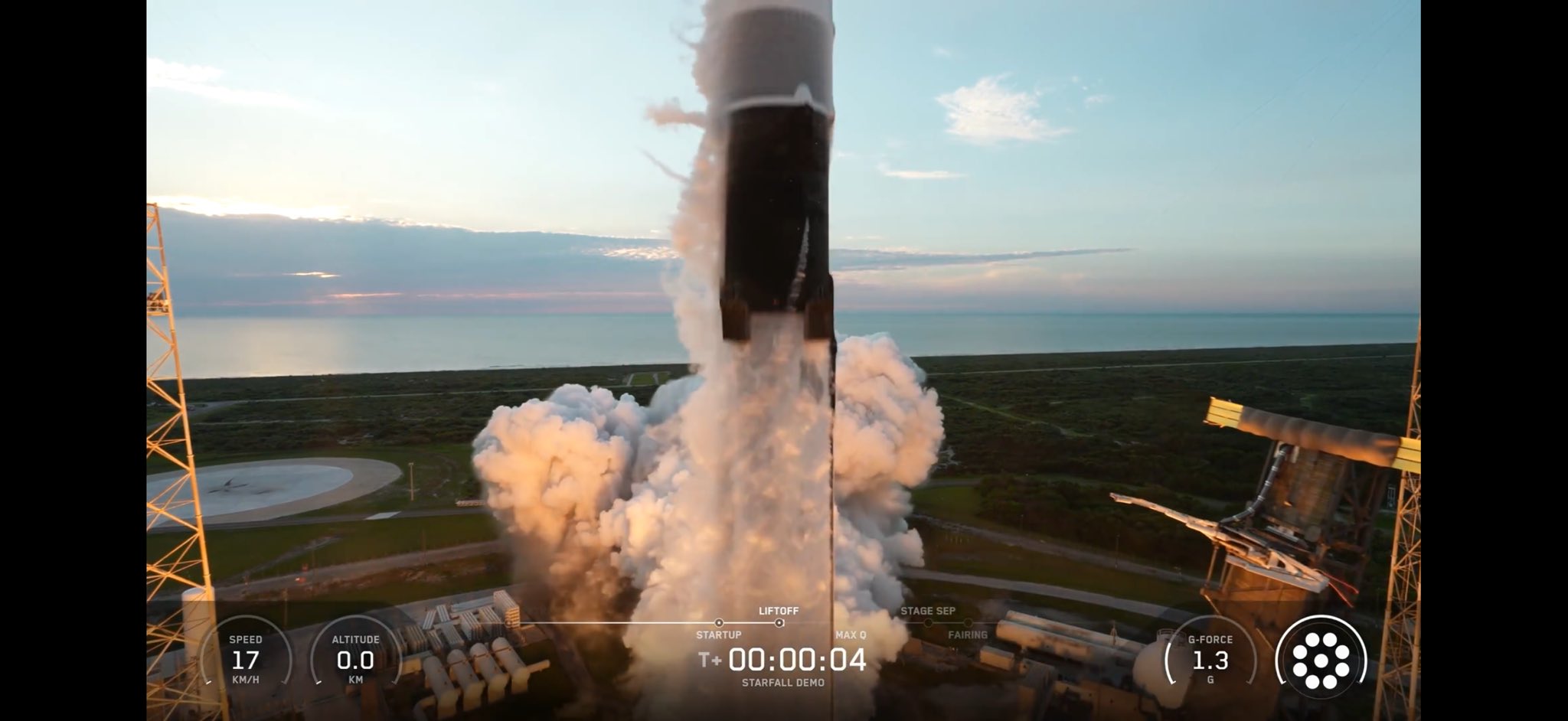
Why a Spaceship Needs to Come Back at All
Most spacecraft go up, not down. Starfall exists to serve a growing industry: in-space manufacturing.
In microgravity, certain materials behave in ways impossible on Earth. Protein crystals grow larger and more uniform. Semiconductors and optical fibers form with fewer defects. Pharma companies have spent years exploring whether drugs made in orbit could be more effective.
Until recently, this was a curiosity — nobody had built an affordable way to retrieve what was made up there. That changed when Varda Space Industries proved small capsules could return cargo intact. In May 2026, Varda partnered with United Therapeutics to process drugs for rare diseases in orbit.
SpaceX looked at that market and built something bigger, cheaper per kilogram, and designed for mass production. According to mission analysts, Starfall can bring back roughly 30 times more cargo per mission than Varda's existing capsules — enough to turn orbital manufacturing into an actual industrial supply chain.
The Business Case Nobody's Talking About Out Loud
SpaceX has been tight-lipped about Starfall's commercial details. But the financial backdrop offers clues: the company has reportedly been arranging a roughly $20 billion bond offering to fund next-generation hardware — Starship, Starlink, and now orbital manufacturing infrastructure.
Starfall isn't built to carry humans — no windows, no life support, just cargo. That keeps costs down and regulatory hurdles lower. It also means SpaceX can iterate fast.
Industry veterans see the long game. Tom Mueller, SpaceX's first employee, now runs Impulse Space — valued at roughly $4.26 billion — and has been vocal that the next phase of the space economy isn't about getting to orbit anymore, but about what you do once you're there.
What Could Go Wrong
Reentry is the hardest part of any spaceflight. Plenty of well-funded programs have stumbled here — capsules that reached orbit just fine but were lost or damaged during descent.
That's why SpaceX structured FAA approval around two flights rather than one. A clean debut proves the concept; a second proves repeatability — arguably the more important test for a manufacturing business that depends on regular, predictable returns.
Expert Perspective
Analysts note that the real significance isn't rocket science — SpaceX has reentry largely figured out — but economics. A mass-produced, cheaply flown reentry vehicle is exactly what's needed to turn orbital manufacturing from an experiment into a routine supply chain. Some also see potential for ultra-fast point-to-point cargo delivery on Earth, though that remains speculative.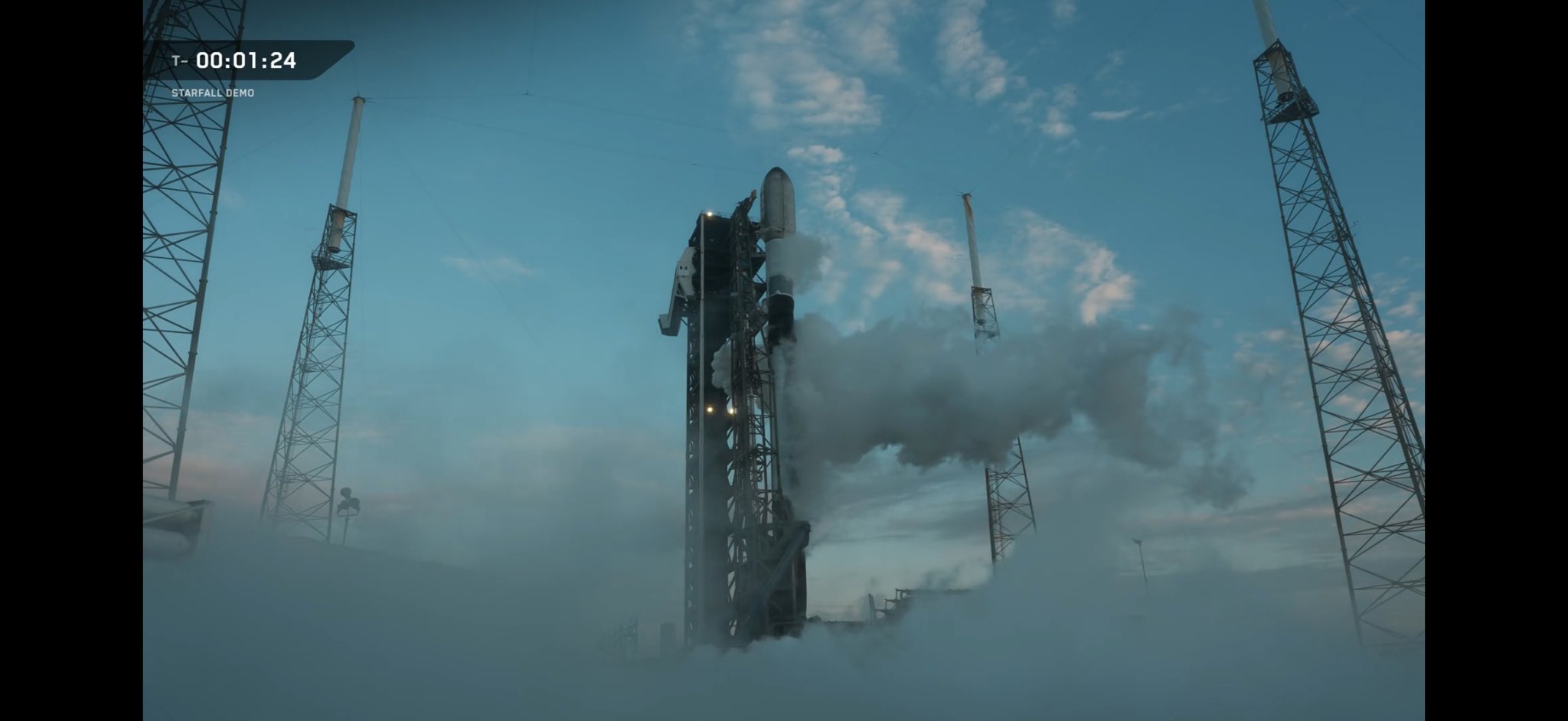
What This Means for You
If you've never thought about where your medicine comes from, this is the moment to start. Some protein-based drugs, ultra-pure fiber optic cable, and specialized crystals genuinely come out better when made without gravity. If Starfall succeeds, the multi-year arc could lead to drugs on pharmacy shelves — or fiber optic cable in your internet — that were partly manufactured hundreds of miles above your head.
It also matters for the broader space economy. Every new reason to launch — and land — adds to the case for cheaper, more frequent spaceflight, which brings down costs for everything from satellite broadband to deep-space science.
The Bottom Line
Starfall's debut flight is a small, disk-shaped vehicle carrying an outsized bet: that the next great industrial revolution won't happen in a factory on Earth, but in low Earth orbit, with finished goods parachuting home into the Pacific for pickup. Whether it succeeds depends on heat shields, parachutes, and guidance computers performing perfectly, twice.
If it does, the hockey-puck-shaped spacecraft that barely anyone outside the industry has heard of yet could end up as quietly consequential as the Falcon 9 itself. Somewhere in the Pacific, a recovery team is watching the sky — waiting for a flash and a splash that could mark the opening chapter of an entirely new industry.



