Written By | Torch Media Africa
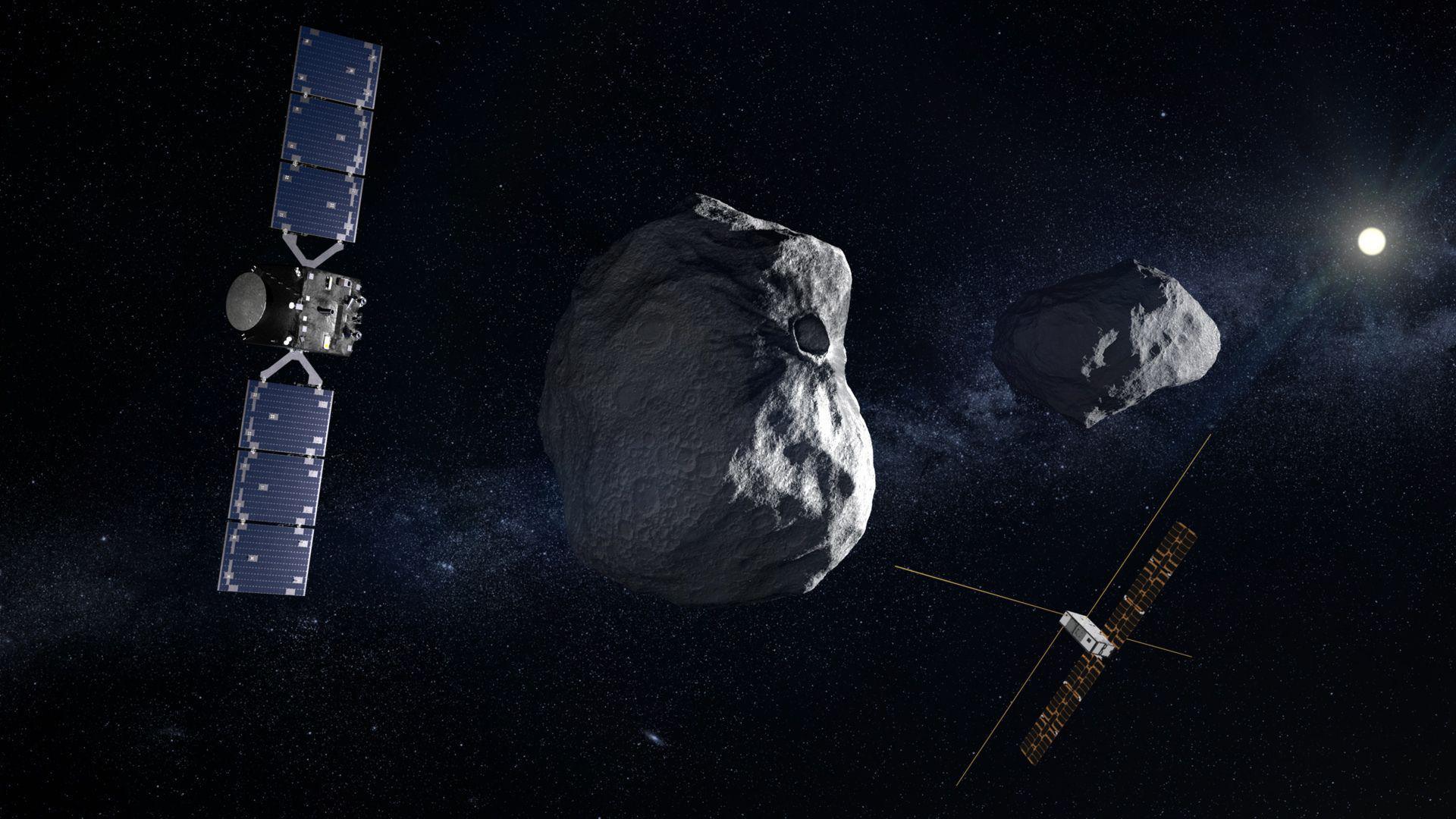
ESA's Hera probe has spotted the space rock NASA smashed in 2022 as a separate world for the first time, and the first detailed portraits are due on November 25
DEEP SPACE
Somewhere out in the dark, roughly 197 million kilometres from Earth, a European robot is creeping up on the scene of the only crime in history in which humanity deliberately rearranged the heavens. And this week, the detective finally got its first proper look at the victim.
The spacecraft is Hera, built by the European Space Agency, and its target is Dimorphos: a small, stadium-sized moonlet that NASA slammed a spacecraft into in September 2022. Dimorphos is now the first object in the Solar System whose orbit has been measurably altered by human action. Until a few weeks ago, Hera could only see it as a single fuzzy dot merged with its big brother, the asteroid Didymos. Not any more.
On 18 October 2026, Hera's black-and-white Asteroid Framing Camera snapped an image from about 1,280 kilometres away. ESA announced it on 27 October. In that frame, Dimorphos takes up just a single pixel. But it is clearly, unmistakably separate from Didymos. For the first time, the double-asteroid system looks like what it truly is: two worlds, locked in a slow cosmic dance.
"For the very first time we are seeing through Hera's own eyes the very double asteroid system," said Ian Carnelli, ESA's Head of Systems Department and the Hera mission manager. "With this image, the smaller Dimorphos asteroid becomes visible for the first time," added Michael Küppers, the mission's project scientist.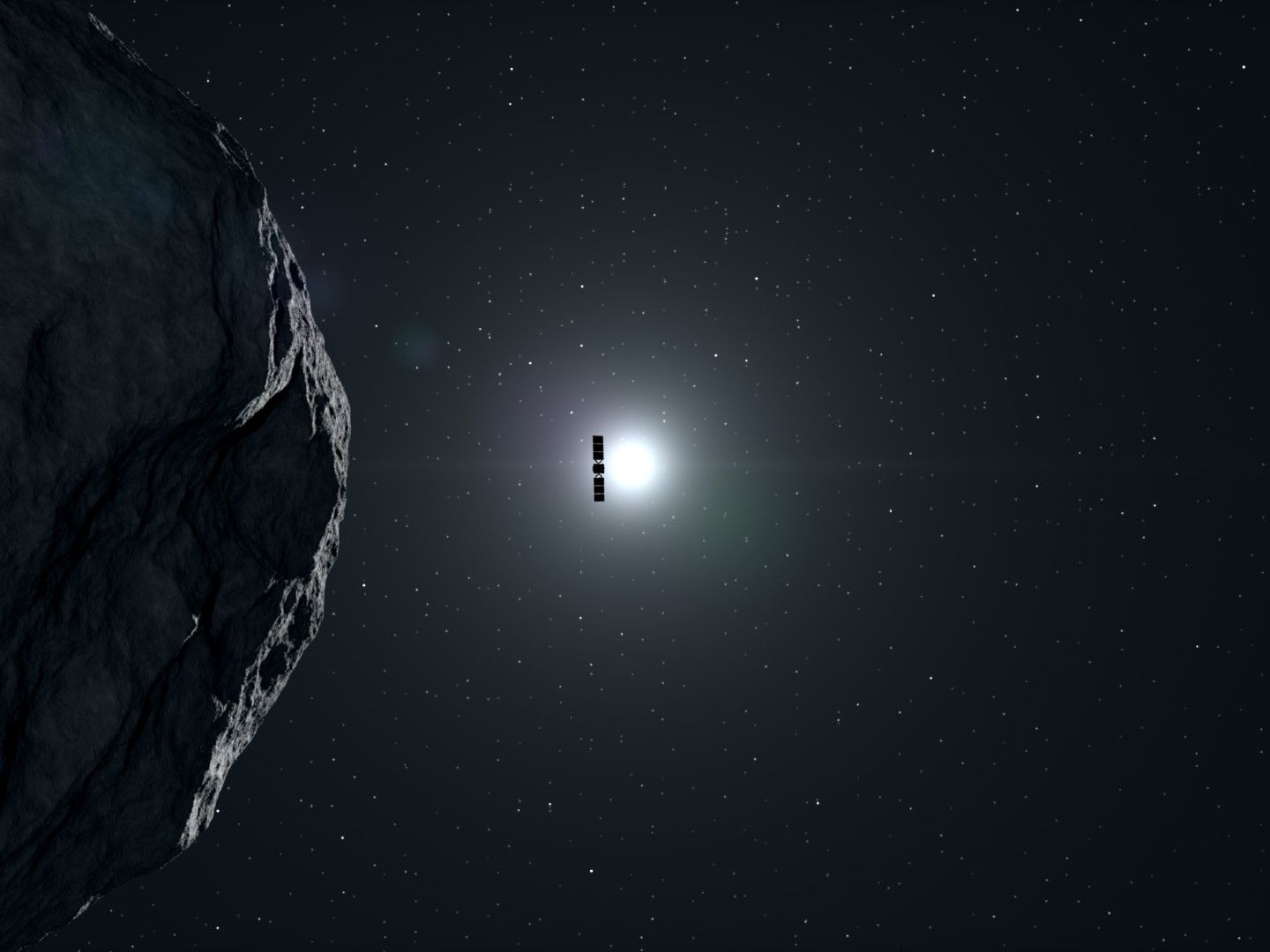
The day humanity punched an asteroid
To understand why a one-pixel smudge has scientists buzzing, rewind to 26 September 2022. NASA's DART spacecraft, short for Double Asteroid Redirection Test, ploughed into Dimorphos at about 6.1 kilometres per second, or roughly 13,600 miles per hour. It was a test of a simple but audacious idea: if a killer asteroid were ever heading our way, could we nudge it off course by hitting it with something heavy and fast?
The answer, it turned out, was a loud yes. Before the impact, Dimorphos circled Didymos once every 11 hours and 55 minutes. Afterwards, that orbit was about 33 minutes shorter, according to ESA, though NASA's first estimate was 32 minutes. Mission planners had set a minimum success target of just 73 seconds. The real result beat that by a mile.
The collision also threw up an enormous plume of debris, stretching across roughly 10,000 kilometres of space. Telescopes around the world, and later the James Webb and Hubble space telescopes, watched the cloud billow out. The nudge was even enough to slightly change the way the pair travels around the Sun.
Why the nudge was bigger than expected
Here is where the story gets juicy. The deflection was larger than the computer simulations predicted. The leading explanation is that the impact blasted out a huge amount of material, and that spray of rock acted like rocket exhaust, giving Dimorphos an extra shove on top of the spacecraft's own momentum.
How big that bonus push really was depends on things DART could not measure: Dimorphos's exact mass and what it is made of inside. If the moonlet is a solid chunk of rock, the physics works one way. If it is a loose heap of rubble held together by feeble gravity, it works another. Without knowing, scientists cannot be sure how well the technique would work on a different asteroid.
That is Hera's entire reason for existing. The probe launched on 7 October 2024, with cooperation from NASA and Japan's space agency JAXA, and its job is to go back to the scene, measure everything properly and turn a spectacular one-off experiment into dependable science. Its headline goal is to weigh Dimorphos, which will let researchers calculate the so-called momentum enhancement factor: how efficiently DART's punch was converted into movement.
Braking for the big reveal
Arriving at an asteroid is not like pulling up at a bus stop. Hera has had to shed speed carefully. An earlier braking burn lasting 93 minutes took place on 15 October, and a second thruster firing followed a week later. Together, those manoeuvres slowed the spacecraft to about 20 metres per second relative to the asteroids.
The system it is approaching is tiny and delicate. Didymos is roughly 780 metres across, and Dimorphos about 151 metres. They orbit an average of 1.15 kilometres apart, and Dimorphos drifts around its parent at a leisurely 18 centimetres per second. That gentle pace is part of the challenge: a clumsy approach could stir up dust or put the spacecraft in danger.
As of the latest reports, Hera was described as only days away from arriving in the Didymos system. ESA has promised that the first detailed images of Dimorphos will be released on 25 November 2026, and Carnelli has said the views will keep getting sharper as the probe gets closer.
Two shoebox-sized sidekicks
Hera does not travel alone. Packed inside it are two CubeSats, each about the size of a shoebox, called Milani and Juventas. Hera itself cannot safely fly very close to the surface, so these little explorers will do the risky, up-close work.
Milani will study the mineral makeup of the surface and the dust around the asteroids, including the area around the DART impact site. Juventas carries a low-frequency radar that ESA describes as the first ever to probe the interior of an asteroid. It should be able to peer around 100 metres beneath Dimorphos's surface, and answer the burning question: is this moon solid rock, or a rubble pile?
The mothership itself carries a formidable kit of its own: two framing cameras, a laser altimeter, a hyperspectral imager and a thermal infrared camera. Together they will map the shape and surface of both asteroids and hunt for the DART crater. There is even a twist waiting to be settled. Researchers want to know whether the impact left a classic bowl-shaped crater, or whether DART simply reshaped the entire moonlet without leaving one.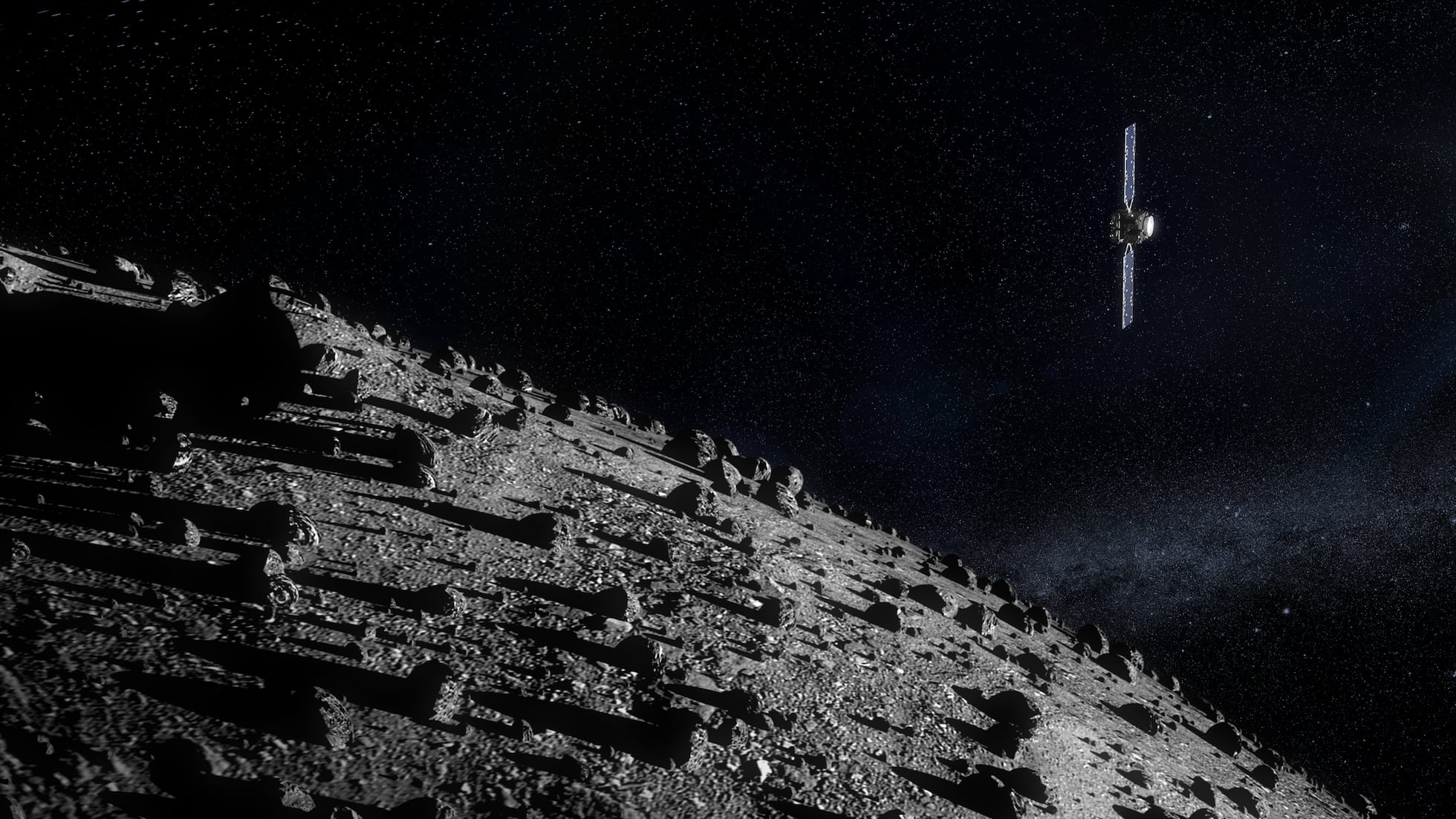
Six months at the scene of the crime
Once settled, Hera's primary science phase is expected to last about six months, according to partner agency DLR, the German Aerospace Center, with the closest approaches coming within a mile of the asteroids. And the mission may end with a bang, or rather a gentle touch. After the main science work, the CubeSats may attempt a landing on Dimorphos, and the team will then decide whether Hera itself should try to touch down too.
If that sounds like science fiction, consider how fast things have moved. In 2022, humans had never changed the path of a natural celestial body. In 2024, Europe launched the follow-up. In 2026, the follow-up can already tell the two asteroids apart. The next few months should deliver the kind of data that will be cited in textbooks, mission plans and government risk assessments for decades.
Expert perspective: the point of looking back
Carnelli's own description of Dimorphos captures the stakes. It is, he says, "the first object in the Solar System to have had its orbit measurably shifted by human action." That phrase matters because the whole planetary defence approach depends on repeatability. A single successful test is encouraging. A well-understood test is a tool.
The kinetic impactor method, hitting an asteroid to change its speed slightly, needs years of warning to work. A tiny early nudge grows with time, and by the time a space rock reaches Earth's orbit a small change in velocity can add up to a miss distance of thousands of miles. But engineers can only plan such a mission with confidence if they know how an asteroid's internal structure affects the result. Hera's mass and radar measurements should supply exactly that missing information.
What this means for you
First, the headline reassurance: neither Didymos nor Dimorphos poses any threat to Earth. This mission is a rehearsal, not an emergency. Astronomers have catalogued most large near-Earth asteroids, and none of the known big ones is expected to pose a significant impact risk over the next century.
The worry is the smaller stuff. Smaller asteroids are harder to spot, and some could still cause regional devastation. The 2013 Chelyabinsk meteor over Russia, which blew out windows and injured more than 1,500 people, mostly from flying glass, is the usual reminder. Better knowledge of how rocks of that size respond to a hit means better odds that, if the day ever comes, governments will know what to do and when.
To be clear, no deflection mission is currently planned against a real threat. But thanks to DART and Hera, the question has shifted from "could we?" to "how reliably, and how big a nudge do we need?" That is the difference between a stunt and a safety net.
For the rest of us, there is also a simpler thrill. On 25 November, ordinary people will be able to look at the first close-up portrait of a world that humans reshaped, from a spacecraft built by a continent-wide collaboration.
The verdict
One pixel does not sound like much. But that single pixel on 18 October marked the moment the second act of the planetary-defence story began. The impact in 2022 was the dramatic bang; Hera is the forensic investigation that gives it meaning.
Over the coming months, a European spacecraft and two shoebox-sized companions will measure the mass, map the surface and, with luck, peek inside a moon that humans pushed. Mark 25 November in your diary. The cosmic detective is nearly at the scene, and the evidence is about to come in.



