ANDØYA, NORWAY
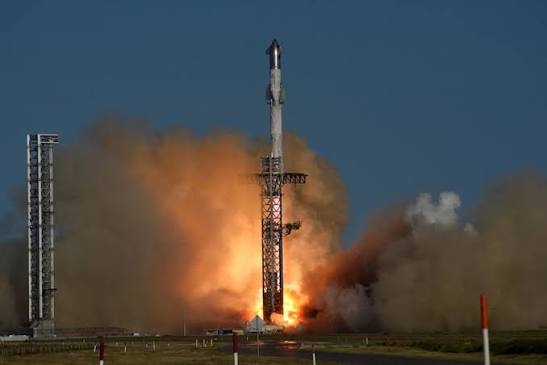
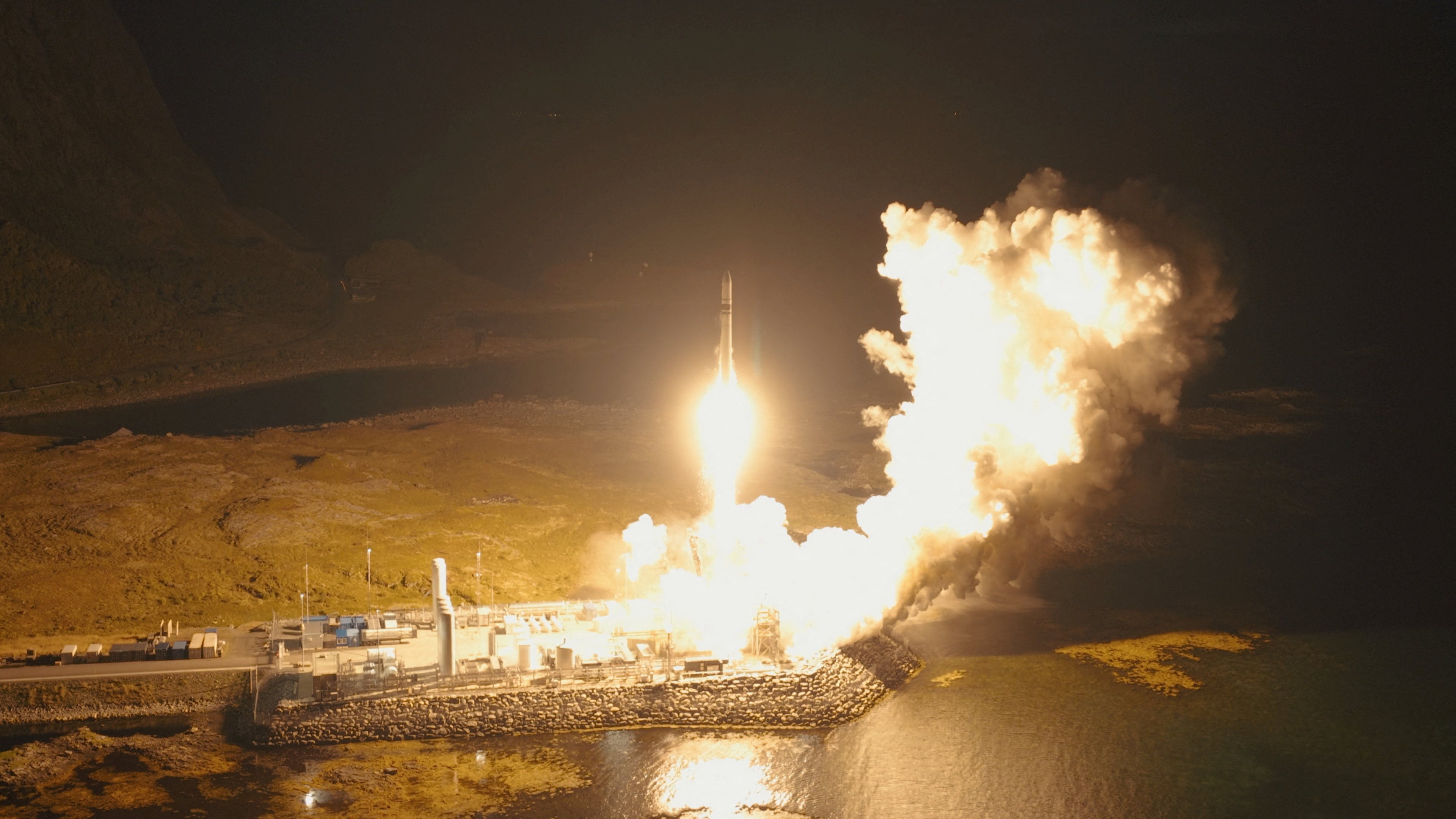
At 10:12 p.m. local time on Saturday night, on a black-rock spit of Arctic coastline 200 miles inside the polar circle, a 92-foot white cylinder lit nine engines and hauled itself off the pad into a Norwegian sky.
Four minutes later it was above the Kármán line. Some minutes after that, a payload fairing tumbled away, a second stage lit, a circularisation burn finished, and five small satellites built by students in Berlin, Trondheim, Maribor and Vienna floated free into a sun-synchronous orbit.
And with that, an eighty-year-old fact about Europe stopped being true.
No privately developed rocket had ever reached orbit from European soil. Not one. Not in the entire history of the space age. Europe put its payloads up from a jungle pad in French Guiana, or it rented Russian Soyuz rockets until the war made that impossible, or — increasingly, humiliatingly — it paid Elon Musk.
On Saturday night, a company that did not exist nine years ago ended that.
"WE ACHIEVED WITHIN A FEW YEARS WHAT TOOK EUROPE DECADES"
The company is Isar Aerospace, headquartered in Ottobrunn, just outside Munich. It was founded in 2018 by three graduates of the Technical University of Munich who had been building rockets in a student club. Today it has more than 400 employees across five international locations, and as of Saturday it has something no other private European firm has: a satellite in orbit that it put there itself.
"Today, Isar Aerospace opened space from Continental Europe," said Daniel Metzler, the company's chief executive and co-founder, in a statement issued from Andøya within hours of the launch. "Launch continues to be the largest bottleneck for the global space industry and from today on, there is a true alternative for commercial and institutional customers."
Then Metzler said the thing that will be quoted in European boardrooms and defence ministries for the next decade.
"We achieved within a few years what had taken the European space industry decades before. Europe now has sovereign access to space. We have entered into a new chapter for European spaceflight."
Sovereign access to space. Read that phrase again, because it is not marketing. It is the entire point.
198 TO 8: THE NUMBER THAT TERRIFIES BRUSSELS
Here is the statistic that explains why a Saturday-night launch from an Arctic fishing region became front-page news across the continent.
Last year, according to figures cited by Isar Aerospace, the United States launched 198 rockets.
Europe launched eight.
Eight. For a bloc of 450 million people with a combined economy rivalling America's, with world-class satellite manufacturers, with a space agency that has landed on a comet and is currently threading a probe into orbit around Mercury. Eight launches.
The reasons are not mysterious. Europe's heavy lifter, Ariane 6, arrived years late. The continent's cheap workhorse option — Russia's Soyuz, flown from Kourou under a cooperative arrangement — vanished overnight when Europe cut ties with Moscow. Western Europe's first serious attempt at a commercial satellite launch, using Richard Branson's Virgin Orbit from a Cornish runway in January 2023, ended in an "anomaly" and no orbit at all. The company was bankrupt within months.
That left one realistic option for most European operators who needed a ride to low Earth orbit: buy a seat on a SpaceX Falcon 9. European science missions, European commercial constellations, even European government payloads have been going up on American rockets owned by a man whose political interventions in European affairs have made a great many European politicians extremely uncomfortable.
German Chancellor Friedrich Merz travelled to Andøya in March alongside Norway's prime minister specifically to make this point in front of cameras, warning about the continent's dependence on the United States including in space launch. In July, German Defence Minister Boris Pistorius visited Isar's facilities to underscore what the company described as the "strategic priority of sovereign access to space for defence and deterrence."
When a defence minister shows up at a rocket factory, the rocket has stopped being a science project.
THE FAILURE THAT MADE SATURDAY POSSIBLE
None of this was inevitable, and eighteen months ago it looked unlikely.
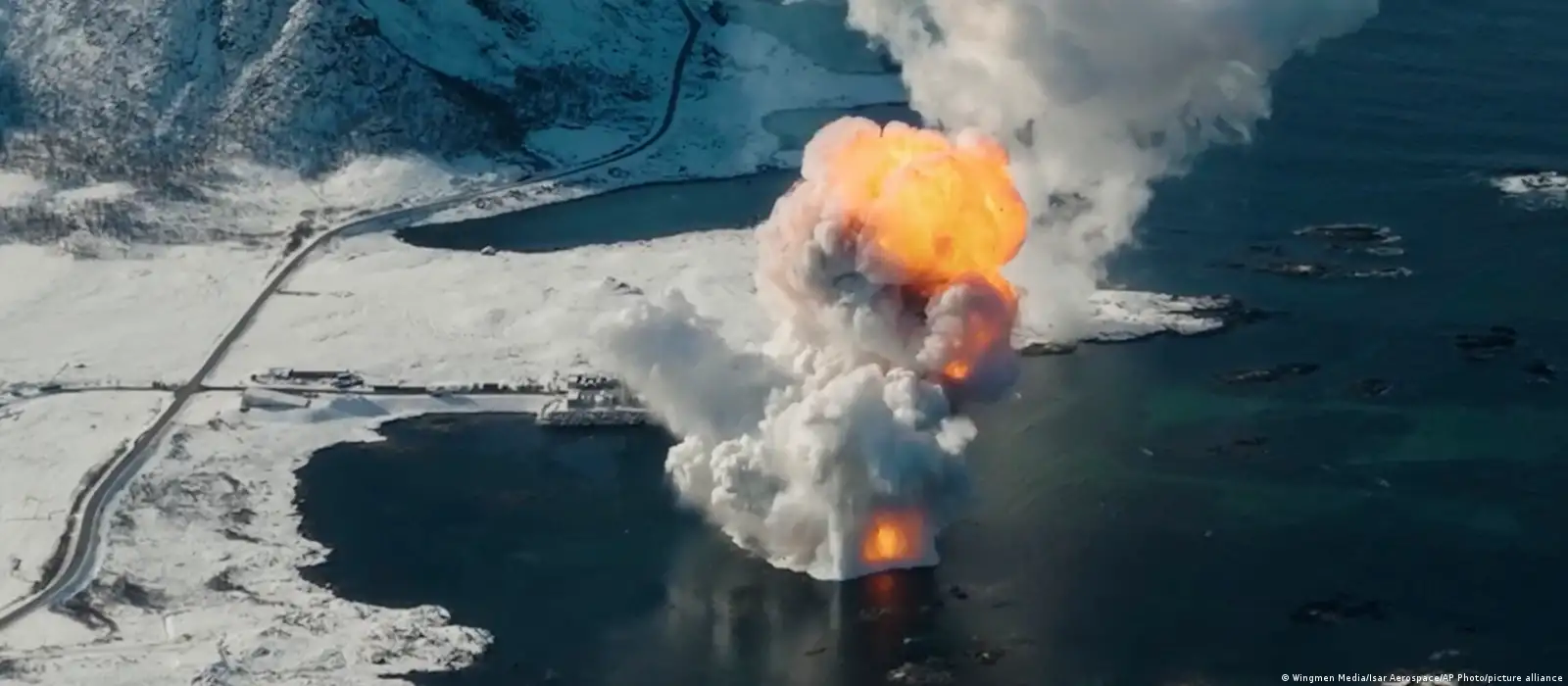
Spectrum's first flight — a mission Isar cheerfully named "Going Full Spectrum" — lifted off from the same Andøya pad on March 30, 2025. Twenty-five seconds into flight, as the rocket began its pitch-over manoeuvre, a vent valve opened when it should not have. The vehicle lost attitude control. At T+30 seconds the flight termination command cut all nine engines and Spectrum fell into the sea beside the launch site, missing the pad.
Thirty seconds. That was the entire flight.
Isar completed its investigation within two months and published the finding: an unintended vent valve opening and a loss of attitude control at the start of the roll manoeuvre. The company rewrote Spectrum's flight software and increased the vehicle's structural and control margins.
Then came the delays — and there were a lot of them, each one a small public humiliation for a company that had already blown up one rocket in front of the world.
Flight two was supposed to go in January 2026. A faulty pressurisation valve scrubbed it. March was targeted next; a combination of bad weather, a boat wandering into the range safety zone, and an unexpected rise in engine fuel temperatures killed multiple attempts. An April 9 try was scrubbed over a suspected leak in a composite overwrapped pressure vessel. On June 15 the team stood down after detecting what the company called "off-nominal behaviour in the vehicle's fluid systems." August came and went with the vehicle not ready.
Eight months of scrubs. In an industry where investor patience is measured in quarters, that is a long time to be standing next to a rocket that will not fly.
WHAT ACTUALLY FLEW ON SATURDAY
Spectrum is 28 metres tall and two metres in diameter — small by the standards of the giants, but squarely in the sweet spot of the small-satellite market. Its first stage runs nine Aquila engines burning propane and liquid oxygen. Its second stage uses a single vacuum-optimised Aquila on the same propellants.
The propane choice is unusual and deliberate. It burns cleanly and offers higher specific impulse — the rocket engineer's measure of fuel efficiency — than other carbon-based fuels. The second stage is designed for multiple in-flight restarts, which means Spectrum does not need a separate kick stage to drop payloads into precise orbits.
From Andøya, Spectrum can put roughly 700 kilograms into a sun-synchronous orbit. From Kourou in French Guiana, which Isar also plans to use, it can carry about 1,000 kilograms to low Earth orbit. For comparison, Rocket Lab's Electron manages up to 200 kilograms to sun-synchronous orbit; Firefly's Alpha does about 630. Spectrum plays at the top of the small-launch market.
Saturday's payloads came through the German Space Agency at DLR's Microlauncher Competition, funded through ESA's Boost! programme, which gives universities and start-ups cheap access to orbit. The manifest reads like a European engineering-school roll call:
TU Berlin's CybeeSat, demonstrating a miniaturised transceiver, cybersecurity applications, and radiation-tolerant perovskite solar cells. NTNU's FramSat-1, a Norwegian-built technology demonstrator. The University of Maribor's TriSat-S, testing battery performance after extended hibernation in space along with a new optical navigation system. TU Wien Space Team's SpaceTeamSat-1, which will let Austrian students run software they wrote themselves on an orbiting spacecraft. EnduroSat's Platform 6, carrying technology demonstrations and customer payloads. A non-deployable experiment from German hardware manufacturer Dcubed rounded out the manifest, with Berlin-based integrator Exolaunch supplying the deployer equipment.
Somewhere in Vienna and Maribor and Trondheim this weekend, there are students who wrote code that is now executing in orbit. That is not a small thing.
The flight hit every milestone in sequence: max dynamic pressure, main engine cutoff, stage separation, second-stage ignition, Kármán line crossing, fairing jettison, orbital velocity, circularisation burn, spacecraft separation. Isar said it was working with customers to confirm the satellites' individual status.
EXPERT PERSPECTIVE: A MARKET, NOT A MOMENT
The European Space Agency has been carefully non-triumphalist about all of this, and that restraint tells you something about how the agency now sees its role.
"These are exciting times for European space transportation, as we witness new actors developing and launching new vehicles," said Toni Tolker-Nielsen, ESA's director of space transportation, in a statement issued back in March ahead of the second flight attempt.
"Regardless of the outcome of this second flight, it will be another step to make European launch services market more diverse and resilient," he added. "Isar Aerospace will have advanced its capabilities and gained valuable experience."
That is the language of an agency that has stopped trying to build the rockets itself and started trying to build a market. It is, essentially, the NASA commercial-crew playbook transplanted to Europe: fund several competitors, buy rides rather than vehicles, let the survivors scale.
The mechanism is the European Launcher Challenge, which requires participants to demonstrate an orbital launch by 2027. Isar signed a contract with ESA under that programme in August worth roughly $230 million to accelerate launcher development and expand launch infrastructure.
"This milestone kicks off the European Launcher Challenge, encouraging competition among European launch providers," said Géraldine Naja, ESA's director of space transportation, in a statement published at the time of the signing.
Isar's commercial pipeline suggests the market is already responding. The company holds two ESA launch service agreements under the Flight Ticket Initiative — one for CASSINI from Dutch firm ISISpace, one for the "Tom and Jerry" mission from France's Infinite Orbits. It signed a dedicated mission for the American company SEOPS in 2028. The Norwegian Space Agency has two Arctic Ocean surveillance satellites booked on that same flight. Redwire is flying Sigma YNDEO-3 with ten European-built demonstration payloads. On September 1 — four days before launch — Isar announced a launch contract with Astroscale Japan.
"The global demand for launch capacity from Europe continues to accelerate as nations and industries recognize the strategic importance of independent access to space," said Stella Guillen, Isar's chief commercial officer, in a statement last November.
THE MACHINE BEHIND THE MACHINE
The part of Isar's strategy that most resembles SpaceX has nothing to do with rockets. It has to do with factories.
The company describes its approach as building "the machine behind the machine" — a vertically integrated manufacturing model with heavy automation, in which Spectrum is developed, manufactured and tested almost entirely in-house rather than assembled from a sprawl of national supplier consortia. That last part is a quiet shot at the traditional European model, in which contracts are distributed across member states for political reasons and every interface becomes a negotiation.
Spectrum vehicles three through seven are already in production. A new 40,000-square-metre facility near Munich — which Isar says will be Europe's largest integrated production plant for launch vehicles — is nearing completion, with an eventual capacity of up to 40 launch vehicles per year.
The company is also spreading geographically. It has leased a pad in Nova Scotia, Canada, for $150 million, covering mid- to high-inclination orbits critical for Earth observation and communications, and plans to use Kourou as well. Two continents, three launch sites, five vehicles in the shop.
WHAT THIS MEANS FOR YOU
If you have never thought about where rockets launch from, here is why Saturday matters to your actual life.
Almost everything you rely on that involves knowing where things are, when things are, or what the weather is doing runs through satellites. Navigation on your phone. The timing signals that let card payments clear and power grids stay synchronised. Weather forecasting. Crop monitoring that shapes food prices. Maritime traffic. Wildfire detection. Broadband to places where laying cable makes no sense.
Every one of those services depends on somebody being willing to fly your hardware. For most of the last five years, if you were European and you needed a ride, the answer was an American company, on American terms, on an American schedule, subject to American export rules and American politics.
That is what "sovereign access to space" means in plain language: the ability to put your own things in orbit without asking anyone's permission.
There is also a straightforward cost argument. Launch has been the bottleneck — Metzler's word — for the entire industry. More suppliers competing for small-satellite business means lower prices, which means smaller organisations get to fly: university labs, climate-monitoring nonprofits, agricultural start-ups, national agencies of countries that could never afford a dedicated launch. Saturday's manifest was literally five student and start-up payloads flying on a subsidised competition slot. That is the model working.
And there is a defence dimension nobody in Europe is pretending isn't there. Earth observation and secure communications are military capabilities as much as civilian ones. The presence of a German defence minister at Isar's factory in July, and a chancellor at its launch site in March, tells you exactly how European governments have come to see a Munich start-up's propane-fuelled rocket.
WHAT COMES NEXT
Nobody at Isar is claiming the hard part is over. One successful qualification flight is a beginning, not a business. Rocket Lab took years to reach a reliable cadence. SpaceX nearly went bankrupt after three consecutive failures before Falcon 1 reached orbit on its fourth try in 2008.
The test for Isar now is not whether Spectrum can reach orbit — that question was answered on Saturday night — but whether Spectrum can reach orbit again in two months, and again two months after that, and eventually every few weeks, from multiple pads, at a price that undercuts a rideshare slot on somebody else's rocket.
"We will now focus on rapidly scaling launch vehicle production, deliver on our order pipeline, and meet surging global demand," Metzler said.
Metzler is 30-something years removed from the generation of European engineers who built Ariane. His company is younger than the iPhone's camera bump. And on a cold Arctic Saturday night, with five student satellites in the nose and a company that had already destroyed one rocket riding on it, it worked.
Eighty years of European spaceflight history says orbital launches happen from Kourou, or Baikonur, or Cape Canaveral. As of 10:12 p.m. CEST on September 5, 2026, they also happen from a rocky island in the Norwegian Sea — and the rocket belongs to a company, not a government.
That is the whole story. Everything else is scaling.
Published By | Tech Wiz