Written By | Torch Media Africa
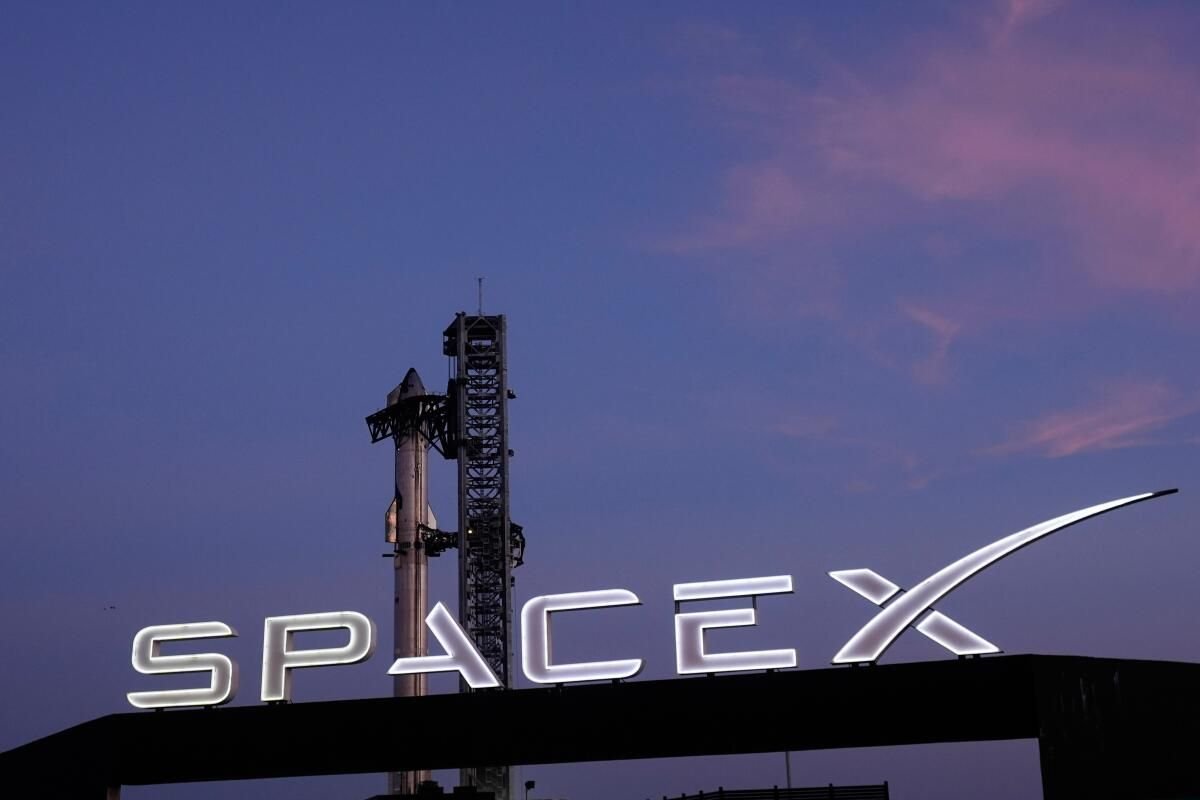
The Deal: Today, an AI Startup Started Paying SpaceX More Than Most Companies Earn All Year — Just for Computer Time
MEMPHIS, TENNESSEE
Forget rockets for a second. As of today, July 1, 2026, the biggest thing happening at SpaceX isn't a launch — it's a bank transfer.
Every month, starting today, a two-year-old artificial intelligence startup called Reflection AI will wire $150 million to Elon Musk's space company. Not for a satellite. Not for a ride to orbit. For electricity, silicon, and floor space inside a converted Memphis, Tennessee, industrial site that most Americans have never heard of: Colossus 2.
If Reflection keeps paying through 2029, the total bill comes to roughly $6.3 billion. That is more money than the annual GDP of some small nations, and it is buying nothing you can touch, see, or launch into space. It is buying compute — the raw processing horsepower needed to train and run artificial intelligence models — and it is the clearest sign yet that SpaceX has quietly turned itself into one of the most powerful landlords in the entire AI industry, without building a single new rocket to do it.
"We can all agree Elon Musk and the team at SpaceX are as capable as anybody on the planet" when it comes to building data centers, Altimeter's Brad Gerstner told CNBC recently, voicing the bull case that has investors buzzing. Not everyone agrees the price is right — Morningstar's Nicolas Owens has called the broader SpaceX valuation "overvalued" — but nobody disputes that the company's AI side hustle is now real money.
From Rocket Factory to Server Farm
To understand how strange this is, rewind a year. Colossus, the original Memphis data center, was built by Musk's xAI to train Grok, the chatbot designed to compete with ChatGPT and Gemini. It was supposed to be xAI's private supercomputer — a in-house tool, not a business.
That has changed fast. SpaceX has now folded xAI into its corporate structure following the two companies' merger, and rather than keeping all that computing power to itself, SpaceX has started renting it out to the highest bidders. Reflection AI is the fourth outside company to sign on, following blockbuster compute deals with Anthropic (reportedly worth $1.25 billion a month), Google ($920 million a month), and the AI coding startup Cursor. Add it all up and SpaceX says it now has more than $80 billion in committed revenue from outside AI clients running through 2029 — a figure that dwarfs what most people think of as the company's "real" business of launching rockets and beaming down Starlink internet.
In other words, the same complex of buildings that helped teach Grok how to talk is now effectively the neighborhood power plant for a chunk of the entire American AI industry.
Who Is Reflection AI, and Why Is It Paying So Much?
Reflection AI isn't a household name yet, but it has a pedigree that makes Silicon Valley take notice. The company was founded in 2024 by two escapees from Google DeepMind: Misha Laskin, who led reward modeling for DeepMind's Gemini project, and Ioannis Antonoglou, DeepMind's sixth-ever employee and one of the co-creators of AlphaGo — the AI that stunned the world in 2016 by beating a human champion at the board game Go.
Their pitch is different from OpenAI's or Anthropic's. Instead of locking their most powerful models behind an app and a subscription fee, Reflection wants to build "open" frontier AI — models with publicly released weights that any developer, company, or government can download, inspect, and build on top of, while Reflection makes its money selling access and support to enterprises and governments. It's a bet that the future of AI won't be owned entirely by three or four closed companies in San Francisco.
That bet has attracted serious money. Reflection raised $2 billion in October 2024 at an $8 billion valuation — itself a huge jump from the $545 million valuation it carried just seven months earlier — in a round led by chipmaker Nvidia. By this spring, the company was reportedly in talks to raise again at a valuation approaching $20 billion.
But building "open" frontier models that can compete with GPT-5 or Gemini requires something Reflection doesn't have enough of on its own: raw computing muscle. That's where SpaceX comes in. Under the new agreement, Reflection gets guaranteed access to Nvidia's newest and most powerful chip, the GB300, sitting inside Colossus 2's server racks — hardware that is in such short supply globally that access to it has become one of the tightest bottlenecks in the entire AI race.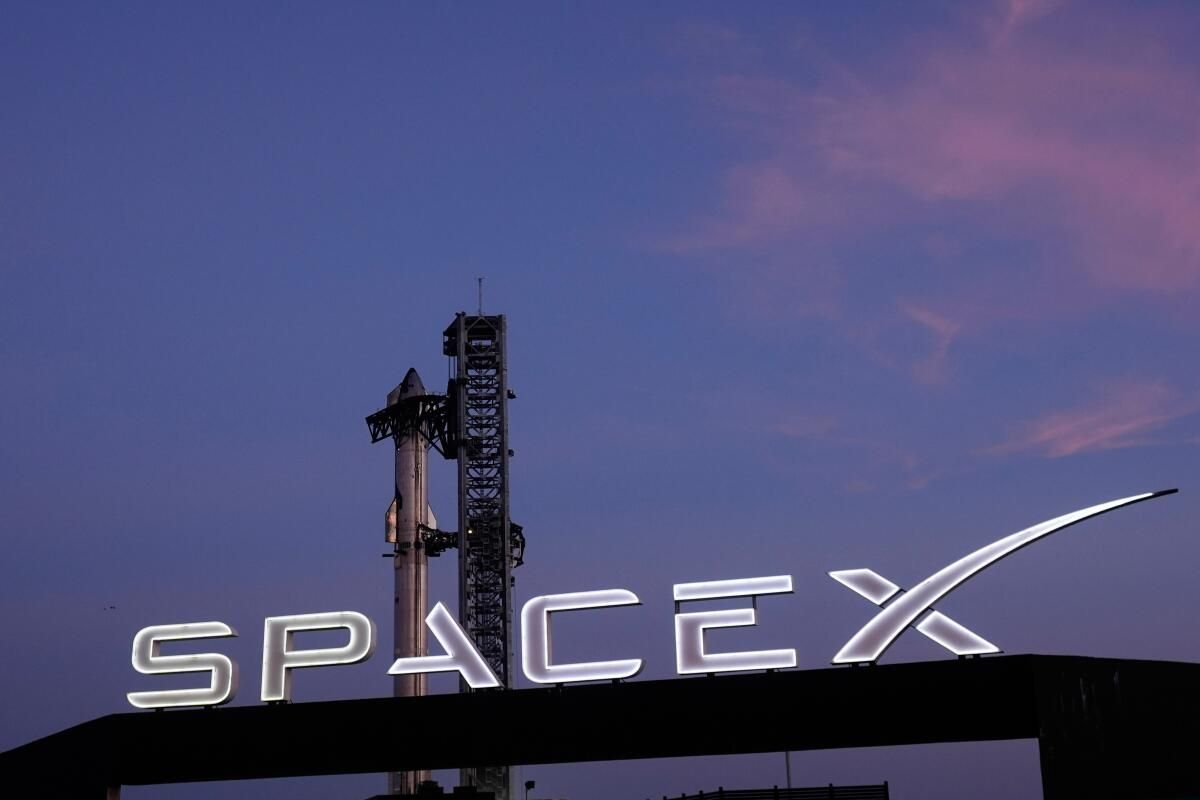
Notably, Nvidia is on both sides of this transaction: it is an investor in Reflection AI, and its chips are the product Reflection is effectively renting through SpaceX. That triangular relationship — chipmaker, landlord, and tenant all tied together — has raised eyebrows among analysts who track circular deal-making in the AI boom, where the same small circle of companies invest in, sell to, and buy from one another in ways that can inflate paper growth.
The contract itself has an escape hatch: after an initial three-month lock-in, either side can walk away with 90 days' notice — a sign that even at $150 million a month, nobody in this industry is certain what AI compute demand will look like a year from now.
The Bigger Picture: SpaceX Isn't Just a Rocket Company Anymore
This deal lands just weeks after SpaceX itself became a public company in the largest IPO in United States history. On June 11, SpaceX priced its Nasdaq debut under the ticker SPCX, raising roughly $75 billion and valuing the combined SpaceX-xAI entity at around $1.75 trillion, according to Reuters reporting cited by NPR. Shares jumped 19% on their first day of trading and continued climbing in the days after, even as some analysts warned the price already reflected years of future growth.
What's emerged, in the words of financial writers tracking the listing, is "a three-engine empire" — rockets and launch services, Starlink satellite internet, and now a fast-growing AI infrastructure arm anchored by Colossus. Wall Street is still trying to figure out how to value a company that is simultaneously a national-security-critical space contractor, a broadband provider to rural homes and ships at sea, and now a wholesale supplier of AI horsepower to some of the most well-funded startups on Earth.
Wedbush has set a price target of $190 on the stock, betting the AI infrastructure business alone justifies a premium. Morningstar's Owens, by contrast, pegs fair value closer to $63 a share — less than half — arguing the market is pricing in AI-fueled growth that may not materialize as cleanly as investors hope.
Why Should Anyone Outside Silicon Valley Care?
It's easy to read all this as a story about billionaires and blue-chip valuations that has nothing to do with ordinary people. It isn't.
First, there's the electricity. Data centers like Colossus 2 consume staggering amounts of power — enough that Memphis-area residents have already raised concerns about strain on the local grid and water supplies used for cooling. When a company signs a multi-year, multi-billion-dollar compute lease, it's also committing to years of industrial-scale energy draw in that community, with knock-on effects for utility rates and local environmental permitting fights.
Second, there's the products this compute will eventually power. Whatever Reflection AI trains on those GB300 chips over the next three years is likely to show up, in some form, in tools ordinary consumers and workers use — customer service bots, coding assistants, search engines, and enterprise software. The chips being rented out today are quite literally the raw material for the AI tools of 2027 and 2028.
Third, and perhaps most importantly, this deal is a window into how concentrated the AI infrastructure business has become. A handful of companies — Nvidia making the chips, a tiny cluster of hyperscale data center operators building the buildings, and an even tinier cluster of AI labs training the models — now sit at the center of a financial ecosystem worth hundreds of billions of dollars. When SpaceX, Anthropic, Google, Cursor, and Reflection are all doing business with each other and, in some cases, investing in each other, it becomes harder for outsiders — regulators, competitors, even everyday investors — to tell where real economic value ends and circular hype begins.
What Happens Next
The Reflection deal officially starts today. Over the coming months, watch for three things: whether Reflection actually ships a major new open-source model trained on this compute; whether SpaceX announces yet another external compute customer for Colossus, pushing that $80 billion committed-revenue figure even higher; and whether skeptical analysts like Morningstar's Owens turn out to be right that the whole AI infrastructure buildout is running ahead of what the underlying business can support.
For now, one thing is undeniable: the company that once measured its ambitions in trips to Mars is now just as focused on server racks in Tennessee. Whether that turns out to be genius diversification or a costly distraction from its rocket business may be the defining SpaceX story of the back half of 2026.
The Bottom Line
A rocket company most people associate with Falcon 9 launches and Starlink dishes on rooftops is now pulling in more guaranteed revenue from renting out computer chips than many traditional cloud giants make from entire divisions. Whether you're a taxpayer whose region hosts a data center, a worker whose job might eventually be touched by whatever Reflection builds, or just someone trying to understand where the AI boom's money is actually flowing, the message from Memphis is the same: the AI arms race isn't just about who builds the smartest model anymore. It's about who controls the electricity, the chips, and the buildings that make those models possible — and right now, that increasingly means Elon Musk.



