Zurich
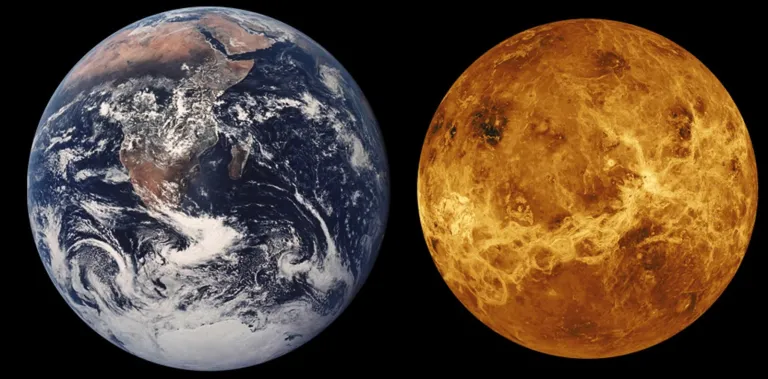
Ninety-two million miles from where you're reading this, a planet nearly the same size as Earth, sometimes called our "evil twin," has spent decades being written off by scientists as a geological corpse — a scorched, crushed, volcanically silent world whose insides froze solid eons ago. This week, that story collapsed. A team of researchers at ETH Zurich, publishing in the journal Nature Geoscience on July 24, revealed the first high-resolution 3D computer simulations of Venus's colossal rift valleys — and the results suggest the planet isn't dead at all. It's actively tearing itself apart, right now, in real geological time, at rates fast enough that scientists watching a human lifetime unfold could, in principle, watch the ground move.
The implications go far beyond bragging rights for planetary scientists. If Venus — a planet that sits at the edge of our sun's habitable zone and may once have hosted oceans — still has a churning, restless interior, it reopens one of the biggest questions in all of astronomy: what actually happens to a potentially habitable world that goes catastrophically wrong, and could it happen here?
The Scars That Wouldn't Stay Still
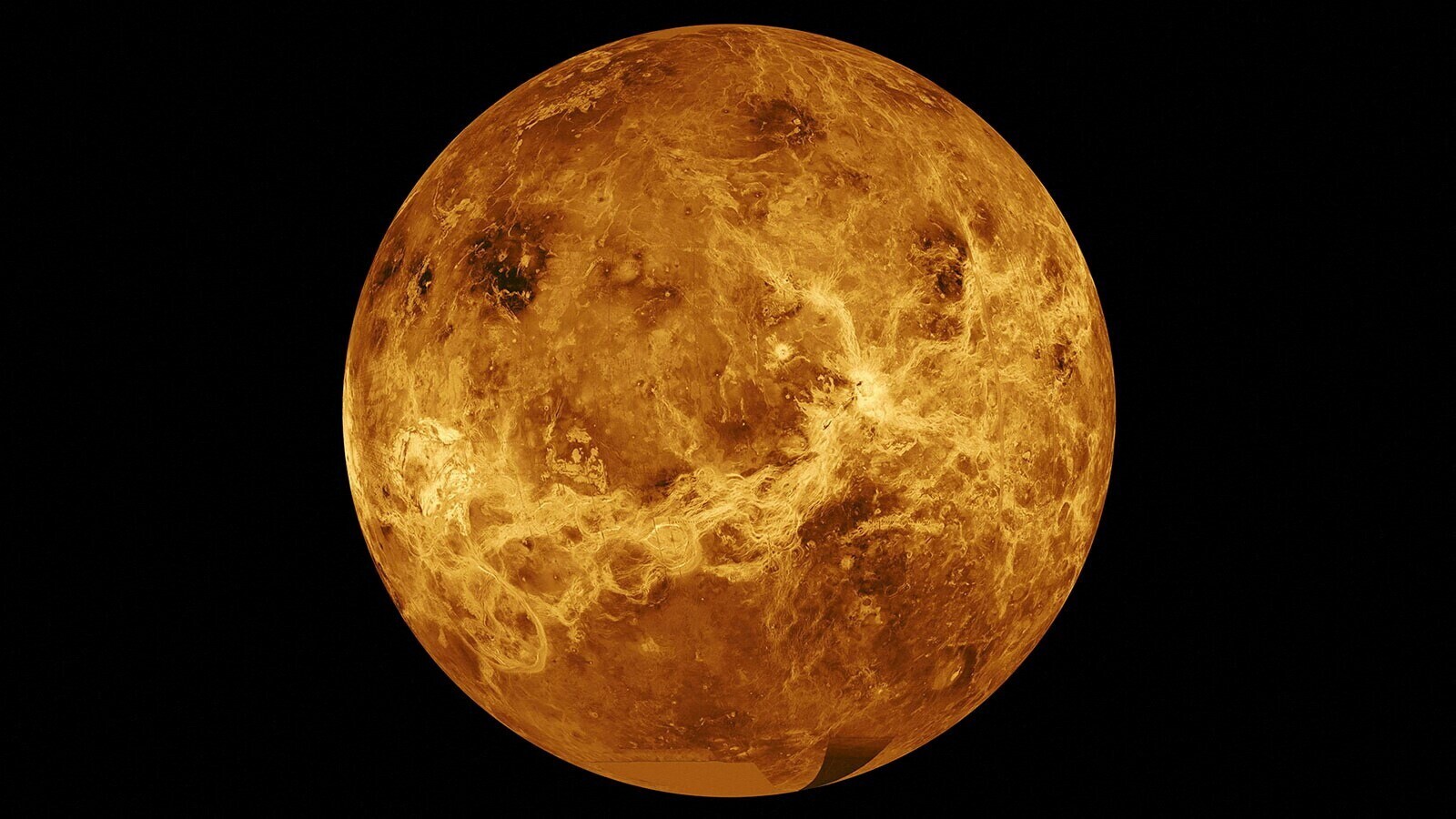
Venus's surface is carved by rift valleys — long, deep depressions where the crust has stretched and cracked apart — some of which stretch across an almost incomprehensible 10,000 kilometers, roughly the distance from New York to Mumbai. They resemble, on a much larger scale, the East African Rift Valley here on Earth, the slow-motion crack that is one day expected to split the African continent in two.
For years, the leading assumption among planetary scientists was that Venus's rifts were exactly what the East African Rift is not: fossils. Old scars from a violent geological past, long since gone quiet, frozen the way the rest of Venus's surface appeared to be frozen since NASA's Magellan spacecraft mapped the planet with radar in the early 1990s and found a relatively young, sparsely cratered surface with no obvious sign of ongoing plate tectonics like Earth's.
The new ETH Zurich study upends that picture. Lead author Xi Yang, who conducted the research as part of his master's studies under Professor Taras Gerya, a geodynamicist in ETH Zurich's Department of Earth and Planetary Sciences, built the first three-dimensional computer models capable of reproducing the fine structural details of Venusian rifts — specifically the "rift flanks," the raised, shoulder-like ridges of terrain that run alongside a rift valley the way levees run alongside a river.
Those flanks, it turns out, are geological tattletales. According to the team's simulations, rift flanks that are wide and steep are a signature of a rift that is young — one where tectonic stretching is either still actively underway or only recently stopped. Flat, eroded, gently sloped flanks, by contrast, would indicate an old, long-dormant rift. When Yang and Gerya's team matched their simulated flank shapes against real radar measurements of Venus's rift systems, several of the planet's largest rifts lined up unmistakably with the "young and active" profile — not the "ancient and frozen" one generations of textbooks assumed.
Even more startling: the simulations suggest these active rifts could be widening at rates of three to ten centimeters per year — comparable to how fast some of Earth's own actively spreading rift zones and mid-ocean ridges move. Multiply a few centimeters a year across the millions of years since the rifts first formed, and you get valleys thousands of kilometers long. But the key point isn't the math — it's the tense. Not "moved." Moving.
"Dead? Far From It."
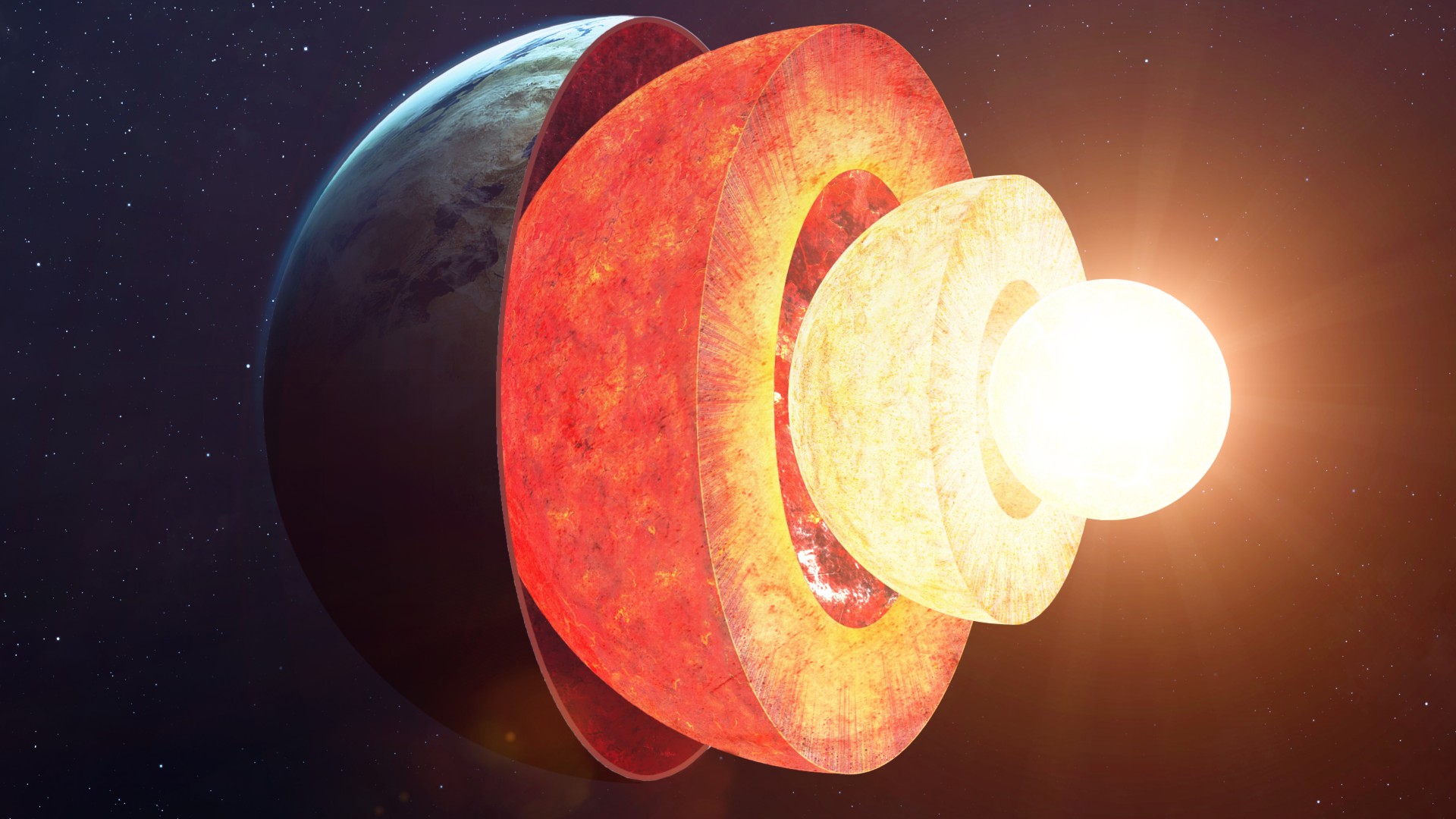
The bluntness of the ETH Zurich team's own headline for its press release on the findings — "Venus: Dead? Far from it." — captures how directly this research confronts the old consensus. Gerya and his colleagues argue the results suggest Venus has a "far more active interior than researchers once believed," directly challenging what had become the dominant view of the planet as a geologically dormant world, cooked into stillness by its runaway greenhouse atmosphere and crushing 92-times-Earth surface pressure.
That dormant-world narrative had real staying power because it was consistent with what little data we had: Magellan's radar maps from the 1990s, a handful of Soviet-era Venera landers that survived mere minutes to hours on the surface before being destroyed by 900-degree-Fahrenheit heat, and no orbiter with modern instruments to check for ongoing activity since. Venus, unlike Mars, has been an exploration afterthought for the better part of three decades — overshadowed by red-planet rovers and outer-solar-system flyby missions, largely because its hellish surface conditions make landing anything there a short-lived and staggeringly expensive proposition.
This new study didn't need a lander to make its case. It needed better math. By building a fully three-dimensional simulation, rather than the simplified two-dimensional models planetary scientists had relied on previously, Yang and Gerya's team was able to reproduce rift structures with a level of geometric fidelity that let them distinguish "still moving" terrain from "long since stopped" terrain using existing radar topography — data that has been sitting, underexploited, in archives for years.
Why a Dead Planet Matters More Than a Living One
It might seem strange that a planet famous for its toxic, crushing, furnace-like hostility to life would matter so much to scientists hunting for habitable worlds elsewhere in the universe. But Venus's importance to astrobiology isn't about whether anything lives there today — it's blisteringly clear nothing does. It's about what Venus can teach us about the difference between a planet that stays habitable and one that catastrophically doesn't.
Venus and Earth are, in the cosmic sense, siblings: similar size, similar mass, similar bulk composition, formed from the same swirl of material at roughly the same time, roughly the same distance from the same star. And yet one became a thriving, temperate, ocean-covered world and the other became a 900-degree hellscape with clouds of sulfuric acid and a surface pressure that would crush a submarine. Understanding exactly where and why those two evolutionary paths diverged — and whether Venus's interior tectonic engine ever ran the way Earth's plate tectonics does, or whether it runs on some entirely different, "stagnant lid" mechanism — is one of the central open questions in comparative planetology.
It also matters enormously for the exploding field of exoplanet science. Astronomers have now catalogued thousands of rocky planets orbiting other stars, and a persistent challenge is figuring out, from light-years away, which ones might be more "Earth-like" and which are more "Venus-like" — potentially hostile despite sitting in a star's habitable zone. Every new piece of ground truth about what drove Venus's transformation, including whether its tectonic and volcanic engine ever fully switched off, sharpens the models astronomers use to judge the habitability odds of alien worlds they'll never be able to visit directly.
The Missions Racing to Check the Math
The timing of this discovery is not incidental. NASA and the European Space Agency have, after years of Venus being a scientific also-ran, greenlit a small wave of new missions specifically designed to settle exactly the kind of question Yang and Gerya's simulations raise. NASA's VERITAS mission — Venus Emissivity, Radio Science, InSAR, Topography, and Spectroscopy — is being built to produce the most detailed surface and gravity maps of Venus ever made, precisely so scientists can search for direct evidence of ongoing volcanic and tectonic activity from orbit, rather than inferring it indirectly from decades-old radar data. Europe's EnVision orbiter is designed to complement that work with even more targeted geological and atmospheric instruments. And NASA's DAVINCI mission plans to send an atmospheric probe plunging through Venus's thick clouds down to the surface, sniffing for the specific chemical signatures that ongoing volcanism would leave behind in the atmosphere.
Both VERITAS and EnVision are explicitly tasked with hunting for present-day geological activity — the exact hypothesis this new ETH Zurich modeling now gives them sharper, more specific rift systems to point their instruments at first. In effect, Yang and Gerya haven't just published an interesting paper; they've handed NASA and ESA's Venus mission teams a target list.
Expert Perspective
Planetary scientists outside the ETH Zurich team have noted that the study's real innovation isn't the headline claim that Venus might be tectonically active — plenty of researchers have floated versions of that idea in recent years based on hints of active volcanism seen in reprocessed Magellan images. The innovation is methodological: building 3D models precise enough to read a rift's activity status directly off the shape of its flanks using data we already have, rather than waiting years for a new orbiter's instruments to confirm it directly. That approach, if it holds up to scrutiny from other groups reanalyzing the same radar archives, could let scientists retroactively "reactivate" decades of old Venus data, extracting new-era conclusions from Cold War-era measurements.
What This Means for You
You are not going to feel Venus's crust shifting three to ten centimeters a year from your kitchen table, and no, this doesn't change anything about Earth's own geology or climate. But it matters if you care about humanity's long-term search for other habitable worlds: a Venus with an active interior is a far more useful natural laboratory for understanding planetary habitability than a Venus that shut down eons ago, and every dollar being spent on VERITAS, EnVision, and DAVINCI just got a clearer, more specific scientific justification. It's also a small but genuine reminder that some of the biggest discoveries left in planetary science don't require a new spacecraft at all — sometimes they require someone building a better computer model of data that's already been sitting in an archive for thirty years.
The Bottom Line
For most of the Space Age, Venus has played the role of the solar system's cautionary tale — a world so similar to ours in size and birth, so different in outcome, that scientists mostly studied it to understand what to avoid, then moved on to more inviting targets like Mars and the icy moons of the outer planets. This week's Nature Geoscience study argues that Venus deserves a second look, not as a fossil, but as a planet still, quite literally, in motion — its rift valleys possibly widening even as you read this sentence. With VERITAS, EnVision, and DAVINCI all racing toward launch in the coming years, humanity may soon get the direct confirmation this new modeling predicts: that our closest planetary neighbor, so long declared dead, never actually stopped moving at all.
Published By | Tech Wiz