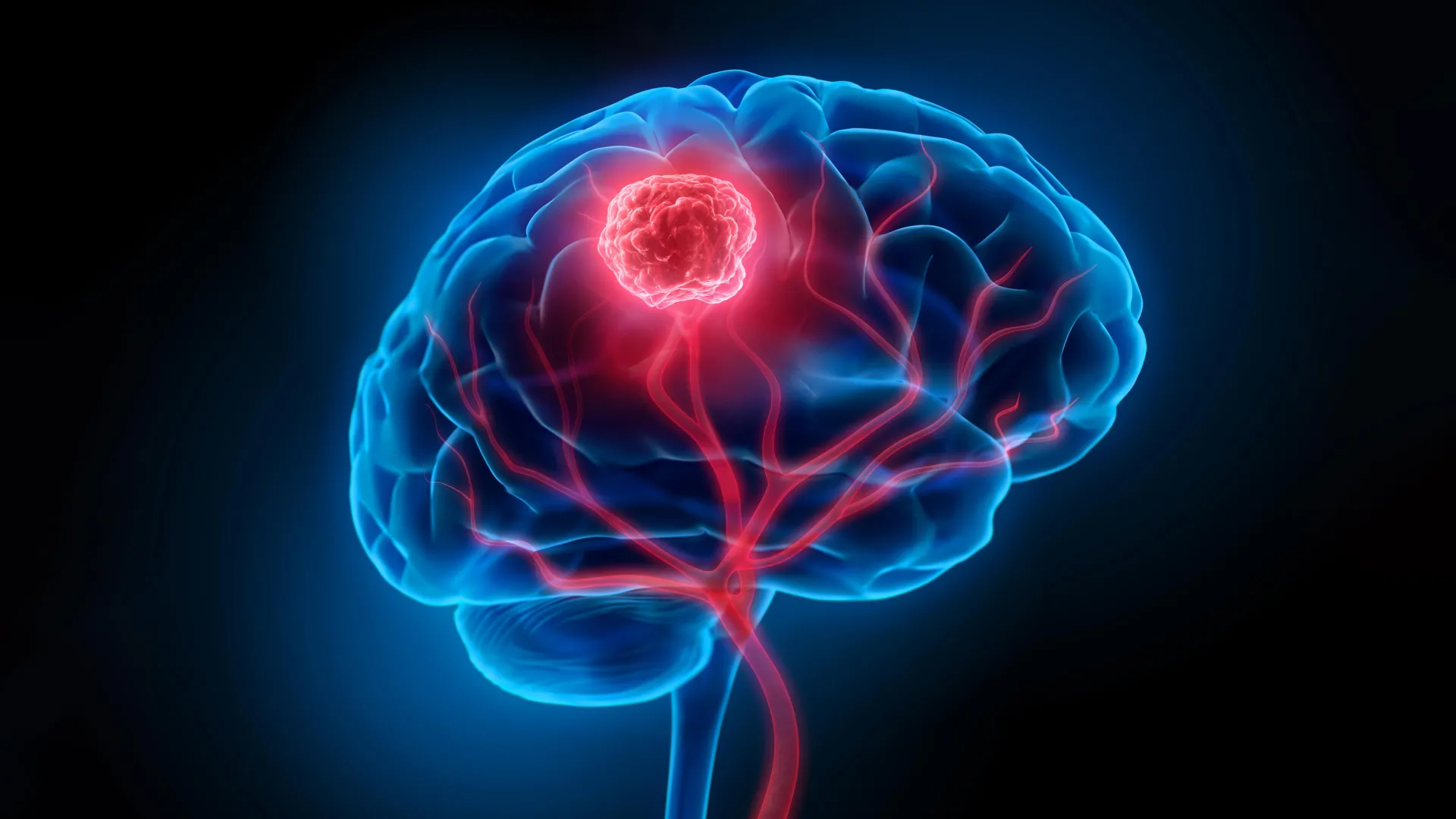
Scientists in Sydney, Boston and China have built a microscopic assassin that does something brain surgeons have dreamed about for decades: it makes invisible tumor cells glow so surgeons can see them, then finishes off whatever's left behind. In mice, it delivered a jaw-dropping 100% survival rate at 60 days against glioblastoma — one of the deadliest cancers known to medicine. Human trials are the next, much harder mountain to climb.
SCIENCE & TECH
Glioblastoma doesn't get beaten. That's the grim consensus that's held for decades among neuro-oncologists treating the most aggressive brain cancer in adults — a disease with a five-year survival rate of roughly 6.8%, a median survival time of just 14 months, and a cruel habit of coming back almost every single time, usually within eight to ten months of the surgery meant to remove it. It killed Senator John McCain. It killed Beau Biden. It is, by nearly every measure, one of oncology's most stubborn and heartbreaking failures.
This week, a team of researchers from the University of Technology Sydney, Harvard University and Henan University in China published something that's rippling through cancer research circles: a single, engineered nanoparticle that appears to solve two of glioblastoma's most notorious problems at once — the fact that surgeons can't see all of it, and the fact that whatever they leave behind almost always grows back and kills the patient.
They're calling it a "double-punch" nanozyme platform. And in mice, it didn't just slow the cancer down. It stopped it.

THE PROBLEM WITH BRAIN SURGERY ON A TUMOR YOU CAN'T FULLY SEE
Here's the brutal math of glioblastoma surgery: even the best neurosurgeons, using the best imaging tools available today, cannot reliably see every tumor cell during an operation. Glioblastoma doesn't grow as one tidy mass — it sends out microscopic tendrils and satellite cell clusters that blend almost seamlessly into healthy brain tissue. Current clinical imaging simply isn't sharp enough to resolve them. Surgeons do their best, remove what they can see, and know going in that they're almost certainly leaving cancerous cells behind. Those leftover cells are what comes roaring back, usually within a year, in a recurrence that's typically even harder to treat than the original tumor — a second surgery, if it's even possible, buys a median of about nine more months.
That's the problem the new nanoparticle was built to solve, and it does it in two acts.
Act one happens during surgery. The nanoparticle is engineered with a fluorescent dye that glows under near-infrared light — a wavelength invisible to the human eye but easily picked up with the right imaging equipment in the operating room. According to the research team, this lets surgeons see individual tumor cell clusters as small as 44 micrometers wide — roughly half the width of a human hair, and a level of resolution well beyond what current clinical imaging tools can achieve. A separate targeting molecule attached to the nanoparticle helps it cross the blood-brain barrier, the body's famously stubborn security wall that keeps most drugs and diagnostic agents out of brain tissue, and accumulate specifically inside glioma cells rather than spreading through healthy tissue.
Act two happens after the visible tumor is removed. The same nanoparticles left behind in the brain get to work as tiny chemical factories: platinum atoms embedded in the material react with hydrogen peroxide naturally produced by tumor cells, generating oxygen and reactive molecules that essentially cook the remaining cancer cells to death from the inside, through a combination of heat and reactive-species-mediated killing.
"We've engineered a single material that does two jobs in sequence," said Dr. Bingyang Shi, Chair Professor of nanomedicine at UTS's School of Electrical, Mechanical and Biomedical Engineering, and one of the study's lead researchers. First it acts as the guide, then it acts as the executioner.
THE RESULTS THAT HAVE RESEARCHERS TALKING
In mouse models of glioblastoma, the numbers are the kind that make cancer researchers sit up. Mice treated with the double-punch nanoparticle platform showed prevented tumor recurrence and 100% survival at the 60-day mark — a striking result set against a disease where, in humans, recurrence is considered all but inevitable. Follow-up testing on the treated mice also found no detectable neurological or motor impairments associated with the treatment, an important early signal that the approach isn't simply trading tumor death for brain damage.
The research was published in the peer-reviewed journal Science Translational Medicine this month, a publication known for a rigorous bar for pre-clinical cancer research with a plausible path toward eventual clinical trials.
But — and this is a big but — Professor Shi and his co-authors have been careful, publicly and repeatedly, not to oversell what they've found. "The results are very encouraging, but this is still early-stage research carried out in mouse models, not in people — and that distinction is important," Shi said. "Its imaging and therapeutic performance will also need to be confirmed at the scale of a human brain."
That caveat matters enormously. A mouse brain is roughly 1,000 times smaller than a human brain, and cancer research has a long, humbling history of therapies that work beautifully in mice and then stumble, sometimes catastrophically, when scaled up to human biology. Delivery, dosing, immune response, and the sheer physical distances the nanoparticles need to travel and diffuse through are all far more complicated in a human skull than in a mouse one.
WHERE THE FIELD STANDS TODAY
This isn't the first attempt to bring nanotechnology into the glioblastoma fight, and it's worth understanding where it sits in a crowded and difficult field. The furthest-along nanoparticle therapy in actual clinical use is NanoTherm, developed by the German company MagForce, which uses intratumoral iron-oxide nanoparticles heated by an alternating magnetic field to cook tumor tissue from within. In a European multi-center Phase I/II study of 59 patients with recurrent glioblastoma, that approach pushed median survival after recurrence to about 13.4 months — more than double the roughly six-month historical baseline for patients who've already relapsed. That's real, meaningful progress, and it took years of trials to get there.
The UTS-Harvard-Henan platform is aiming at something more ambitious: not just treating recurrence after the fact, but preventing it in the first place by combining precision surgical visualization with an immediate post-surgical mop-up of whatever's left behind. If it can replicate even a fraction of its mouse-model results in humans, it would represent a meaningfully different approach from anything currently in clinical use — treating the surgery and the residual disease as a single continuous problem rather than two separate ones handled months apart.

EXPERT PERSPECTIVE
Outside researchers reviewing the study have generally described it as a genuinely elegant piece of materials science — engineering a single nanoparticle to serve as both a diagnostic beacon and a therapeutic weapon is technically difficult, and successfully threading that needle in a living animal is a real achievement. At the same time, the broader nanomedicine field carries a well-earned reputation for caution: dozens of nanoparticle cancer therapies have shown spectacular results in mice over the past two decades, and only a small handful have ever made it through the gauntlet of human trials to approval. Researchers not affiliated with the study have pointed to the blood-brain barrier and the sheer scale difference between mouse and human brains as the two hurdles most likely to determine whether this technology follows NanoTherm's slow-but-real path to the clinic, or joins the long list of promising mouse-model therapies that never made the leap.
WHAT THIS MEANS FOR YOU
If glioblastoma has touched your family — and given roughly 12,000 to 15,000 new diagnoses a year in the U.S. alone, it touches more families than most people realize — this study isn't a treatment you or a loved one can access today, and it's important to be clear-eyed about that. There is no human trial recruiting yet, and the timeline from a promising mouse study to an approved therapy is typically measured in many years, not months, even for research this compelling.
What it does offer is something more modest but still meaningful: a credible, published, peer-reviewed signal that the two-headed problem of glioblastoma — invisible residual tumor plus near-guaranteed recurrence — might be solvable with a single, elegantly engineered tool, rather than requiring an ever-expanding cocktail of separate treatments. For patients and families navigating a glioblastoma diagnosis today, the realistic takeaway is to ask your oncology team about current clinical trial options (including nanoparticle-based approaches already in human testing, like NanoTherm-style thermotherapy) rather than waiting on research that's still years from a hospital near you.
CONCLUSION
Brain cancer research is littered with therapies that dazzled in a petri dish or a mouse cage and then quietly disappeared somewhere on the long road to a human hospital bed. The double-punch nanozyme platform from UTS, Harvard and Henan University hasn't beaten those odds yet — it's taken one solid step, not the whole journey. But for a disease that has humbled some of the best minds in oncology for generations, a nanoparticle that can light up what surgeons can't see and then finish the job chemistry started is exactly the kind of "very encouraging" result, in Professor Shi's own careful words, that the field needed. The next few years, as this technology (hopefully) moves toward human trials, will determine whether "double-punch" becomes a footnote in nanomedicine history or the opening chapter of a real answer to one of medicine's cruelest diagnoses.
Published By | Tech Wiz